Digging Deep to Get it Right
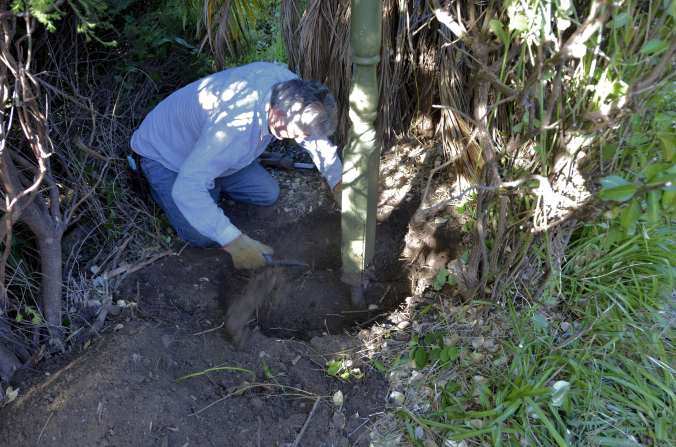
Recently, my mother sent me an article about my paternal uncle. In it, he claimed to have ancestry extending back to Titus, a Greek convert to Christianity and the apostle Paul’s missionary companion. The author of the article took the claim with a grain of salt, saying, “Be that as it may …”
The article was written in the 1990s, way before we knew much about DNA. It was published when the internet was in its infancy and before research tools such as Wikipedia, and genealogical platforms such as Ancestry and My Heritage existed.
So, how did my uncle figure we were descendants of Titus?
Was it just a fanciful family history conclusion? Or did he have some access to secret information stored away in a library in Europe?
Many families have claims such as my uncle’s. It is what fuels family myths that are passed down from generation to generation, morphing and mutating from the original truth, much like Chinese whispers.
So, here was the challenge. Did this claim have any truth?
Equipped with the knowledge that historical claims need to be backed up by proof, I began my family history journey using research tools to find the evidence.
We don’t even know if Titus had any descendants. And if he did, who were those descendants? An initial search in my Bible notes reveals that Titus is last mentioned as going east of Greece, into the Balkans.
Yes, I have a percentage of Balkan ethnicity. But is that enough?
Next, I discussed this Titus theory of my uncle’s with my significant other, as you do. I find it useful to discuss my research with others and bounce ideas off each other. His first thought was the Roman Emperor Titus.
Now there’s a thought.
So, like a good amateur investigator, I spent some time tracing the noble line of the Orsini Family to which my father’s family is related. With the help of Wikipedia and My Heritage, I went back as far as I could. I am so thankful for Wikipedia, and My Heritage where information is shared and researchers are able to collaborate their findings.
But here I hit another snag. The article on the Orsini family in Wikipedia makes it abundantly clear that the Orsini’s would like to think they can trace their family back to Julius Caesar, but there is no solid proof.
As stated in the Wikipedia post on the Orsini Family (note the clause “according to family legend”):
“According to their own family legend, the Orsini are descended from the Julio-Claudian dynasty of ancient Rome.”
It’s not looking good for my uncle’s claims. My digging into the deep past of my dad’s ancestors and connection to Titus has gone cold.
This rabbit hole of fancy, that is, thinking we are related to someone great in our past, got me thinking how in our quest to build up our identity, we often take mighty leaps of faith without much substantiation.
History Research 101 which I picked up from my friend Carol in University and also as a research officer way back in my youth, taught me that good research depends on primary sources.
What are primary sources?
In family history research these are: birth, death, marriage, immigration and census records for a start. Diary entries and letters are also useful primary sources, as they give the reader a rounded view of the individual’s time and place in history. Newspaper articles can be helpful but can be skewed by a journalist’s subjective point of view. Hence, news reports, magazine articles and books may be seen as a secondary source.
That being said, even what appears to be solid records can become rubbery when the ancestor or ancestors, themselves are not truthful.
Another example, again the noble line. Information abounds for these famous ones on the internet. (Bless these historical influencers of the past.) And for this brief foray into history research, they serve a good purpose in the need to dig for information, find the hard facts, and support the genealogical claims. Plus, so much is written about these people, they become real and fleshed-out so to speak. Also, no touchy relatives will get offended if I use these noble people as my example.
A few months after plugging away doing the family history thing of filling in the boxes on my family tree, an interesting match appeared. Charlotte de Luxembourg, a noblewoman from the mid-1400s. The name Luxembourg piqued my interest as it resonated to be a name connected with the French and English royal families. I followed the lead slowly tracing back to Henry I of England and Charlemagne.
Then I returned to the key ancestor upon which this claim to such distinguished ancestry hung. Charlotte de Luxembourg. What was her age? Her age seemed to be in dispute. Furthermore, in some genealogies, she was missing.
I needed to do more research.
Was she just some family history fancy?
I worked out through my internet research that she was most likely Pierre de Luxembourg’s illegitimate daughter. Most likely born before Pierre married Margarete de Savoi. However, according to a genealogist on another family history site called Geni, she could possibly be the daughter of Pierre’s brother, Charles, Bishop of Laon. Either way, to smooth over the family’s disgrace, Charlotte officially became Pierre and Margarete’s daughter; the details of her birthday fudged in the mists of time and covered up so that she remained marriageable.
After what appears to be a shaky start to life in nobility, all ended well for Charlotte. She married an esteemed knight, Phillipe Estavayer. He went up in status and the world was none the wiser of her suspect background. From the records of the knight’s will, which I found in my internet research, Charlotte was well-provided for and loved.
When I first shared these findings with my family, there were those who were sceptical. As a result, I have had to be extra thorough in my research and use every resource and piece of evidence to support my conclusions.
I’m still at the beginning of my family history odyssey. One day I hope the results of this research, my legacy, will be dependable, based on solid facts, and not just a vague myth that boosts the ego but has no substance.
© Lee-Anne Marie Kling 2025
Sources: Ritter, Eug. Mariage de Philippe d’Estavayer avec Charlotte de Louxembourg, en 1484. Revue historique vaudoise, Volume 30 (1922)
ETH-Bibliothek Zürich, E-Periodica, https://www.e-periodica.c
 Indie Scriptorium -- Self Publishing Collective