Summer holidays are over, and school has started again here in Australia. With it, memories of the way things were way back when I was at school, in the 1970’s. Those were the days…
Our Sensei, the Avenger
Timmy hunched over his desk, sobbing.
Luke laughed at him. Simmo slid back on his chair sneering. Bruce barked in the small skinny lad’s ear. I watched, guarding my books from being flung out of the window, again.
Those boys!
Our Sensei marched into the classroom. We stood.
His face turned crimson. He thumped the blackboard. ‘Da’me Yo! Bad! Very Bad!’
Sensei swooped on Bruce and Simmo. Grasping their shirt collars, one in each hand, he clonked their heads together, forcing them to look at Timmy.
‘Look what you have done! You made him cry! Bad! Very Bad! Dame Yo!’
Would you like to join in the 100-word challenge? If you have a story you’d like to share, drop us a line in the comment box. The one requirement: the story must be exactly 100-words.
It’s a wonderful compliment, as an author, to being invited to make a presentation to a book club. But what makes for a good, entertaining presentation?
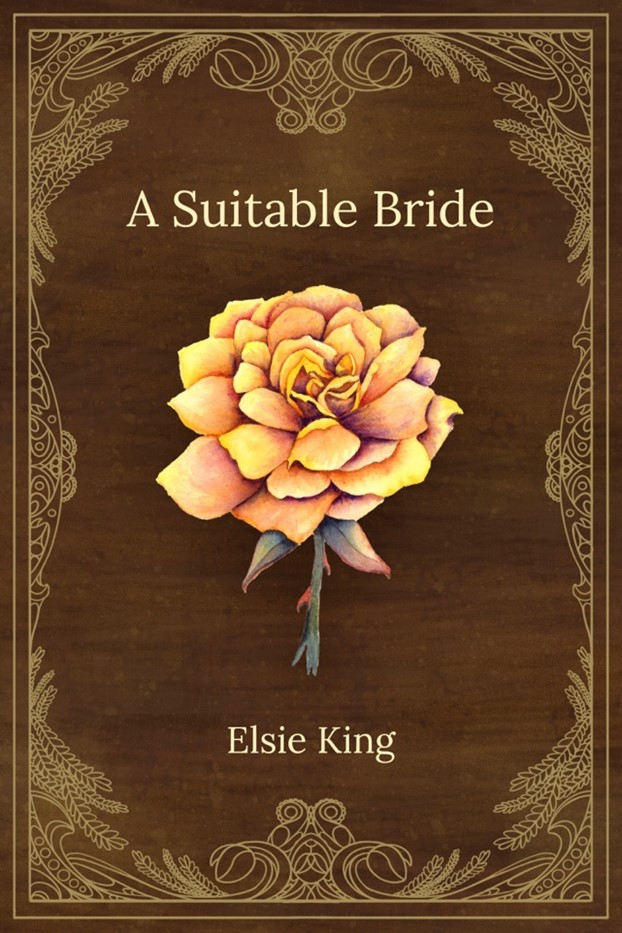
I was invited to a book club last year to talk about my first published novel, A Suitable Heir.
It was a great evening with a lovely group of ladies and I had a lot of fun but I wasn’t properly prepared and it made me wonder if I could have done better. My second invitation was from a member of one of the writing groups I attend and they had a specific agenda. Time to do some research to improve my book club presentation.
An article by Bookish raises a topic that must be seriously considered when accepting an invitation to present to a book club: Do you need to be a part of the book discussion? Book clubs by their nature allow members to openly say what they think of the book. Some readers will love a book and some won’t but having the author present during the review could either suppress the opinions of some members or be confrontational for the author. It becomes important to discuss with the co-ordinator what the book club wants. If it’s to have a robust, critical review of the book the author needs to be prepared for positive and negative evaluations. Alternatively, you can ask that the discussion of the book occurs before or after the author presentation. https://bookish.netgalley.com/book-club/11/2022/do-dont-author-visit-book-club-invite-how-to/
So, what do you talk about in a presentation? Here’s a list of areas to consider in your presentation plan:
For the novel: • First say, ‘Thank you for the invitation’. • Introduce yourself, your pen name (if appropriate) and the book title. • Talk about what inspired you to write the novel. Where did the idea come from? • Discuss the genre and setting. • What are the themes of the book? • Discuss the characters. • What was the initial question and conflict? • Research and world building. • Specific questions from the audience.
About you as a writer: • My writing history. • My writing process. • Why I write. • My strengths and weaknesses as a writer. • Plotting or “pantsing” (writing by the “seat of one’s pants”, such as making up the story as you go along)? • The editing process. • Publishing options. • Where to next.
It would be a good idea to discuss with the book club co-ordinator what format is acceptable and then write and practice the presentation. Supply some marketing material (bookmarks and cards) and make sure you have copies of the book to sign and sell.
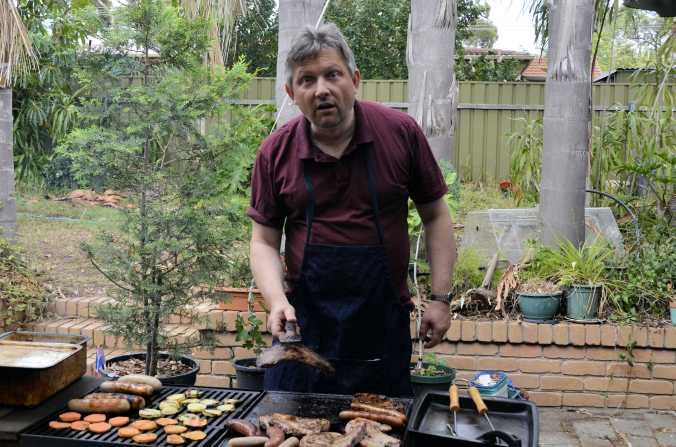
This day, being Australia Day and the nearly 250 years of baggage that goes with it, I made an executive decision to re-blog my missive on the fine line writers literally “walk” when storytelling.
Feature Photo: An Australia Day tradition: the Barbeque (c) L.M. Kling 2015
The track was steep and bumpy. It shook his bike, made braking hard on the sharp corners. His eyes watered, his heart thundered. He felt like laughing but had to focus. He’s hadn’t felt this scared since he fell off his first two-wheeler.
Teeth clenched, bones shaken as the bike bucked and slid over rocks. It was impossible to brake, too fast, too hard. The ground tore past, blurred by speed. Cold wind whipped tears into his eyes. Hands curled around the handlebars as if they could be a lifeline. Focus, focus, focus. Blood thundered in ears, sweat sprang and got whipped away. Laughter bubbled and was swallowed. Fear evoked the four-year-old’s memory. Falling, pain, blood and Dad saying. “Get back on. You can do this.”
Above are two attempts at describing the same event. In the first I’ve used pronouns, he, his, he felt. This is me as the writer intruding, describing the action. I’ve also said he felt scared, telling not showing the fear. This is third person subjective.
In the second I’ve got rid of the pronouns, added more sensory information to illustrate fear, added internal dialogue and provided a detailed memory. It required more words but gives a deeper experience for the reader. This is third person subjective deep point of view. (Also known as 3rd person limited or 3rd person close)
Using Deep Point of View (Deep PoV) is a writing style that has become increasingly popular in the past two to three decades. It is tricky to understand, and I’ve found requires a lot of study and practice. The idea is that you tell your story from the perspective of the character, that the story emerges through their experience which includes what they see, hear, feel, taste and smell. Add some thoughts, opinions and memories and then remove the narrator’s voice, (he felt, he thought, she wondered, she saw.)
Changing your natural writing style is challenging work but I think adopting deep PoV can make the writing zing and allows the reader to engage more closely with the characters. But do I need to use deep PoV all the time and for all my characters?
I write Historical novels set in the Regency era. The writing style of authors such as Jane Austin, Charlotte Bronte and Charles Dickens use third person, but the narrator is always popping in with observations and opinions. I want my own novels to reflect the writing style of the era in which they are set but I also like to adopt the modern deeper point of view. It’s a challenge.
Having done some reading into this complex topic I have come to a set of rules that work for me as a writer. It’s a work in progress; I am learning new things all the time and making adjustments, but I thought it might help people if I share my guidelines.
Use deep PoV for major characters. Minor characters don’t need deep PoV, but it could be fun to give the baddie a deep PoV.
Deep PoV can be exhausting. Use it sparingly for pivotal moments in your plot.
Start each scene with deep PoV.
Use deep PoV mostly in the first third of your book. Less is required as the pacing/suspense increases and the readers are hooked into the characters.
Don’t head hop between characters. One deep PoV per chapter or scene.
Use the character’s thoughts, actions, memories, opinions in both internal and spoken dialogue. Emotions are better conveyed by actions and dialogue than described. (show don’t tell)
Use the five senses to give readers a clear picture of the scene from the characters perspective.
Use vivid language (find more interesting words in your thesaurus) and active voice. (I use a soft-ware editing program to highlight passive voice for removal)
These are my recommendations. They will not suit everyone, and they are a work in progress. My idea is that I write the first draft of my novel/short story and select the character who will be the PoV character for the scene/chapter but not focus on creating the deep PoV until I’ve done a structural edit. I will then do an editing sweep looking at strengthening the sensory input, opinions, thoughts, memories and actions in strategic scenes in the book.
Points of view is a complex topic. I found the following articles and books helpful.
I also used Richard Bradburn’s book Self-Editing for Self-Publishers, Reen Publishing 2020
I’m still finding my way with PoV. I don’t head hop as much, but I can’t say that I am deeply conscious of using deep PoV as I write my first draft, but it’s an effective and powerful tool for introducing new characters. For me it works for one or two characters in a novel and is valuable to use in highly emotive, pivotal scenes. I do enjoy giving my character’s opinions and internal dialogue as it brings the reader closer to the character.
In 1986, all pumped up from a successful finish to my university degree, I began writing my “Great Australian Science Fiction” novel. I chose Science Fiction because I thought it would be easy to write.
Hah!
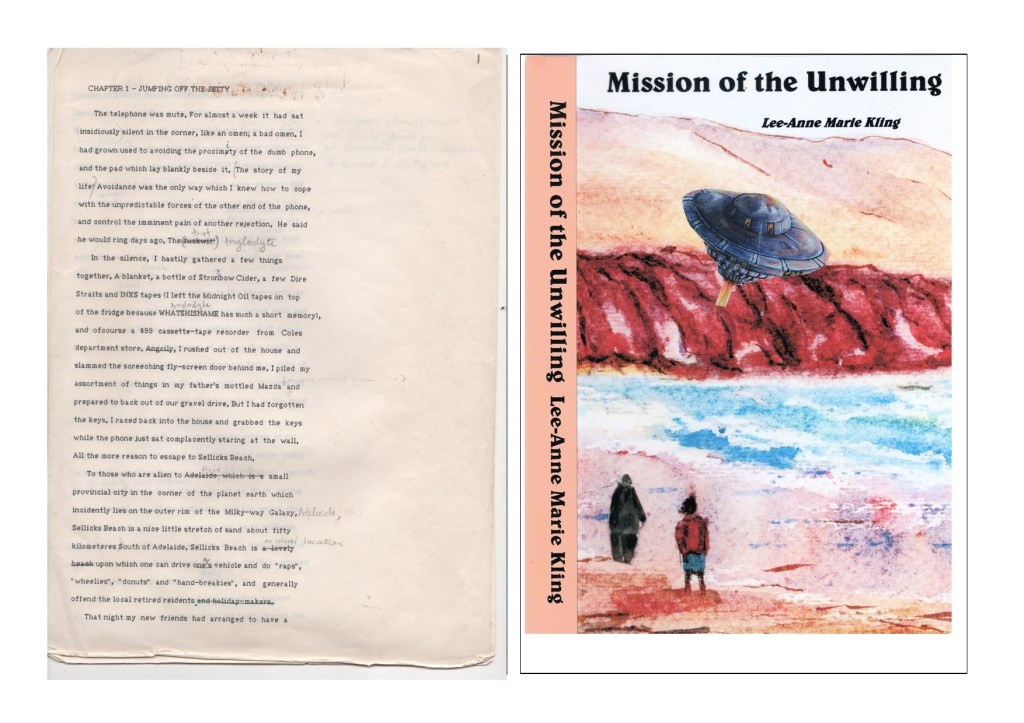
At every opportunity, I inflicted the latest chapter of this rough and raw work on my friends. Below are the first few paragraphs of the very first draft of “Mary’s Story”, which 30 years later would be Mission of the Unwilling, written in 1986. The reason the title changed? Well, frankly, my writing mentor at the time thought the title, “Mary’s Story” was a bit lame. So, the book title had to change to something that would grab the reader. As a result, the main character had a name change.
Here I am inflicting this piece that needs a great deal of TLC to polish it into shape, so you can see that I was just like any other hopeful author, making all the mistakes common to novice writers. Have a look and see what you would’ve changed to improve this piece.
Twenty years passed. The manuscript languished in the cupboard. Unfinished. I had progressed halfway through. Lost my way. Lost in space and time, you could say.
Then a spark, and an idea. The story changed and continued to its end. As technology had progressed from Commodore and floppy disks to Windows PC and CDs, I had to rewrite the whole novel. Not a bad move, actually.
After printing off the reams of paper that made up the book, I took it to my uncle who was in the writerly business.
[2. Sample of MOU from 2008]
Suffice to say, he was not amused and gave feedback: Basic errors like no page numbers and glaring grammatical mistakes to using a ridiculous amount of speech attributions. It would seem that my years of motherhood had been detrimental to my writing craft. Bad habits in my writing had developed. He recommended joining a writers’ group.
Writing is a craft that requires honing skills and words to impact the reader in a positive way. Test readers, editors, fellow writers are essential to a manuscript developing from a rough draft to a polished piece ready for publishing. There is no shame in reworking or rewriting a story.
[3. Sample of MOU after reworking from writers’ group feedback, before my mentor gave her feedback]
I recall my writers’ group mentor saying that with feedback: listen to it, consider it and if it works for you, implement it. If not, put the suggestion aside. It’s your writing, it’s your voice.
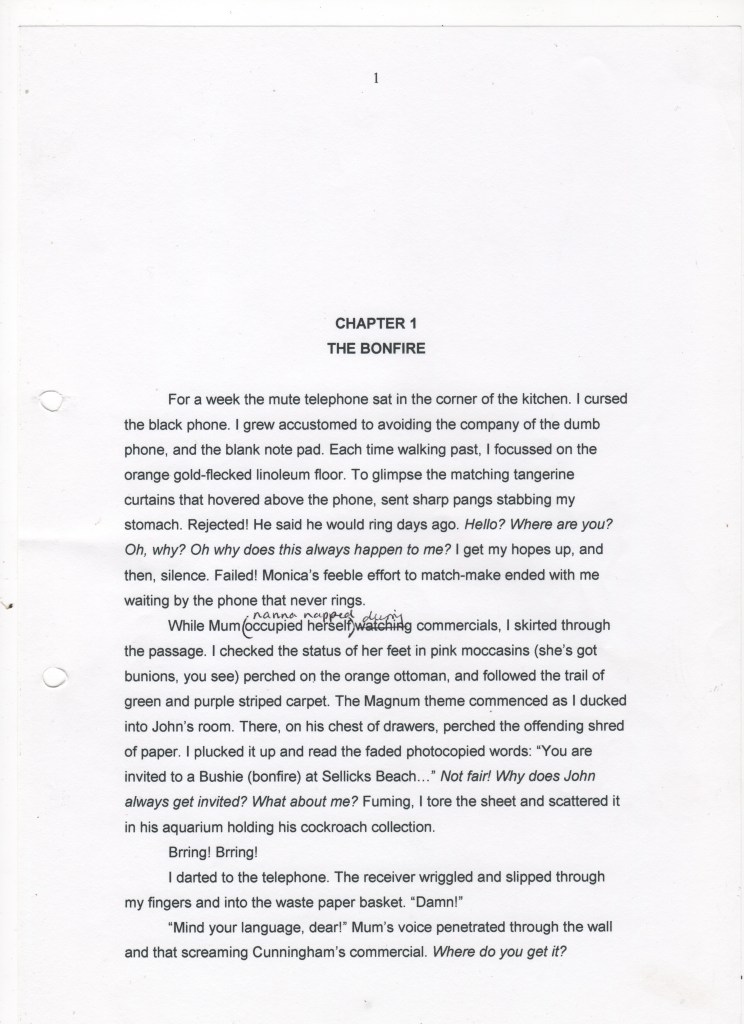
You may see in the sample 4 and 5, that I took most of what my writing mentor advised. There were suggestions further on in their manuscript appraisal, that I didn’t agree with. One was the use of the expression “Man!” which they said wasn’t used in the 1980’s that it was only an expression that turned up in the 1990’s. I begged to differ, as I lived through the 1970’s and 1980’s as a teenager/young adult and behold, I remember the expression “Man!” being used; not just locally in Adelaide youth circles, but also on the television.
[4. Sample of mentor’s feedback]
My mentor stressed that we need to consider our readers. Who is our audience? What do you want your story to say to them? Is the story for entertainment? Or do you have a point to make? In the end, you won’t be sitting alongside them and being able to point to a word and say, “Sorry, I didn’t mean that—this is what I did mean.”
Our written work needs to stand on its own literal two feet and make sense to the reader without the author having to be the virtual translator, and thus committing the mortal writing “sin” of “author intrusion”. Author intrusion is when the author tells the reader how they should see, think and understand the narrative. For example, think of “author intrusion” like explaining the punchline of a joke.
[5. After many more drafts, and 30-years later—Mission of the Unwilling, those paragraphs as they were, published in 2015.]
The editing process never ends. More changes in 2022: A cover aligning with the War Against Boris Series, a new “preamble” chapter, more proof corrections and formatting done to make a second edition. check out Mission of the Unwilling as it looks now.
The final result is about refinement of the work: sentence tightening, word tweaking, word cutting and polishing the prose. All through revising and proof-reading.
Now I know you’re all hanging out for the nitty-gritty; the how do I make my writing good? Make it shine? How do I make my story clear and interesting for my readers?
For a start, invest in a good “How to Write” or “Grammar and Spelling” book. The reason we have and learn this language tool of grammar is to keep us all speaking and writing our particular language on the same page. It’s like a cake recipe. Follow the recipe, the cake bake is a success. It’s so that we understand each other. Adhering to the grammar and spelling rules helps readers understand what you have written. Not misunderstand. Of course, rules can be broken for effect, but you need to know the rules of your writing craft well to have the skill to know how to bend (or even break!!) them.
As I have mentioned in previous blogs, the World Wide Web is full of resources for writers. So, no need to “reinvent the wheel”. I have mentioned Microsoft Word Editor and Grammarly but there are other websites out there you can search for and find.
Our own Indie Scriptorium’s Mary McDee has some good grammar tips which you can look at. Click on the link here on her post on the Little But Important Words as an example.
I come back to the lesson I learnt from my dad: Keep It Simple.
Use basic sentences. Avoid purple prose. Use strong verbs and choose words that are understood by most readers. Be consistent.
After all, the aim of reading is for the reader to have an experience they find enjoyable and worth their time.
We, at Indie Scriptorium met last week and reflected on our direction and purpose, especially in relation to our weekly blogs. Recently, I came across this post by fellow blogger, Anthony Robert, which to me, hits the spot when it comes to getting out there and increasing our presence.








 Indie Scriptorium -- Self Publishing Collective