The new year is traditionally a time to try something different, change old habits or get organised. So many times, I’ve made resolutions on New Year’s Eve and forgotten them a week later.
Age is a wise teacher. This year I will make one sound resolution. I will meticulously assess the challenge envisaged having learned to be circumspect, prudent and wary of unguarded and reckless promises.
I will become a wordsmith.
Changes to my writing must not be as fleeting as a summer day but soar like mountains; my tenacity only worn away by seasons of foul weather. (Well, maybe the odd earthquake too.)
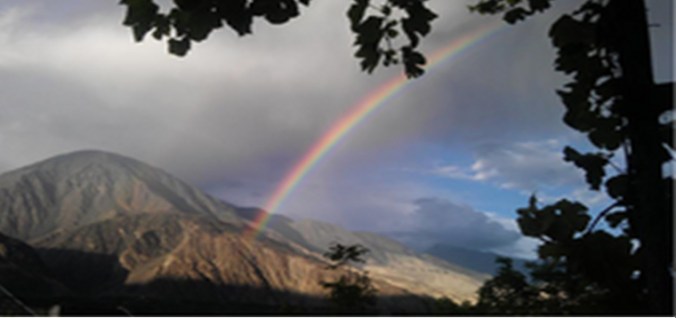
Words are like rainbows; they need to contain pure colours and fascinating hues as the colours blend at the edges. Like rainbows they must conform to a set of rules in terms of the colour spectrum, but they can soar, be broken and finish or start in peculiar places. Words, like rainbows can be fleeting, lovely to behold but quickly forgotten as clouds cover the sun. But then some words achieve immortality and stand up to centuries of use and misuse.
“To be or not to be, that is the question.” ~ William Shakespeare, Hamlet, 1601.
What words will you craft in 2026?
I hope you find your own challenge for the forthcoming year. Enjoy writing, whatever it may be. Enjoy reading and have fun.
No two writers will ever write the same; unless they copy each other’s work.
As we write our history emerges. Our birthplace and early childhood lay down the roots of our language, the words we use and how we say them. Education hones our writing skills, providing the rudiments of spelling, grammar, clarity and brevity. The extent of our education is reflected in our vocabulary, knowledge and understanding.
Life, with all it’s trauma, joys, grief and love add a layer of personal experiences that shines light on, or clouds, our perceptions.
Writers of fiction take the written word further. In ignorance or awe, they craft words into edifying entertaining stories. They create worlds in time and place with characters who are as unique and exceptional as real people. The process is magical.
Style is the author’s choice that allows their personal history to shine through the story. The summation of a singular life; bent by beliefs, passions, opinions, encounters and events.
Style is a matter of establishing the mood of the story, the best tense to tell the story, what word choices capture the emotions, which character can tell the story in the most effective way.
Style can come down to sentence length, grammar and spelling. Dialogue can add history and dialect with a character’s utterances which shape their relationships and place in society.
Style can be manipulated by writers to provide rhythm and metre.
Style can be transparent and easy to read, enhancing a strong story. Dense prose may hide the story behind word smithing or complications that may entrance or offend.
Purple prose, too much of everything, isn’t recommended.
But what about the reader?
I liken literature to the composition of music.
Some composers write for the entertainment of their listeners. They want to transport the listener on waves of sound that draw out emotions and memories. Good music can bring tears, stir resolve or just provide a wonderous relaxation. Music can move people from the humdrum to the fantastic, and it is pure entertainment.
Some composers, especially those before technological devices, wrote music for players of musical instruments. Their compositions were to build skills, challenge and inspire. They incorporated complications and tests of dexterity, difficult techniques to build confidence and proficiency in fellow performers. They didn’t write for the entertainment of ordinary listeners.
But some composers both entertain listeners and challenge musicians. They achieve immortality.
But what about the reader?
As writers, like composers, we need to consider our audience. Are we writing to provide our readers with entertainment? A good story, easily read that delivers our ideas and characters simply and clearly. A bestseller, one among many, distracting, diverting and providing pleasure; for a short time.
Or are we writing to impress and challenge aspiring writers? To build the writing craft and stretch the boundaries of our fellow wordsmiths. Do we want to craft a style that may be dense and hard to read for the average reader? That needs re-reading. That stirs love or hate, or both in equal measure.
Well, I’ve got to the end of re-writing and structurally editing my third novel The Jamaican Heiress. It required two complete rewrites and a substantial structural edit which took me about eighteen months. It’s now a good story with a logical plot propelling stronger characters through a series of crises and culminates in a satisfying ending. I’m happy with the flow, time line, changing points of view and how it all hangs together. I’ve had feedback from two respected writing friends and made much needed changes to time lines, character arcs and motivations. Alpha readers are gold. Yay.
Big sigh. I’m feeling happy. But now it’s time to do the line/copy edits.
Should be a breeze. HA!
For my previous novels I used Pro Writing Aid to pick up overused words and phrases, (names and blushing references) repetitions, passive voice and my tendency to start every paragraph the same way. I then used a wonderful professional editor who tirelessly tidied up my prose and produced two readable books.
But having it done for you doesn’t help you to learn about the problems you have when you write. This novel I’ve decided to do the line/copy editing myself, as an exercise in strengthening my writing. This blog is about my process.
First step: Google search: What is the difference between line and copy editing?
There is heaps of information on Google and many useful videos on YouTube to check out. For a very quick rundown have a look at Alex Cattoni’s video “Copy Writing Tips: What’s the difference between Line and Copy Editing”. In short, she says: “Line editing crafts the story, Copy editing catches the errors.”
Second step: How many sweeps of the novel will I need to do and what do I look for in each sweep?
Again, I googled line editing and read several blogs and watched a few videos. I suggest spending a few hours combing through the plethora of information available and then come up with your own plan. I’m going for two, or possibly three sweeps (see step five)and then use Pro-writing Aid to pick up my remaining bad habits, then read it out aloud (or use the audio program on your computer) I will then re-read the entire manuscript and pass it on to my beta readers with trembling hands.
Step three: How do I do the line/copy edit?
The general consensus is to line edit a small piece of writing at a time. Could be a paragraph, a page or a scene but then go through your work looking for things like flow, word usage, passive voice, repetition, continuity, dialogue consistent to each character, adding/deleting description, telling and showing balance and point of view problems. The idea is to make every sentence clear to read, strong and efficient at conveying what you want to tell the readers without browbeating them.
Step four: Next sort out your process.
If you want to line edit on the computer, make sure you keep a copy of the first draft and line edit the new copy. I suggest you don’t name the copy the same as the original. I’ve got myself tied up in knots trying to find documents with similar sounding names, so put a date on your new file. You might want to try a program like Scrivener which helps sort multiple copies of a manuscript and allows colour coding too.
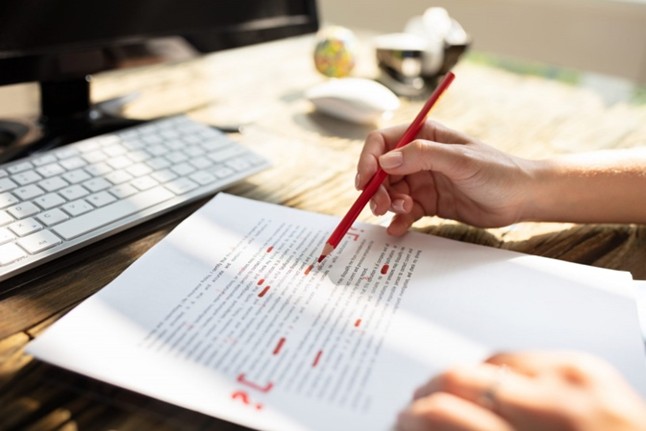
Other people like to print out the manuscript and edit on the printed page. Using different highlighters for different problems is something I’m going to give a try. So, red for errors, blue for word usage, pink for POV, purple for purple prose, green for continuity and yellow for “it’s just wrong”.
Step five: It makes sense that your first sweep looks at paragraphs and scenes and information to be added, deleted or changed completely. My first sweep will concentrate on:
Do I need to add/delete descriptions?
Have I used the senses?
Is the balance of show/tell good for pacing.
Continuity. Robert has blue eyes not brown!
Remove repetitions.
Is dialogue unique for each character? Think about tone as well as commonly used words or phrases.
Is each sentence clear and easy to read.
Is there any head hopping going on?
The second sweep will focus more on sentences and words and includes:
Over used words, descriptions or phrases.
Reduce filter words: she thought, he realized…
Change weak words to stronger words, he walked, to he paced/strode/shambled/limped.
Address passive voice in sentences.
Reduce adverbs.
Look at consistency of tense.
I’m new to this so I’m not sure this process will work. I will try it out for a few weeks, tweak it and experiment, then report back.
I have published two previous novels and have also had three short stories published. The feedback I’ve had from readers and editors has been positive so I will approach line/copy editing with some confidence. I do have faith that I can catch a lot of clangers, but I think it’s essential to have an editor or well-informed writing friend to catch what I miss. There are lots of problems that you as the writer don’t see.
I found the following articles helpful but there are many more on-line.
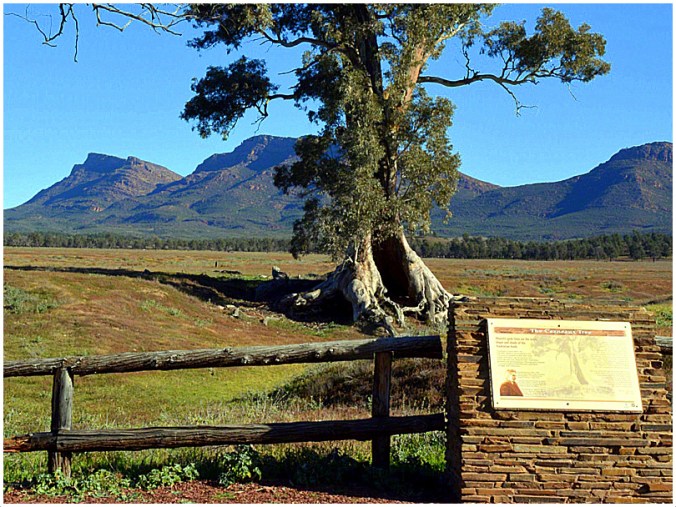
Our bushwalk included some city-slicker newchums. Crossing a wide plain between mountains, we noticed cows in the distance. They began wandering across to check us out. Newchums, trailing behind with heads down, slogging it out, were only half way across when we reached the fence.
Suddenly the newchums became aware of large creatures approaching. They walked faster; the cows came closer. Newchums trotted. So did the cows. Newchums ran. The cows, udders swinging, galloped alongside. We doubled up laughing.
Newchums, white faced and panicked, arrived safely, totally oblivious that your average dairy cows are peaceable animals. But curious as cats.
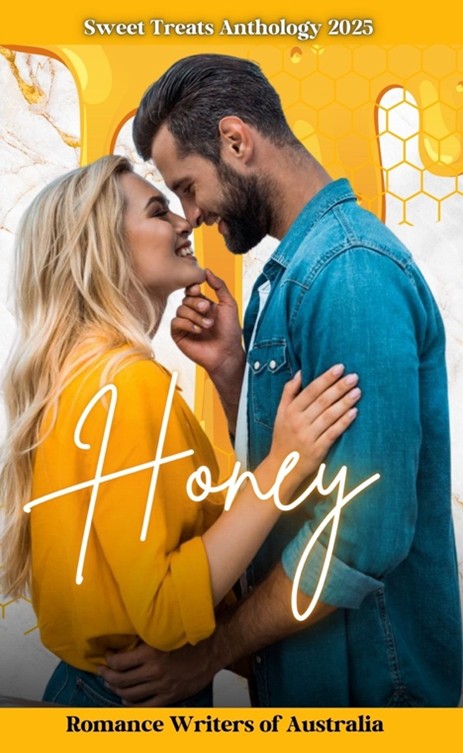
I’m pleased to announce that my story “Ant Honey Magic” has been short-listed in the Romance Writers of Australia Sweet TreatsAnthology for 2025.
The theme this year was Honey and required a sweet romance story of up to three thousand words. Romance Writers of Australia run a competition every year. The stories are judged and given scores and the top sixteen are selected for inclusion in the anthology.
I’m very pleased and proud to be included this year. The competition provides participants with excellent feedback and gives us a chance to get our work published along with some wonderful authors.
This is my second short story to be included in a Sweet Treats anthology. I also had a short story, “The Houdini Lollipop”, published in 2023.
Honey will be available on Amazon from mid-August 2025.
Back in January I found out about an upcoming competition. With regular life in suspension and a bit of time on my hands I thought – “Give it a go. Why not? Nothing to lose.” One was required to write a memoir – couple of thousand words and a cash prize. Beyond the address for submission there were no more details.
But what exactly is a memoir? As a keen member of a local camera club, I’ve had photographs disqualified as “out of category” or “didn’t meet the brief”. I didn’t fancy putting time and effort into a couple of thousand words to have them peremptorily discarded in such a cavalier fashion. Obviously, memory is involved. Is it just autobiography or is there some twist I’m not aware of? Bit of research seemed to be in order.
The first dictionary I consulted (fairly simple; from my schooldays) told me it was “an autobiography; a reminder”. I had a sneaking feeling that for this writing competition there was a bit more to it than that. So, off to my great big two volume Shorter Oxford to discover that this word has been in use for centuries. Way back then, half a millennia ago, it simply meant “a note; a memorandum; a record – often an official one”.
A couple of hundred years later it had morphed into something much closer in meaning to our twenty first century perception – “a record of events or history from personal knowledge or from special sources of information”. All connected to memory and autobiography but with a bit of a twist as well in that interviewing then writing an account of someone else’s memories seemed to be in order too. Right then though I was more concerned with my own personal recollections of my own life.
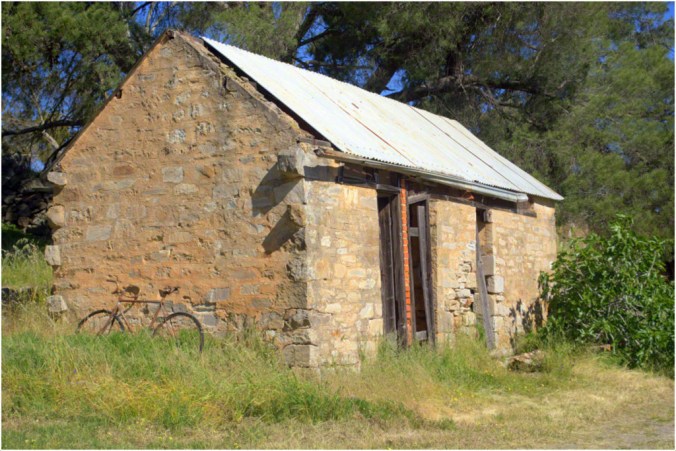
My very earliest memory is of a big wooden table in the middle of a dim room. I was sitting in my highchair at one end of the table; to my left, a door standing ajar; a window next to it and beyond the verandah the gentle slope of a sunlit, golden hillside. I was aware of the rest of the house to my right, behind me and away across the table in the far wall, there was another window with, next to it, in the corner a wood stove, shrouded in shadow. However, my attention was caught by movement outside on the hillside. It was a rabbit or more probably a hare, lolloping across; stopping to nibble or look around before continuing its leisurely progress. The Easter Bunny! I was filled with immense excitement.
Now, so many, many decades later, I have no idea whether that was my own idea or whether my parents had suggested it. I was four months past my second birthday; the memory and the magic of it still clear and vivid.
My memories of a happy childhood are not at all a story continuing through the years but a series of pictures, many pictures randomly stamped on a blank canvas, like vignetted photos: crystal clear but with blurred edges. The competition? The time on my hands somehow evaporated. Life last January has also become a blur.


 Indie Scriptorium -- Self Publishing Collective