After Elsie’s “Thingamajig” poem last week, what better than Mary McDee’s writing tips for poetry.
Click on the link and check it out for yourself.
Feature Photo: After a Rain Shower (c) Alison McDonald 2017
After Elsie’s “Thingamajig” poem last week, what better than Mary McDee’s writing tips for poetry.
Click on the link and check it out for yourself.
Feature Photo: After a Rain Shower (c) Alison McDonald 2017
*
“Where’s the thingamajig?”
I cry in despair,
I rummage in drawers,
Look under the chair.
*
“What, the TV remote?”
The hubby suggests,
“No, I’ve found that,
On that old wooden chest.”
*
It’s essential, it’s needed,
My heart races,
I search through cupboards
And dusty obscure places.
*
But what’s it called?
I just can’t remember,
The thingamajig, thingy,
I had it last December.
*
Hubby sighs and shrugs,
“Well, I’ve no idea.
You’ll manage without it.
Your innovative my dear.”
*
And just when I give up,
Well, stone the crows.
There it is, the stapler,
Right under my nose.
*
On my desk!
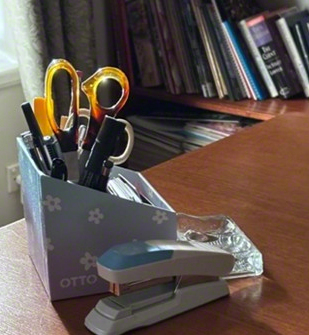
By Elsie King © 2025
Feature Picture provided by Elsie King
This season reminds me of resolutions to turn over a new leaf, maybe starting a novel that has been percolating over the past year, or years.
This is the year to get going, but how?
Here is a poem, a re-blog, by Mary McDee to encourage and inspire to write…
Feature Photo: Hologram (c) L.M. Kling 1984

Not enough cash
so I have to choose
choosing…
and choosing…
always a matter of choosing
~$~
To choose is so hard
and it’s always a matter of choosing
I can’t have it all.
~$~
The stuff that I want,
the stuff that I need,
the stuff that’s for me –
why is it always
a matter of choice?
~$~
But no.
There’s no choice,
no choice at all.
It’s my friend that I have to consider.
He needs me and loves me,
depends upon me;
he’s my friend.
I cannot allow him to starve,
so it does have to be
that small tin of food
for my cat.
(c) Mary McDee
Feature Photo: Holly (c) L.M. Kling 2015


Many, many years ago I read something that, as a writer, has haunted me ever since.
Those words painted a picture that stayed in my mind – it is only a simple picture but vivid and emotive; a picture I wish I had the skill to record with repaint.
The sun is low in the sky – morning or evening it matters not. I’m sitting by a lake surrounded by trees but nestled in a mountainous land. Far away, at the other end the mountains soar up in cliffs that come right to the edge of the lake. At one point a waterfall cascades in a maelstrom of spray.
However, in front of me, things are more peaceful. As the sun to my left is so low in the sky the trees are casting long shadows across the lake. A gentle breeze is disturbing the leaves causing those shadows to move while at the same time rippling the surface of the water so the shadows break up and re-form.
As I said, a simple picture: two short paragraphs; one hundred and nineteen words in all. I hope, with my word picture, I’ve been able to get you to see what I can see, feel a little of what I feel whenever I bring this to mind.
“So, what!!” I can hear you muttering. “Where are you going with all this waffle? What’s the point? And that title makes no sense at all!”
If I were you, I’d agree entirely. So let me explain. It was a mere seven words from a poem written about two hundred years ago by Alfred, Lord Tennyson; Englishman whose life spanned the eighteen hundreds (1809 – 1892). Those seven words? –
“The long light shakes across the lake.”
To be able to produce seven simple little words, all but one a single syllable and arrange them in such a way that they gave me a vivid picture was thrilling. I was awe struck. And humbled. This was what writing was all about! Would; could, I ever be able to attain a level of skill to match this??
The next line; (another seven words!) “And the wild cataract leaps in glory” fleshed things out; completed the picture. Wow!!
© Mary McDee 2024
Feature Photo: Valley, Lake, Mountains—Engelberg, Switzerland © L.M. Kling 1998
NB. That poem, by the way, is “The Splendour Falls on Castle Walls” if you want to check it out.
Ever since time began
We’ve been telling tales
Entertaining others
With stories of people and perfidy
Friendship, revenge
Cowardice and bravery…
Imagination soars –
We can see those we create,
Hear their voices,
Eavesdrop their chatting.
We know them so well,
How they dress,
Where they live,
Who they love
Or hate….
What it is that they feel
And why…
When it was that the conflicts
They’re embroiled in began –
For a story must have conflict,
Conflict and resolution.
Ever since we could speak
We’ve been telling tales.
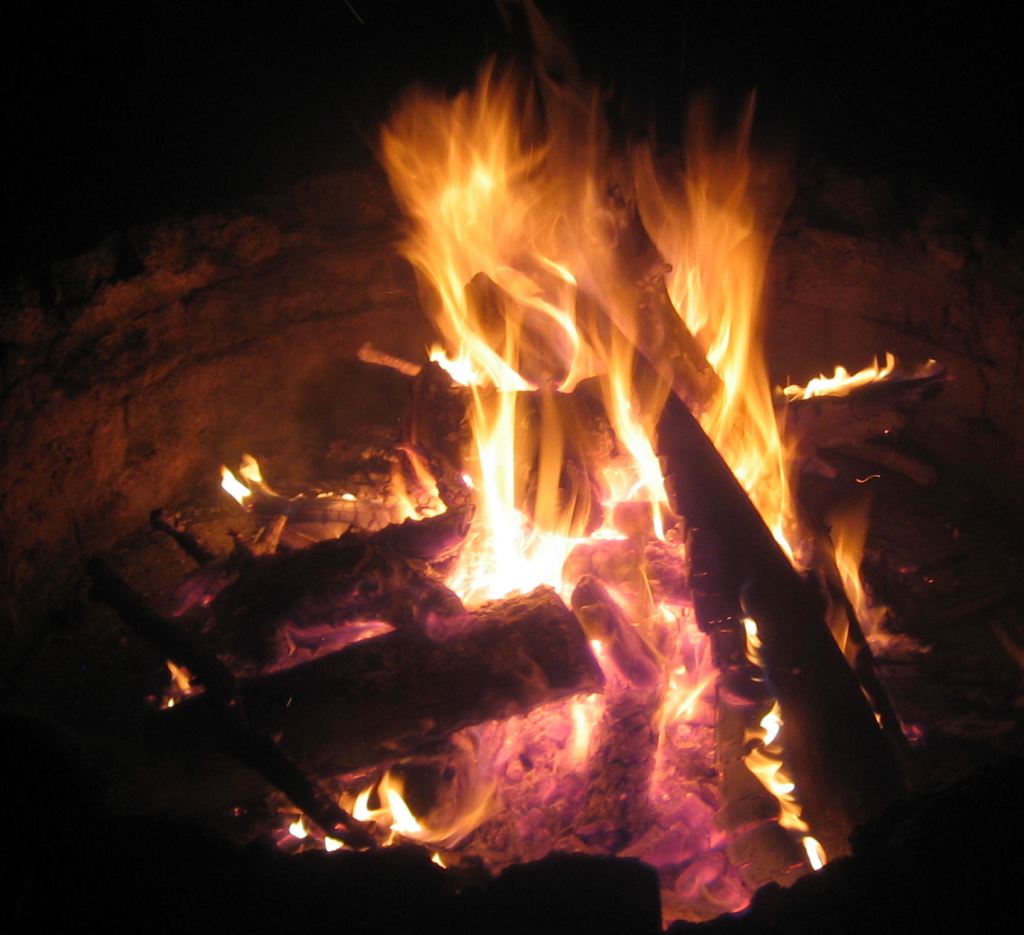
Yarning round campfires;
Huddled in caves
As storms howl;
Rain drowns our world
So we seek comfort,
Seek to pass time,
Seek to get into the mind
Of our mates,
We build shared memories
And forge a community.
Time passed.
Scratchings on stone became letters –
A letter for each sound that we spoke.
Those letters made words
So now we recorded our doings and thoughts,
Our buying and selling, Our songs and our stories…
(c) Mary McDee 2024
Feature Photo: Around the Campfire (c) L.M. Kling 2010
Yesterday, I was perusing one of my dad’s old exercise books from way back, possibly the 1950’s. There, first page, neatly written in his handwriting, a poem. I had read this a few months back and didn’t think much of it. But yesterday, reading it again, it resonated with me about the beauty of God’s creation. Dad having taught at Hermannsburg Mission, Northern Territory in the 1950’s was particularly taken with the vibrant colours and striking formation of the land and mountains up there. He fell in love with the land and would make regular pilgrimages to the Centre, taking my brother and I, plus other family and friends, on safaris to explore his beloved part of the world.
Dad encouraged me to write about our adventures. So, these treks up the Centre, inspired me to write two travel memoirs, The T-Team with Mr. B: Central Australian Safari 1977, and Trekking with the T-Team: Central Australian Safari 1981.
In Memory of my dad, Clement David Trudinger 1928—2012

I strove to grasp the meaning of the beauty stretched before me,
The beauty of the mountain, fiery red against the sky,
It’s changing colour deepened, its colour changed once more,
The sun was slowly sinking sun about to die.
The mountain stood surrounded by a mighty mulga plain.
Green and brown and beautiful, as far as eye could see,
Not man nor beast, flood nor fire, had left its ugly stain,
The perfect beauty of the scene was God’s and his alone.
© C.D. Trudinger circa 1955
Feature Photo: Sunset on Petermann Ranges, Northern Territory © C.D. Trudinger 1981
Indie Scriptorium is beginning a new tradition in 2024. Every fourth Sunday of the month we will be featuring a guest writer.
This week, the Indie Scriptorium team have invited fellow Adelaide artist and writer, Robert Richardson to share a poem from his recently published book on poetry, Words and Rhyme.
Some months ago, Mary McDee wrote a post giving tips on writing good poetry. We had quite a bit of interest in the article and some further questions pertaining to the mechanics of an effective poem.
The following poem by Robert Richardson is an excellent and catchy summary of the main types of poetry and how to write them.


If you’d like to read more of Robert Richardson’s poetry book, click on the link below:
Cheers,
Lee-Anne Marie Kling (c) 2024
Feature Photo: Words and Rhyme cover (c) Robert Richardson 2023
With shops closed,
Except for trusty IGA.
There’s no room in the fridge,
All stocked up for Christmas Day.
Drinks cool in the esky,
Presents wrapped under the tree,
Doused with tinsel snow,
Waiting for us to open and see.
So, before all the rush
In the stillness of the night,
We rest, at peace reflecting,
The wonder, Christ our light.
© L.M. Kling 2015; updated 2023
Feature Photo: Christmas Bauble © L.M. Kling 2015

 Indie Scriptorium -- Self Publishing Collective