I recently had the pleasure of attending an author talk given by Australian rural crime writer, Fleur McDonald. My friend, who is an avid fan of Fleur, booked tickets then invited me along.
I’ve only been to a few author talks at Adelaide Writer’s week but this was a local event at the Hallett Cove Civic Centre and Fleur is a South Australian born writer, so I was happy to attend.
As an emerging author, I also wanted to get some ideas about how to plan an event. You never know I might get invited to talk about my own writing experience some day.
Local author Nina D. Campbell interviewed Fleur. and this worked well. They covered a lot of interesting topics. Much of the talk centred around Fleur’s life as a mother, farmer and aviator. She also touched on her history as a writer, her research, writing processes and delved into a few of her characters. It was a funny and entertaining presentation which was thoroughly enjoyed by the audience, including me.
The organisation of the event was excellent with a comfortable venue, free wine or soft drinks, lots of promotional banners, a local bookstore selling the books and of course book signings. It was a superb night.
Here’s a post from the past on feedback, or more accurately, “On-line Reviews”; a vital part of refining our work and making our stories the best they can be.
Those On-Line Reviews
I like to celebrate. As a child, when I received full-marks for a spelling test, Dad rewarded me with a Kitchener Bun from the Fish ‘n Chip shop/Bakery which in the good ol’ days of my childhood was situated opposite Glenelg Primary School. A few years ago, now, when I used to drive my son his course in Magill, my mum and I treated ourselves to lunch at the local hotel.
Every so often, I check my Amazon account. I wipe off the virtual cobwebs of neglect, and dig deep in the files of my mind, retrieving the password to enter. I expect nothing much to have changed.
I’ve been busy with my blog and the rewards, small, though they are, compared to the rest of blogging world, but the steady trickle of views, likes and comments, satisfies me. Over the years, the number of followers has steadily grown.
Once long ago, now, I made a daring move, and posted my short story, Boris’ Choice—not for the faint-hearted or while one eats breakfast…After the post, I checked for results on Amazon with my War Against Boris Series books.
And…there were. Yes!
Then, I checked the reviews. Now, I don’t know how other writers have fared with reviews, but for many months since my books were published, I had received no reviews. Yes, I asked my readers to do the deed and tick the star-boxes and comment, with no results. Yes, they’d say, and the weeks went by and nothing. Were they just being polite? I have no illusions, and the reality is that art and literature are subjective—what one person likes another won’t.
Anyway, back to checking the reviews…I looked again at one of the countries one of my books sold. The page appeared different. A yellow bar, and a comment. Genuine feedback. Not a great appraisal, but an appraisal all the same. I knew the person responsible for this first-ever comment for my book but was not surprised at their response. I did wonder at the time how my novella would work for them—not well—just as I imagined when they informed me, they’d bought the book on Kindle. As I said before, Boris and his antics are well…not for everyone.
That being said, and for fear my works may be misunderstood, the over-riding theme of my stories are the classic fight of good against evil. How evil, like Boris, can creep into our lives. And when for whatever reason, usually when we maintain and enhance our self, and to avoid discomfort, we allow evil to stay. This evil, however subtle, will drive us to isolated places in our lives, much like Boris does in The Hitch-hiker; places we never wanted to go. I want young adults and people young at heart, to make choices and use their energy for goodness and to fight evil, so they can live a full life and also be an agent for good in their community and the world.
A dramatic scene which reminds me that Australian history is ancient, often sacred and secrete. There are Aboriginal myths shared at this site, but their deeper meaning is hidden from new Australians. A caution that, as writers, acknowledging indigenous stories requires sensitivity and care.
But the landscape is awe-inspiring and we can create our own myths when we write.
As expressed by John Keats: (letter to J.H. Reynolds 1818)
“Almost any man may, like the spider, spin from his own inwards his own airy citadel.”
It’s a wonderful compliment, as an author, to being invited to make a presentation to a book club. But what makes for a good, entertaining presentation?
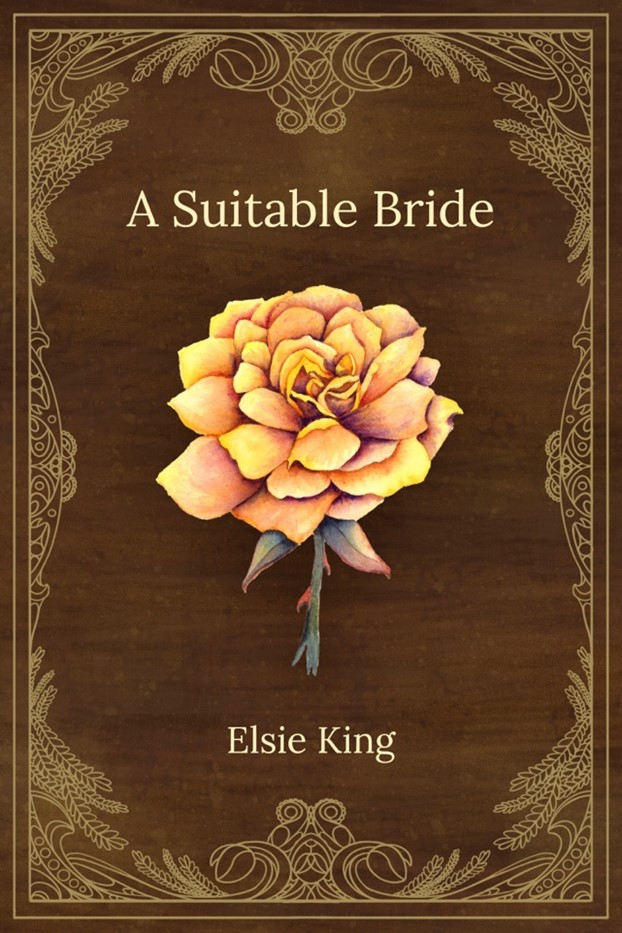
I was invited to a book club last year to talk about my first published novel, A Suitable Heir.
It was a great evening with a lovely group of ladies and I had a lot of fun but I wasn’t properly prepared and it made me wonder if I could have done better. My second invitation was from a member of one of the writing groups I attend and they had a specific agenda. Time to do some research to improve my book club presentation.
An article by Bookish raises a topic that must be seriously considered when accepting an invitation to present to a book club: Do you need to be a part of the book discussion? Book clubs by their nature allow members to openly say what they think of the book. Some readers will love a book and some won’t but having the author present during the review could either suppress the opinions of some members or be confrontational for the author. It becomes important to discuss with the co-ordinator what the book club wants. If it’s to have a robust, critical review of the book the author needs to be prepared for positive and negative evaluations. Alternatively, you can ask that the discussion of the book occurs before or after the author presentation. https://bookish.netgalley.com/book-club/11/2022/do-dont-author-visit-book-club-invite-how-to/
So, what do you talk about in a presentation? Here’s a list of areas to consider in your presentation plan:
For the novel: • First say, ‘Thank you for the invitation’. • Introduce yourself, your pen name (if appropriate) and the book title. • Talk about what inspired you to write the novel. Where did the idea come from? • Discuss the genre and setting. • What are the themes of the book? • Discuss the characters. • What was the initial question and conflict? • Research and world building. • Specific questions from the audience.
About you as a writer: • My writing history. • My writing process. • Why I write. • My strengths and weaknesses as a writer. • Plotting or “pantsing” (writing by the “seat of one’s pants”, such as making up the story as you go along)? • The editing process. • Publishing options. • Where to next.
It would be a good idea to discuss with the book club co-ordinator what format is acceptable and then write and practice the presentation. Supply some marketing material (bookmarks and cards) and make sure you have copies of the book to sign and sell.
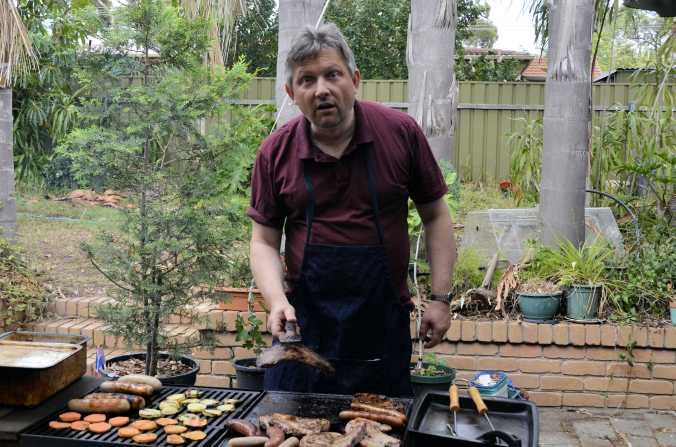
This day, being Australia Day and the nearly 250 years of baggage that goes with it, I made an executive decision to re-blog my missive on the fine line writers literally “walk” when storytelling.
Feature Photo: An Australia Day tradition: the Barbeque (c) L.M. Kling 2015
“The only time I feel alive is when I’m painting.” – Vincent Van Gogh. “I can’t change the fact that my paintings don’t sell. But the time will come when people will recognize that they are worth more than the value of the paints used in the picture.”
[The Sunflower; a Van Gogh icon (c) L.M. Kling 2018]
A current example of those discouraging times when our books don’t sell; I recall my experience during two years in art exhibitions of not selling—not one, not even a cheaper unframed painting. So, at the time, I could relate to Vincent Van Gogh.
As writers we too feel disheartened when our books don’t sell. We’ve spent hours, weeks, months, maybe years writing, refining and producing our “babies” just to see them sit there on the shelf, unloved, unwanted, buried under millions of competing books in the Amazon ranking list.
Perhaps you were one of those authors who attempted to take the traditional route, sending query letters to potential agents or big-name publishers, only to receive the rejection letter months down the track. And this happened over and over again.
Or maybe like me, you saw the writing on the wall, bypassed all that palaver; went straight to Amazon, Draft to Digital, (or some other online publishing service) and self-published. Whichever way, the result is the same, the product must be sold. Even in traditional publishing, we are selling our books to the publisher then, if we are successful, they expect us to promote our books at book launches, speeches and signings.
Advertising, it’s all about marketing and advertising.
So, here I was, I had my “baby”, (actually “babies” — five books now), and to advertise, I have my blog, my website and most recently, Indie Scriptorium Self-Publishing Collective. Week in, week out I blog and post. I try and keep up with my followers by reading, liking, and following their blogs. Sometimes I offer my books for free on Kindle. I’ve tried a bit of advertising too. Slowly my contingent of followers has grown.
Yet, I see my friends or associates on social media pumped up with successes and bestsellers to their name. There’s influencers who have monetised their websites and now own a portfolio of properties. Then there are the bloggers who have 100,000-plus followers.
How do they do it?
All the while, here’s you and me, the wallflowers, missing out.
Believe me, being a wallflower is discouraging.
But, fellow wallflowers, don’t be discouraged.
Don’t give up.
Persevere.
I keep reminding myself that those success-stories often start with struggle. The people who are successful in sales, most often put themselves and their products out there. They spread the net far and wide, so to speak. They don’t give up when faced rejection. They keep on going. They have goals. And when they fail, they pick themselves up and keep on running.
True, there are some for whom success falls in their laps. But for most of us, we need to make the effort to reap the rewards.
The comment Van Gogh makes resonates with me. Although he sold only one painting in his life, he believed in his work, and the timeless quality of his art, as one can see from his quote at the beginning of this post.
I believe that’s how it is for me when I am writing, and also painting. I feel alive. And echoing what so many of my fellow “creators” say, I would rather be creating than getting bogged down in all the marketing and advertising. Like Van Gogh, I can’t change the fact that my books or paintings don’t sell…
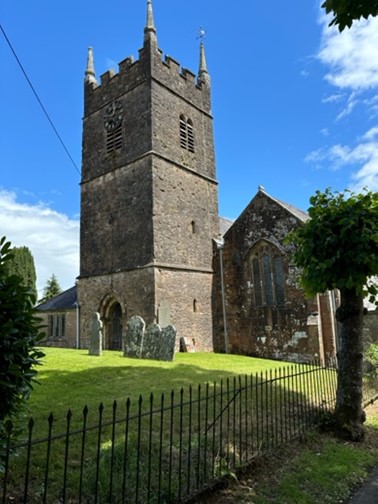
Quaint English villages are the typical settings for Cosy Mysteries, but any small, interesting community will suffice.
I admit that I’d never heard about Cosy Mystery novels until I attended a wonderful presentation by Morgana Best at the Romance Writers of Australia conference in Adelaide 2024. Cracking the Cozy Mystery session opened my eyes to this delightful, popular genre.
I personally love crime books, especially Nordic noir, the darker the better but even this avid reader sometimes finds the desperate situations, vivid descriptions and awful outcomes too much to bear. Waking up in the middle of the night with detailed images of beheadings, disfigurements and accompanying gore is unsettling. Psychopathic villains can haunt my nightmares and leave me looking for a good romance at the library the next day.
Maybe it’s time to read some Cosy Mysteries instead? A murder without mess, a whodunit solved by an untroubled, clever amateur sleuth with a happy outcome.
But there are conventions for writing these very popular tales.
The sleuth must be likeable, unexpectedly clever and an amateur. They might want to hide their brilliance under a bushel.
The investigator must have a strong motivation to solve the crime; a sense of justice, a desperate relative, someone falsely accused or police incompetence.
The mystery must be cleverly crafted with copious red herrings, but the reader discovers all the clues in the end.
Good research is essential into murder techniques, police procedures, coronial enquires, autopsies and medical assessments.
No blood, gore or graphic descriptions of the crime.
No blasphemy, cursing or coarse language.
No sex but a touch of sweet romance is allowed.
The victim must be flawed and/or unlikeable but must still engender some sympathy to warrant the investigation.
The setting is a small, appealing community with lots of quirky residents.
No animals or children should be harmed.
You can add smart dogs, strange cats and unusual but endearing pets/wildlife.
The police should not be involved unless they get it wrong and need to be enlightened.
The mystery/murder must be solved, and everyone live happily ever after until the next victim bites the dust.
These books sell in their millions every year. There are many sub-genres including romantic, historical and paranormal themes. Many Cosy Mystery writers do a series of books and get a following of avid fans.
The genre can be traced back to Agatha Christie, who introduced readers to her clever sleuth, Miss Marple in the 1930s. Other famous historical mystery writers are Dorothy L. Sayers, Margery Allingham and Ngaio Marsh. These four ladies were the Queens of Crime in the early to mid-twentieth century.
Cosy Mystery books have engendered many television series: Death in Paradise, Agatha Raison, Shakespeare and Hathaway, Father Brown and Sister Boniface to name a few.
I certainly will be looking out for some cosy entertainment at the local library. As for writing one, the ideas are circling. A murder of crows over a distant field …
For more reading, I found the following articles informative:
Ingram Spark—What is a Cozy Mystery and why is it so popular? An article by Debbie Young September 2019
Crime reads – Cozy Mysteries aren’t going anywhere, in fact, There’re as Popular as ever. By Olivia Blacke February 2021.
And please have a look at the cat inspired web site of Morgana Best – writer of paranormal cosy mysteries and the lovely lady who inspired this blog.
I have been mulling over what stops us. What makes us stall from reaching our potential? Our potential to write that novel in our heads. Finish that story. Take up the challenge we are given and run with it to the end. Often, it’s the way we see ourselves. Our limitations. When faced with the challenge, our song is, “I can’t. I’m not good enough.” We reinforce our self concept with the chorus, “I failed that (insert challenge) at school.” Or “I was sacked when I did (that particular challenge)”. It got me thinking that when we define ourselves by our limitations, we work ourselves into a corner.
One fun activity that our Writers’ group found useful was the 100-word challenge. This little task helps fire up the creative juices, refine writing skills, and simply work around the limitations we writers put on ourselves.
Below is an example from my collection.
Worked…
…Into a Corner
All afternoon, our backyard echoed with the hum of the cement-mixer, and intermittent scraping. Dad, armed with a trowel, smoothed the cement over an area pegged to become the back patio. Metre by metre, he pasted his way back.
Mum stood on the porch, and with hands on her hips, remarked, ‘And how are you going to get out of this one?’
In an ocean of soft cement, Dad looked around him, lost. ‘Er…um…I’ll work it out.’
Tracks back to the lawn-edge smoothed, Dad stood and admired his DIY job.
Next morning, paw-prints made their way to the rainwater tank.






 Indie Scriptorium -- Self Publishing Collective