The Perils of Vanity Publishing

[Last Tuesday the Indie Scriptorium team were part of the Spring into books Wordfest at our local library in Woodcroft. We hope to have a more detailed reflection on the event in the near future–once we’ve recovered…One thing that stood out for me were the number of aspiring authors who had written a book, but needed guidance on what steps to take next.

With this in mind, here’s a re-blog; a cautionary tale by Mary McDee.]
A Cautionary Tale

We have just discovered that a writer friend of ours has been taken in by a couple of publishers. She has lost a lot of money (nearly $30,000), is confused upset and angry. All she’s got out of it is one single copy of the book of which she was so proud.

“She must be pretty thick” I hear you saying.

Not so. Not at all. She’s vibrant, intelligent, educated; a businesswoman all her working life and still, in her retirement, involved in theatre. But she’s been conned by experts. It could happen to any of us which is why we feel it is important to fill you in.

Let me tell you how it happened.

Long ago writing became an interest for her but only as a sideline, an enjoyable hobby. For a long time, she operated on a “lone wolf” basis but a few years ago she joined our writing group. Occasionally she referred to a book she had written and the publisher with whom she was dealing. We never took her up on any of the details; our group concentrates on works in progress and critiquing each other’s efforts. That book of hers was done and dusted – on to the next level so beyond our current concerns.

However, a couple of days ago she made another comment and was obviously unhappy about things. We’d finished our readings and given our feedback early so this time took her up on it: who was the publisher, what was going on…  And, eventually, how on earth did this happen?

Very easily as it turned out.

Publishing was a foreign field to her, so she did what most of us do these days – she went on the internet. Not long after her internet search, she began getting phone calls.  There were people in the USA who were interested in her work; keen to look at it; keen to publish!!

She was thrilled, sent her stuff to them – it was a children’s story illustrated with her own delightful artwork. They rang and talked terms, explained the “situation” and were enthusiastic about possibilities. The world opened up; she was thrilled, excited.

But she was an innocent abroad, abroad in a world of which she knew nothing; nothing at all. She sent them money as requested (Pay Pal is a wonderful innovation when dealing with those who are far away!) and waited expectantly. There were phone calls relating progress. She paid more money.

Things dragged on. The months became years. She began to have concerns; to worry. But reassuring phone calls, explanations, progress reports allied her fears. She received a single copy of her book.

She was told it was in bookshops in the UK; bookshops that were part of a large chain with stores all over the country and that it was selling well. But she was getting paid only a few cents very occasionally. She wondered and began to worry again.

With friends and family in the UK, she asked them to go to a few of these bookshops and check them out. No sign of any copies of her book anywhere. Then she somehow found out that Amazon was supposed to be involved – she’d had no contact with Amazon; none at all.

At no time throughout this saga had she been offered a contract; at no time had she been asked to sign anything. All she’d ever had was phone contact. So, she asked for them to communicate with her in writing. Despite repeated requests, they never have.

She realised there was something seriously wrong; that she had been conned. She was hugely embarrassed and loath to admit to what she saw as her own stupidity. We keep telling her that action coming from lack of knowledge can never be classified as stupidity. She’s finding that hard to accept though and still feels dreadful about the whole thing.

Sadly, there are many out there operating this way; skilled in taking advantage of the uninformed; the unwary; those of us with dreams. In the world of publishing, they are labelled “Vanity Publishers”. It is doubtful if what they do is illegal – they’d be very sure it wasn’t!!  But it is certainly immoral. All they will ever do is flatter you; con you; extort money from you. In short, use you then spit you out,

So, “caveat emptor” – Buyer Beware.

© Mary McDee 2023; 2024

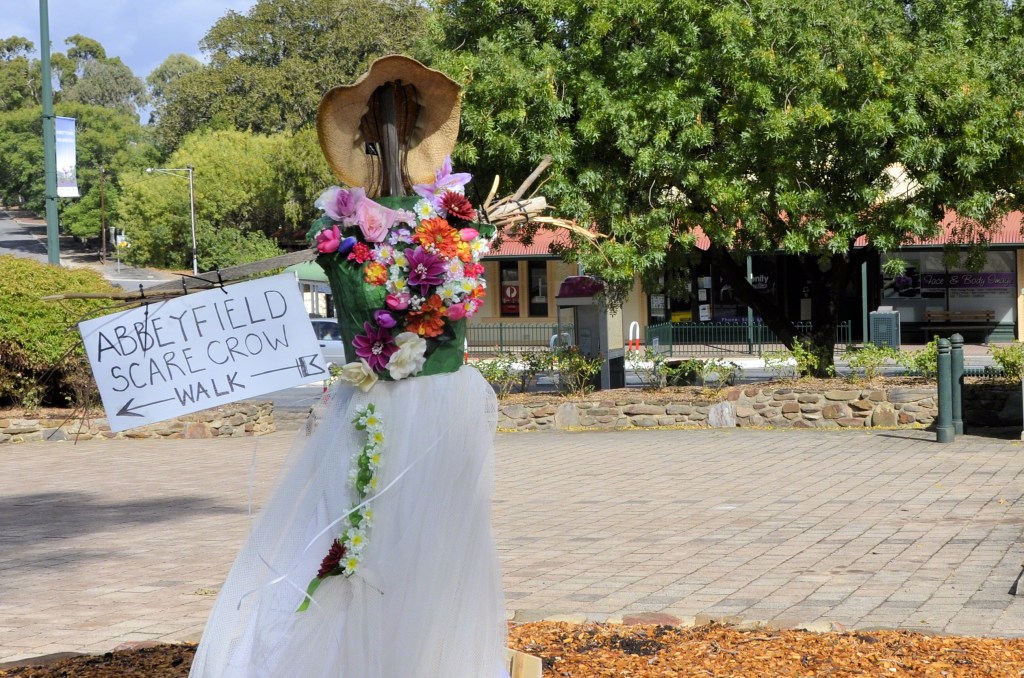
Feature Photo: Vanity Scarecrow © L.M. Kling 2017

Further note: If you or someone you know have had a similar experience, we would love you to share your story in our comment section.

***

Our anthology for 2024 is now available in print on Amazon.

Check it out!

Click on the link below:

Indie Scriptorium Self-Publishing Collective Anthology 2024

Publishing vs Printing–Clarifying Confusion

CLARIFYING A CONFUSION (I HOPE!!!)

Some time ago we told you the sad story of friends of ours caught up by a so-called “vanity publisher”.  When their work was accepted (with a great deal of enthusiasm!) by this publisher, they were over the moon.  Slowly, however, joy turned to frustration and financial loss to the tune of more than $30,000-oo. With nothing more to show for it all than only one single copy of their book they were hugely ashamed and embarrassed – not at all surprising as they are very savvy and have always dealt with life in a business-like way.

Fortunately, this bitter experience has not killed the urge to write.  But it could well have done so.

However, we have become aware of the fact that, as well as this vanity publishing racket, there are a number of other matters connected with writing that are causing a degree of confusion among those of us who dream and scribble and dream some more. 

The two words we want to deal with today are “printing” and “publishing”.  They are not the same and they are not inter-changeable.  Let me repeat that so you get the message –  

THEY ARE NOT INTER-CHANGEABLE

Printing is something you can do yourself.  All you need is a laptop; a ream of plain paper; a printer attached to your laptop; card for a cover and a good strong stapler or comb binding machine.  Your magnum opus won’t look all that professional, of course, but it will be printed.  If you require a better-looking job, you can source a printing business, make an appointment to discuss the details of exactly how you want your book to look; how many copies you would like and how much it will cost.  End of story.

You may have ordered only a few copies to give away, in which case you pay up; collect; distribute and (hopefully!) bathe in the glow of all the congratulatory comments.  End of story.  On with the next.

On the other hand, you may have ordered a hundred copies with a view to selling them.  Have you decided on a marketing plan?  How do you intend to publicise your book so eager buyers will be aware that it is available for sale?  Do you have a list of bookshops that might be willing to stock your deathless prose?

 If you decided to jump on this bandwagon, you have now become a publisher.  Congratulations!!  I really hope you succeed and make at least enough money to cover your costs and maybe have a celebratory dinner as well.

Bottom line: publishers are businesspeople whose essential business is to produce books, market them and make a profit.  They do not author books although some do occasionally commission a book on a particular topic from an author they know and believe in.  Once they have found a book they consider marketable, the author is offered a contract.  After this is signed the publisher works hard to ensure a profitable outcome; hard work that involves, among other things, editing, proofreading, printing and marketing – and that printing is done by a printing firm; a separate business.

Publishers are not printers and printers are NOT publishers.  Not a case of “never the twain shall meet”.  Far from it.  Much more a case of mutual dependence as each cannot function without the other.  Think of it as complementary co-existence.

© Mary McDee 2024

Feature Photo: Winter Elm Mirror-Design © L.M. Kling 2020 (artistic design 2024)

Marketing Tips–Key Words

Keywords–Helping Readers Find Your Books

Modern marketing is an amazing process. As more people use the internet to find out information about all sorts of things it’s not surprising that buying books is now subject to the same internet marketing strategies of so many other products.

I’ll give you an example from real life. My oven was in desperate need of a clean and especially the glass door. Before the internet I would have phoned my mum or a friend and asked, “How do you clean your glass oven door?” These days I google “How do I clean my glass oven door?” and I get lots of useful and useless answers and many adverts telling me that this particular oven cleaner is perfect for the job.

My original search did not get the product I needed. So, I refine my search and add “How to clean a glass oven door when it’s encrusted with fat?” And then I get more specific products and information. I may also add another keyword “How do I clean my encrusted oven door with an environmentally friendly product?”

The keywords in my search are: clean, glass oven door, encrusted fat, environmentally friendly.

Keywords are what people type into the Google, or alternative search engines. As I explained in my previous blog for marketing it helps to understand how search engines work. Key words are essential.

But, you ask, how does this effect authors?

There are millions of books online in so many genres. And within each genre there are sub categories of genre so key words become important words and/or phrases for readers to find the right book for them on Amazon and other platforms.

Try googling Romance books. You will get a list of different types of romance books. I selected Dark Romance books and got another list of keywords, hottest, extremely dark, possessive dark, dark kidnapping. Select one of these and you will finally get a selection of books in just the right genre sub-category you crave. So, before they get to your cover, blurb and reviews readers will find your book from the millions of other using key words.

Try a few different categories just for practice. I tried Fantasy novels and chose with dragons. I then selected romantic fantasy novels with dragons and finally you get to a list of books that fit close to what I was seeking. That list of books is where you want your novel to appear so it can compete with the others. After coming up on the list your cover and blurb will then win the sale.

Authors can select their keywords when they upload their book on Amazon and other platforms. It is part of the process for getting your book available as an e-book or print version. Before you start it is wise to research what keywords will get your book noticed.

Google keyword selection and you will find a number of websites that provide authors with the best key words for your novel. There are forums (Kindle forum, Reddit) lists of genres (Marie Cole) and my favourite from Draft2digital Specific Genres Literature and Fiction.

But can you change your keywords after you have published your book? The answer is Yes.

Keywords are classed as metadata so can be changed for free. (Unlike actual changes to your book cover or inner material which might incur a fee for changes) Just go to your publishing site and edit the novel metadata and review your keywords. Both Kindle Direct and Draft2digital allow changes to metadata but do check the term and conditions carefully yourself.

I’ve found this foray into keywords enlightening indeed (as one of my Regency romance protagonists would proclaim). I will be doing further research and perhaps update the keywords I so blindly selected when loading my books. Modern marketing is complex. I hope that this blog helps you navigate some of its complexities and increase your chances of your novel being found on-line.

Cheers Elsie

Elsie King©2024

Photo attributed to unknown author from creative commons.