Our Indie Scriptorium Team has been busy this week preparing for a fantastic local author event, Wordfest. If you happen to be in Adelaide, come to Woodcroft Library, 3 to 7pm this Tuesday September 10.
Indie Scriptorium Self-Publishing Collective Anthology 2024 will be available in print from this date.
As well as the anthology, we will be selling our print copies of our books which include:
Do you want to write? Wish you could write? Feel you have stories in your head that want to come out, stories you are sure others would enjoy? But you just don’t know where to start!
Many would-be writers seem to think that you must start at the beginning, work your way through the first chapter then the next and the next until you get to the end. Finito! Ready for publication!
This may be the way it is for some; but in my experience, very few. Very, very few. Such folk are rare birds indeed and quite possibly rare birds with a great deal of experience. The rest of us have to do things differently.
One way that is highly recommended and successfully used by many is to work out a plan; make notes for each chapter; shuffle things around a bit if it seems better that way; add or subtract incidents, characters, locations… Then, when you are happy with the big picture you’ve worked out, you can get writing. Many will begin at the beginning and proceed in an orderly manner, chapter by chapter. Others will find it more satisfactory; more useful to jump in the middle somewhere; write the easy bits (or maybe the harder bits!) first up. Doesn’t matter; all equally valid and ultimately successful. So go with what suits you.
I’ve always seen my “early-draft” writing as a sort of jigsaw puzzle – dozens of pieces (ideas) to be fitted together in such a way that they would eventually create a “picture” to be enjoyed or confronted or challenged by or…
As a kid I loved jigsaws; spent hours doing them and devised many different ways of tackling them. The easiest way was to separate out all the edge pieces; assemble the “frame” then fill in the middle. If I wanted a challenge, I’d divide the big heap into little heaps of similar colours and go from there. The ultimate challenge was to do the whole thing using all the pieces reversed, i.e. on a large tray or rectangular pan used for cooking slices or cakes and with the plain backing uppermost. When complete I’d carefully tip the whole lot out to check for success (or failure!).
Using the jigsaw analogy, my initial writing on scraps of paper; on the backs of envelopes or circular letters are the jigsaw pieces. Sometimes it might be great chunks of scribbled prose (or poetry). At other times just a sentence or two, a few words that seemed to sing; to sum up a situation, a feeling, an incident, a character… It’s all grist to the mill; grist that I will re-arrange, add to, change, scrap, enhance, re-locate, delete…
Whenever I begin with a nice, orderly, logical plan or outline I feel it’s like starting the jigsaw with the edge pieces; things flow and there is a comfortable feeling of achievement. Many times, however, I feel I’m wrestling with all the pieces upside down, the blank backs of the bits, no idea of the final picture.
I know my finished product has to have a beginning, a middle and an end. It must flow; have a logical sequence of events; maybe a crisis and resolution; drama, pathos, evince tears or laughter or… But this is the finished work; ready for a reader to enjoy. The completed jigsaw puzzle.
So, how do you tackle your writing? Are you hobbled by the belief that youmust start at the beginning and laboriously work your way through in logical progression? Or do you always just jump in the deep end, flounder around, fed up and frustrated? Either way it is far too easy to decide this writing racket is all too hard; you’ve no talent; it’s not for you. Which is sad if you have ideas and stories in your head that you want to share, if you find words fascinating and putting them together in interesting ways a satisfying and fulfilling challenge.
When it comes to grammar and basic sentence structure there ARE rules that need to be obeyed. If you don’t know the rules or your knowledge of them is wobbly, you don’t need to see this as a major roadblock – there are plenty of people willing and able to help tidy up writing for those who see the rules of grammar as a bit of a handicap but don’t let this stop them getting their ideas down onto paper. These people are called editors, and all published authors value the contributions they make to the final success of their literary efforts. There is absolutely no humiliation or shame attached to using the services of an editor. Just make sure you get a kind, caring and, above all, knowledgeable one!!
BUT but, but.
There are no rules at all when it comes the actual writing bit itself. How, when where you do it is up to you; your own choice to suit you and your lifestyle. Do it your way; whatever feels right and comfortable for YOU. But do just grab a pen, pencil, bit of paper and write.
[After another debacle involving technology last Friday which sent the world into a tailspin, I have brought Elsie King’s “rant”, I mean, reflections on her tussle with technology, forward one week. It was my turn, but after my own wrangling with Windows 11 in the midst of the aforementioned debacle, while producing my art group’s newsletter, I had had enough for one week…so here’s Elsie’s take on technology. ~ Lee-Anne Marie Kling ]
Technology Roadblocks
I came to computing later in life. When I went to university, we didn’t have computers and had to do all our research in libraries from books or journals. I wrote my first novel on an electric typewriter. I probably bought my first computer when I was in my forties.
I started using computers at work, then got a home computer and I slowly got more confident at using one. Then came the smart phones, social media, Google, on-line banking and passwords, passwords, passwords.
Sometimes it feels you only have to blink and something new appears. We now have AI and everything is linked and we can talk to technology and get our heater turned on when we are on the bus home. It seems to me that younger people who grew up with technology fare better with these rapid changes, better than people who didn’t.
Technology makes so many things easier for an author. Research is amazingly fast, getting a book self-published to Amazon, a website on WIX or having an author page is complex but doable. However, technology can also cause so many problems for the unwary.
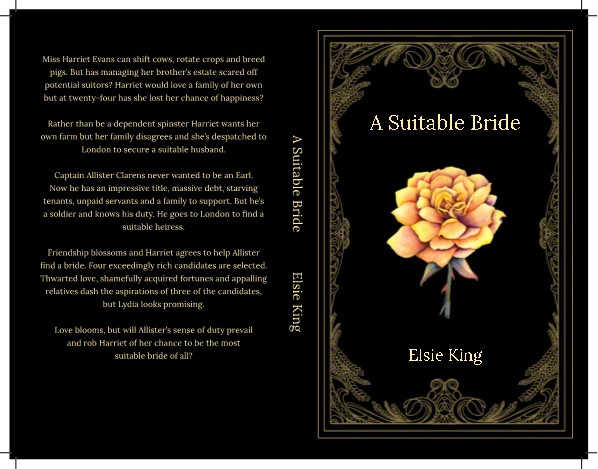
I have recently self-published my second novelA Suitable Bride. It should have been a joyous occasion but problems with the technology wasted my time and caused distress. My first problem occurred when I decided to get an author page on Meta (I still call it Facebook). I set up one, was happy with the result but then tried to publish my blog from my website on the new author page. Didn’t work.
I’ve never had problems before with uploading a blog to Facebook and I needed to blog to market my new novel. I tried to sort it out with Meta but had no idea what the first step was. I found out the new Facebook business page is set up for marketing and once they have you hooked, they won’t easily let you go. I googled, explored my Facebook account and got into a chat line but couldn’t find the delete button. After hours of wasted time, a friend suggested I try unsubscribing. Finally, back to my old classic Facebook page.
Tried again to get my WIX website blog onto Facebook. No luck. After many wasted hours I found a phone number. Yay a lifeline for the technologically challenged. WIX represented by Jerry in America proved to be magnificent. I’m on an Apple she was on a PC which brought in another level of complication but after an hour we got it sorted. However, a week later and another blog and couldn’t post it again. Back to WIX helpline when I have the time.
My third technology glitch occurred when I uploaded my novel to Amazon. I have previously published with Kindle Direct Publishing, and I have sold a few copies of my novel on-line. I have a wonderful ASIN link for my first novel A Suitable Heirhttps://www.amazon.com.au/dp/B0CB52VT16
It works. Try it, just press the link and like magic you get to the Amazon page, and you can purchase my novel. Yay.
I was provided with another link for my second novel A Suitable Bride
And guess what? It doesn’t work.
I have no idea why? I have no idea how to fix it and finding help that doesn’t go round and round in a useless chat appears to be beyond Amazon.
IF ANYONE WHO READS THIS CAN HELP, PLEASE MAKE A COMMENT AT THE BOTTOM OF THIS BLOG.
Not being able to get usable links for my book means readers who want an e-book from Amazon can’t be linked from my website. I have been invited to release my book on various platforms but as I don’t have a usable link, I’ve put on-line marketing on hold and I’m concentrating physical book sales of author copies for family and friends.
You can get a print copy and an e-book through Draft2Digital whose links work worldwide. So, if you wish to order A Suitable Bride, please use the D2d link.
Thanks, Draft2digital because your link is working just fine.
Modern technology is brilliant and awful. When it works well it is time saving, easy and helps authors get their stories and ideas into print. When something goes wrong it is a time- wasting nightmare and definitely acts as a roadblock when trying to market your book. The services for getting help are difficult to negotiate and much of the language and instructions used expects a much higher level of computer competence than is available to this little black duck. I will keep on trying to sort this out, but it has been a series of roadblocks that is making my journey much more difficult than expected.
My stories begin long before I put pen to paper or print words on a screen. They start in my head. Dreaming. Often with a dream. Or a vision. Or a “what if”. Or a memory.
My latest novel venture into crime fiction, began with a dream. Then developed with a “what if” and some memory thrown in. Fourteen years ago, my mum and I would discuss what if a child were given up for adoption, traced their birth parents and the reunion wasn’t the rosy one imagined it would be for the child. We had a certain character in mind when musing this situation. This person had their life together and would see their former “mistake” as an intrusion and something they’d rather forget.
Around this time, I had a dream about finding a body under a bridge. It was so vivid that I drafted a short story about the “experience”. I read out the story at writers’ group and received both honest feedback and harsh criticism for my efforts. The story was filed away.
Years went by and the ideas of the story percolated. Meanwhile I concentrated on my Sci-fi “War on Boris” series and the “Intrepid T-Team Travel Memoir” series. I travelled with my family and got on with life. In the background, I mulled over the characters and the world in which my Under the Bridge characters lived. I allowed the characters to move about and interact in the world of my imagination. I realised that I could marry the idea of an adoption reunion gone wrong with the body found under the bridge.
As ideas and situations emerged, I shared them with my mum and others. Along the way I began research into the issues around my crime fiction story. I familiarised myself with the genre. Read books and newspaper articles, watched crime shows, and listened to podcasts. All this absorption of information helped with the percolation process.
Five years ago, I sat down with pen and paper and began planning. After writing a sentence encapsulating the main idea of the book, I fleshed out the characters on paper. By this time in writers group, we had been given a sheet of paper that had set out how to write a character profile. I found this helpful in describing what my characters looked like, their main motivation and desires, their habits, personality, backstory and even fears. As I did this, the characters began to interact with each other, and the story began to take shape.
I decided to set Under the Bridge, being my first crime novel, in a place in which I was familiar. My home town, Adelaide. After all, the city has much going for it, and could be equated with “Midsommer” in the British Midsommer Murder series. It does have the reputation for the strangest and grizzliest of crimes—the Beaumont children (never solved), the Family murders, the Truro murders, and the bodies in the barrel murders, just to name a few. Come to think about it, I don’t know how I’ve managed to survive in Adelaide.
Into this I spent time planning the story line, timeline and chapters. Last year I wrote a synopsis and shared it with my Indie Scriptorium big-picture editing friend, Elsie King. She loved the premise, but gave helpful feedback on developing the characters more, giving them depth.
So back to the process of percolating, dreaming, visioning and having conversations with my characters in the shower…And research. As I have mentioned previously, part of that research has been delving into my family history. Although, in doing so, I have opened a Pandora’s Box of more stories that have started to percolate. Watch this space…We have so far: riches to rags (more than once), destitute to convict to doctor, missing on the Russian Front (or is he?), and mistreated orphans (sounds like another Dickens tale only this time it’s Dutch). I hope to write up short stories of these ancestors over time and after sufficient research and again, percolation.
Back to Under the Bridge, I then began to plot the chapters and timeline of the story. But I will deal with this part of the World-building process in Part 2.
Welcome to my new novel, A Suitable Bride. Impossible love, the dire need for an arranged marriage and a happy ending firmly place this novel into the Romance genre. And yes it’s set in the Regency era.
I got lovely feedback from my first novel A Suitable Heir so I hope my readers will enjoy this second foray into my favourite time in history.
The book will be available from the 30th April in both e-book and print copies. Please visit my website www.elsiekingauthorartist.com for links to purchase on-line.
I read an article by Draft2digital that said the best marketing for your first book is to publish a second. I certainly hope that this is true. Enjoy.
I’ve never really understood or considered tropes when I write something. I find it easier to write with a theme in mind. But Tropes are apparently important enough in the romance genre to provide the theme for the Romance Writers of Australia conference 2024. Time to do some research.
The Collins Pocket English Dictionary defines a Trope as ‘a figure of speech.’
The Collins National Dictionary is more extensive. It defines Trope as ‘a word or phrase used metaphorically.’
Roget’s Thesaurus of English Words and Phrases links Tropes with metaphors. And a metaphor is a way of describing one thing with a phrase that describes something else.
Examples: Courage – a heart of a lion
Love – the light of my life
Lazy – a couch potato.
A look at Wikipedia (bless them) says that the word Trope has undergone “a semantic change” and is now used as a rhetorical (persuasive) device in creative works.
So, to summarise: A trope used to be a figure of speech but has morphed into a commonly used metaphorical device in genres of rhetorical creative fiction. In simple terms they are the themes that readers want to have in a novel.
Some common romance tropes are:
Happy ever after
Lovers torn apart, fight to get back together
Forbidden love
Love triangles
Enemies to lovers
Amnesia
I have a secret
Some historical novel tropes are:
Marriages of convenience
Dual timelines
Political/social upheavals
Actual historical figures
Protagonists ahead of their time.
Research driven plots.
Fantasy tropes may include:
Good versus evil
Quests
Magic
Mythological species
Time travel
The list of tropes can be extensive for each genre but from what I’ve read it’s important that the trope is subtle, that it emerges with the story or it can become a dreaded cliché. These are tropes used so often they become a bit of a joke. Think of the dreaded Bodice ripper.
I hope you found my exploration of tropes useful. I have discovered that I definitely like happy endings, most of my characters are ahead of their time and some engage in marriages of convenience. I also like to use historical research to describe political and social upheavals.
And these tropes put me firmly into my genre; historical novels with a touch of romance.
My photo is of the black sand beach in Iceland made famous in Game of Thrones. Yet another example where an image can be used as a literary trope.
Now I have to work out what costume I’ll wear at the RWA conference that will clearly define a romantic trope.
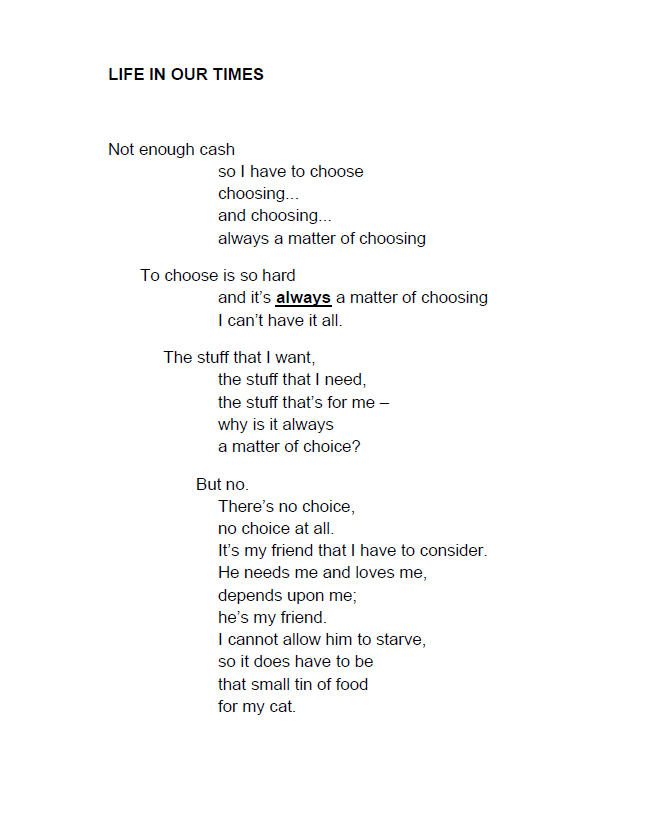
Yesterday, I was perusing one of my dad’s old exercise books from way back, possibly the 1950’s. There, first page, neatly written in his handwriting, a poem. I had read this a few months back and didn’t think much of it. But yesterday, reading it again, it resonated with me about the beauty of God’s creation. Dad having taught at Hermannsburg Mission, Northern Territory in the 1950’s was particularly taken with the vibrant colours and striking formation of the land and mountains up there. He fell in love with the land and would make regular pilgrimages to the Centre, taking my brother and I, plus other family and friends, on safaris to explore his beloved part of the world.
If I had my way, I’d ban alphabet books for all pre-schoolers. Ideally no child should see an alphabet book until it’s at least eight years old and had learnt to write and read. And as for the Alphabet Song!! Grrrr! But we’ll come to that later.
“Why on earth?” I hear you say. Or are you quietly thinking to yourself, “Poor thing, she’s finally lost it”? Or (somewhat more kindly) “Years and years of teaching small children has got to her. Stress, you know.”
Au contraire. It’s the years and years of teaching all those children who came to school singing the Alphabet Song; minds stuffed full of alphabet books with their pages and pages of pretty pics; confident of their ability to master all this reading and writing stuff… Then they get as confused as all get up.
Confused? you say. How come? Isn’t the alphabet the basis of our written language? Yes indeed – but only in a way.
You see the letters of the alphabet are symbols; mere squiggles if you like; that we use to represent the sounds of our spoken language. It’s a code, but sadly, not a straight-forward one for a number of reasons.
Aeons ago, when mankind first sought a way to record information that did not rely on memory (and therefore personal contact) they drew pictures on whatever came to hand using whatever they had that worked. Over time the pictures became stylised until eventually some bright spark got fed up with the labour involved in learning the meaning of thousands of picture-symbols. Whoever it was, they were obviously a radical and an original thinker with particularly good hearing ability in the way of auditory discrimination. He/she realised that it was only a small number of different sounds that were put together in a myriad of diverse ways to make up all the words used by his/her community.
Yes, I know – a flight of fancy. We’ll never really know for sure how it happened, and I seriously doubt if it was that simple. Rather than a single bright spark, I’m sure it was more a process of refinement over dozens of decades with contributions from many as well as adoption by neighbours who adjusted, adapted, added to, subtracted from… to suit their own situation and language.
And this is still happening today – we add words; we invent new ones; we drop ones we see as no longer useful, pretentious, or “bad” or we change the meaning… When I was young and went to a beaut party where I’d had a lot of good, clean fun with laughter, friends, food (really yummy food, that is!) I usually reported that “We’d had a gay old time.” No longer would I dream of saying such a thing. Back in Elizabethan times (the Francis Drake/Walter Raleigh ones, that is) “nice” was a far from complimentary word. Only two, of but many examples.
Anyway, back to my entry point: banning books for babies (alphabet books, that is), if you’ll remember.
Rather than learning the alphabet, it is much more important for little children to learn to differentiate the sounds we use to make up the words we use to communicate with others. Once they can do that, it is an easy matter to learn an appropriate symbol (squiggle!) to match each one. At which point they can write. And reading will follow on. Simple.
Sadly, not so simple because our alphabet is full of glitchy bits: some letters can be used for more than one sound; several letters are used for the same sound; some letters in some words do not represent any sound at all (blame history for that one because they once did). Additionally, we don’t have enough letters to represent all the sounds we use so we solve that problem by putting two together (e.g.: ch/sh/th).
Another problem with these books for babies is that they always partner the two forms of the same letter (upper case/lower case) side by side along with the picture it “illustrates”. This gives the impression that the two forms of that letter are interchangeable which is not so – not at all. Capitals (upper case) should only ever be used when there is extra information to be conveyed.
You’ll notice I put “illustrates” in quotes. This is because one of my pet hates is that so many pictures have little connection with the actual beginning sound of the letter they are meant to represent. To use egg/ostrich/cat is OK. But eagle or eight/owl or orchestra/ chair or centipede is quite definitely NOT. Books using such as these are concentrating on the names of the letters and letter names are no help at all when learning to write and read. They are more a source of confusion and, therefore, frustration.
Reciting the alphabet, singing the song (which means we’ve learned the names of the letters in a particular order) is a handy skill but one we only need when called upon to search for information in written material arranged alphabetically – which no child will need to do until it is able to read competently. To make things worse, the middle bit of the Alphabet Song gets run together, coming out as a single word (elemenopee) so many children think of it as needing only one single letter to represent it. Which is very confusing for them.
To wind up: my biggest hate of all; my absolute bete noir? Alphabet books that have come to us from the USA. The reason: over there what we on this side of the Pacific call a ‘bucket’ they refer to as a “pail”. Which, because a small child’s vision often does not fully stabilise until seven or eight years of age, can lead to awful confusion between p and b for our littlies. This lack of stabilisation can take the form of visual reversals, both side to side or top to bottom, resulting in, for instance, ‘was’ for ‘saw’ or ‘p’ for ‘b’ (or vice versa).
I’m at the tail end of my third novel “A Suitable Passion” (working title). It’s about slavery at the time of the abolition movement and has been the most challenging of my novels so far. It started out as a historical romance and that genre usually has a happy ending. But when a happy ending just doesn’t fit with the history, what do you do?
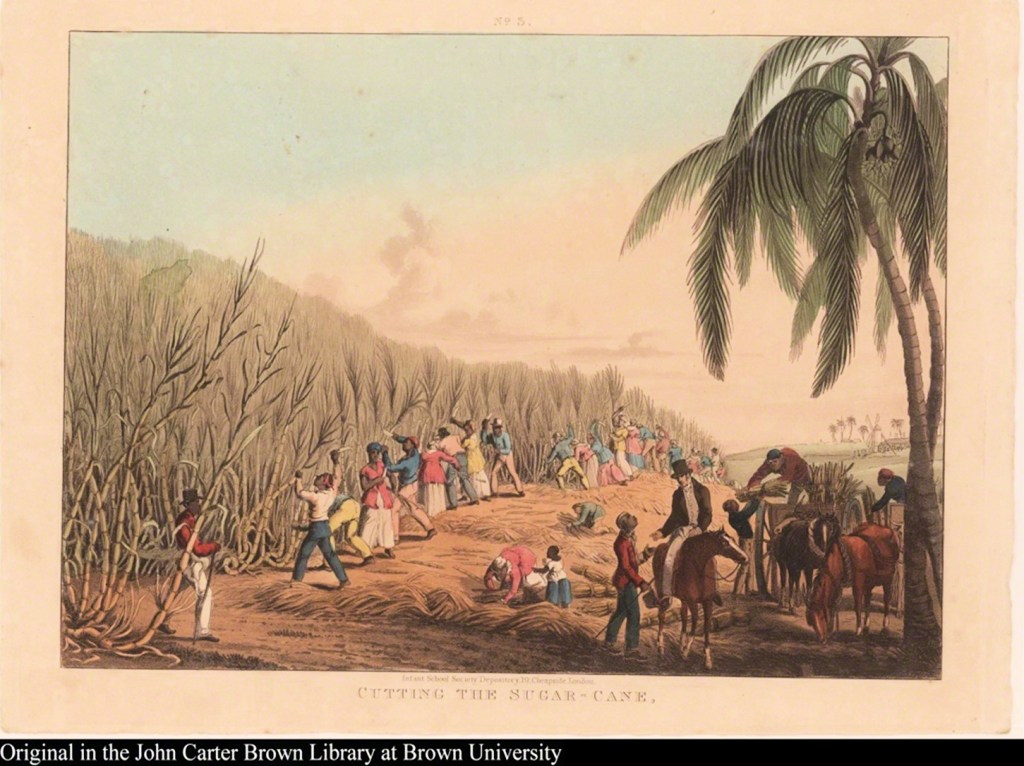
In a nutshell, the British Jamaican slave trade started in 1655 when the British overthrew the Spanish colonialists and finished on August 1st, 1834, with an Act in the British Parliament that gave slaves in all British colonies freedom. Well sort of, as the wealthy plantation owners in the West Indies managed to finagle an apprenticeship system that gave them free labour for another six years. This system was designed so the slaves could learn to become a paid labour force. Not surprisingly it didn’t work, and the scheme was abandoned 1838 due to the appalling behaviour of the plantation owners and managers. After that, most of the African people in the West Indies walked away, choosing to live in their own villages and grow their own food rather than work for the men who had owned and abused them. The sugar industry collapsed.
To make matters even more unfair, the plantation owners were given compensation for freeing their slaves. Like cows or sheep, slaves were considered property. The slave owners demanded compensation and it cost the British public twenty million pounds (approximately $40,000,000 AU). The money was distributed to some of the richest and most influential families and institutions in Britain. The slaves got nothing. This huge debt was only paid off in 2015.
Into this mix came the abolitionists. The movement started in the mid 1780’s with predominately Quakers establishing committees and making presentations to Parliament. In 1807 the shipping of slaves from Africa to British colonies was banned but slavery continued in British colonies for another twenty-seven years. The abolition movement was slow growing but by the 1820’s the new middle classes became involved. They formed societies throughout Britain to actively work against slavery, many of the societies were organised and ran by women.
The historical research to tackle this book was extensive. I read five different PhD. dissertations to get the social, religious, economic and political dynamics that led to the abolition of slavery. I read first-hand accounts of slaves and the terrible deprivations and punishments they endured. I gleaned information about how the sugar industry worked and even visited sugar museums in Queensland to get a sense of the process of sugar production. I read articles from newspapers at the time and attended a meeting of the Quakers to experience first-hand their remarkable religion.
I set my novel in 1829. The plot revolved around the question:
What if a young heiress discovers her family’s wealth and prestige come from slavery and she is expected to marry a man who will continue the cruel practice of the plantation system in Jamaica? How will she comply with her family’s expectations when she is an abolitionist?
I sent my protagonists to Jamaica where they experienced slavery first hand and confronted their relatives who profited from slaves. I had hoped to end the story on a positive note with my protagonist’s relative having an epiphany and freeing his slaves. But the research could not be denied. There was no happy ending. I could not find one example of a slave owner who showed one iota of compassion and freed his slaves. Avarice abounded and was rewarded and the plight of enslaved people in the West Indies was appalling even after emancipation.
My novel became an exploration of a shameful chapter in British history. I found that I had to follow the history rather than a romantic plot. The romance became a secondary consideration and the history took over. I changed the characters to make the villains more realistic and my protagonists end up together but are powerless to change the outcome for the slaves. A sadder ending than I wanted but I hope the novel sheds light on the history of racism and still delivers a satisfying read.







 Indie Scriptorium -- Self Publishing Collective