I’ve always been fortunate to have far more ideas for my fiction than I have time to write them into a story or novel. But some writers struggle to find an idea and inspiration. So how do you get inspiration and ideas for what to write? This was my experience.
My first novel was easy to plot and plan. I wanted to set the novel in the Regency era because of my love of Jane Austen and Georgette Heyer. Then, women had no rights and little education and I wanted to promote my ideas about feminism and equality in that era. A Suitable Bride emerged from these basic ideas. I asked what would an intelligent and sensible woman do to ensure she made the best choices to achieve a fulfilled and happy life in a world where woman had no legal rights and little education? The answer informed the storyline of A Suitable Bride. The love that grew between my protagonists against impossible odds gave me the conflict required and the happy ending fulfilled the romance genre.
Family and friends who experienced the sad loss of a baby or suffered infertility inspired my second book A Suitable Heir. Again, I set the novel in the Regency period to capture the additional difficulties of upper-class woman whose main purpose in life was to marry and produce an heir. I asked how would a woman in a society cope with infertility in this era. In addition, I incorporated the issues of depression and loss when a couple remains childless and the joy of having children after a difficult time conceiving.
I’m currently writing my third book, which began when I watched the sad and senseless death of George Floyd. It appalled me to witness his awful murder and made me think what could I do to counter such extreme racism. I returned to my favourite historical period and I learned about the British slavery trade and its aftermath. This became the focus of A Suitable Passion. My protagonists appear to be on the opposite side of the abolition of slavery movement, yet my heroine is coerced into a marriage of convenience with a man she cannot respect. This book has been the most difficult to plot and plan as it required considerable historical research about slavery in the British colonies, a romance and a happy ending. Two rewrites later I am still attempting to incorporate an engaging story with a fascinating but sad history. I’m not sure I will achieve the right balance but love the challenge.
So, my inspiration for novels comes from social issues and themes, which I then incorporate into a favourite historical time to create fictional characters and storylines. I find inspiration for short stories harder but thinking back these are some spurs that have helped me to create my short stories.
Writer’s group exercises. Some of my best short stories started out as a topic for a 10-minute writing exercise at the Woodcroft Writer’s group. Everyone wrote a sentence from a book, poem, article or from our imagination on a scrap of paper and then fold them up and put them in a tin. Each week we’d pull out a sentence and it would inspire us to write on the given topic.
If you can’t attend a group, just grab a book, pick a paragraph or sentence and use that as inspiration.
Some flash fiction web-sites provide topics for short fiction.
Reading is also a significant source of inspiration. You may enjoy a particular genre or author. Ask yourself could I also write like Stephen King, Agatha Christie or Jane Austen and start planning.
You can read articles in newspapers and magazines about actual crimes, daring rescues, sad losses, politics, sport, celebrities and unusual events and use these as inspiration. Change the time, place and names and start writing.
Just overhearing a conversation can inspire a story. So, learn to listen to people talking around you. It will give you ideas and help you create authentic dialogue.
Competitions are a great way to get inspiration. The Romance Writers of Australia have three anthologies published a year each with a particular keyword and theme that inspires the entrants. There are a lot of writing competitions that provide entrants with a theme or keyword.
Photos, films, social media posts can all provide you with ideas.
Research an area of history that fascinates you. As you learn more about the time, you can discover real life people and events that will provide a fabulous story. You can take an event in one era and put it into another. Change the characters’ names, the country they live in and then write it up as fiction.
Your own family or personal experiences can inspire as many a memoir writer will tell you.
Keep a notebook of ideas, or have a desktop folder with writing ideas so when inspiration strikes you can put the idea away for later consideration.
An important step in the creative process is to ask what if or how would? What if that hero in the paper later regretted his actions? What if that murderer wasn’t caught? What if that woman I overheard left her husband? How would a barren wife cope with a demanding husband in the 1800s. How would an abolitionist cope when her family are slave owners.
So, select a topic, make whatever changes you like and ask what if, how would and get writing.
It’s that time of year. In Australia, the end of the year signals groups winding up and the inevitable array of Christmas parties, exchanging of gifts and cards. In my writers’ groups we exchange cards, small presents and some give their latest book or manuscript to peruse. I’ll be guilty of doing that very thing this year, I hope. (Still in the process of editing my latest a detective novel, Fly on the Table.) Together with my fellow writers, I am looking for feedback. I’m hoping that over the holidays, my “test readers” will find the time and interest to read the manuscript. I want my novel to be the best it can possibly be.
But Feedback, that proverbial “elephant in the room” can be difficult for some readers to handle. So, here’s a revisit to an earlier blog. Check it out, I hope you find it useful.
Some time ago, a member of our writers’ group recently published a book.
‘I don’t want to tell anyone,’ they said, ‘because I needed a lot of help.’
Certain members of the writers’ group ensured they revealed and celebrated the news; their achievement was our achievement. A book doesn’t happen in isolation; it’s a group effort. Just as a village raises a child, for the best outcome, a community or group births a book. There’s the writer with the ideas, then comes the editor, test-readers, friends and family, the proof-reader and finally, the audience, the readers out there in reader-world.
We write stories for readers, that’s why the editing process is vital. A story needs to be readable to be effective. Readers need to understand the story to enjoy it. It’s the reason language, especially written language has rules for grammar, spelling, and the art of storytelling has a structure.
So, you’ve finished your masterpiece, but now the challenge: how will you go about editing your work? That’s where the writers’ group comes in. Fellow writers are your work’s first point of contact. Their reaction to your story will tell you if your creation is a winner or a flop. Either way, there will be more work required to perfect your piece of genius—more pen to paper, more fingers tapping on the keyboard, more pain and hair-pulling before your work can be “birthed”.
Once you have completed your work, file it away in a drawer for about three months. You need distance between you and your “baby”. When you revisit your work, you may be amazed at how brilliant you have been putting all those words together in such a clever way, or be horrified at how the gremlins of grammar, spelling, typos, weasel words, repetitions, and so on have bred and multiplied. With fresh eyes, you’ll see ways to improve your story, thus creating your second draft.
Repeat the process of draft and distance until you feel it’s ready to meet fresh eyes that don’t belong to you. But who?
Ever had trouble getting someone to peruse your work? Suddenly, they’re all busy. Or they take your story and sit on it for months, years… Again, happy are those in a writers’ group. Or be bold and blog. Consider serialising your work on Wattpad, even. If you are wanting to sell your novel down the track, having a http://www.presence and band of followers may help.
For those finishing-touches to refining your work, you may seek out a professional editor. When paying an editor, ensure that you define the time and rates in a contract. For Trekking With the T-Team, I negotiated an hourly rate and a limit on the number of hours the editor would work on my book.
There are two types of editing: big picture and proof-reading. Big picture editing looks at the plot, pace, character development, language use and content. Proof-reading deals with the technical side of the work such as grammar, spelling, and formatting. But as my friend who’s an editor said, ‘It’s hard to separate the two. If the content and ideas trigger you, then it’s difficult to be objective and it affects how you respond to the piece.’
So, while it may be preferable for an editor to be outside the genre in which you are writing, it may not work for your book. A good editor, of course, is impartial, but they are still human and will approach your story from their worldview. And on the other side, we as writers are human and see the world through a filter of attitudes and the way we see ourselves. A good editor who is paid, then, is only as good as the receptiveness to feedback of the writer who pays them. After all, you are paying for that objective set of eyes, and feedback based on their experience as a reader and what they perceive as good literature or entertainment. In the end, whatever comments an editor makes, it’s up to you, the writer, to implement those changes—it’s your work, your story.
The last step of editing is proof-reading; the nit-picking of the piece before it surfaces for publication. Ernest Hemmingway, in an interview for The Paris Review (1958), said that he rewrote the end of Farewell to Arms 39 times before he was satisfied with it. However, each writer is different. I use five different coloured pencils: 1) grammar, 2) spelling, 3) word-use, 4) formatting, and 5) content. That being said, I am sure I have perused my works near 39 times by the time it reaches the Amazon shelves.
Other tips: • Reading out aloud helps with sentence structure, flow, and the art of storytelling. Even better, if you can bear it, use a voice-recorder as you read out your story, and then play it back. • Line by line editing. Print out your story and then use a ruler under each sentence to concentrate on each word. Effective for exposing typos and formatting flaws. • Start with the last chapter first, and so work through your piece backwards. Again, helps with plot-holes, character consistency and pacing. • Have an English grammar book and a dictionary within reach, for you’ll be reaching for them repeatedly. I’ve discovered that an online dictionary, or Google are also reliable resources, but beware, as dodgy information slips through the cracks of the Internet.
In the end, it’s up to you, but it’s also a group effort. We are all part of the larger community collective of writers, readers, sharers and receivers of ideas. And I cannot stress enough, the more you read, the more effective your writing will become. We learn from each other.
Just write. Get the first draft down without thinking about it… Just do it.
For me, putting down a first draft is magical. The characters take over, the ideas flow and the dialogue takes your plot in unforeseen directions. But when I read over my surging words of creativity, I realise that repetition has crept into the work and that needs to be assiduously weeded out.
I have a tendency to overuse certain words and phrases such as smiling, feeling, frowned and ‘took a deep breath’. I also add extraneous words that I don’t need. She stood up. He sat down. She screamed loudly. Three words that are not needed at all, at all, at all.
Another major flaw is my inclination to belabour a point. I find in the first draft I often have up to three different paragraphs all saying the same thing but with different words or with the smallest of twists. This is demonstrated in the first line of this blog. Readers find this particularly annoying, as it implies they are not bright enough to get your message the first time.
I also use appellations repetitively. I will name a character time and time again when there are only two people in the scene and he or she will suffice. Miss Baker will look out the window. Miss Baker will sit down. Miss Baker will stand up. Miss Baker will scream loudly. Oh no, here we go again. When I go over my first draft, it’s not uncommon to find I’ve started several paragraphs on one page with Miss Baker…. Boring, boring, boring!
I’m finding that the more I write and edit my work the more aware I become of my tendency to be repetitive. I am using repetitions less and I’m starting to see the repetitions in my first read through and can correct them quickly. Except I’ve just used the word repetitions, or its derivatives, four times in the above paragraph. Sneaky little things.
The trouble with repeating ideas, words and phrases is that it’s damned annoying for the reader and slows down your pacing. Learning to spot the problems and editing them out is important and will make your writing zing.
But you say, can’t repetition be a helpful literary device? Homer’s Oedipus certainly uses repetition as a literary device when he writes about the “wine dark sea” which he uses 12 times in the text. It is thought that this type of repeated phrase is a device to assist oral story tellers remember the story line.
Then there’s Martin Luther-Kings’ speech “I had a dream.” A repeated phrase which provides emphasis and also gives the speech a rhythm and flow that captures attention. Repetitions are often used in speeches deliberately to hammer home a idea.
I recently had the pleasure of critiquing another writers’ first draft and noticed they repeated a characters action at least three times on the first page. It made the action stand out and emphasised the point that the character was skilled in meditation and philosophy. Over use or a useful device to emphasis the characters’ abilities?
Repetitions are a double-edged sword. They can sneak in uninvited and slow your writing down or you can use them deliberately and they can be a powerful literary device. Awareness is important so after the first draft look out for unplanned repetitions and cut, cut, cut.
The spark of the idea for an Indie Writers’ collective came out of belonging to Marion Art Group; a group of painters who meet together every Monday morning and exhibit their works in shopping centres.
With that premise, I thought, ‘Why not draw together a group of writers who help each other, with their different gifts and talents to publish their books?’
Fellow MAG artist, Elsie King thought this was a great idea and with Mary McDee, Indie Scriptorium was born.
Currently, Marion Art Group is holding an exhibition at Brighton Central (Foodland) in the mall area. If you are in Adelaide, South Australia, come and have a look. The exhibition is on for another week until October 29, 2023.
So, on that note, I have included below a story of the beginnings of my journey with art which combines with my love of Central Australia.
Mount Hermannsburg
My father and I sat in the dry river bed of the Finke River painting Mt Hermannsburg which towered above the river gums and spinifex. We painted our muse on site; Dad painted in watercolour and I painted in acrylic.
After a couple of hours, Dad packed up his brushes and palette and returned to the town of Hermannsburg. I stayed, in the creative zone, dibbing and dabbing, the setting sun casting shadows over the river bed and a cool breeze pricking me with goose bumps on my bare arms.
I made the final touches as the sun sank below the horizon and I was called in for tea. I signed with my maiden name, naturally, as I was only 18.
Dad’s painting and mine sat side by side on our host’s piano where all who saw, admired our work. I kept walking past and gazing at my painting. Did I really do this? Wow! Did I really?
[Holidays, Swiss relatives visiting from overseas, and a mis-timed meeting at Morialta falls, reminds me of this post I wrote some time ago. I ran out of time for a fresh and pertinent post to publish, so here is this old but timely post—with a few adjustments related to the skill of storytelling.]
WARPED TIME
An argument broke out between two members of our family over time—threatening a war that would rival the epic war of the Time Lords from the Dr Who series.
‘You better allow at least two hours to get from Zurich Airport to Wattwil,’ a member of our family who came from Switzerland warns.
‘What? According to Google Maps, it should only take an hour,’ another family member shows their relative the map on their computer screen. ‘See? It’s only sixty kilometres—and we’ve got the freeway.’
And so, a joke endures in our family that time speeds up in Switzerland, perhaps owing to the mini-black hole created by the Large Hadron Collider.
Fast forward to Zurich Airport August 2014…and we witness not time, but our relatives, fresh off the plane, stand still for an hour and a half, debating where to change Australian dollars into Swiss Francs. Is this what our relative meant when they said all goes slower in Switzerland? For them, perhaps, not us. Up until then, the only impediment to our timekeeping was a wayward Tom Tom who prefers scenic routes to the more expedient ones, and road works—the bane of summertime in Europe.
So, maybe it wasn’t the mini–Black Hole after all, but I have observed time does speed up or slow down depending on the place and activity. You may have heard the old adage: “Time flies when you’re having fun”. When I’m painting, I’m in the zone, and hours melt away, and a whole afternoon disappears into night. My son will come to me and ask, ‘When’s tea?’
‘Soon,’ I say. ‘Just need to do a few more dabs.’
Another hour slips by and my husband comes and says, ‘It’s nine o’clock, when are we eating?’
Fine then. I put down my brushes and admire my work…for another half an hour.
Yet there are places where time slows and stretches almost into eternity. My mother and I are convinced that Magill, a suburb east of Adelaide city, is one of those places. We love our “Magill time”—a leisurely lunch, then a slow snoop at the Salvos, then the bookshop, and still time to do the grocery shopping before we pick up my son from his guitar-making workshop.
However, for my son, “Magill time” doesn’t exist. For him, the time spent on his craft vanishes into the sawdust—much like when I paint, I guess.
My son theorises that time is relative to age. When a person is young, say, one year old, they haven’t experienced much time so the time they have lived seems a long and drawn out. But for an eighty-year-old, one year is one of eighty and thus seems short in comparison.
I guess there’s something to be said that time is related to energy. Young people possess a greater amount of energy; they pack so much more into a day, and still don’t tire. Have you noticed, as you get older, young people speak faster? Or if you are younger, you wonder why older people speak so slow. What’s going on there? Young people complain about being bored and needing to fill in each minute of the day, so as not to waste time. Screen time fills in the gaps when “nothing” is happening.
In contrast, I believe there is a phenomenon called “older people’s time”. I observed this with my aging relatives. They complain time speeds up, but from my point of view they are just slowing down. They compensate for their slow movement in time, by preparing in advance for events, and arriving early so as not to miss out. It’s not unusual for the older generation to arrive at a venue an hour early so as to be on time.
Now that we have reached that golden age, Hubby still needs to learn this skill. Just fifteen minutes late to a rendezvous with the younger relatives today, and poof, they were off. Never caught up to them. They must have been doing a cracking pace, while we (or should I say, I) ambled to the first falls at a “knee-cracking” pace, what with my dodgy knee and my wonderful kind hubby keeping me company.
And in contrast to their youth, older people prefer to sit for hours pondering, their memories perusing their past. For them, days blend together, years vanish into a succession of Christmases. ‘Oh, dear, how time has flown,’ they say. Some think they’ve lived so long, they experienced the pre-Industrial Revolution. Not sure what’s going on there.
How does this relate to writing a story? Well, pacing comes to mind. I have observed that the younger generation enjoy a faster pace, many characters all interacting. I’m amazed at how they keep track of so many characters.
Meanwhile, as we age, we savour a slower, gentler pace. Time to breathe between the dramas and crisis in a story. And as for characters, it’s fair to say, from my experience with the older and wiser of us, we appreciate a character list if a book has too many characters.
Also, when planning a story, or novel, a timeline is helpful to avoid timing issues and plot holes.
So, after a busy day hiking (or hobbling in my case), then finally meeting the Swiss relatives for dinner, it’s time to say “goodnight”.
I’ve always thought of anthologies as books of short stories and poems put together by writers’ groups as a fun and interesting exercise. A way to get your work into a book format that can be sold at low cost to family and friends and maybe raise funds for the group or for a charity.
I recently entered a competition with the Romance Writers of Australia (RWA) and the prize was being included in the Sweet Treats anthology Lollipop. I was short listed and my story The Houdini Lollipop was included. It was fabulous encouragement, a learning experience and wonderful publicity. It was great to be published with other romance authors but the proceeds the anthology raised were used for the organisation.
Ebony contends, and with lots of evidence, that anthologies don’t only make money for the authors included, they can also be listed on best-sellers lists and get the attention and publicity that all authors need in order for their work to get into the hands of readers.
I won’t go through the steps Ebony suggests in her book, it would be better for readers to purchase her book and use it as a reference. But I will go through some of the advantages and disadvantages of the process and some things to consider when deciding to put together an anthology.
Before setting up an anthology you will need to consider what sort of anthology you want to produce. Anthologies can include short stories, novellas, poetry or even non-fiction articles but the first thing to think if you are putting the anthology into the marketplace is who is your targeted audience. Readers like anthologies with a consistent content, whether that’s all historical, crime, romance, fantasy science fiction or poetry. Ebony also suggests similar heat levels (sweet or erotic) and a consistent type of content. This makes advertising easier and you won’t shock a reader who expects an anthology full of sweet love stories and finds one or more stories with erotic or horror themes. A full study of what is popular and what is selling is important. Google ‘popular anthology books’ to get an idea of what is out there. The most important issue is that all the included writers must do their bit and contribute equally to the project. Ebony suggests a contract clearly stating the terms and obligations required.
Advantages
You can make money.
You will get your work published.
It may help you get your name into a new genre.
You have a given theme/subject.
Writing novellas and short stories can be easier than a full-length novel.
You can learn a lot about publishing and marketing in a group experience.
It could be fun.
Disadvantages
It does require good organisation.
You will need to ensure all members contribute their time equally even if their skills differ.
Contributors do have to “buy in” to the anthology, which means you pay to cover costs such as the cover design, formatting, marketing, advertising etc.
The organiser will have to work out the steps of producing the anthology and ensure they are carried out professionally.
Anthologies often take 2-3 years to put together.
The group may have to learn about taxes and royalties and sort out the finances before proceeding.
If you don’t want to organise your own anthology many are advertised on-line. Romance writers have an advantage as there is a dedicated Facebook group: Australian Romance Anthology Connection. Other genre’s may require some internet searches to find what is on offer.
Writers organisations also provide information about anthologies and many competitions will include your work in an anthology. Try browsing through the Writers SA website under competitions and opportunities, and have a look at other writers centres interstate or overseas.
Following Lee-Anne’s blog last week I realise there are a couple of extra points to be made in relation to this thorny issue of others being upset by something we have written. These are points of a more general nature however.
Memoir is probably a simpler issue: you yourself as the writer are recording events from your own point of view. Yes, there are others involved but you can run your work passed them prior to publication to seek approval or come to an agreement re any changes or omissions that seem to be either necessary or kind and considerate.
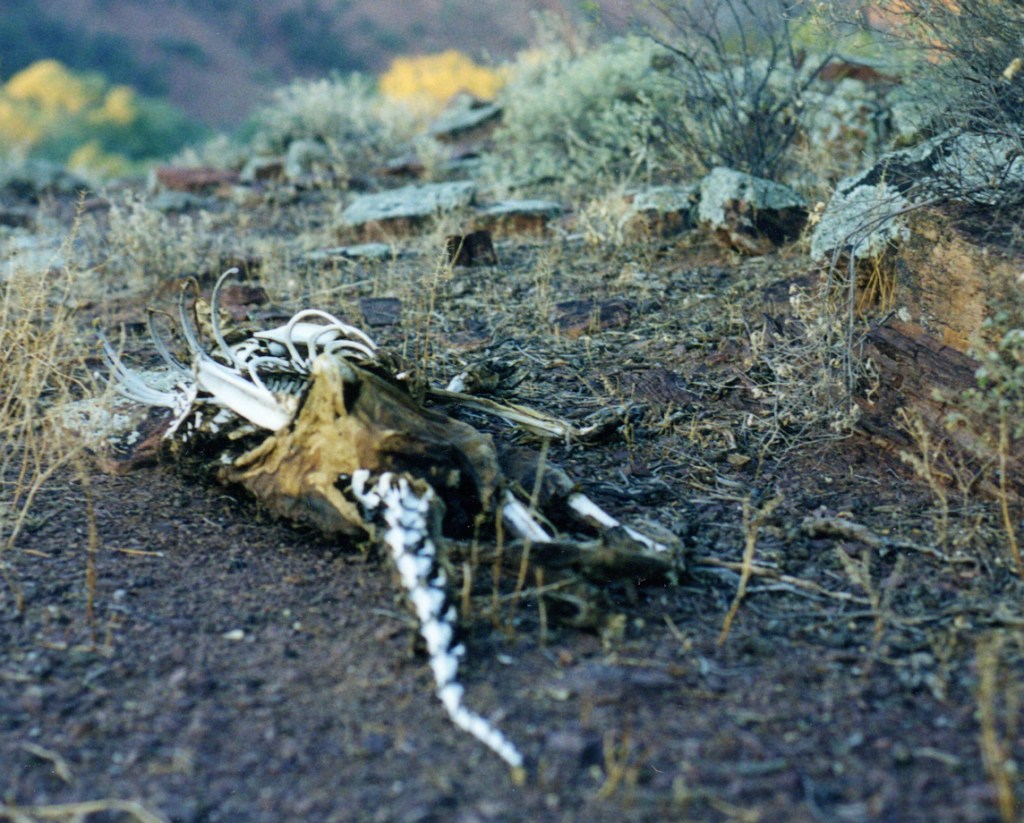
As I see it, the real problem comes if you have chosen to write family history. All families have skeletons in their cupboards. Some don’t care a fig if and when these skeletons are dragged out and aired; others can be hugely embarrassed, distressed, humiliated… Basic common decency and respect for others means that these concerns must be dealt with carefully and caringly.
By way of example let me tell you about my own family where there were a couple of babies born “out of wedlock” back when such things were not acceptable in most circles.
One was born in the 1930s and on the chart of the family tree her name was underlined; the only one that was. My brother and I were intrigued and asked questions. We were told that even though it looked like she was the youngest of a number of siblings that underline indicated her birth mother was in fact her eldest “sister” and the people she regarded as her parents were actually her grandparents.
All this was well known in the large family she was born into but never held against either lass. Both were much loved and treasured family members who always belonged regardless of what any neighbours might say or think. As this was a couple of generations ahead of us it was ancient history and never mentioned when we were being regaled with stories of the doings and peccadillos of our forebears – not because it was shameful; simply because it was no longer relevant.
By way of contrast, the same situation took place on the other side of my family but was treated very differently. To be fair, this occurred back in the late 19th century in a very conventional Methodist family. Currently, most of the family could not care less at the present time but the branch descended from that wayward one still feel shamed and humiliated and, while happy to be included in the family history, were guarded and most reluctant to supply certain details.
When we write history, it is important to present the facts. This is obvious. What is often not so obvious is that we can so easily present those “facts” from a current, 21st century perspective and thus unconsciously skew them somewhat. The values, ethics and attitudes to morality can be (and often are!) very different today from what they were fifty, one hundred or even more years ago.
If you are torn between producing an historically accurate record or one that does not cause distress to others might we suggest one way out of the dilemma is to produce a text that pleases all but then also quietly write a sort of addendum stating the “truth” of the bits that had to be omitted or glossed over; put it in a sealed envelope marked “not to be opened till twenty (or fifty if you prefer!) years after my death”. Lodge it with your lawyer or in a strong box in a bank or with a highly trustworthy family member.
When I first mooted (last century) to author a story of our adventure in Central Australia in 1977, Dad told me, “No! You’ll upset people.”
So, I waited decades, then wrote a private copy for my dad. Dad was appreciative but thought our safari adventures in 1981 would be more entertaining. Hence the creation of my travel memoir, Trekking with the T-Team: Central Australian Safari 1981.
The 1977 pilgrimage to the Centre languished in the draw for another decade, until enough time had passed to hopefully not offend people, and it had morphed into a historical travel “faction”; a story based on real events, some real people and others made up. In fact, before publishing my latest book, The T-Team with Mr. B: Central Australian Safari 1977, I included a disclaimer to that effect.
Why all the drama?
You see, as we know in life, an individual’s image of themselves, their reputation is important to them. Their reputation, social status, and what others think of them is vital for their survival and advancement in society.
With this in mind, you could wonder how accurate is history? Especially as individuals and cohorts of high status must maintain their reputations to keep that high status. I mean surely kings have never been murderers, leaders been despots, sports and movie icons immoral.
Have they?
I wonder…
Meanwhile, certain internet platforms are full of happy, well-adjusted individuals with thousands of friends.
Anyway, that being said, it’s not just these days that people have put their best face forward and hide their proverbial skeletons in cupboards. I confess that there are bony “proverbials” in our family history—locked away, key lost…
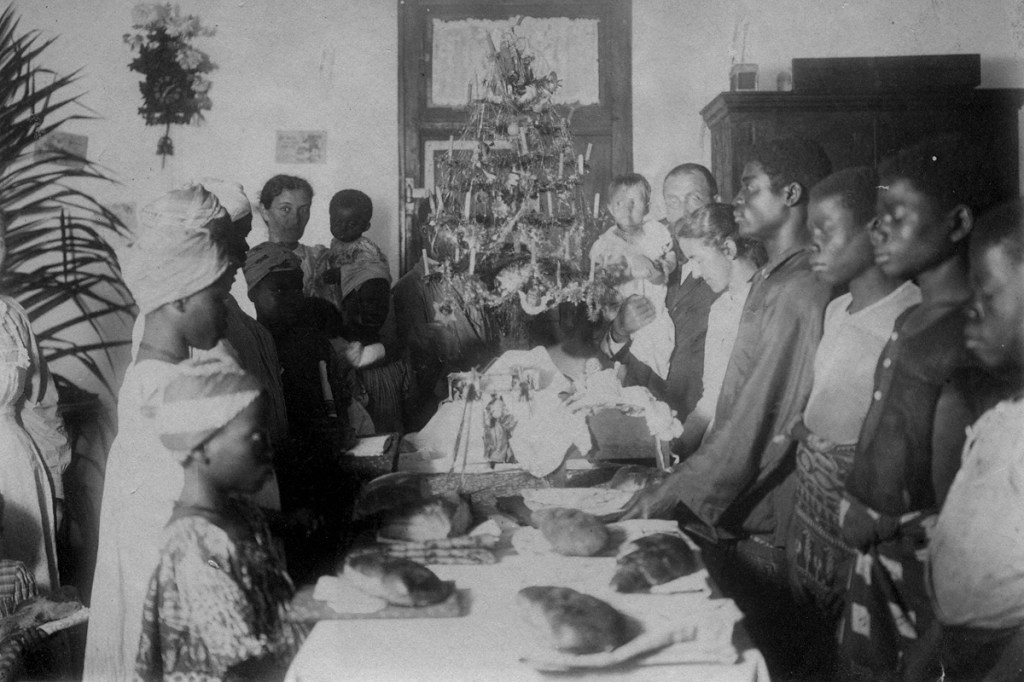
An elderly relative told me that I couldn’t put my missionary great-grandmother’s letters relating to her Caesarean birth experience in the Cameroon Africa in 1899 into the Lutheran Archives. Too personal, she said. Somehow, they are there now.
If my great-grandmother’s birth experience is too sensitive for some, imagine the real spicy skeletons that exist in families. Again, in our family, those fascinating stories have been leaked by enterprising characters who have written about them and published the works, these being limited publications such as family histories, part of a research study or as a theological study in one case. With the theological study book, we were told plainly, we were forbidden to read that book. Heaven help us if we developed sympathy for the good doctor with a problem with alcohol addiction. I read the book and found it fascinating and encouraging as it revealed in a very real and practical way, God’s love and grace for his broken people.
So, here I am thinking, just the type of stories the rest of the world would be interested in. Stories with grit, guts and depth. Stories that can change our thinking. Help grow us to be better people. Yet, because of an individual’s or community’s sensitivities and threat to their individual or collective reputations, these life-experiences remain ethereal, talked about in whispered tones around the dinner table after a few drinks, or when reminiscing the past with elderly relatives.
Well, that’s my family.
On the other side, there are writers who have no inhibitions when it comes to publishing juicy details on their family’s or friends’ misfortunes and unfortunate life-choices. They change the names, add spicy details of their own creation (just to give a little “kick”), and on they go to entertain their readership. Nothing like those skeletons to fire up the imagination. My eyes widen as one tells me about their friends or family they’ve included (without their knowledge) in the latest novel. I muse how common this modus operandi of writing is.
However, the rest of us, especially in Indie Scriptorium are sensitive to the feelings of family, friends and associates, and have shrouded our characters’ real-life identities in history, Science fiction, fantasy, as well as conglomerating them with several people we know while at the same time veiling the situations to disguise them. That way, no one gets offended or takes us to court…hopefully. As I mentioned, disclaimers about characters not resembling anyone in real life help.
So, I bring this missive to it’s conclusion, for now; our life’s journey, the people we meet, the people we from whom we are descended, the choices we make and the consequences that come from those choices, all enrich our lives and creativity with the stories they generate. And the skeletons in the cupboard also have stories to tell. In whatever way we decide to tell those secret spicy stories, whether as history or fiction, true characters or disguised ones, you never know, it may be those stories that will have influence for good and growth for the reader.
What do you think? Let us know in the comments below.












 Indie Scriptorium -- Self Publishing Collective