Indie Scriptorium — Self Publishing Collective

Helping Each Other Publish

Skip to content
  • Home
  • About Us
  • Blog
  • Books For Sale
  • Introducing Indie Scriptorium
  • Links–More for You
Search

Procrastination

April 6, 2025 / lmkling / Leave a comment

The team at Indie Scriptorium is excited to introduce our newest member, Berenice who joined us at the end of 2024. We hope you enjoy her insights into what challenges us as writers from time to time.

Procrastination

What it is, and what it isn’t.


It has been said that procrastination is ‘the thief of time’, and indeed it is, but it is very often misunderstood. How many times have we heard people describe themselves as a procrastinators when they turn up late for appointments, fail to meet deadlines or admit to having piles of unfinished projects that they meant to tackle when they had more free time? Procrastination can even be a common problem with writers of all genres.

In my personal experience, I have found that procrastination is more than a lack of time management skills, being disorganised or lacking motivation. In conversation with other writers who speak about their ambition to create significant works, they find that the end goal may feel daunting, causing them to avoid their projects and become distracted. I’ve heard of a description called ‘Imposter Syndrome’ where writers feel that their work is not good enough, that they are deluding themselves and may even experience the fear that their work may not achieve the desired outcomes, such as the approval of others, especially that of their more successful peers. I have realised that I often set high expectations of myself and in reviewing my work, question my ability, leading to hesitation, frustration and avoidance.

In the Shakespearian play of Richard 111, the king says, ‘I wasted time and now Time doth waste me,’ which is for me an apt description about how I feel about the many times I have put off doing writing tasks which have been waiting to be completed. I believe my issue is in aiming for perfection in my writing and spending endless hours editing, rewriting and revising my work, while anxiously aware that I am not progressing further than several reworked drafts. This causes self-doubt and stress as I worry that I might never finish the project which I started with so many ideas and enthusiasm.

The danger for people, like me, who know that they have a tendency to procrastinate, is that they are often inclined to ‘multi-task’ and get distracted by a whole range of disconnected activities instead of focussing on the one, single writing activity that requires their full attention. External distractions like social media, domestic duties, the telephone and television or personal hobbies can divert their attention away from writing. I may instinctively know that this is counterproductive and feel guilty about wasting precious time but may justify this by convincing myself that I will do better the next day, week or month, until often it all congeals into a familiar procrastinating blur…again. This may form a habit, creating a vicious cycle from which it seems virtually impossible to escape. When that happens to me, I feel embarrassed, stressed and vulnerable, avoiding the emotional task required to continue the work at hand.

I have spent many years trying to understand why, when I seemingly have no valid reason to put off performing some writing tasks, I often am caught at the last minute frantically working under stress to produce work of a high standard. Even if I micro-manage my time to avoid this occurring, it still happens. Even identifying as a procrastinator is tantamount to assuming that there is a controlling mechanism in my brain holding me ransom to a habit I am struggling to break. It has not always been so. As a studious child and student, I found the creative experience of writing my joy and pleasure, a circumstance that ironically carries on to this day as a mature person.

Ask yourself, ‘What have I as a so-called procrastinator done to help overcome the feelings of being overwhelmed, fear of failure, self-doubt, burn-out and disappointment?’

These are some of the strategies that I have employed that might prove helpful.

  1. First of all, recognise that you might be having a problem and that you can do something to minimise the situation.
  2. Set smaller tasks in your writing project. These may be a certain number of words, or a manageable amount of writing time, with a timer to help you stay on task. (I have a cute little kitchen chook timer.)
  3. Don’t include detailed editing for every session of writing, other than the obvious small spelling and punctuation errors as they arise. (I use the Review function in Windows.)
  4. The review function Read Aloud may help to pick up minor errors.
  5. Join a writing group such as “Shut Up and Write’ where the focus is on actually writing for a set time, not talking, critiquing or sharing during the writing session.
  6. Positive SELF-TALK. I Am, not I’m Not…….
  7. Avoid multi-tasking instead of writing. Do the necessary distracting activities first, then stop and concentrate on writing. Focus on that. If the phone rings, ignore it. You can check your messages later.
  8. Don’t stress if you can’t spend time writing because of family obligations, appointments and other social activities. Enjoy a healthy, happy, active lifestyle as far as possible.
  9. Writing can be hard. But that’s okay. Choose your own way of managing the demands on your time but give your writing the attention and enthusiasm it deserves.
  10. Procrastination can also be a coping mechanism when you are working too long on a project, allowing you time to rest and recover. If you are not being overworked by writing too much, for too many hours…this does not apply to you. Hint Wink!
  11. Find a supportive friend, fellow writer, mentor who will offer constructive criticism and encouragement. That includes YOURSELF.

Good Luck with your projects.

© Berenice Norris 2025
Feature Photo: Waiting for a Feed, Baby Magpies ©L.M. Kling 2020

Share this:

  • Share on X (Opens in new window) X
  • Share on Facebook (Opens in new window) Facebook
Like Loading...

Wise Words …

March 30, 2025 / lmkling / Leave a comment

… For the Months of History and Memoir

Feature Painting: The Choice © L.M. Kling 2015


“Watch your thoughts; they become words.
Watch your words; they become actions.
Watch your actions; they become habits.
Watch your habits; they become character.
Watch your character; it becomes your destiny.”
— Lao-Tze

Share this:

  • Share on X (Opens in new window) X
  • Share on Facebook (Opens in new window) Facebook
Like Loading...

100-Word Challenge with a Family History Twist

March 23, 2025 / lmkling / 2 Comments

Character Study for Family History

[I have spent hours reading the diary of my Great Aunt Dora. The story begins all full of the hopes of a young 18-year-old first-generation Australian girl whose parents had migrated from Germany to South Australia around 1877. I know her story, I knew and loved my great Aunt Dora. She will never marry. One of many women of her time, when, after World War 1, there were not enough men to go around. I imagine this is what life in the 1920’s was like for her, a maiden aunt caring for her parents.]

Dora

She had one once. Before the war.
He came from Hamburg. A distant relative from the family.
But the Great War intruded. He was the enemy.
Interned. Never to return.
She perched on the bench in the Royal Botanical Gardens. Watching. Men promenading in pale pinstriped suits, on their arms women in their frilly-white Sunday best, giggling.
Easy for the men, she thought. Pick and choose. Pick and choose. Even the damaged men, the cripples, have a chance.
She sniffed.
What about me? Is that my future? Caring for my aging parents? No choice but to be an old maid?

© Lee-Anne Marie Kling 2020; updated 2024; 2025
Feature Photo: A lone date palm, Botanical Gardens © L.M. Kling (nee Trudinger) 1986

Share this:

  • Share on X (Opens in new window) X
  • Share on Facebook (Opens in new window) Facebook
Like Loading...

The Value of Research

March 16, 2025 / lmkling / Leave a comment

Having read Elsie King’s first two historical romance novels, A Suitable Bride and A Suitable Heir, I can highly recommend them. Both are well researched and are a good read. Hence, when deciding what to post for this week, I couldn’t go further than Elsie’s post on the subject of research.

Check it out, click on the link below.

Writing Tips–Research

Share this:

  • Share on X (Opens in new window) X
  • Share on Facebook (Opens in new window) Facebook
Like Loading...

Family History–Start with Research

March 9, 2025 / lmkling / Leave a comment

Digging Deep to Get it Right

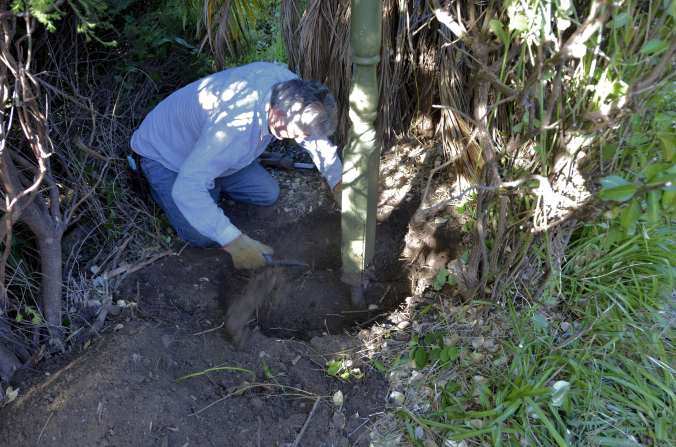
[Feature Photo: Digging a hole; is it a rabbit hole? © L.M. Kling 2023]

Recently, my mother sent me an article about my paternal uncle. In it, he claimed to have ancestry extending back to Titus, a Greek convert to Christianity and the apostle Paul’s missionary companion. The author of the article took the claim with a grain of salt, saying, “Be that as it may …”

The article was written in the 1990s, way before we knew much about DNA. It was published when the internet was in its infancy and before research tools such as Wikipedia, and genealogical platforms such as Ancestry and My Heritage existed.

So, how did my uncle figure we were descendants of Titus?

Was it just a fanciful family history conclusion? Or did he have some access to secret information stored away in a library in Europe?

Many families have claims such as my uncle’s. It is what fuels family myths that are passed down from generation to generation, morphing and mutating from the original truth, much like Chinese whispers.
So, here was the challenge. Did this claim have any truth?

Equipped with the knowledge that historical claims need to be backed up by proof, I began my family history journey using research tools to find the evidence.

We don’t even know if Titus had any descendants. And if he did, who were those descendants? An initial search in my Bible notes reveals that Titus is last mentioned as going east of Greece, into the Balkans.
Yes, I have a percentage of Balkan ethnicity. But is that enough?

Next, I discussed this Titus theory of my uncle’s with my significant other, as you do. I find it useful to discuss my research with others and bounce ideas off each other. His first thought was the Roman Emperor Titus.

Now there’s a thought.

So, like a good amateur investigator, I spent some time tracing the noble line of the Orsini Family to which my father’s family is related. With the help of Wikipedia and My Heritage, I went back as far as I could. I am so thankful for Wikipedia, and My Heritage where information is shared and researchers are able to collaborate their findings.

But here I hit another snag. The article on the Orsini family in Wikipedia makes it abundantly clear that the Orsini’s would like to think they can trace their family back to Julius Caesar, but there is no solid proof.
As stated in the Wikipedia post on the Orsini Family (note the clause “according to family legend”):

“According to their own family legend, the Orsini are descended from the Julio-Claudian dynasty of ancient Rome.”


It’s not looking good for my uncle’s claims. My digging into the deep past of my dad’s ancestors and connection to Titus has gone cold.

This rabbit hole of fancy, that is, thinking we are related to someone great in our past, got me thinking how in our quest to build up our identity, we often take mighty leaps of faith without much substantiation.

History Research 101 which I picked up from my friend Carol in University and also as a research officer way back in my youth, taught me that good research depends on primary sources.

What are primary sources?

In family history research these are: birth, death, marriage, immigration and census records for a start. Diary entries and letters are also useful primary sources, as they give the reader a rounded view of the individual’s time and place in history. Newspaper articles can be helpful but can be skewed by a journalist’s subjective point of view. Hence, news reports, magazine articles and books may be seen as a secondary source.

That being said, even what appears to be solid records can become rubbery when the ancestor or ancestors, themselves are not truthful.

Another example, again the noble line. Information abounds for these famous ones on the internet. (Bless these historical influencers of the past.) And for this brief foray into history research, they serve a good purpose in the need to dig for information, find the hard facts, and support the genealogical claims. Plus, so much is written about these people, they become real and fleshed-out so to speak. Also, no touchy relatives will get offended if I use these noble people as my example.

A few months after plugging away doing the family history thing of filling in the boxes on my family tree, an interesting match appeared. Charlotte de Luxembourg, a noblewoman from the mid-1400s. The name Luxembourg piqued my interest as it resonated to be a name connected with the French and English royal families. I followed the lead slowly tracing back to Henry I of England and Charlemagne.

Then I returned to the key ancestor upon which this claim to such distinguished ancestry hung. Charlotte de Luxembourg. What was her age? Her age seemed to be in dispute. Furthermore, in some genealogies, she was missing.

I needed to do more research.

Was she just some family history fancy?

I worked out through my internet research that she was most likely Pierre de Luxembourg’s illegitimate daughter. Most likely born before Pierre married Margarete de Savoi. However, according to a genealogist on another family history site called Geni, she could possibly be the daughter of Pierre’s brother, Charles, Bishop of Laon. Either way, to smooth over the family’s disgrace, Charlotte officially became Pierre and Margarete’s daughter; the details of her birthday fudged in the mists of time and covered up so that she remained marriageable.

After what appears to be a shaky start to life in nobility, all ended well for Charlotte. She married an esteemed knight, Phillipe Estavayer. He went up in status and the world was none the wiser of her suspect background. From the records of the knight’s will, which I found in my internet research, Charlotte was well-provided for and loved.

When I first shared these findings with my family, there were those who were sceptical. As a result, I have had to be extra thorough in my research and use every resource and piece of evidence to support my conclusions.

I’m still at the beginning of my family history odyssey. One day I hope the results of this research, my legacy, will be dependable, based on solid facts, and not just a vague myth that boosts the ego but has no substance.

© Lee-Anne Marie Kling 2025

Sources: Ritter, Eug. Mariage de Philippe d’Estavayer avec Charlotte de Louxembourg, en 1484. Revue historique vaudoise, Volume 30 (1922)
ETH-Bibliothek Zürich, E-Periodica, https://www.e-periodica.c

Share this:

  • Share on X (Opens in new window) X
  • Share on Facebook (Opens in new window) Facebook
Like Loading...

Some Months of Memoir

March 2, 2025 / lmkling / Leave a comment

Indie Scriptorium will cover the theme of memoir over the next few months. As we investigate all memoir-related topics, we will explore family history, historical writing, autobiographies, and more.

But, how does an aspiring family historian or memoir writer begin their journey?

For me, it began with years of gathering information. I have discovered that listening is the key to family history research. I needed to listen to my older relatives and collect their stories. Then I was able to build a picture of what life was like for them in generations past.

These are the first steps in my family history journey.

Stay tuned for more family history and memoir ideas in future blogs.

“When people talk, listen completely. Most people never listen.”
― Ernest Hemingway

© Lee-Anne Marie Kling 2025
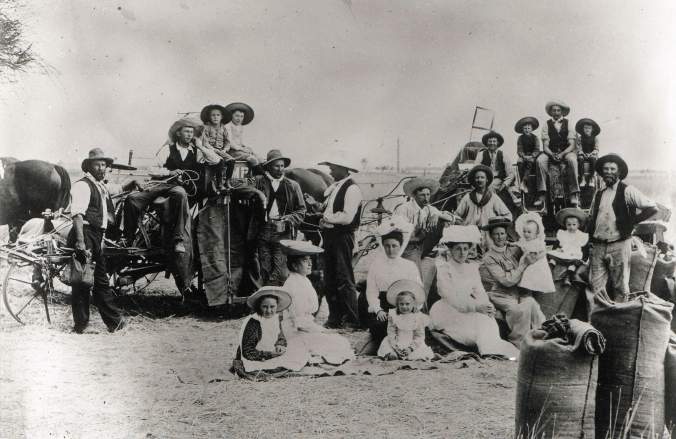
Feature Photo: Gross Family Gathering circa 1906, near Horsham, Victoria courtesy M.E. Trudinger (nee Gross)

Share this:

  • Share on X (Opens in new window) X
  • Share on Facebook (Opens in new window) Facebook
Like Loading...

On-Line Reviews

February 23, 2025 / lmkling / Leave a comment

Here’s a post from the past on feedback, or more accurately, “On-line Reviews”; a vital part of refining our work and making our stories the best they can be.

Those On-Line Reviews

I like to celebrate. As a child, when I received full-marks for a spelling test, Dad rewarded me with a Kitchener Bun from the Fish ‘n Chip shop/Bakery which in the good ol’ days of my childhood was situated opposite Glenelg Primary School. A few years ago, now, when I used to drive my son his course in Magill, my mum and I treated ourselves to lunch at the local hotel.

Every so often, I check my Amazon account. I wipe off the virtual cobwebs of neglect, and dig deep in the files of my mind, retrieving the password to enter. I expect nothing much to have changed.

I’ve been busy with my blog and the rewards, small, though they are, compared to the rest of blogging world, but the steady trickle of views, likes and comments, satisfies me. Over the years, the number of followers has steadily grown.

Once long ago, now, I made a daring move, and posted my short story, Boris’ Choice—not for the faint-hearted or while one eats breakfast…After the post, I checked for results on Amazon with my War Against Boris Series books.

And…there were. Yes!

Then, I checked the reviews. Now, I don’t know how other writers have fared with reviews, but for many months since my books were published, I had received no reviews. Yes, I asked my readers to do the deed and tick the star-boxes and comment, with no results. Yes, they’d say, and the weeks went by and nothing. Were they just being polite? I have no illusions, and the reality is that art and literature are subjective—what one person likes another won’t.

Anyway, back to checking the reviews…I looked again at one of the countries one of my books sold. The page appeared different. A yellow bar, and a comment. Genuine feedback. Not a great appraisal, but an appraisal all the same. I knew the person responsible for this first-ever comment for my book but was not surprised at their response. I did wonder at the time how my novella would work for them—not well—just as I imagined when they informed me, they’d bought the book on Kindle. As I said before, Boris and his antics are well…not for everyone.

That being said, and for fear my works may be misunderstood, the over-riding theme of my stories are the classic fight of good against evil. How evil, like Boris, can creep into our lives. And when for whatever reason, usually when we maintain and enhance our self, and to avoid discomfort, we allow evil to stay. This evil, however subtle, will drive us to isolated places in our lives, much like Boris does in The Hitch-hiker; places we never wanted to go. I want young adults and people young at heart, to make choices and use their energy for goodness and to fight evil, so they can live a full life and also be an agent for good in their community and the world.

Especially in these times.

© Lee-Anne Marie Kling 2016; updated 2022; 2025
Feature Photo: The Reward—A Kitchener Bun © L.M. Kling 2024

Share this:

  • Share on X (Opens in new window) X
  • Share on Facebook (Opens in new window) Facebook
Like Loading...

Inspirational Quotes–Landscape

February 16, 2025 / lmkling / Leave a comment

Photo of a morning storm over Karlu, Karlu – The Devil’s Marbles. Near Tennant Creek Northern Territory, Australia. (L.C. Wong ©2019)

A dramatic scene which reminds me that Australian history is ancient, often sacred and secrete. There are Aboriginal myths shared at this site, but their deeper meaning is hidden from new Australians. A caution that, as writers, acknowledging indigenous stories requires sensitivity and care.

But the landscape is awe-inspiring and we can create our own myths when we write.

As expressed by John Keats: (letter to J.H. Reynolds 1818)

“Almost any man may, like the spider, spin from his own inwards his own airy citadel.”

***

What landscapes inspire you?

Share this:

  • Share on X (Opens in new window) X
  • Share on Facebook (Opens in new window) Facebook
Like Loading...

100-Word Challenge

February 9, 2025 / lmkling / Leave a comment

Summer holidays are over, and school has started again here in Australia. With it, memories of the way things were way back when I was at school, in the 1970’s. Those were the days…

Our Sensei, the Avenger

Timmy hunched over his desk, sobbing.

Luke laughed at him. Simmo slid back on his chair sneering. Bruce barked in the small skinny lad’s ear.
I watched, guarding my books from being flung out of the window, again.

Those boys!

Our Sensei marched into the classroom. We stood.

His face turned crimson. He thumped the blackboard. ‘Da’me Yo! Bad! Very Bad!’

Sensei swooped on Bruce and Simmo. Grasping their shirt collars, one in each hand, he clonked their heads together, forcing them to look at Timmy.

‘Look what you have done! You made him cry! Bad! Very Bad! Dame Yo!’

© Lee-Anne Marie Kling 2020
Feature Photo: Japanese School Students at Ritsurin Koen © L.M. Kling (nee Trudinger) 1985

***

Would you like to join in the 100-word challenge? If you have a story you’d like to share, drop us a line in the comment box. The one requirement: the story must be exactly 100-words.

Share this:

  • Share on X (Opens in new window) X
  • Share on Facebook (Opens in new window) Facebook
Like Loading...

Author Presentations

February 2, 2025 / lmkling / Leave a comment

Planning a Presentation for a Book Club

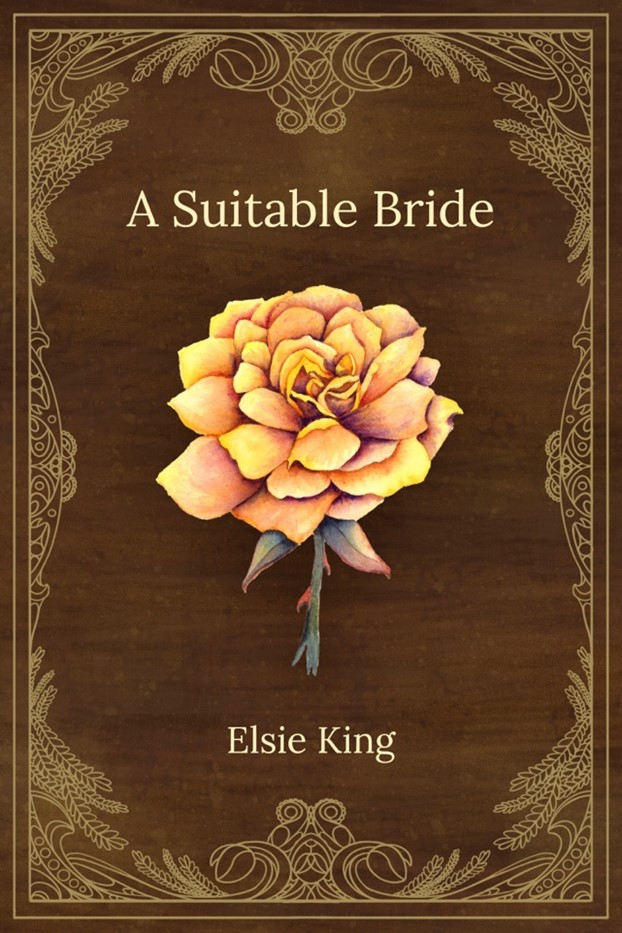
A Suitable Bride available on books2read.com/u/3L8l7D

It’s a wonderful compliment, as an author, to being invited to make a presentation to a book club. But what makes for a good, entertaining presentation?

I was invited to a book club last year to talk about my first published novel, A Suitable Heir.

A Suitable Heir available on https://books2read.com/u/bPLvyr

It was a great evening with a lovely group of ladies and I had a lot of fun but I wasn’t properly prepared and it made me wonder if I could have done better. My second invitation was from a member of one of the writing groups I attend and they had a specific agenda. Time to do some research to improve my book club presentation.

I consulted the internet and discovered “The Author Learning Centre” suggest that an author presentation to a Book Club must “entertain, enlighten, excite and engage.” They also advise having a pre-planned discussion outline which includes a quick introduction and what you want to talk about. You will need to practice the presentation and include marketing.
https://www.authorlearningcenter.com/b/ask-keith/posts/what-are-the-best-ways-to-present-a-book-at-a-reading-or-book-club

An article by Bookish raises a topic that must be seriously considered when accepting an invitation to present to a book club: Do you need to be a part of the book discussion? Book clubs by their nature allow members to openly say what they think of the book. Some readers will love a book and some won’t but having the author present during the review could either suppress the opinions of some members or be confrontational for the author. It becomes important to discuss with the co-ordinator what the book club wants. If it’s to have a robust, critical review of the book the author needs to be prepared for positive and negative evaluations. Alternatively, you can ask that the discussion of the book occurs before or after the author presentation. https://bookish.netgalley.com/book-club/11/2022/do-dont-author-visit-book-club-invite-how-to/

So, what do you talk about in a presentation? Here’s a list of areas to consider in your presentation plan:

For the novel:
• First say, ‘Thank you for the invitation’.
• Introduce yourself, your pen name (if appropriate) and the book title.
• Talk about what inspired you to write the novel. Where did the idea come from?
• Discuss the genre and setting.
• What are the themes of the book?
• Discuss the characters.
• What was the initial question and conflict?
• Research and world building.
• Specific questions from the audience.

About you as a writer:
• My writing history.
• My writing process.
• Why I write.
• My strengths and weaknesses as a writer.
• Plotting or “pantsing” (writing by the “seat of one’s pants”, such as making up the story as you go along)?
• The editing process.
• Publishing options.
• Where to next.

It would be a good idea to discuss with the book club co-ordinator what format is acceptable and then write and practice the presentation. Supply some marketing material (bookmarks and cards) and make sure you have copies of the book to sign and sell.

Further reading:

https://www.bookbrowse.com/bookclubs/advice/index.cfm/fuseaction/inviting_authors

https://www.authormagazine.org/archives/2014/5/1/secrets-to-better-author-presentations

Cheers

Elsie King©2025

Share this:

  • Share on X (Opens in new window) X
  • Share on Facebook (Opens in new window) Facebook
Like Loading...

Posts navigation

← Older posts
Newer posts →
Blog at WordPress.com.
Indie Scriptorium — Self Publishing Collective
Blog at WordPress.com.
  • Subscribe Subscribed
    • Indie Scriptorium -- Self Publishing Collective
    • Join 94 other subscribers
    • Already have a WordPress.com account? Log in now.
    • Indie Scriptorium -- Self Publishing Collective
    • Subscribe Subscribed
    • Sign up
    • Log in
    • Report this content
    • View site in Reader
    • Manage subscriptions
    • Collapse this bar
 

Loading Comments...
 

    %d