Writing a book is difficult enough, but getting it edited, published and marketed adds three additional jobs to the process. A new author must go through a tremendous learning curve and expend a lot of time and effort to get their book completed to a professional standard. Luckily, there are some places to turn to for help. I have listed three organisations I have used for support, advice and information.
The Institute of Professional Editors IpEd
“Editors work with writers for the benefit of readers. They help writers get their message across with greater clarity, elegance, forcefulness and insight.”
The Institute of Professional Editors encompass editors, of all types from both Australia and New Zealand. They offer some excellent services for writers.
Check out their website for helpful articles about what editors do, the three types of editing and how editors are trained and accredited. They also cover the skills needed to be an editor. They even have advice on self-editing.
The IpEd. web site offers information about how to brief an editor and how to make a contract with one.
The Find an Editor Service is an invaluable way of finding the right editor for your project, whether it’s a romance, a history book or an academic paper. The search engine asks you some simple questions and then provides a number of editors that will fit your criteria.
I have used this service and found a wonderful editor who whipped my two novels into shape.
For more information go to the web site: Click on the link here.
The Australian Society of Authors (A.S.A.)
This professional organisation has been established for over forty years. A.S.A. provides services to aspiring, emerging and established authors and illustrators.
Services Include:
• On-line courses on a wide range of topics. • Providing advice on subjects such as copyright, royalties and contracts. • Supplying information about fair rates of pay for authors and illustrators. • Offering mentorships and manuscript appraisals. • Providing guidelines and templates for contracts. • They make submissions to Parliament about issues affecting authors and illustrators. • A find service for creators and illustrators. • Speed dating – 3-minute sessions to pitch your work to an agent or publisher. ($30 fee)
Annual membership fees (2024) Associate – $160 Full member – $215
This is a state wide service for authors, both aspiring and published. They are located in the Institute Building on the corner of Kintore Road and North Terrace. Right next door to the State library.
People can join for an annual fee of $98. Concession card holders and young writers can join for $60.
They offer courses, workshops writing festivals and other activities both on-line and in-person. There are fees for all activities but members get a 30% discount.
In addition, Writers SA provide manuscript assessments, pre-submission assessments, mentorship programs, feedback, consultations and synopsis audits. All these services are provided at a cost. The fees are negotiable depending on the scope of the service and size of the manuscript.
It is certainly a good idea to browse through Writers SA web site. Look at Opportunities to discover competitions and publishers seeking submission. They also have a list of Writer’s groups throughout South Australia. You can also subscribe to their free newsletter and read their blog.
If interested in joining Writers SA contact them on 0476999002
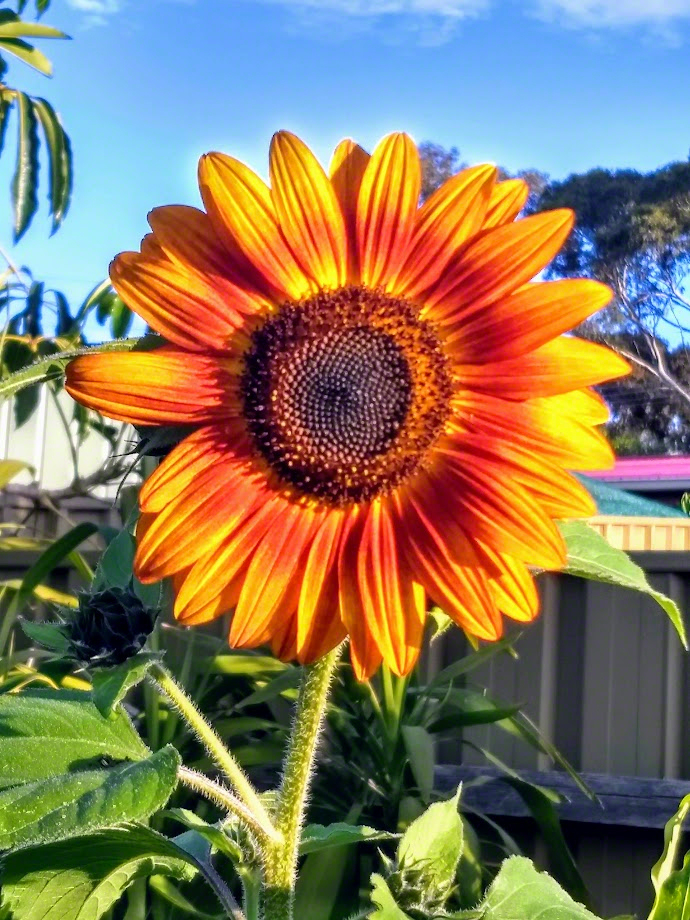
“The only time I feel alive is when I’m painting.” – Vincent Van Gogh. “I can’t change the fact that my paintings don’t sell. But the time will come when people will recognize that they are worth more than the value of the paints used in the picture.”
[The Sunflower; a Van Gogh icon (c) L.M. Kling 2018]
A current example of those discouraging times when our books don’t sell; I recall my experience during two years in art exhibitions of not selling—not one, not even a cheaper unframed painting. So, at the time, I could relate to Vincent Van Gogh.
As writers we too feel disheartened when our books don’t sell. We’ve spent hours, weeks, months, maybe years writing, refining and producing our “babies” just to see them sit there on the shelf, unloved, unwanted, buried under millions of competing books in the Amazon ranking list.
Perhaps you were one of those authors who attempted to take the traditional route, sending query letters to potential agents or big-name publishers, only to receive the rejection letter months down the track. And this happened over and over again.
Or maybe like me, you saw the writing on the wall, bypassed all that palaver; went straight to Amazon, Draft to Digital, (or some other online publishing service) and self-published. Whichever way, the result is the same, the product must be sold. Even in traditional publishing, we are selling our books to the publisher then, if we are successful, they expect us to promote our books at book launches, speeches and signings.
Advertising, it’s all about marketing and advertising.
So, here I was, I had my “baby”, (actually “babies” — five books now), and to advertise, I have my blog, my website and most recently, Indie Scriptorium Self-Publishing Collective. Week in, week out I blog and post. I try and keep up with my followers by reading, liking, and following their blogs. Sometimes I offer my books for free on Kindle. I’ve tried a bit of advertising too. Slowly my contingent of followers has grown.
Yet, I see my friends or associates on social media pumped up with successes and bestsellers to their name. There’s influencers who have monetised their websites and now own a portfolio of properties. Then there are the bloggers who have 100,000-plus followers.
How do they do it?
All the while, here’s you and me, the wallflowers, missing out.
Believe me, being a wallflower is discouraging.
But, fellow wallflowers, don’t be discouraged.
Don’t give up.
Persevere.
I keep reminding myself that those success-stories often start with struggle. The people who are successful in sales, most often put themselves and their products out there. They spread the net far and wide, so to speak. They don’t give up when faced rejection. They keep on going. They have goals. And when they fail, they pick themselves up and keep on running.
True, there are some for whom success falls in their laps. But for most of us, we need to make the effort to reap the rewards.
The comment Van Gogh makes resonates with me. Although he sold only one painting in his life, he believed in his work, and the timeless quality of his art, as one can see from his quote at the beginning of this post.
I believe that’s how it is for me when I am writing, and also painting. I feel alive. And echoing what so many of my fellow “creators” say, I would rather be creating than getting bogged down in all the marketing and advertising. Like Van Gogh, I can’t change the fact that my books or paintings don’t sell…
Words are wonderful, a vital means of communication for most humans. They are powerful but often we don’t treat them with the respect they deserve. We abuse them. We change the meaning – at times because we don’t fully understand for some reason.
But before we give ourselves a rap on the knuckles for our mistreatment of words, remember that language is alive. If words remained the same, with the same meaning for all time, then the language we speak would be dead—like Latin. The problem is that the meaning of words changes over time, but some of us haven’t kept up with the latest contemporary meaning. Or some people may use and understand a current, an “urban” meaning of a word but be unaware of its original meaning.
This happened with “decimate”. Currently most of us use it to mean “almost completely destroyed”. Originally it meant “every tenth one”. This was because it came to us from “decem”; the Latin word for ten. An ancient Roman army conquered and decimated i.e., lined up those who’d been conquered, counted their “victims” and every tenth man was put to the sword, the rest enslaved. Far from “almost complete destruction” of that enemy.
Two words that currently fascinate me are “million” and “billion”. We all know they mean “a lot”: a million of anything whether it’s dollars, dwellings or the inhabitants of those dwellings is a very large number–a seven-figure number, you know, one with six zeros attached to it (1,000 000). But just how much? What does it look like if we were to imagine it? Hard to comprehend even though we casually talk about a house selling for over a million dollars; even though we hear on the news of a million or so people in some country or other…
I once knew of a primary school teacher in a small country school who was in charge of the “middle lot”: two- or three-year levels of seven- to ten-year-olds. She wanted to give her class an idea of just how many a million was, so she decided to have the children collect bread tags to use for a number of aspects of their Maths lessons.
It wasn’t long before the whole town got involved. Bread-bag tags by the dozens, the hundreds arrived, and were used in a variety of Maths activities, then counted; the results graphed, tabulated… and finally those tags were added to all the others in a handy, unused glass aquarium. All were agog to see if that aquarium would hold a million. Everyone hoped they’d reach that magical million mark by the end of the year.
It was not to be.
The collecting continued throughout the next year. And the next. By this time friends, relatives, aunts, uncles, grandparents from near and far, some from the other side of the country were avidly collecting and contributing.
After ten years that teacher retired, and the project came to an end. The aquarium was about two thirds full and the grand total of bread-bag tags. Not even a quarter of a million.
The point was made, loud and clear. A million is an enormous number!
So, the moral of this tale is that we as writers need to take care when using words. Even simple words we use all the time can be misunderstood by the reader.
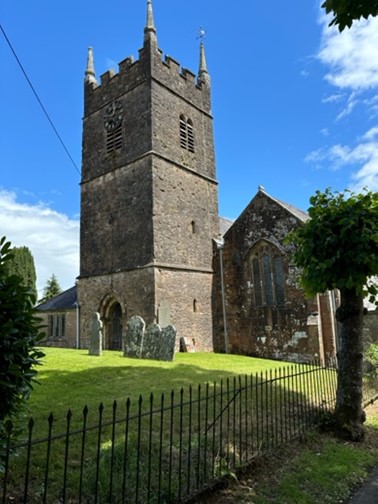
Quaint English villages are the typical settings for Cosy Mysteries, but any small, interesting community will suffice.
I admit that I’d never heard about Cosy Mystery novels until I attended a wonderful presentation by Morgana Best at the Romance Writers of Australia conference in Adelaide 2024. Cracking the Cozy Mystery session opened my eyes to this delightful, popular genre.
I personally love crime books, especially Nordic noir, the darker the better but even this avid reader sometimes finds the desperate situations, vivid descriptions and awful outcomes too much to bear. Waking up in the middle of the night with detailed images of beheadings, disfigurements and accompanying gore is unsettling. Psychopathic villains can haunt my nightmares and leave me looking for a good romance at the library the next day.
Maybe it’s time to read some Cosy Mysteries instead? A murder without mess, a whodunit solved by an untroubled, clever amateur sleuth with a happy outcome.
But there are conventions for writing these very popular tales.
The sleuth must be likeable, unexpectedly clever and an amateur. They might want to hide their brilliance under a bushel.
The investigator must have a strong motivation to solve the crime; a sense of justice, a desperate relative, someone falsely accused or police incompetence.
The mystery must be cleverly crafted with copious red herrings, but the reader discovers all the clues in the end.
Good research is essential into murder techniques, police procedures, coronial enquires, autopsies and medical assessments.
No blood, gore or graphic descriptions of the crime.
No blasphemy, cursing or coarse language.
No sex but a touch of sweet romance is allowed.
The victim must be flawed and/or unlikeable but must still engender some sympathy to warrant the investigation.
The setting is a small, appealing community with lots of quirky residents.
No animals or children should be harmed.
You can add smart dogs, strange cats and unusual but endearing pets/wildlife.
The police should not be involved unless they get it wrong and need to be enlightened.
The mystery/murder must be solved, and everyone live happily ever after until the next victim bites the dust.
These books sell in their millions every year. There are many sub-genres including romantic, historical and paranormal themes. Many Cosy Mystery writers do a series of books and get a following of avid fans.
The genre can be traced back to Agatha Christie, who introduced readers to her clever sleuth, Miss Marple in the 1930s. Other famous historical mystery writers are Dorothy L. Sayers, Margery Allingham and Ngaio Marsh. These four ladies were the Queens of Crime in the early to mid-twentieth century.
Cosy Mystery books have engendered many television series: Death in Paradise, Agatha Raison, Shakespeare and Hathaway, Father Brown and Sister Boniface to name a few.
I certainly will be looking out for some cosy entertainment at the local library. As for writing one, the ideas are circling. A murder of crows over a distant field …
For more reading, I found the following articles informative:
Ingram Spark—What is a Cozy Mystery and why is it so popular? An article by Debbie Young September 2019
Crime reads – Cozy Mysteries aren’t going anywhere, in fact, There’re as Popular as ever. By Olivia Blacke February 2021.
And please have a look at the cat inspired web site of Morgana Best – writer of paranormal cosy mysteries and the lovely lady who inspired this blog.
For many of us, the word “swamp” doesn’t have much in the way of appealing connotations with its implications of boggy, muddy, and probably smelly too. Many a frustrated mother has applied the word to a child’s bedroom along with orders, “Clean it up! Or at least keep the door shut! Please!”
The Macquarie Dictionary tells us that a swamp is: “a piece or tract of wet spongy land; marshy ground; an area of still, often stagnant water, infit for cultivation”.
Nothing appealing there, is there?
Words are powerful. How we use them; the pictures we get in our head when hearing them are often beyond our conscious control—we hear, we respond (and at times react. Sometimes in quite unexpected ways!)
In the far South East of our state of South Australia, “swamp” has a vastly different meaning. Here the land is flat, seemingly as level as a tabletop. Apart from the many acreages that were cleared and planted with pines, the country is studded with magnificent, giant red gums: Eucalyptus Camaldulensis.
You could see this part of the world as upside down; a reverse of “normal” where usually so-called “flat land” is actually a series of low, rolling hills and shallow valleys. Here, mile after mile of the South East however, there is not a hill to be seen, not even a gentle rise. Instead of the “gentle rises” there are dips: downs rather than ups, huge shallow bowls in the land surface. As it is so flat there are no rivers of streams but in winter all those lower parts can function as drainage sumps. Again, due entirely to that word “sump”, a less that appealing picture.
The very earliest settlers must’ve found these vast stretches of winter water an impediment, their animals could well have trampled round and in and through creating bog holes while areas for cultivation and cropping were dictated by the sheets of water impeding their workaday world. To those folk, “swamp” would surely have been seen as appropriate.
Late settlers, however, learned to work around all the water. They learned to appreciate the myriad of water birds that flocked to their swamps. They saw beauty in all those clear, still sheets reflecting the giant gums so often standing alongside.
The children of these settlers had a magical childhood where they could catch tadpoles and tortoises; paddle around in homemade rafts; climb the nearby trees; construct cubbies; build boats; and, on a convenient bank, dig out dockyards for those boats.
This was also my childhood too and it was truly magical. Along with that magical childhood, I also learned how words can be used in a way that varies their meaning—there is much more to them than mere definitions in a dictionary.
“Lake” would be far more appropriate word for the magnificent sheets of water teeming with life that were an integral part of my younger years. But “swamp”, for South Easterners like us stuck.
Such is life!
Those of us who write, however, must always be careful with our words. We cannot assume our reader will interpret what we have written in the same way that we intend. And yet we mustn’t go into long, convoluted explanations—a sure and certain way to ensure we’ll have not readers! It is truly a balancing act demanding skill, awareness, and sensitivity.
Nobody has ever said that skillful writing, effective writing is, to put it colloquially, a walk in the park. It takes time, care. And consideration—lots of that! The rewards: the satisfaction; the sense of achievement outweigh the pain and frustration many times over though, don’t they?
I have been mulling over what stops us. What makes us stall from reaching our potential? Our potential to write that novel in our heads. Finish that story. Take up the challenge we are given and run with it to the end. Often, it’s the way we see ourselves. Our limitations. When faced with the challenge, our song is, “I can’t. I’m not good enough.” We reinforce our self concept with the chorus, “I failed that (insert challenge) at school.” Or “I was sacked when I did (that particular challenge)”. It got me thinking that when we define ourselves by our limitations, we work ourselves into a corner.
One fun activity that our Writers’ group found useful was the 100-word challenge. This little task helps fire up the creative juices, refine writing skills, and simply work around the limitations we writers put on ourselves.
Below is an example from my collection.
Worked…
…Into a Corner
All afternoon, our backyard echoed with the hum of the cement-mixer, and intermittent scraping. Dad, armed with a trowel, smoothed the cement over an area pegged to become the back patio. Metre by metre, he pasted his way back.
Mum stood on the porch, and with hands on her hips, remarked, ‘And how are you going to get out of this one?’
In an ocean of soft cement, Dad looked around him, lost. ‘Er…um…I’ll work it out.’
Tracks back to the lawn-edge smoothed, Dad stood and admired his DIY job.
Next morning, paw-prints made their way to the rainwater tank.
I was fortunate enough to attend a session curated by Associate Professor of Creative Writing, Amy T. Mathews at Flinders University at the 2024 Romance Writers of Australia conference. Called Romancing Academia I was intrigued to find out how a university course tackled the most popular form of fiction, romance.
It was an amazing revelation. Doctor of Philosophy doing romance?
The presenters were brilliant speakers who spoke passionately about their PhD. topics. Their analysis of the tropes used in Romance was entertaining, enlightening and inspiring.
It became obvious that Romance was much more than light entertainment to these academics. One session delved deep into the sociological, historical, psychological value of strong independent romantic heroines. It discussed how feminism is portrayed in popular literature.
Another session looked at the ways writer’s avoid incorporating characters of ethnic diversity or Indigenous characters for fear of getting it wrong.
The issue of informed consent in romantic relationships was another lively topic for a thesis.
Another speaker examined the arranged marriage trope which was contrasted with the reality of arranged marriages in many modern societies. It was explained that arranged marriages can be culturally acceptable and a welcomed way for single people to meet potential partners.
Romancing Academia was informative and enjoyable. It also highlighted for me the opportunities available for writers who want to hone their craft.
I’ve been writing for five years and have produced two historical romance novels. I’ve learnt lots by researching and writing blogs for Indie Scriptorium. I’ve honed my skills as I’ve analysed the work of other writers in my critique group. I’ve acquired information about writing romance from the Romance Writers of Australia articles and wonderful sessions at RWA conferences.
Looking back, it’s amazing how much my writing craft has developed. When I started my first novel, I didn’t have a clue about what I even needed to know. Luckily, I had two university degrees and a career in social work so I could portray characters well and understood the motives that drive people. I relied on good beta readers and editors to get my ideas into readable prose.
But do I need more? The more I write the more I realise I don’t have the skills to adequately portray the ideas, themes and goals that I want to write about. The Romancing Academia session made me think more carefully about what I write. I’ve come to realise that my passion is portraying realistic history in the format of entertaining fiction. I love history, especially neutralising the misogynist and racist biases that have been offered up over time. To do this with authenticity in fiction is not easy.
Romancing Academia opened my eyes to the possibility of enrolling in a university course that focuses on creative writing. A way of fast tracking the knowledge and skills I need to become a better writer.
In South Australia, all three of our universities offer undergraduate and post-graduate courses in Creative writing.
University of South Australia offer:
Bachelor of Arts (Creative Writing and Literature)
Bachelor of Creative Industries
Graduate and Masters degrees
For information contact 8302 2376 or you can submit an on-line enquiry. Visit their web site https://study.unisa.edu.au for more information.
[Last Tuesday the Indie Scriptorium team were part of the Spring into books Wordfest at our local library in Woodcroft. We hope to have a more detailed reflection on the event in the near future–once we’ve recovered…One thing that stood out for me were the number of aspiring authors who had written a book, but needed guidance on what steps to take next.
With this in mind, here’s a re-blog; a cautionary tale by Mary McDee.]
A Cautionary Tale
We have just discovered that a writer friend of ours has been taken in by a couple of publishers. She has lost a lot of money (nearly $30,000), is confused upset and angry. All she’s got out of it is one single copy of the book of which she was so proud.
“She must be pretty thick” I hear you saying.
Not so. Not at all. She’s vibrant, intelligent, educated; a businesswoman all her working life and still, in her retirement, involved in theatre. But she’s been conned by experts. It could happen to any of us which is why we feel it is important to fill you in.
Let me tell you how it happened.
Long ago writing became an interest for her but only as a sideline, an enjoyable hobby. For a long time, she operated on a “lone wolf” basis but a few years ago she joined our writing group. Occasionally she referred to a book she had written and the publisher with whom she was dealing. We never took her up on any of the details; our group concentrates on works in progress and critiquing each other’s efforts. That book of hers was done and dusted – on to the next level so beyond our current concerns.
However, a couple of days ago she made another comment and was obviously unhappy about things. We’d finished our readings and given our feedback early so this time took her up on it: who was the publisher, what was going on… And, eventually, how on earth did this happen?
Very easily as it turned out.
Publishing was a foreign field to her, so she did what most of us do these days – she went on the internet. Not long after her internet search, she began getting phone calls. There were people in the USA who were interested in her work; keen to look at it; keen to publish!!
She was thrilled, sent her stuff to them – it was a children’s story illustrated with her own delightful artwork. They rang and talked terms, explained the “situation” and were enthusiastic about possibilities. The world opened up; she was thrilled, excited.
But she was an innocent abroad, abroad in a world of which she knew nothing; nothing at all. She sent them money as requested (Pay Pal is a wonderful innovation when dealing with those who are far away!) and waited expectantly. There were phone calls relating progress. She paid more money.
Things dragged on. The months became years. She began to have concerns; to worry. But reassuring phone calls, explanations, progress reports allied her fears. She received a single copy of her book.
She was told it was in bookshops in the UK; bookshops that were part of a large chain with stores all over the country and that it was selling well. But she was getting paid only a few cents very occasionally. She wondered and began to worry again.
With friends and family in the UK, she asked them to go to a few of these bookshops and check them out. No sign of any copies of her book anywhere. Then she somehow found out that Amazon was supposed to be involved – she’d had no contact with Amazon; none at all.
At no time throughout this saga had she been offered a contract; at no time had she been asked to sign anything. All she’d ever had was phone contact. So, she asked for them to communicate with her in writing. Despite repeated requests, they never have.
She realised there was something seriously wrong; that she had been conned. She was hugely embarrassed and loath to admit to what she saw as her own stupidity. We keep telling her that action coming from lack of knowledge can never be classified as stupidity. She’s finding that hard to accept though and still feels dreadful about the whole thing.
Sadly, there are many out there operating this way; skilled in taking advantage of the uninformed; the unwary; those of us with dreams. In the world of publishing, they are labelled “Vanity Publishers”. It is doubtful if what they do is illegal – they’d be very sure it wasn’t!! But it is certainly immoral. All they will ever do is flatter you; con you; extort money from you. In short, use you then spit you out,
Our Indie Scriptorium Team has been busy this week preparing for a fantastic local author event, Wordfest. If you happen to be in Adelaide, come to Woodcroft Library, 3 to 7pm this Tuesday September 10.
Indie Scriptorium Self-Publishing Collective Anthology 2024 will be available in print from this date.
As well as the anthology, we will be selling our print copies of our books which include:








 Indie Scriptorium -- Self Publishing Collective