Sunday Missive–Family History & Writing

Ancestry—In the Looking Glass

More than once fellow writers have asked me, “Where do you get your ideas from?”

Is it from other stories, books, plays or the media such as radio, television, or the internet? Or is it something more?

In the past couple of months I have, as mentioned in other blogs, like Alice in Wonderland, gone down the rabbit-hole of Family History.

What has ancestry or my heritage got to do with writing and publishing, you may ask?

One of the reasons, in my case, is research. A detective novel I am working on requires understanding of genealogy, and the process of DNA analysis. So, down the proverbial rabbit-hole I have gone.

What I’ve discovered so far are the beginnings of a revelation and like a detective novel, the clues/information presents itself like puzzle pieces gathered, then sorted and finally fitted together.

I’ve learnt that like a detective, I must be patient, methodical and have a keen eye for detail. Nothing worse than being sloppy or having sloppiness thrust upon me in the process and getting sidetracked by a red herring.

For example, in the beginning of my family history quest, there was the mystery of the extra “brother” of my great-grandfather. On further investigation and checking of Census data, it turned out the “brother” was a nephew. My great-grandfather from Bavaria, being new to Great Britain and the English language, labelled his brother’s son as a “brother” in the first Census he completed. Ten years later, in the next census, the mistake had been corrected.

Learning what it takes to become a good detective for my Detective Dan series, I’ve discovered that creativity is a part of problem-solving. One lesson learnt was the problem of my youth, tunnel vision. Thirty-five years ago, my auntie handed over the family historian mantel and box. Dutifully, I read the material, joined the local genealogical society, and began my search. I helped a family historian relative with my branch of my paternal grandmother’s family history.

But in the early 2000’s, once grandma’s history was done, dusted, and launched, with the internet in its infancy, continuing with the whole deal got too hard, and was looking like being expensive. So, I turned to the comfort and ease of fiction writing. I eased my guilty conscience of abandoning the project by knowing that my relatives of German descent were doing a much better job than I was in digging up ancestors, building family trees and producing more books. I was happy to receive their hard-earned research usually published in large tomes by local publishers and enjoy what they had uncovered.

Meanwhile, ideas flowed for my Sci-fi novels. The good crusaders fought against evil alien cockroaches. Injustices challenged, good people imprisoned, innocent people burned at the stake as witches, young nobles went missing and evil cockroach aliens wreaked havoc on the universe. Often ideas came in the form of dreams or ideas for a novel sprouted while showering. Worlds were built on these dreams and with the recall of stories of my German ancestors migrating to Australia, the Lost World of the Wends was born.

In late 2023, I delved into Family History once again, this time with more sophisticated computer technology. While plotting my ancestors using all those family history books, I had accumulated, I discovered a noble family line in Lausanne, the French part of Switzerland, stretching back to the 12th Century. Why had I missed this gem when reading the translation in 2010? Tunnel vision. It wasn’t my father’s family name from Bavaria, therefore the family name presented that was of French origin meant nothing to me. I must’ve skipped over that part when reading it.

Further investigation unearthed a pedagogue (a cousin I think from the other branch of this family). However, the pedigree showed me that this line of the family may have been influential in our family’s value for education, not just for the males, but females as well. Plus, it explains my affinity with France.

Now, to answer the question posed at the beginning of this post. Where do my ideas come from? I’ve often wondered if dreams have a genetic component. Sure, family passed stories down from generation to generation, but couldn’t it be also the case that significant emotional events of our ancestors are also passed down through our genetic code? Who we are, our identity, our creativity, is made up of the sum of our predecessors, our ancestors. Could explain why unpublished novel, Mirror World, Adelaide is French…Just a thought.

On that note, I feel as a writer, that with family history, it’s not enough just to fill in the birth, death, and marriage details. The genealogical books that most interest me are the ones which give the context of history, description of the land in which they lived, and a brief resume of each family member’s lives. Photos too are important and make history come alive.

All this research takes time. I’m at the beginning of my quest, searching, digging, and fitting the puzzle pieces together. I’m learning the art of research, once again, as I delve into the rabbit-hole of ancestry. At the same time, I’m learning what makes a good detective for my Detective Dan series which will be under the pen name, Tessa Trudinger. Watch this space.

© Lee-Anne Marie Kling 2024

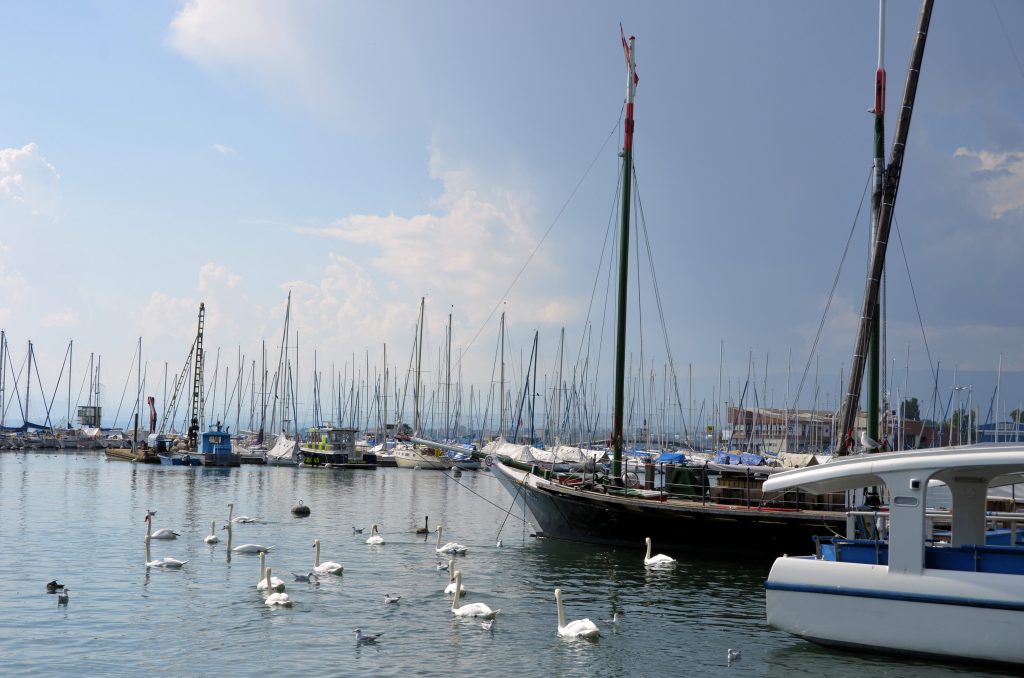
Feature Photo: Lake Geneva, Lausanne © A.N. Kling 2014

Guest Writer–Robert Richardson

Words and Rhyme by Robert Richardson

Indie Scriptorium is beginning a new tradition in 2024. Every fourth Sunday of the month we will be featuring a guest writer.

This week, the Indie Scriptorium team have invited fellow Adelaide artist and writer, Robert Richardson to share a poem from his recently published book on poetry, Words and Rhyme.

Some months ago, Mary McDee wrote a post giving tips on writing good poetry. We had quite a bit of interest in the article and some further questions pertaining to the mechanics of an effective poem.

The following poem by Robert Richardson is an excellent and catchy summary of the main types of poetry and how to write them.

If you’d like to read more of Robert Richardson’s poetry book, click on the link below:

Cheers,

Lee-Anne Marie Kling (c) 2024

Feature Photo: Words and Rhyme cover (c) Robert Richardson 2023

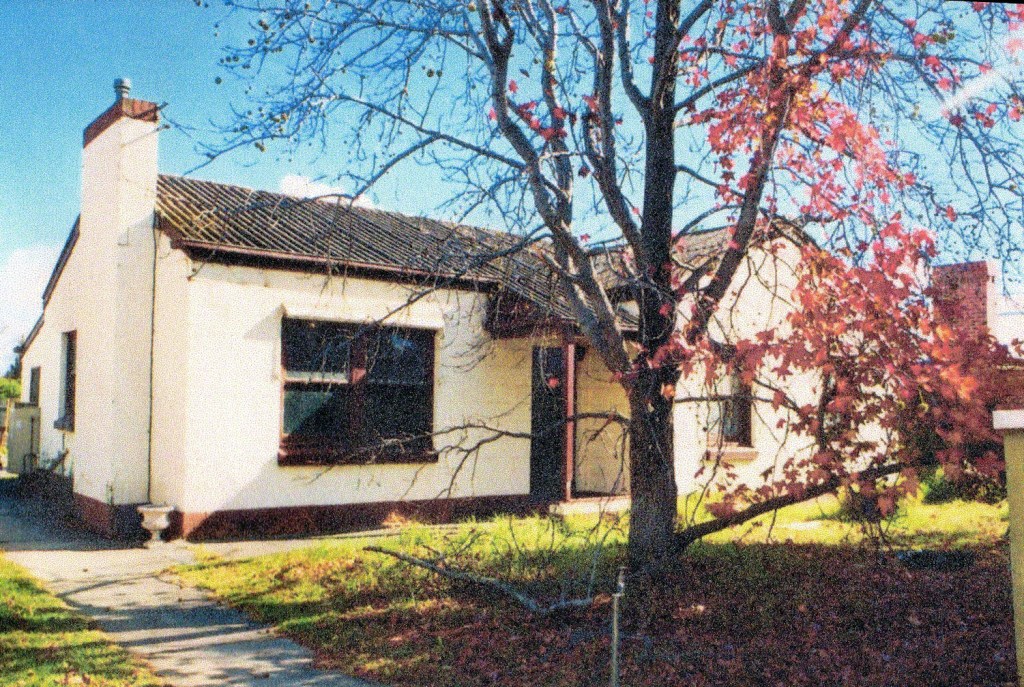
Words–When a House is a Home

WORKING WITH WORDS

We writers consider words as our stock-in-trade; valuable servants to our need for self-expression; treasured allies in our creative pursuits.  They have meanings that give messages; messages that, at times, are subtle or can be misinterpreted or confusing. Consequently they must be treated with care and respect if we are aiming for clarity and impact when we use them.

I learned this lesson many decades ago so let me tell you how it happened.

“A house is not a home.”  My father was adamant.

I must have been about ten or twelve years old; it was a mealtime and I had been sounding off about something or other.  I have no idea what I’d said to elicit this from Dad but my memory of that situation and his response to me is very clear.  He was firm, very firm.  But gently so as he went on to explain what he saw as the difference.

“A house is a building”, he said; “nothing more – bricks and mortar; walls and a roof.  A house is not a home until people are occupying this sheltering structure.  Even then it is not a proper home if those residing there do not care about each other; were not considerate, respectful of each other; welcoming to strangers and willing to share whatever they had, however little that might be.

A shed, a tent or a bark humpy could be just as much a home as a fancy mansion.  Indeed, a fancy mansion where there is no peace; where people are always fighting, abusive, rude, or out to take others down is no home at all.  A place where everything is only for show, designed to impress; aligned to elicit awe and admiration from visitors but is, in fact, a veneer for misery could never ever be a home.”

My parents lived their beliefs and, apart from the values such conversations inculcated in me, this particular episode stuck.  It gave me a great respect for the importance of accuracy in my use of language as well as triggering a lifelong fascination for the subtle differences in the meanings of words.

A few years later, a High School English teacher emphasised the point but in a different way. He was talking about the nature of poetry and told us that, in essence, poetry was:         

“The very best words arranged in the very best order”                                                                                        

As a budding writer I remember thinking, “Surely that applies to anything I write, not just poetry?”  At the time, like Brer Rabbit, I just lay low and said nuffin’ – I was far too shy to question someone I saw as an expert.  But those words stuck and became a guiding light; a light that is far from easy to follow all the time, believe me!!

Many, many years later my sister-in-law, Nancy, completely and unintentionally in this matter of word precision, turned the tables by setting me straight on the use of another word (as well as the importance of care when conversing with littlies). 

This time it was her grandchildren who were involved.  They’d been excitedly telling me about something planned for their father that was to be a surprise.  I’d responded along the lines of “So you’re being careful to keep it a secret?”  At which point Nancy told me that, in their home, they don’t talk about “having secrets”.  It was always “Keep the surprise”.

Discussing it later, out of earshot of the small ones, she told me that they wanted to ensure the children were brought up in an atmosphere where openness was the norm as they felt that “keeping secrets” could lead to trouble down the track. 

Despite my fascination with words and unrelenting passion for accurate usage, it was something I’d never thought of before!  Point taken!  And appreciated!!

Language is communication.  It can be subtle and suggestive.  Words are powerful.  And the implications of those words can be even more powerful.  So it behoves us as writers to consider every word we write with the utmost care – but not in the initial first draft stage where we simply spit out our ideas; get it all down out of our heads and onto paper. 

The “working with words” bit is part of the editing process.  But that is another story for another day.

© Mary McDee 2024

Feature photo: Somerton Park Trust Home © L.M. Kling 2005

Who Do We Think We Are?

An Artist’s/Writer’s Perspective

[New Year and for me at least a quieter time to reflect after a hectic end to 2023. Also a time when I have finally tackled the challenge of family history research. Almost thirty years ago, my auntie passed on the “mantel” of family historian. She also handed the box of research which she had done. For most of that time the box has been stored away in our closet, except for the early 2000’s when I took part in compiling my father’s mother’s family history. Then, after hitting brick walls in my research, back it went. Writing fiction was so much easier. And fun.

This last year, I have been working on a crime novel. Since a key part of the theme of this novel will include family history and using DNA to build ancestral family trees, out came the family history box again. You could say, I’m researching my novel by doing and experiencing. After only four weeks of exploring down the family history rabbit-hole, and believe me, it is a rabbit-hole, I’ve discovered tracing once’s ancestors requires methodical, critical brain power, and an OCD attention to detail…much like a detective, really. You wouldn’t believe how many of our ancestors have the same name but are different people.

I also have discovered that names, and dates of births, deaths and marriages get boring after a while. The family history books that stand out are the ones which give a brief, or not so brief, descriptions of people, their lives, personalities, interests and job.

On that note, I’m reminded of a blog I wrote way back in 2016 and how we are often defined and judged as a person by what job we do and how much we earn. So, below is that article which examines current day attitudes which may affect our motivation to become a writer.]

Census time!

As I filled the forms out online (two days after the due date—another story covered in the media), I had a Eureka moment.

I faced a dilemma regarding the work/employment section with questions: “What’s your main job?” and “How much do you earn?”

As an artist/writer I had a conflict of interest. I knew what the statisticians from Canberra were after. I understood by “your main work”, they meant “paid” work, or in my case, the work that paid the most dollars.

So, if I ticked my writing and proceeds from the novels I’ve published for which I’ve been paid a pittance, but on which I’ve spent the most time, the Australian Bureau of Statistics (ABS) would not be happy. In their estimation, work without the dollars attached to it, is not “work”.

If I put my Art, that is, painting, from which I earned a few hundred dollars in the last financial year, that also wouldn’t satisfy the ABS—even if I do sit down at Art Group and say, “I’m going to do some work now.” Besides, according to my accountant, my earnings from art is “hobby money” that goes back into painting supplies and equipment.

Well, then, that leaves the paper round. I inherited the paper-delivery-round from my son, who after he saved enough money for a computer, had no use for it. But I did. This “work” earns sufficient funds for a holiday every year or two. And I like the fresh air and exercise.

So I marked the paper-round as my main work even though I spend the least amount of time compared to painting and writing. How sad that my “work” according to the ABS is reduced to four hours a week delivering papers after having achieved a University degree.

[I might add here, that I no longer do this paper round. So, I am investing time into building up the Indie Scriptorium business and helping fellow writers in the process of publishing their books.]

The ABS will never know the other side of my life—my work of choice—the Arty Creative work, because there’s no money of any significance in it.

In our society, unless the “work” has dollar signs attached, it’s worth nothing.

So I mean to say, the whole spectrum of our culture, what makes our culture in fact, and enriches our lives: the writing, drama, music, art, doesn’t exist in the Australian story according to the ABS.

The reason? Artisans, be they writers, actors, artists, musicians and other creative people are not valued for their craft. To survive they must earn a wage—if they can find a job. How many of us “creators” are forced to choose between our craft, and food and shelter?

We become teachers, restaurant staff, cleaners, office workers, accountants or whatever while our passion to create becomes quenched by the need to survive. At the end of the workday, we are often too tired to create.

 ‘When we retire…’, we promise ourselves.

My Dad was an artist. He went to Art School after high school. He even sold a painting through the local newspaper as a young married man. However, he had a family to support, thus became a teacher, and his art was sidelined. ‘When I retire, I’ll get back to my art,’ Dad would say. He retired, but the paints and paper remained packed in a suitcase in the cupboard while he pursued his passion teaching and music.

Also, having come from a family of authors, he had dreams of writing a book, or maybe his memoir. Never happened.

I have inherited Dad’s 300gsm Arches paper, watercolours and brushes, and I feel that I’m carrying on the art tradition my Dad began. In the writing field, I am also carrying on the family legacy of authorship, albeit self-published, but published all the same.

So in the end, statistics are just statistics; they don’t tell the whole rich story. Statistics won’t reveal that the Fleurieu Peninsula (the area in which I live) has reportedly the highest percentage of writers and artists in Australia. Statistics only reveals the tip of the iceberg of artists and writers who have entered for the census information that they are a writer or artist because it’s their main source of income. However statistics will miss many other creators who do not put their craft as their main source of income.

For most of us creators, the line flung at us by well-meaning family and friends is: “Get a real job.”

Creating is not valued unless there’s a cost, and yet everyone wants to be entertained…often without cost.

The other side of the story those who push the “proper job line” don’t understand is that the rewards of creating for an artist, in the broad sense of the word, outweigh the monetary rewards one receives from the so-called “real work”.

© Lee-Anne Marie Kling 2016; updated 2024

Feature Photo: One of my ancestral stamping grounds, and behind it, a riches to rags tale (but that’s a story for another time), Lake Geneva, Lausanne, Switzerland © L.M. Kling 2014

Christmas in Australia is almost Over…

CHRISTMAS DAY TAKE-AWAY

A reflection…

With shops closed,

Except for trusty IGA.

There’s no room in the fridge,

All stocked up for Christmas Day.

Drinks cool in the esky,

Presents wrapped under the tree,

Doused with tinsel snow,

Waiting for us to open and see.

So, before all the rush

In the stillness of the night,

We rest, at peace reflecting,

The wonder, Christ our light.

© L.M. Kling 2015; updated 2023

Feature Photo: Christmas Bauble © L.M. Kling 2015

Merry Christmas and have a Wonderful New Year

From the Elsie, Mary and Lee-Anne, your Indie Scriptorium team

To Market, To Market, How Did We Fare?

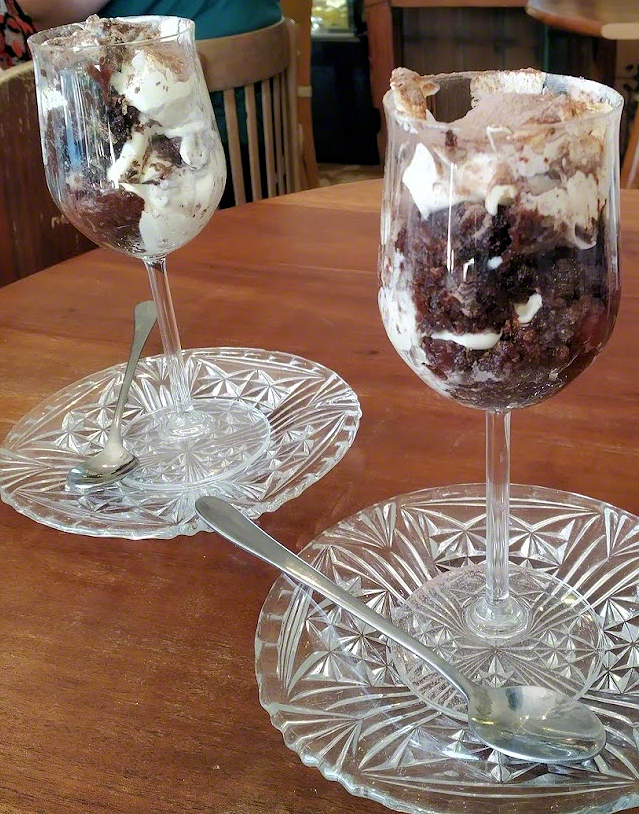
Last Friday, Mary and I attended a party at a local Café that we patronise every Wednesday between Bible study and Writers’ Group. We go there for lunch and have started to get to know some of the regulars there as well as the manageress. She makes a delicious Black Forest Cake.

[Photo 1: Black Forest Cake at Café 101 © L.M. Kling 2023]

Anyway, on the way, I remarked, ‘Wow, it’s been a week already since the market.’

So, how did we go? You ask.

What you must understand is that the main stream media did its best to deter people from doing anything—apart from activating their fire-safety plan. Or second to that, heading to the nearest bunker and hunkering down waiting for the apocalyptic storm to pass.

As it turned out, the doom and gloom weather forecasters were out by a couple of days. Clouds shrouded Adelaide by mid-afternoon, even a few spots of rain. The fires never happened. The evening of the market turned into a balmy twenty-something degree Celsius, perfect for strolling in the market or enjoying Christmas festivities.

However, the damage by media had already been done and no one but a hardy few, ventured outside their homes to attend. In the end, traders traded amongst themselves. I bought a native orchid and a couple of Christmas cakes. Elsie bought my significant-zero-number birthday present, a handy art pouch that I can use when painting en plein air.

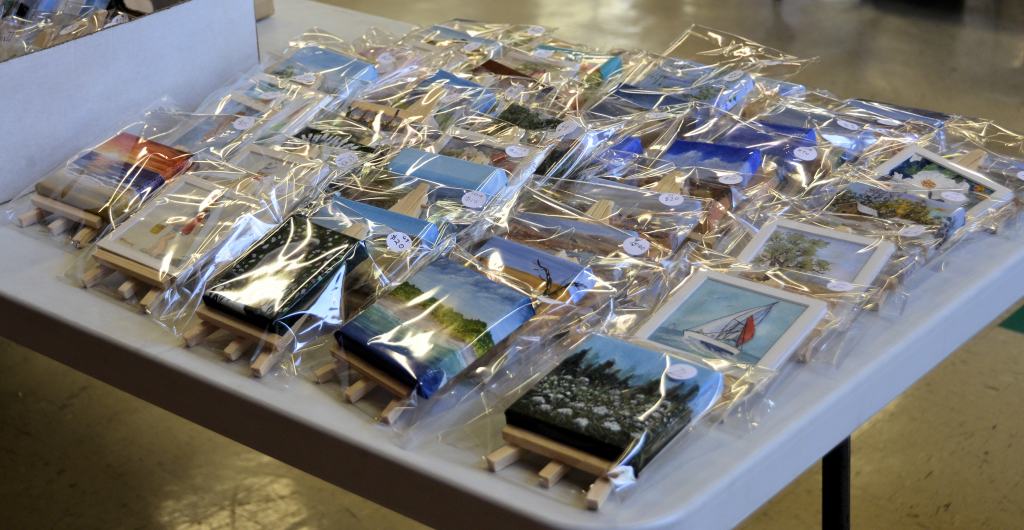
And finally, after no financial transaction action all evening on our stall, a neighbouring vendor bought one of my books, and Elsie’s great nephew one of my miniature paintings. Minutes before, we had sold one of Elsie’s cards while she was away from the table having a break.

[Photo 2: Miniatures for a previous market venture with Marion Art Group © L.M. Kling 2019]

Disappointing? No, I don’t think so. I have come to believe that the market experience is more than just buying and selling goods. It’s about community. Building relationships. Being a regular reassuring presence. Being there to listen to people, to connect with people.

Now at times, during the evening, this connecting was difficult to do. We were situated right under the main entertainment; a couple of merry “Elves” singing Christmas songs. They were doing a jolly good job of it, drumming up that seasonal spirit—except that they sang to no one but the vendors most of the time. Where we were the music blared at top volume. When some hapless soul did enter the market and pass our stall, they sped around the tables, glancing only briefly at our books and artwork. Communication, even amongst us concluded in sign language and I resorted to sharing writing in my notebook; a kind of note-passing between friends.

When the music-makers took a break, we had opportunity to connect with potential buyers or people who just wanted someone to listen to what was going on in their world.

While packing up, one of the neighbouring vendors gave some advice; cards don’t sell, they said, and every time is different, so don’t give up. From the brief debrief we had, we decided that in the future, we’ll look at selling smaller paintings and trying to get a stall far, far away from the entertainment.

As for connection, the market is just one way for advertising Indie Scriptorium and our indie-published books. After years of going to this local café I mentioned Mary and I go to every Wednesday, I finally gave one of my books, The T-Team with Mr. B to the manageress to read as a Christmas present. The Lost World of the Wends was given to a young writer who also comes to this café, and also I gave away a bookmark advertising Indie Scriptorium.

[Photo 3: The T-Team with Mr. B © L.M. Kling 2023]

Building the “brand”, the business by networking takes time, especially with the strident voice of professional media, but slowly but surely I feel, people are catching on and it’s happening for Indie Scriptorium.

A heart-felt thank you to all you faithful followers and newcomers to our Indie Scriptorium blog. Merry Christmas and we wish you a successful New Year in your endeavours.

Cheers, Lee-Anne Marie.

© Lee-Anne Marie Kling 2023

Feature Photo: Indie Scriptorium Team at the market © L.M. Kling 2023

Any Ideas? Need Inspiration?

I’ve always been fortunate to have far more ideas for my fiction than I have time to write them into a story or novel. But some writers struggle to find an idea and inspiration. So how do you get inspiration and ideas for what to write? This was my experience.

My first novel was easy to plot and plan. I wanted to set the novel in the Regency era because of my love of Jane Austen and Georgette Heyer. Then, women had no rights and little education and I wanted to promote my ideas about feminism and equality in that era. A Suitable Bride emerged from these basic ideas. I asked what would an intelligent and sensible woman do to ensure she made the best choices to achieve a fulfilled and happy life in a world where woman had no legal rights and little education? The answer informed the storyline of A Suitable Bride. The love that grew between my protagonists against impossible odds gave me the conflict required and the happy ending fulfilled the romance genre.

Family and friends who experienced the sad loss of a baby or suffered infertility inspired my second book A Suitable Heir. Again, I set the novel in the Regency period to capture the additional difficulties of upper-class woman whose main purpose in life was to marry and produce an heir. I asked how would a woman in a society cope with infertility in this era. In addition, I incorporated the issues of depression and loss when a couple remains childless and the joy of having children after a difficult time conceiving.

I’m currently writing my third book, which began when I watched the sad and senseless death of George Floyd. It appalled me to witness his awful murder and made me think what could I do to counter such extreme racism. I returned to my favourite historical period and I learned about the British slavery trade and its aftermath. This became the focus of A Suitable Passion. My protagonists appear to be on the opposite side of the abolition of slavery movement, yet my heroine is coerced into a marriage of convenience with a man she cannot respect. This book has been the most difficult to plot and plan as it required considerable historical research about slavery in the British colonies, a romance and a happy ending. Two rewrites later I am still attempting to incorporate an engaging story with a fascinating but sad history. I’m not sure I will achieve the right balance but love the challenge.

So, my inspiration for novels comes from social issues and themes, which I then incorporate into a favourite historical time to create fictional characters and storylines.  I find inspiration for short stories harder but thinking back these are some spurs that have helped me to create my short stories.

  • Writer’s group exercises. Some of my best short stories started out as a topic for a 10-minute writing exercise at the Woodcroft Writer’s group. Everyone wrote a sentence from a book, poem, article or from our imagination on a scrap of paper and then fold them up and put them in a tin. Each week we’d pull out a sentence and it would inspire us to write on the given topic.
  • If you can’t attend a group, just grab a book, pick a paragraph or sentence and use that as inspiration.
  • Some flash fiction web-sites provide topics for short fiction.
  • Reading is also a significant source of inspiration. You may enjoy a particular genre or author. Ask yourself could I also write like Stephen King, Agatha Christie or Jane Austen and start planning.
  • You can read articles in newspapers and magazines about actual crimes, daring rescues, sad losses, politics, sport, celebrities and unusual events and use these as inspiration. Change the time, place and names and start writing.
  • Just overhearing a conversation can inspire a story. So, learn to listen to people talking around you. It will give you ideas and help you create authentic dialogue.
  • Competitions are a great way to get inspiration. The Romance Writers of Australia have three anthologies published a year each with a particular keyword and theme that inspires the entrants. There are a lot of writing competitions that provide entrants with a theme or keyword.
  • Photos, films, social media posts can all provide you with ideas.
  • Research an area of history that fascinates you. As you learn more about the time, you can discover real life people and events that will provide a fabulous story. You can take an event in one era and put it into another. Change the characters’ names, the country they live in and then write it up as fiction.
  • Your own family or personal experiences can inspire as many a memoir writer will tell you.
  • Keep a notebook of ideas, or have a desktop folder with writing ideas so when inspiration strikes you can put the idea away for later consideration.

An important step in the creative process is to ask what if or how would? What if that hero in the paper later regretted his actions? What if that murderer wasn’t caught? What if that woman I overheard left her husband? How would a barren wife cope with a demanding husband in the 1800s. How would an abolitionist cope when her family are slave owners.

So, select a topic, make whatever changes you like and ask what if, how would and get writing.

Cheers Elsie

Elsie King©2023

Photo from Apple stock images.

To Market, To Market…

This Friday we, the members of Indie Scriptorium, will be selling our books, artwork and cards at the

Reynella Neighbourhood Centre Inc. Twilight Christmas Market.
164 South Road, Old Reynella
Friday 8 December 4 – 7pm

If you are in Adelaide, come and visit us there.

Not only will you be able to see the books and artwork which we have produced, we will be available to discuss with aspiring authors, such topics as: Helpful tips on becoming a writer, publishing your own book, and marketing options.

Hope to see you there,

Indie Scriptorium – a self-publishing collective.

© Lee-Anne Marie Kling 2023
Feature Photo: Christies market © L.M. Kling 2019

In the meantime, check out this blog from the recent past on ways to sell your book …