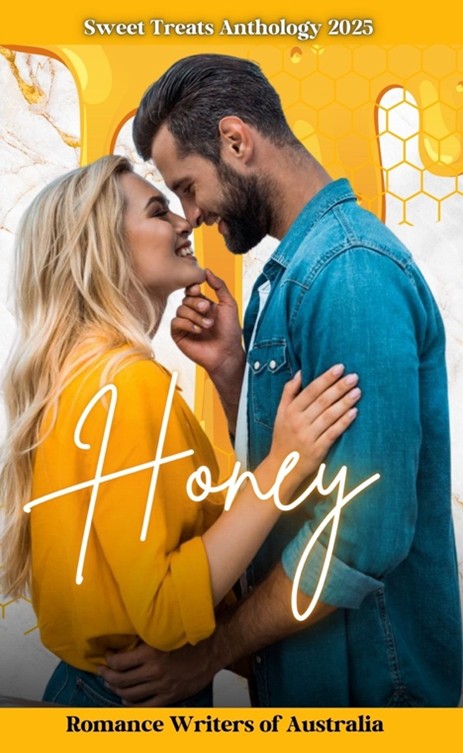
I’m pleased to announce that my story “Ant Honey Magic” has been short-listed in the Romance Writers of Australia Sweet TreatsAnthology for 2025.
The theme this year was Honey and required a sweet romance story of up to three thousand words. Romance Writers of Australia run a competition every year. The stories are judged and given scores and the top sixteen are selected for inclusion in the anthology.
I’m very pleased and proud to be included this year. The competition provides participants with excellent feedback and gives us a chance to get our work published along with some wonderful authors.
This is my second short story to be included in a Sweet Treats anthology. I also had a short story, “The Houdini Lollipop”, published in 2023.
Honey will be available on Amazon from mid-August 2025.
As a member of Indie Scriptorium one of our duties is to write and publish blogs on aspects of writing, editing, publishing or marketing every three weeks. Two years later we are doing a review of our blogs with the idea of putting them into an anthology.
As we currently only have three members the task of blogging has proved to be onerous. We would love to have some new members but …. Coming up with a topic, doing the research, writing 500-1000 words that make sense can be challenging. Making sure the blog is professionally written, properly edited and provides valuable information can be time consuming.
Indie Scriptorium has posted over a hundred blogs in two years. We have a following of 70 people and occasionally get positive feedback with likes from Facebook. Friends from my writing groups have also said they read the blogs and find them helpful. Yay.
But is the time and effort worthwhile for a busy writer who would rather be working on their next novel or short story?
I was recently asked where I find the time to blog? I responded without thinking. Oh, it’s a pain but I actually get a lot out of blogging. And on reflection that is true.
Doing a regular blog means that I am constantly researching writing skills, how to edit, what steps do you need to do to publish a book do a cover and burb, write a synopsis and market a book. (I need to do more research on this topic) In addition I have learnt about the legal, moral and technical issues to do with writing.
Looking back, I’ve realised that blogging has improved my writing style, made me a better editor and critique partner, has got me two books published and will in the future get my books marketed. The blogs have been like a course in creative writing, done with good friends and we have people who find our efforts helpful. We also will have a book of blogs later in the year for people to buy in the near future. That’s enough good reasons to keep me going.
[Our Indie Scriptorium team have been putting together an anthology of some of our posts over the last two years. As I hunted around my messy computer filing-system for a number of these cheeky posts that went hiding, I came across this gem that somehow got buried in the vast layers of time. Amazing what one finds when searching for something else. So, with a few changes, here it is…Enjoy and be encouraged.]
BURIED GOLD
People spend their lives building their own kingdoms. As creators, we often measure success by how far our name-brand spreads over the “Empire” of the internet, world, community, and how much “gold” (money) we’ve amassed through the sale of our product.
When I first started exhibiting my paintings, friends, family, and fellow artists asked, ‘Have you sold?’ and ‘How many paintings have you sold?’
The fact that I had sold made me an authentic artist.
Same can be true as an author of two self-published works of fiction. Again, like a broken record, those interested asked, ‘How many books have you sold?’
Answer, ‘Er, um…not that many.’
Then the implication I should have gone through the traditional route of getting a publisher.
Yup, maybe, probably…still deciding if I’ll do that with future books, especially the travel ones that have colour photos on glossy pages—the coffee-table variety. Not sure how I’d go…I mean, I’m not an unpublished “virgin” since I’ve gone ahead and self-published on Amazon. I got impatient, afraid I’d remain invisible with a pile of rejection letters, and my novel manuscripts languishing as a PDF-file on my computer hard-drive (the hard copies stored in a box in my closet).
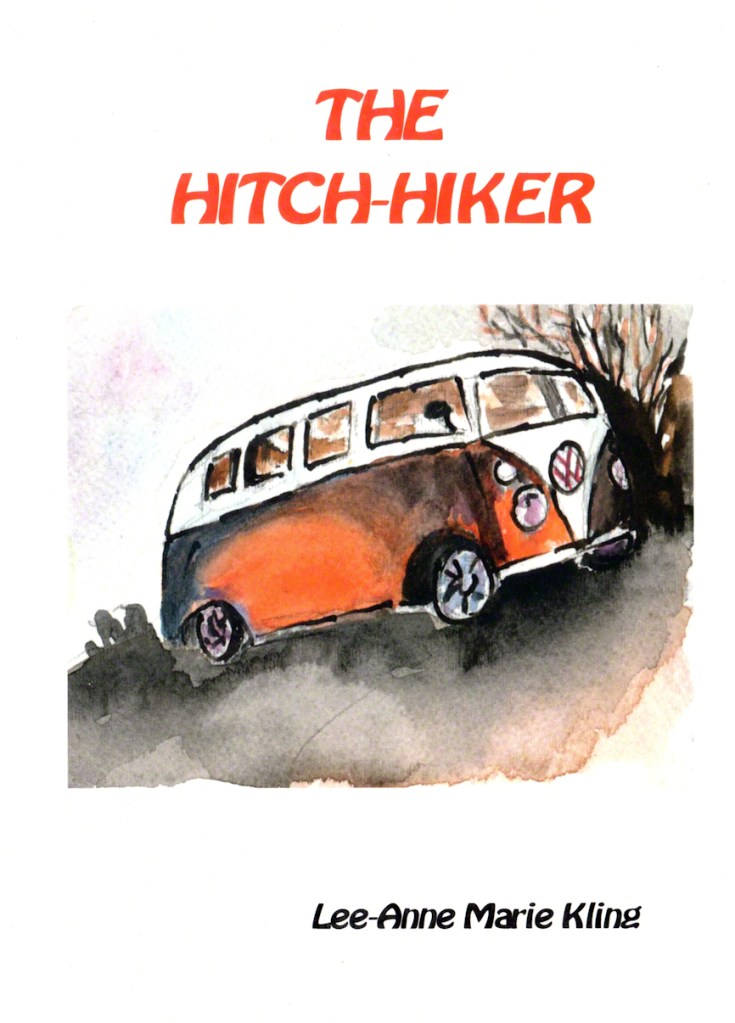
So, I published The Hitch-hiker (a novella) and Mission of the Unwilling(novel), on Amazon. Check them out. You can download them for the cost of a cup of coffee and find out what mischief Boris gets up to.
[Photo 1: The Hitch-Hiker (c) L.M. Kling 2015]
After publishing, having a little launch in our South Aussie pre-Christmas summer sweltering in 40 degrees Celsius, then a DIY advertising with bookmarks, flyers and emails, I decided to do research on how other Indi-authors built up their e-book kingdoms. There must be a secret method for digging up the buried gold of success in sales.
[Photo 2: Mission of the Unwilling (c) L.M. Kling 2015]
I discovered a mine of information lighting up my computer screen. I also discovered a precious nugget in an old Australian Artist Magazine—stand-out quality. In today’s language, I assume that means “brand”.
So, when at our SALA exhibition launch, a friend told me they knew which paintings were mine, that I had a unique style, I thanked them. I was on the right track with my “brand”.
But my books? Well, there’s Boris…albeit swamped by millions of other characters on Amazon.
Then, I discovered a gem—blogging. Not in the way I anticipated, though. I was optimistic. With my blogging presence, out there, I expected sales to rise and hundreds of instant visitors to my blogsite. My works were brilliant, right?
My posts drowned under the deluge of millions of other posts, tweets, Facebook pages, and other more successful blogs. For weeks, I remained South Australia’s best kept secret. Even my mum couldn’t find me—not even with my help on her computer.
Fellow writers at my writers’ group suggested I needed to post articles more frequently, get those WWW- “neural”-pathways (Algorithms) working by increasing traffic. Still, the site remained as lively as a cemetery.
Over time, I gathered a band of followers: friends, family, colleagues from church, writers’ and art group. Interest ensued—all Australian—no likes.
Undeterred, I wrote and published posts once or twice a week. Writing, my therapy. The articles available for free, my gift to the world. I prayed that there’d be others out there who’d find my words, and consider them useful, inspirational, amusing.
Week by week, comments and likes (mostly from mum) trickled in. Then, a comment from someone I didn’t know…and a visitor from the United States. Oh, what joy!
A friend encouraged me. I’d improved since they first started reading my blogs. Yes, writing is a craft; the discipline and practice refined my skill to communicate.
I read posts from other bloggers. I liked the posts that resonated with me. I knew I must start commenting. Friends who had websites and blogs said that’s how you make your presence known in the blogging community. I usually read WordPress articles late at night and was concerned my comments would come across as sleep garbled. Eventually, I plucked up the courage to comment. My first comment was about cats.
Each month, slow and steady, the number of followers, likes and visitors grew. My site on WordPress, the first place I visit each day when I open my computer. What countries have visited today? Check the emails. Who has liked me? Who’s following? I visit their sites and see what gems of writing, stories, photos, or paintings they have.
My world has opened; I read stories from every continent…and my stories shared around the globe.
Photo 3: Screenshot, My Stats for the Year (c) L.M. Kling 2024
The treasure I found by entering the world of bloggers, is not the gold I collect in my bank account for my own kingdom from my own works, but the cities of gold we share collectively as writers and artists. We put our stories out there and celebrate each other’s works.
So, a heart-felt thank you for all you who have followed, liked and visited my humble site—and thank you all for your stories, insights, artwork and photography.
Photo 4: Screenshot, visitors from all over the world (c) L.M. Kling 2024
So, if you’ve started up a blog/website and are waiting for it to be noticed, don’t give up. Keep writing, reading, commenting, liking and following and watch your readership grow.
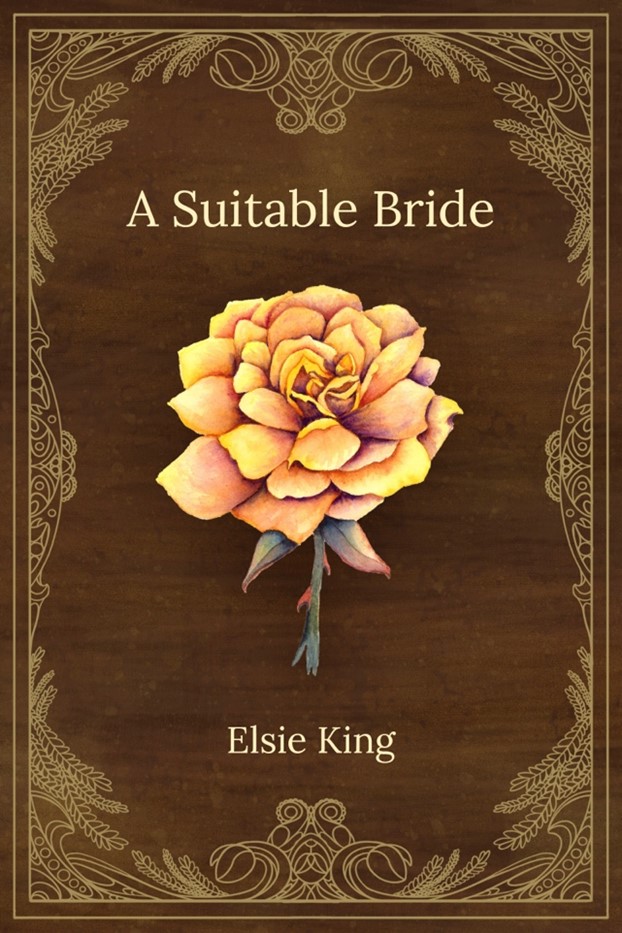
In a previous blog I mentioned that the best form of marketing is to write a second book. I’m about to test that theory and my second book A Suitable Bride is at the proof-reading stage with a release date hopefully soon. (I’m reluctant to name a date until the book has been fully edited as many things tend to intervene and I have to apologise for the delay.)
My first novel A Suitable Heir was marketed to family and friends, through the indie table at the Romance Writers of Australia Conference and on their magazine Hearts Talk. I sold some through my art group. We tried a local market with no success. I sold about fifty books through this process and was reasonably happy with the outcome but hopefully can increase sales for my next book.
My problem, and I think it is a problem for many writers, is that I don’t have the knowledge, inclination or time to devote to marketing. I admire those writers who have taken the plunge and got a large following of readers and are making a good living from their craft but marketing is not my forte. However, as a member of Indie Scriptorium I feel that I have an obligation to get some understanding of the various marketing techniques and report on my findings. I would love to find a book marketer who is able to market my novels for me at a reasonable cost but first I think it’s important to know what sort of marketing you want for your books.
Types of Marketing Services
Getting the book ready for the market- includes cover design, blurb, the correct Search Engine optimisation (SEO), the best keywords for your book, an author bio and reviews of previous books and make the price competitive.
Advertising – can include social media advertising, Amazon advertising, Goodreads and many other platforms
Setting up an author website and learning how to use it effectively.
Having marketing material, banners business cards, bookmarks etc.
Getting an e-mail campaign started
Doing author talks, book launches and making media releases
Listing your book with online distributors such as Amazon, Booktopia and Book depository.
Each of these areas of marketing will need to be extensively researched and require a working knowledge of the various social media and web pages. There are lots of options in most categories. I will do the Google searches, look at countless You-tube videos and try to work out the sometimes-confusing web sites and social media platforms for my own edification and to inform IS followers.
The other option is to hire a book marketer. A quick google search for book marketers in Australia reveals lots of options that all want your e-mail address so they can bombard you with sales pitches for the rest of time. It’s also a matter of buyer beware as some of these book marketers are vanity publishers who promise a lot, take your money and deliver a shoddy product and leave you in the lurch. I will keep searching for book marketers who may provide a good service at a reasonable price and keep you informed.
Indie Scriptorium has provided some blogs about some marketing techniques. See our previous blogs on SEOs, cover designs, blurbs, websites but the above is a very large checklist and we still have a way to go.
I already have a website, business cards, reviews and I’m happy with my cover design, author bio and blurb for my second novel. I will be reviewing my SEO and making sure my keywords are the best for my novel.
My initial focus will be on my social media, look at Amazon and Facebook adverts and explore Goodreads and other book distribution services. Going local and using my existing contacts in Romance Writers of Australia, organising a book launch and networking with local writing and book clubs will also be in my plan. Hopefully I can share what has worked for me, and what didn’t. Stay tuned for more on marketing.
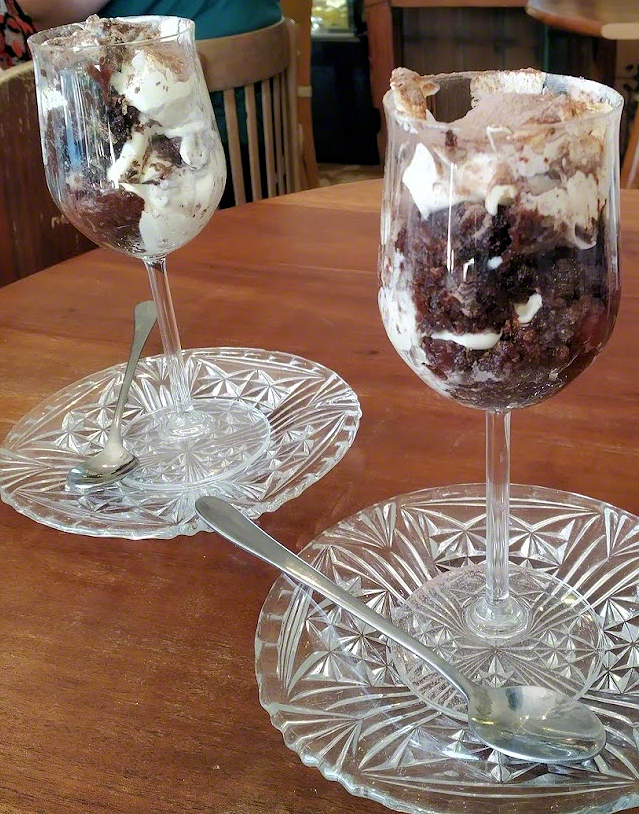
Last Friday, Mary and I attended a party at a local Café that we patronise every Wednesday between Bible study and Writers’ Group. We go there for lunch and have started to get to know some of the regulars there as well as the manageress. She makes a delicious Black Forest Cake.
Anyway, on the way, I remarked, ‘Wow, it’s been a week already since the market.’
So, how did we go? You ask.
What you must understand is that the main stream media did its best to deter people from doing anything—apart from activating their fire-safety plan. Or second to that, heading to the nearest bunker and hunkering down waiting for the apocalyptic storm to pass.
As it turned out, the doom and gloom weather forecasters were out by a couple of days. Clouds shrouded Adelaide by mid-afternoon, even a few spots of rain. The fires never happened. The evening of the market turned into a balmy twenty-something degree Celsius, perfect for strolling in the market or enjoying Christmas festivities.
However, the damage by media had already been done and no one but a hardy few, ventured outside their homes to attend. In the end, traders traded amongst themselves. I bought a native orchid and a couple of Christmas cakes. Elsie bought my significant-zero-number birthday present, a handy art pouch that I can use when painting en plein air.
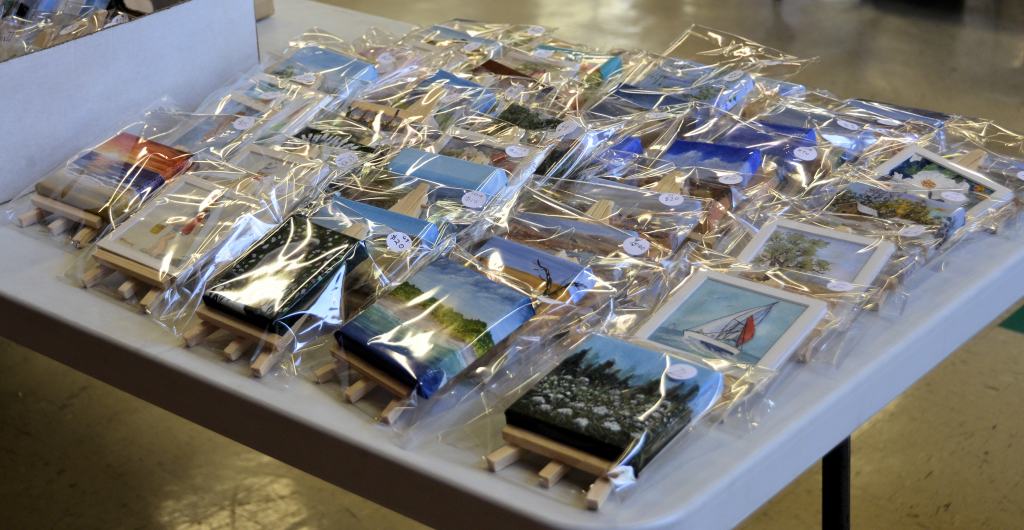
And finally, after no financial transaction action all evening on our stall, a neighbouring vendor bought one of my books, and Elsie’s great nephew one of my miniature paintings. Minutes before, we had sold one of Elsie’s cards while she was away from the table having a break.
Disappointing? No, I don’t think so. I have come to believe that the market experience is more than just buying and selling goods. It’s about community. Building relationships. Being a regular reassuring presence. Being there to listen to people, to connect with people.
Now at times, during the evening, this connecting was difficult to do. We were situated right under the main entertainment; a couple of merry “Elves” singing Christmas songs. They were doing a jolly good job of it, drumming up that seasonal spirit—except that they sang to no one but the vendors most of the time. Where we were the music blared at top volume. When some hapless soul did enter the market and pass our stall, they sped around the tables, glancing only briefly at our books and artwork. Communication, even amongst us concluded in sign language and I resorted to sharing writing in my notebook; a kind of note-passing between friends.
When the music-makers took a break, we had opportunity to connect with potential buyers or people who just wanted someone to listen to what was going on in their world.
While packing up, one of the neighbouring vendors gave some advice; cards don’t sell, they said, and every time is different, so don’t give up. From the brief debrief we had, we decided that in the future, we’ll look at selling smaller paintings and trying to get a stall far, far away from the entertainment.
As for connection, the market is just one way for advertising Indie Scriptorium and our indie-published books. After years of going to this local café I mentioned Mary and I go to every Wednesday, I finally gave one of my books, The T-Team with Mr. B to the manageress to read as a Christmas present. The Lost World of the Wendswas given to a young writer who also comes to this café, and also I gave away a bookmark advertising Indie Scriptorium.
Building the “brand”, the business by networking takes time, especially with the strident voice of professional media, but slowly but surely I feel, people are catching on and it’s happening for Indie Scriptorium.
A heart-felt thank you to all you faithful followers and newcomers to our Indie Scriptorium blog. Merry Christmas and we wish you a successful New Year in your endeavours.
Pitching can be defined as short verbal promotion of your book to a publisher or agent. The pitch can be face to face or on-line. It’s usually is between three and ten minutes. In some instances, the pitching appointment is a set time and you may need to alter your pitch to fit.
Elevator pitches are very quick and so named to capture the scenario of entering a lift with a popular publisher. You have just moments to convince them they need to accept your book for publication before the lift stops at the next floor. Pressure indeed.
The Australian Society or Authors and Romance Writers of Australia organise pitching sessions which get hopeful authors in front of people in the publishing industry. The ASA have courses for authors to learn all about pitching and also offer Literary Speed Dating sessions. The RWA offers pitching sessions as part of their annual conference.
But do you want or need to pitch your book to a publisher? Many writers decide to self-publish so don’t need to pitch their novel. However, if you would prefer to have your novel traditionally published, or you want an agent, then pitching is essential.
There is considerable information on line about how to formulate the perfect pitch. If you Google Author Pitching Formula a variety of web sites appear. I have done a pitch and used a formula but it went out the window in the actual interview. I would suggest doing the research and picking out the formula that suits you and your novel and construct it according to the time constraints of the publisher/agent.
At the minimum the pitch should cover:
That the book you are pitching is completed, fully edited and formatted and ready for submission.
The title (even if it’s a working title)
Word count
The specific genre and target audience
A brief description of the main characters
The conflict and resolution
Why it’s different from anything else.
With longer pitches you can include your author credentials and experience
What target market you envisage for your book
What books are similar to yours.
When you’ve written, re-written, practiced, timed and learnt your pitch off by heart take a course in deep breathing and mindfulness for anxiety and you’re ready to pitch.
Two articles from Romance Writers of Australia, Hearts Talk magazine provided some interesting and helpful ideas.
Rachel Sweasey The Importance of Pitching June 2023 suggests for Zoom pitching appointments
Practice looking calm and happy prior to the pitch. Smile maintain eye contact.
Be on time
Be prepared
Dress in the same style as your Author bio picture so the publisher/agent can put a face to your picture on your submission.
Have answers to expected questions on post-it notes stuck to the edge of your screen to act as prompts if you dry up. This way you won’t have to shuffle through notes and can maintain focus on the interviewer.
Amy Hutton Pitch Perfect April 2023 suggests:
Have a solid synopsis
Learn the pitch by heart
Make sure you know what a particular editor/agent is looking for before making a pitching appointment.
Allow time at the end of the pitch for questions
Have answers prepared about your character, themes, yourself and your writing history
If you have time include courses, groups and workshops you’ve attend
Also include your social media and marketing experience
Pitching is a difficult, nerve-wracking experience but it can get your book read rather than being left to languish at the bottom of a slush pile.
The art of pitching is different to presenting your book to potential readers. This is also a great skill to learn for both traditional and self-published authors. I will address author presentations in my next blog.
The spark of the idea for an Indie Writers’ collective came out of belonging to Marion Art Group; a group of painters who meet together every Monday morning and exhibit their works in shopping centres.
With that premise, I thought, ‘Why not draw together a group of writers who help each other, with their different gifts and talents to publish their books?’
Fellow MAG artist, Elsie King thought this was a great idea and with Mary McDee, Indie Scriptorium was born.
Currently, Marion Art Group is holding an exhibition at Brighton Central (Foodland) in the mall area. If you are in Adelaide, South Australia, come and have a look. The exhibition is on for another week until October 29, 2023.
So, on that note, I have included below a story of the beginnings of my journey with art which combines with my love of Central Australia.
Mount Hermannsburg
My father and I sat in the dry river bed of the Finke River painting Mt Hermannsburg which towered above the river gums and spinifex. We painted our muse on site; Dad painted in watercolour and I painted in acrylic.
After a couple of hours, Dad packed up his brushes and palette and returned to the town of Hermannsburg. I stayed, in the creative zone, dibbing and dabbing, the setting sun casting shadows over the river bed and a cool breeze pricking me with goose bumps on my bare arms.
I made the final touches as the sun sank below the horizon and I was called in for tea. I signed with my maiden name, naturally, as I was only 18.
Dad’s painting and mine sat side by side on our host’s piano where all who saw, admired our work. I kept walking past and gazing at my painting. Did I really do this? Wow! Did I really?
Self-publishing a book is a wonderful goal but it certainly isn’t the end of the road. The book does not get into the hands of readers without marketing.
So, how do you get your book noticed, bought and read?
I read somewhere that the best form of marketing is to write the next book. That makes a lot of sense to me as the release of the second book, anthology or short story draws attention to what you have written before.
The business of marketing can take up a lot of time and attention and it’s difficult to get through all the steps you need to market your work and still have time for the joy of writing the next book/story.
This blog will explain my strategy for my own modest marketing plan:
What is your goal?
If you are like me my primary goal was to have a novel published. I don’t need a liveable income from writing. I don’t expect to be a best seller and if I cover some of my expenses I will be happy. So, my marketing strategy was modest and relied on word of mouth and the generosity of friends and family to buy my book and spread the word. If you have given up your day job and have the rent or mortgage due, you will need a much more vigorous marketing plan.
The basic essentials that I used are:
Business cards with an e-mail address and web site address. You can add your phone numbers and address if you choose.
A website that is connected to your social media accounts and where you can post covers of your books and have links to the sites that sell your book. Then tell everyone possible that you have a website and ask them to visit.
Do regular blogs on your web site and post to social media.
Organise a launch party. My release coincided with a big birthday so I invited guests and asked that, in lieu of presents they buy a copy of my book. I then ordered 35 author copies of the book and sold them to friends and family. I sold 34 books with promises of online orders too.
I’m a member of Romance Writers of Australia so will take five copies of my books to the 2023 Sydney conference and put them on the Indie table for sale along with my business cards and a free card (A giveaway displaying my artwork)
I have advertised my novel on the RWA website and in their magazine Hearts Talk.
I paint as well as write so put my business cards of the back of my paintings
Copies of my paintings have been made into cards and my website address is on the back of the card next to the copyright.
Indie Scriptorium web site also advertises my books. I and my fellow members write regular blogs about the self-publishing process. We have a small but increasing following and go world-wide. My website is linked to the Indie Scriptorium website.
Indie Scriptorium will launch a book of our accumulated blogs about self-publishing as well as an anthology of writing, poems, artwork and photograph early next year. Our individual novels and books will be included in this launch.
My fellow writers in IS plan to get a display table of art, cards, books and other advertising at local craft markets.
I intend to contact local writers groups and offer to give an information session about the process of self-publishing my book. Hopefully sell a few books too.
That’s the plan for now. I intend to review my sales strategy from time to time but now I’m going to start writing my third novel.
So, you’ve written your book, and maybe you’ve progressed as far as self-publishing the book on Amazon or Goodreads or some such platform for indie authors and their books. Then, you sit back and watch the royalties roll in. Except, they don’t.
You check on your stats and there’s nothing. Just one long flat line.
You check your book’s rating. It’s so buried under the weight of millions of competing books on the shelf, it doesn’t even have a rating.
This is not right, you think, my book is brilliant. It should be a best seller. Something’s wrong with the platform. You complain to the relevant platform on the community chat forum. And you discover you’re not the only one.
Advice comes in. Get reviews, they say. Easier said than done, these days. You discover that the heady days of the early internet when reviews were free and easy to come by, now are screened by certain seller platform’s review scrooges. Any hint of association in real life or friendship, and the review is banned. Reviews are also not published on such platforms that are well-known but remain not mentioned, if the reviewer has not bought more than $50 worth of goods from that selling platform.
So, again, the question, “How do we get our work out there? Noticed?”
Having been given this task to share with you my wisdom, I considered doing some research and conveying the wisdom of other, more successful experts in the field of advertising. I decided against that as “reinventing the wheel” so to speak, is not my thing. If you want to get your head around advertising, there’s plenty to offer on the internet.
Instead, I’ll share with you my journey with advertising and getting my books and paintings noticed. Here are a few pointers:
Word of Mouth—many, many years ago, my brother started up his own business as a mechanic. He never placed an ad in the paper (such were the times before the internet), yet his business grew. Satisfied customers recommended him to friends and family. I leant from this example the basic lesson of marketing, do an excellent job (key word here is excellent) and your business grows by word of mouth. This principle, then, I used when growing my tutoring business.
Networking—when I’m out and about, and I’m chatting with people, inevitably, they ask, “What do you do?” So, I tell them what I do. When this happens to you, make sure you have a few business cards handy, and some of your work/books handy. I’m not one for pounding the footpath and asking bookshops to consign my books, but I have a friend who has done just that with her book with some success. The thing is, is to be social, meet new people and don’t be afraid to show them your books.
Online presence—I think Indie Scriptorium has covered this particular aspect in detail. These days with the prevalence of the internet, look at having a blog or website as another avenue of networking. Just remember, building your online presence takes time, effort and some risk. But to get your book out there, if you are prudent and discerning, the risk is worth the reward of getting the fruits of your labour, your book, noticed.
Advertise—a friend who has their own business once said, “You need to spend money to make money.” Meaning that money spent advertising will be rewarded with sales. I also heard an advertising expert speaking on the radio once say that a person needs to be exposed to a product seven times before they notice its existence. Which means many times more exposure to buy the product.
At this present time, I have a couple of my books being advertised. I have Trekking with the T-Team: Central Australian Safari 1981 nominated for Prime Reading with Amazon, and I’m trialling The Hitch-Hiker with Amazon Ads. The Prime Reading has yielded some sales, mainly through the Kindle Lending Library, some nibbles, but no sales yet from the Amazon Ads for The Hitch-Hiker.
What I like about the Prime Reading is that it’s like a cat (generally, not my cat, but most other cats); they take care of themselves. I nominate, and the Prime Reading programme does the rest and I get some sales and royalties.It’s all done for me, and I don’t have any control over when and where the advertising takes place. Much like a cat.
However, the Amazon Ads is different. You could say, keeping with the pet analogy, it’s like a dog. You have to feed it—money and walk it—check on its progress and adjust your settings to how you want to advertise and how much you want it to bid for you to make the advertising happen. You have more control. With Amazon Ads, you limit the cost so that you don’t go over-budget, and you can regulate the pace at which the advertising occurs. You can have a fast-moving campaign, or one that moves at a slower pace. Much like owning a dog, depending on what breed of dog you have, I guess. Never owned a dog, actually.
The main takeaway is to get your work out there. If its hidden in a drawer, or file on your computer, waiting for it to be perfect, no one is going to see it. If its buried under a load of competitors on the internet, it’s up to you to take it to the next level and make it visible. Tell your friends and family, network face to face, and online, and advertise.
Stay tuned for future blogs where we will take a closer look at branding, digital platforms and getting yourself recognised.






 Indie Scriptorium -- Self Publishing Collective