No two writers will ever write the same; unless they copy each other’s work.
As we write our history emerges. Our birthplace and early childhood lay down the roots of our language, the words we use and how we say them. Education hones our writing skills, providing the rudiments of spelling, grammar, clarity and brevity. The extent of our education is reflected in our vocabulary, knowledge and understanding.
Life, with all it’s trauma, joys, grief and love add a layer of personal experiences that shines light on, or clouds, our perceptions.
Writers of fiction take the written word further. In ignorance or awe, they craft words into edifying entertaining stories. They create worlds in time and place with characters who are as unique and exceptional as real people. The process is magical.
Style is the author’s choice that allows their personal history to shine through the story. The summation of a singular life; bent by beliefs, passions, opinions, encounters and events.
Style is a matter of establishing the mood of the story, the best tense to tell the story, what word choices capture the emotions, which character can tell the story in the most effective way.
Style can come down to sentence length, grammar and spelling. Dialogue can add history and dialect with a character’s utterances which shape their relationships and place in society.
Style can be manipulated by writers to provide rhythm and metre.
Style can be transparent and easy to read, enhancing a strong story. Dense prose may hide the story behind word smithing or complications that may entrance or offend.
Purple prose, too much of everything, isn’t recommended.
But what about the reader?
I liken literature to the composition of music.
Some composers write for the entertainment of their listeners. They want to transport the listener on waves of sound that draw out emotions and memories. Good music can bring tears, stir resolve or just provide a wonderous relaxation. Music can move people from the humdrum to the fantastic, and it is pure entertainment.
Some composers, especially those before technological devices, wrote music for players of musical instruments. Their compositions were to build skills, challenge and inspire. They incorporated complications and tests of dexterity, difficult techniques to build confidence and proficiency in fellow performers. They didn’t write for the entertainment of ordinary listeners.
But some composers both entertain listeners and challenge musicians. They achieve immortality.
But what about the reader?
As writers, like composers, we need to consider our audience. Are we writing to provide our readers with entertainment? A good story, easily read that delivers our ideas and characters simply and clearly. A bestseller, one among many, distracting, diverting and providing pleasure; for a short time.
Or are we writing to impress and challenge aspiring writers? To build the writing craft and stretch the boundaries of our fellow wordsmiths. Do we want to craft a style that may be dense and hard to read for the average reader? That needs re-reading. That stirs love or hate, or both in equal measure.
Or do we dare to become immortal?
Cheers
© Elsie King 2025
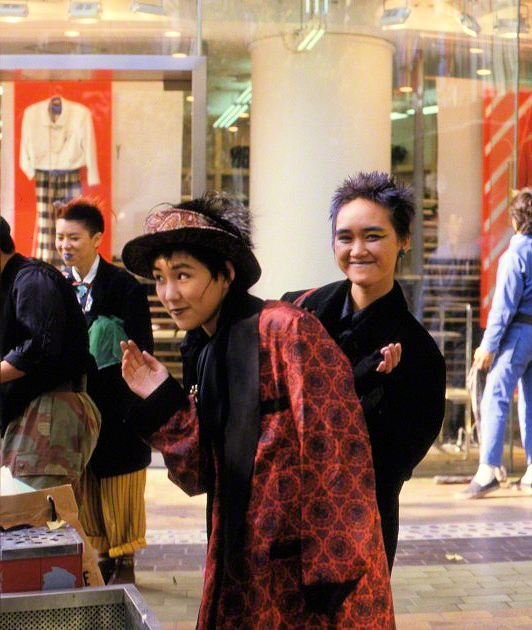
Feature Photo: Harajuku,, Tokyo, Japan © L.M. Kling (nee Trudinger) 1984











 Indie Scriptorium -- Self Publishing Collective