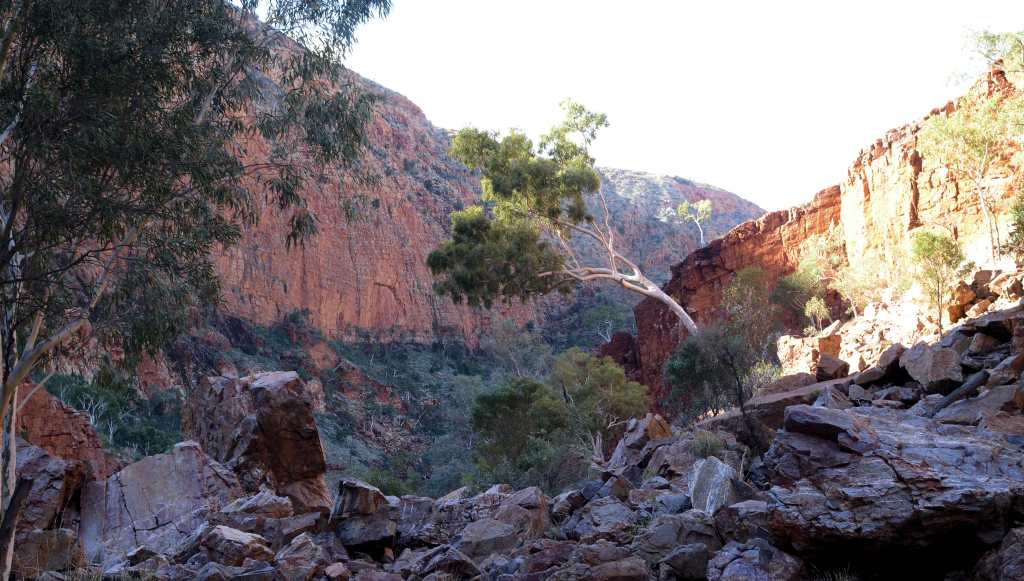
Yesterday, I was perusing one of my dad’s old exercise books from way back, possibly the 1950’s. There, first page, neatly written in his handwriting, a poem. I had read this a few months back and didn’t think much of it. But yesterday, reading it again, it resonated with me about the beauty of God’s creation. Dad having taught at Hermannsburg Mission, Northern Territory in the 1950’s was particularly taken with the vibrant colours and striking formation of the land and mountains up there. He fell in love with the land and would make regular pilgrimages to the Centre, taking my brother and I, plus other family and friends, on safaris to explore his beloved part of the world.
Incubating an idea for a story is an interesting process. As a novelist my inspiration most often comes from a theme. It might be the rights of women, the importance of family or equality and fairness. At other times the theme emerges as I write.
When I reflect on the themes that are important to me as a writer I can trace the influences on my life. My mother was a strong feminist even before it was a movement. Her actions in life were all about doing things her way, standing up for those less fortunate and being a strong advocate for what she considered right for her family.
My education as a Social Worker strengthened my principles of feminism, justice, equality and being non-judgemental. I learned to respect a person’s self-determination, even if it was outside the norm. I’m also a pacifist and abhor violence and war.
Stop Pushing was a story where the themes emerged without pre-planning. At a writers’ group we were given a ten-minute exercise to complete a piece of writing inspired by a sentence that contained the words stop pushing. I just wrote. Top of my head the story just emerged with flow of consciousness. It wrote itself. I liked the original and took it home to refine. “Stop Pushing” is the final short story and I like to think it is one of my best pieces of writing. I hope readers enjoy it and also look for the themes that are entrenched in the story.
Stop Pushing
It was a peculiar name. Who would ever call a bloke Stop Pushing? Snowy Jones reckoned it was him that got it wrong. Said he had asked the new bloke for his name and got told it was Pushenko, or something foreign like that. Now Snowy was ‘bout eighty-five at the time, deaf as a post and with a few wallabies loose in the top paddock, so it makes sense he got it wrong. Snowy decided it must be Pushing, and that was that.
I never found out where the Stop came from; but it is Australia, and everyone gets called something short that’s fitting. Stop Pushing sort of emerged, settled and became part of the lingo, and that was that.
Stop arrived in the early fifties. Bought Warren, the goat’s old place on the edge of town. The sheila’s tried to do the neighbourly thing and get him to the RSL chook night, but Stop wouldn’t have any of it. But he turned up in the front bar every Friday, have two beers and then go home at closing time, did that all of his life. And he always fronted at the dawn service on Anzac Day, stood at the back, then drifted away like a drizzle on a breeze.
Stop was a funny bloke. You wouldn’t believe he had a sense of humour; and he didn’t! Never smiled or laughed. Ordered his beers with a nod to the barman and said nothing else; to anyone. There were no laughter lines on Stop’s dial. He had deep gauges around his mouth, sunken cheeks and eyes that emerged from the black pits of hell. He was thin as a long dead cadaver and looked no different in forty-odd years.
What Stop did on the small holding we never knew. He kept himself to himself, and we were alright with that. He was quiet, clean, and took up very little room at the bar. After, a few years, his bar stool became a protected zone on Friday nights. “Oi, you can’t sit there, that’s Stops’ corner.”
It was in the nineties and the local fire crew had just mopped up after a blaze that grazed right up to the edge of town. The pub put a couple of hundred on the tab and everyone got plastered, really plastered. A few of the younger fella’s got a bit out of hand; as you do when you face off a fire for the first time. A kerfuffle broke out over some bloke’s missis, and the two Romeos took to some shoving, right into Stops’ corner of the bar.
Stop was jostled, he swayed, then toppled sideways, fell to the floor. The fire chief rushed over and tried for a pulse, but then shook his head sadly. They propped the poor old bastard back up on his stool and raised their glasses in remembrance. Stop Pushing was no more.
Now Stop Pushing could have just faded into obscurity, but a couple of months after the funeral, a bloke in a suit called a meeting in the front bar of the pub. The suit said he was a “lawyer for the deceased known as Stop Pushing.” Turns out Stop was worth a bob or two and left all his money to the town. He was some sort of fancy writer. Not a Steven King type writer, but he did history books which he sold to schools and universities, for a fair bit of money.
Well, the CFS got a new fire truck, the oval got a new stand with change rooms underneath and Warren, the goat’s place, got turned into a community library with meeting rooms and even computers.
He also donated a new park bench at the war memorial. The plaque was short and to the point, “In memory of Stephan Pushenko”
There was a lot of talk about Stop for a few years after his passing. One of the teachers did a bit of digging and found out the poor bloke had come from Poland and done time in Auschwitz. There was some speculation that he was from some rich Jewish family, or he was a Romany or even a poof, but I don’t think that mattered to anyone in the pub.
I reckon Stop found his way to our small place in Australia. He was taken in, given a new name, and left to be himself. He never did anybody any harm and ended up doing everyone a lot of good. Whatever ghosts he needed to bed, he did it quietly.
I like to believe Stop found serenity here. He took in the ordinary life; the fires battled, the footy games won, the cricket games lost, the jokes, the gossip and the yarns. We gave him back a life, and he took what he needed, then gave back in spades.
Visitors to the pub may find it a bit strange but at closing time every Friday, to this day, some joker will raise his glass and shout, “Stop Pushing” and everyone will raise a glass and repeat “Stop Pushing” and have a laugh. For a memorial, you can’t get better than that.
I’m at the tail end of my third novel “A Suitable Passion” (working title). It’s about slavery at the time of the abolition movement and has been the most challenging of my novels so far. It started out as a historical romance and that genre usually has a happy ending. But when a happy ending just doesn’t fit with the history, what do you do?
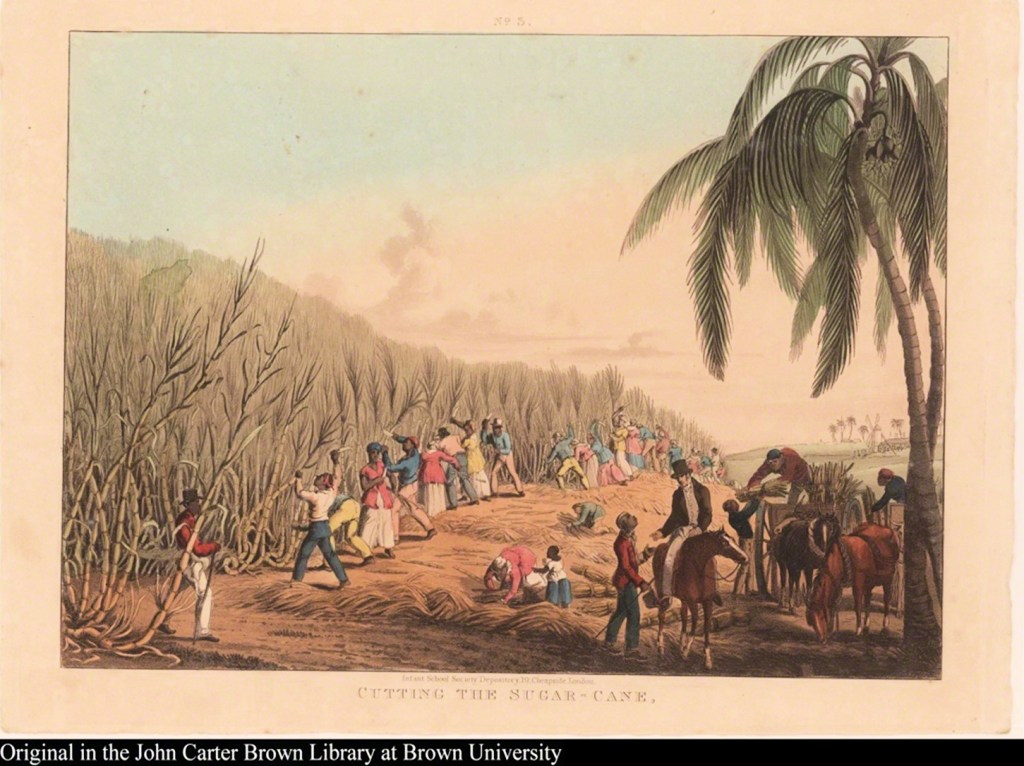
In a nutshell, the British Jamaican slave trade started in 1655 when the British overthrew the Spanish colonialists and finished on August 1st, 1834, with an Act in the British Parliament that gave slaves in all British colonies freedom. Well sort of, as the wealthy plantation owners in the West Indies managed to finagle an apprenticeship system that gave them free labour for another six years. This system was designed so the slaves could learn to become a paid labour force. Not surprisingly it didn’t work, and the scheme was abandoned 1838 due to the appalling behaviour of the plantation owners and managers. After that, most of the African people in the West Indies walked away, choosing to live in their own villages and grow their own food rather than work for the men who had owned and abused them. The sugar industry collapsed.
To make matters even more unfair, the plantation owners were given compensation for freeing their slaves. Like cows or sheep, slaves were considered property. The slave owners demanded compensation and it cost the British public twenty million pounds (approximately $40,000,000 AU). The money was distributed to some of the richest and most influential families and institutions in Britain. The slaves got nothing. This huge debt was only paid off in 2015.
Into this mix came the abolitionists. The movement started in the mid 1780’s with predominately Quakers establishing committees and making presentations to Parliament. In 1807 the shipping of slaves from Africa to British colonies was banned but slavery continued in British colonies for another twenty-seven years. The abolition movement was slow growing but by the 1820’s the new middle classes became involved. They formed societies throughout Britain to actively work against slavery, many of the societies were organised and ran by women.
The historical research to tackle this book was extensive. I read five different PhD. dissertations to get the social, religious, economic and political dynamics that led to the abolition of slavery. I read first-hand accounts of slaves and the terrible deprivations and punishments they endured. I gleaned information about how the sugar industry worked and even visited sugar museums in Queensland to get a sense of the process of sugar production. I read articles from newspapers at the time and attended a meeting of the Quakers to experience first-hand their remarkable religion.
I set my novel in 1829. The plot revolved around the question:
What if a young heiress discovers her family’s wealth and prestige come from slavery and she is expected to marry a man who will continue the cruel practice of the plantation system in Jamaica? How will she comply with her family’s expectations when she is an abolitionist?
I sent my protagonists to Jamaica where they experienced slavery first hand and confronted their relatives who profited from slaves. I had hoped to end the story on a positive note with my protagonist’s relative having an epiphany and freeing his slaves. But the research could not be denied. There was no happy ending. I could not find one example of a slave owner who showed one iota of compassion and freed his slaves. Avarice abounded and was rewarded and the plight of enslaved people in the West Indies was appalling even after emancipation.
My novel became an exploration of a shameful chapter in British history. I found that I had to follow the history rather than a romantic plot. The romance became a secondary consideration and the history took over. I changed the characters to make the villains more realistic and my protagonists end up together but are powerless to change the outcome for the slaves. A sadder ending than I wanted but I hope the novel sheds light on the history of racism and still delivers a satisfying read.
My venture into the world of Murder Mystery/Crime Writing has guided my path to digging into life and death of a different kind—Family History. Crimes, even cold case crimes are being solved by DNA analysis and technology from which family trees are built.
As I have delved into the realms of ancestry, through the My Heritage site and the wonderful tool of crowdsourcing that is available there, I have stumbled on some historical “crimes” that would make even the resident artificial intelligence (AI) called “My Heritage Consistency Checker” laugh or more likely jump up and down (virtually) in conniptions of frustration.
Before I launch into a few of these amusing tales, I might remind you fellow writers that such errors can easily be made when one thinks the research is all too hard or that editing is boring and makes one fall asleep.
My all-time favourite historical faux pas—I get a “Smart Match” from a fellow family historian who has ticked the box that my great-grandfather, born in 1839, is still alive. Quite a feat, he’d be almost 200-years old if he is. And, if he is still in the land of the living, where is he? I have few questions I want to ask him. His answers, I’m sure would make for great reading. I can see the title now: “How my great-grandfather met my great-grandmother.” Oh, and of course, what’s his secret for staying alive?
For two weeks, ye old “My Heritage Consistency Checker” complained that my dad’s cousin’s grandmother was too young at 14 years of age to be married. Good on it for picking this detail up. More like the morality police than an AI (artificial intelligence) with knowledge of historical context (we’re talking mid 1800’s here in Australia). Anyway, the mystery spurred me down that proverbial rabbit-hole where it seemed, according to official birth and marriage records, a certain ancestor had to get married, if you know what I mean. So, I’m guessing that her parents gave consent for the “shot gun” wedding. The young couple (well, the groom with the shotgun to his head wasn’t so young, but) went on to have at least ten children.
How does this angry AI relate to writing?
You may have developed an uneasy relationship with your editor, or fellow writer/test reader who questions certain details of your story. For example, from my experience, my writing mentor was adamant that a planet can’t have two suns. Another time, a fellow writer insisted that cattle did not exist in Central Australia. I did my research, and armed with the evidence to the contrary, I proved them incorrect.
A friend asked me to type up and edit their relative’s biography. I began reading the story and soon discovered key details relating to birth and marriage were missing or vague. Now, I’m not adverse to a few “circas” now and then. I plop them in all the time when acknowledging my grandfather’s photos in my posts, or when “playing” with my family tree for centuries-long gone ancestors, in the hope a “smart match” or record might show up courtesy of a more obliging My Heritage AI.
But with a biography, a historical record of this person’s forebears, the lack of detail bothered me. I asked the friend if they had any documents. No, they replied, all too hard, and expensive.
So, putting on my Indie Scriptorium hat, and having the resources and research skills, I offered to do the relevant investigation for them.
When writing a history, it is vital to get the right dates, places, times and people. This is true also for drafting a novel or story. If you want your story to be believable, you need to do the research and at least get your timeline sorted. Make note of significant events in that period which may impact your characters. Take time to plot the dates and places to ensure it’s do-able and believable.
There are other examples, but I will reserve those for another time, another blog post.
All my life, words have fascinated me – their meanings and double meanings, along with puns, jokes, and varied pronunciations. How we put them together for impact; to make poems or stories or paint pictures in a reader’s imagination is grist to my mill, floats my intellectual boat.
So choosing English as a major subject when I got to university was a no-brainer. And when I discovered that Linguistics was one of the third year options, I couldn’t wait to enrol.
Before this, High School Latin had opened my eyes to the fact that languages other than English have very different rules; can be structured differently; are often quite a different kettle of fish. This was amazing! Putting the verb at the end of the sentence? Changing the last syllable of the word instead of using one of the “little words” (e.g: to/for/by/with/from…) as those ancient Romans had done? Wow!!
All this opened up the wide world of translation and how tricky it can be to “get it right”; get the original author’s attitude and intentions across accurately; convey as many as possible, of the subtleties of the original.
Conversations with multi-cultural friends, some of whom were fluent speakers in not just two but several languages were frustrating as these people took all the differences for granted. None shared my passion for words; so they quickly found our “chats” boring. And me weird.
Consequently, I was forced to turn to books in my quest for enlightenment. The only books readily available that provided varied renditions of the original text was the Bible. So I go down all sorts of rabbit holes, spanning several centuries of translations in this adventure.
And after all that long-winded background bumph we come to the point of this blog; a blog designed for those of us who write. Finally I hear you say (if you are still with me, of course!!).
A couple of days ago I read and compared several accounts of the Last Supper; that final, pivotal meal before the crucifixion, that Jesus shared with his disciples; the meal which Judas walked out of to meet with the High Priests and betray him.
Several of the modern translations wound up their account with:
“So Judas left, going out into the night”.
Others (including the King James Version) rendered the same incident as:
“So Judas left. And it was night.”
Only a very small difference – a single sentence of eight letters versus two sentences of seven letters.
But it hit me like a bomb.
The strength and implicit emotion; the sense of impending doom, that that second sentence gave when contrasted with the first was palpable. The first was an accurate but matter-of-fact, almost journalistic rendition. The first, set alongside the heart-wrenching vividness of the second, was just ordinary writing in my eyes.
Of course you may not agree. We all see and interpret things very differently. Which is a good thing; makes life interesting!
When we speak we add to our words with both our voice and our facial expressions, as well as gesture, stance… There are a hundred and one ways of getting our meaning across as we become aware of responses from those to whom we are speaking. There is an immediacy in the spoken that is not available in the written. So we have to compensate.
As writers, we need to develop awareness of those aspects of writing that are more than merely putting words together. This is what divides great writing from the simply pedestrian. How those words are arranged, organized, juxtaposed one with the other is important. How our words are divided into sentences and punctuated can make a huge difference to how we get our message across to the reader. These are the things that make our writing truly impactful.
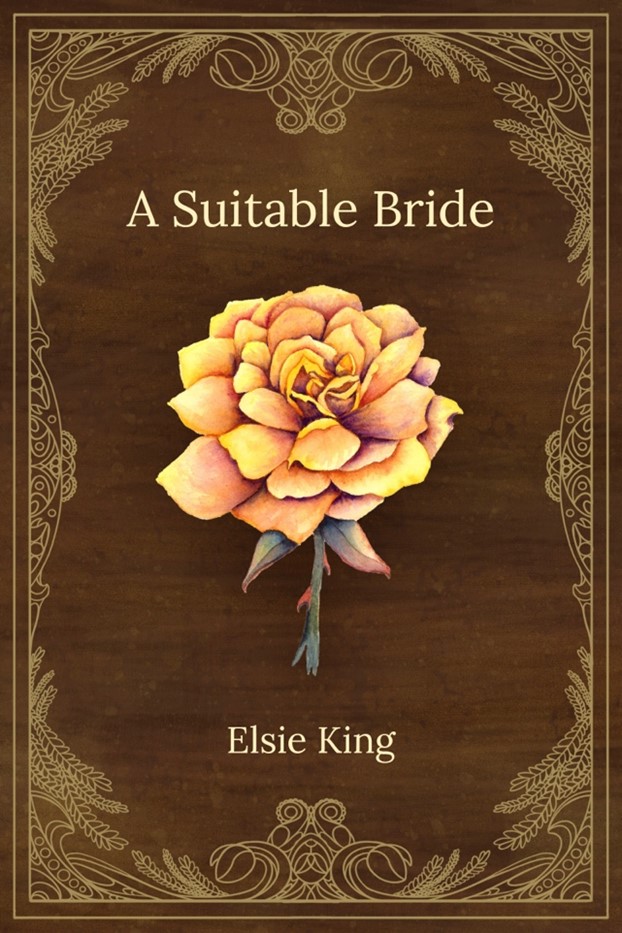
In a previous blog I mentioned that the best form of marketing is to write a second book. I’m about to test that theory and my second book A Suitable Bride is at the proof-reading stage with a release date hopefully soon. (I’m reluctant to name a date until the book has been fully edited as many things tend to intervene and I have to apologise for the delay.)
My first novel A Suitable Heir was marketed to family and friends, through the indie table at the Romance Writers of Australia Conference and on their magazine Hearts Talk. I sold some through my art group. We tried a local market with no success. I sold about fifty books through this process and was reasonably happy with the outcome but hopefully can increase sales for my next book.
My problem, and I think it is a problem for many writers, is that I don’t have the knowledge, inclination or time to devote to marketing. I admire those writers who have taken the plunge and got a large following of readers and are making a good living from their craft but marketing is not my forte. However, as a member of Indie Scriptorium I feel that I have an obligation to get some understanding of the various marketing techniques and report on my findings. I would love to find a book marketer who is able to market my novels for me at a reasonable cost but first I think it’s important to know what sort of marketing you want for your books.
Types of Marketing Services
Getting the book ready for the market- includes cover design, blurb, the correct Search Engine optimisation (SEO), the best keywords for your book, an author bio and reviews of previous books and make the price competitive.
Advertising – can include social media advertising, Amazon advertising, Goodreads and many other platforms
Setting up an author website and learning how to use it effectively.
Having marketing material, banners business cards, bookmarks etc.
Getting an e-mail campaign started
Doing author talks, book launches and making media releases
Listing your book with online distributors such as Amazon, Booktopia and Book depository.
Each of these areas of marketing will need to be extensively researched and require a working knowledge of the various social media and web pages. There are lots of options in most categories. I will do the Google searches, look at countless You-tube videos and try to work out the sometimes-confusing web sites and social media platforms for my own edification and to inform IS followers.
The other option is to hire a book marketer. A quick google search for book marketers in Australia reveals lots of options that all want your e-mail address so they can bombard you with sales pitches for the rest of time. It’s also a matter of buyer beware as some of these book marketers are vanity publishers who promise a lot, take your money and deliver a shoddy product and leave you in the lurch. I will keep searching for book marketers who may provide a good service at a reasonable price and keep you informed.
Indie Scriptorium has provided some blogs about some marketing techniques. See our previous blogs on SEOs, cover designs, blurbs, websites but the above is a very large checklist and we still have a way to go.
I already have a website, business cards, reviews and I’m happy with my cover design, author bio and blurb for my second novel. I will be reviewing my SEO and making sure my keywords are the best for my novel.
My initial focus will be on my social media, look at Amazon and Facebook adverts and explore Goodreads and other book distribution services. Going local and using my existing contacts in Romance Writers of Australia, organising a book launch and networking with local writing and book clubs will also be in my plan. Hopefully I can share what has worked for me, and what didn’t. Stay tuned for more on marketing.
More than once fellow writers have asked me, “Where do you get your ideas from?”
Is it from other stories, books, plays or the media such as radio, television, or the internet? Or is it something more?
In the past couple of months I have, as mentioned in other blogs, like Alice in Wonderland, gone down the rabbit-hole of Family History.
What has ancestry or my heritage got to do with writing and publishing, you may ask?
One of the reasons, in my case, is research. A detective novel I am working on requires understanding of genealogy, and the process of DNA analysis. So, down the proverbial rabbit-hole I have gone.
What I’ve discovered so far are the beginnings of a revelation and like a detective novel, the clues/information presents itself like puzzle pieces gathered, then sorted and finally fitted together.
I’ve learnt that like a detective, I must be patient, methodical and have a keen eye for detail. Nothing worse than being sloppy or having sloppiness thrust upon me in the process and getting sidetracked by a red herring.
For example, in the beginning of my family history quest, there was the mystery of the extra “brother” of my great-grandfather. On further investigation and checking of Census data, it turned out the “brother” was a nephew. My great-grandfather from Bavaria, being new to Great Britain and the English language, labelled his brother’s son as a “brother” in the first Census he completed. Ten years later, in the next census, the mistake had been corrected.
Learning what it takes to become a good detective for my Detective Dan series, I’ve discovered that creativity is a part of problem-solving. One lesson learnt was the problem of my youth, tunnel vision. Thirty-five years ago, my auntie handed over the family historian mantel and box. Dutifully, I read the material, joined the local genealogical society, and began my search. I helped a family historian relative with my branch of my paternal grandmother’s family history.
But in the early 2000’s, once grandma’s history was done, dusted, and launched, with the internet in its infancy, continuing with the whole deal got too hard, and was looking like being expensive. So, I turned to the comfort and ease of fiction writing. I eased my guilty conscience of abandoning the project by knowing that my relatives of German descent were doing a much better job than I was in digging up ancestors, building family trees and producing more books. I was happy to receive their hard-earned research usually published in large tomes by local publishers and enjoy what they had uncovered.
Meanwhile, ideas flowed for my Sci-fi novels. The good crusaders fought against evil alien cockroaches. Injustices challenged, good people imprisoned, innocent people burned at the stake as witches, young nobles went missing and evil cockroach aliens wreaked havoc on the universe. Often ideas came in the form of dreams or ideas for a novel sprouted while showering. Worlds were built on these dreams and with the recall of stories of my German ancestors migrating to Australia, the Lost World of the Wends was born.
In late 2023, I delved into Family History once again, this time with more sophisticated computer technology. While plotting my ancestors using all those family history books, I had accumulated, I discovered a noble family line in Lausanne, the French part of Switzerland, stretching back to the 12th Century. Why had I missed this gem when reading the translation in 2010? Tunnel vision. It wasn’t my father’s family name from Bavaria, therefore the family name presented that was of French origin meant nothing to me. I must’ve skipped over that part when reading it.
Further investigation unearthed a pedagogue (a cousin I think from the other branch of this family). However, the pedigree showed me that this line of the family may have been influential in our family’s value for education, not just for the males, but females as well. Plus, it explains my affinity with France.
Now, to answer the question posed at the beginning of this post. Where do my ideas come from? I’ve often wondered if dreams have a genetic component. Sure, family passed stories down from generation to generation, but couldn’t it be also the case that significant emotional events of our ancestors are also passed down through our genetic code? Who we are, our identity, our creativity, is made up of the sum of our predecessors, our ancestors. Could explain why unpublished novel, Mirror World, Adelaide is French…Just a thought.
On that note, I feel as a writer, that with family history, it’s not enough just to fill in the birth, death, and marriage details. The genealogical books that most interest me are the ones which give the context of history, description of the land in which they lived, and a brief resume of each family member’s lives. Photos too are important and make history come alive.
All this research takes time. I’m at the beginning of my quest, searching, digging, and fitting the puzzle pieces together. I’m learning the art of research, once again, as I delve into the rabbit-hole of ancestry. At the same time, I’m learning what makes a good detective for my Detective Dan series which will be under the pen name, Tessa Trudinger. Watch this space.
Indie Scriptorium is beginning a new tradition in 2024. Every fourth Sunday of the month we will be featuring a guest writer.
This week, the Indie Scriptorium team have invited fellow Adelaide artist and writer, Robert Richardson to share a poem from his recently published book on poetry, Words and Rhyme.
Some months ago, Mary McDee wrote a post giving tips on writing good poetry. We had quite a bit of interest in the article and some further questions pertaining to the mechanics of an effective poem.
The following poem by Robert Richardson is an excellent and catchy summary of the main types of poetry and how to write them.
If you’d like to read more of Robert Richardson’s poetry book, click on the link below:
Cheers,
Lee-Anne Marie Kling (c) 2024
Feature Photo: Words and Rhyme cover(c) Robert Richardson 2023
We writers consider words as our stock-in-trade; valuable servants to our need for self-expression; treasured allies in our creative pursuits. They have meanings that give messages; messages that, at times, are subtle or can be misinterpreted or confusing. Consequently they must be treated with care and respect if we are aiming for clarity and impact when we use them.
I learned this lesson many decades ago so let me tell you how it happened.
“A house is not a home.” My father was adamant.
I must have been about ten or twelve years old; it was a mealtime and I had been sounding off about something or other. I have no idea what I’d said to elicit this from Dad but my memory of that situation and his response to me is very clear. He was firm, very firm. But gently so as he went on to explain what he saw as the difference.
“A house is a building”, he said; “nothing more – bricks and mortar; walls and a roof. A house is not a home until people are occupying this sheltering structure. Even then it is not a proper home if those residing there do not care about each other; were not considerate, respectful of each other; welcoming to strangers and willing to share whatever they had, however little that might be.
A shed, a tent or a bark humpy could be just as much a home as a fancy mansion. Indeed, a fancy mansion where there is no peace; where people are always fighting, abusive, rude, or out to take others down is no home at all. A place where everything is only for show, designed to impress; aligned to elicit awe and admiration from visitors but is, in fact, a veneer for misery could never ever be a home.”
My parents lived their beliefs and, apart from the values such conversations inculcated in me, this particular episode stuck. It gave me a great respect for the importance of accuracy in my use of language as well as triggering a lifelong fascination for the subtle differences in the meanings of words.
A few years later, a High School English teacher emphasised the point but in a different way. He was talking about the nature of poetry and told us that, in essence, poetry was:
“The very best words arranged in the very best order”
As a budding writer I remember thinking, “Surely that applies to anything I write, not just poetry?” At the time, like Brer Rabbit, I just lay low and said nuffin’ – I was far too shy to question someone I saw as an expert. But those words stuck and became a guiding light; a light that is far from easy to follow all the time, believe me!!
Many, many years later my sister-in-law, Nancy, completely and unintentionally in this matter of word precision, turned the tables by setting me straight on the use of another word (as well as the importance of care when conversing with littlies).
This time it was her grandchildren who were involved. They’d been excitedly telling me about something planned for their father that was to be a surprise. I’d responded along the lines of “So you’re being careful to keep it a secret?” At which point Nancy told me that, in their home, they don’t talk about “having secrets”. It was always “Keep the surprise”.
Discussing it later, out of earshot of the small ones, she told me that they wanted to ensure the children were brought up in an atmosphere where openness was the norm as they felt that “keeping secrets” could lead to trouble down the track.
Despite my fascination with words and unrelenting passion for accurate usage, it was something I’d never thought of before! Point taken! And appreciated!!
Language is communication. It can be subtle and suggestive. Words are powerful. And the implications of those words can be even more powerful. So it behoves us as writers to consider every word we write with the utmost care – but not in the initial first draft stage where we simply spit out our ideas; get it all down out of our heads and onto paper.
The “working with words” bit is part of the editing process. But that is another story for another day.
Over Christmas break, I was asked to read through and critique a friend’s murder/mystery novel. It was a historical novel set in a South Australian location. I had previously got the gist of the storyline from the author’s presentation to the critique group we both attend.
LE the author provided me with a proof copy of her novel. This is a brilliant idea and has inspired me to produce a proof version of my next novel for my beta readers and reviewers. The beauty of a proof copy is that you read the novel as if it is a completed novel but you can scribble comments and use a red pen on the proof. Getting a proof copy through a self-publishing platform or a local printer is usually low cost so you can get several copies for your critique readers. The author can then amend the downloaded novel on whatever platform is used and release the edited final version.
I got a proof copy of my first novel from Draft2Digital and believe the cost was $40+ dollars. Proofs through Amazon are cheaper. It would be a good idea to do some research prior to getting a proof copy printed.
LE also provided a questionnaire for her critique readers. Another really sensible option that gets you the feedback you want. The questionnaire covered:
Title feedback
Plot clarity.
Setting place and time
Interest engagement
Character engagement
Dialogue suiting each character
Character arcs for the main protagonists
Pacing
Word usage and wordiness/repetition
Consistent POV
Show and tell
Tone/style of writing suit the period
Amount of description vs action
Satisfying ending
Overall readability and clarity
Additional feedback
In addition, I would have asked if the cover and blurb accurately reflect the content and engage the readers’ interest.
LE’s questionnaire mostly covers the type of feedback one would get from a structural edit. This may also be called a manuscript appraisal. It is the bones of the novel and generally doesn’t include items such as spelling, grammar and punctuation but that depends on the person doing the critique what, and how much they choose to focus on. The structural edit focuses on the plot, pacing and if the characters engage with the reader. It is about ensuring the book is interesting enough for the reader to get to the end with a satisfied smile.
A line or copy edit usually covers correct word usage, research accuracy, time lines, un-necessary repetition, consistency with names, places and descriptions. It also covers overuse of words or phrases, dialogue tags, too many adverbs, head hopping with POVs and grammar, punctuation and spelling. The copy edit makes your work more readable and easier to understand so you can get to the end with a satisfied smile.
The proof edit may pick up some of the above if they’ve slipped through the eagle eyes of the copy editor but usually focus on formatting, typos and glitches rather than major problems with the writing style. Some readers find glitches and typos really annoying but unfortunately they do sneak in even with novels that are traditionally published. Annoying but it shouldn’t be so pervasive that they stop your reader getting to the end with a satisfied smile.
I have read LE’s novel once through and made some initial comments but will read it again to focus on the structural elements requested in the feedback.
Being in a critique group provides me with a wonderful opportunity to really study my fellow writers’ work and makes me think through what a good novel is all about. I have found I’m getting better at picking up my own mistakes and my own work improves in this process.









 Indie Scriptorium -- Self Publishing Collective