Indie Scriptorium — Self Publishing Collective

Helping Each Other Publish

Skip to content
  • Home
  • About Us
  • Blog
  • Books For Sale
  • Introducing Indie Scriptorium
  • Links–More for You
Search

getting going

Getting Going and Flowing with your Writing

July 28, 2024 / lmkling / Leave a comment

Tackling the Challenge of Writing
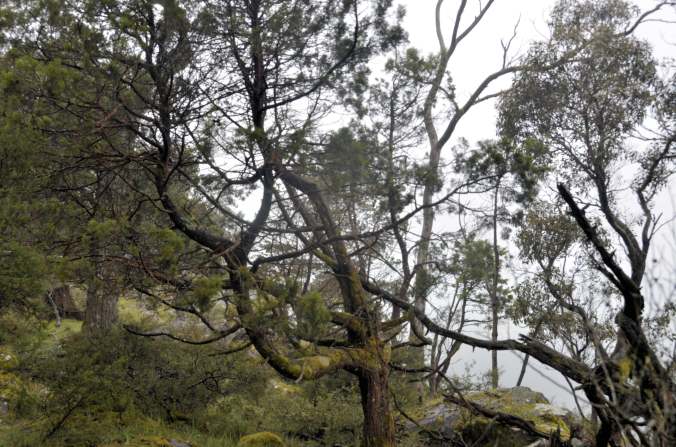
Feature Photo: Branches creating a puzzle © L.M. Kling 2023

Do you want to write? Wish you could write? Feel you have stories in your head that want to come out, stories you are sure others would enjoy? But you just don’t know where to start!

Many would-be writers seem to think that you must start at the beginning, work your way through the first chapter then the next and the next until you get to the end. Finito! Ready for publication!

This may be the way it is for some; but in my experience, very few. Very, very few. Such folk are rare birds indeed and quite possibly rare birds with a great deal of experience. The rest of us have to do things differently.

One way that is highly recommended and successfully used by many is to work out a plan; make notes for each chapter; shuffle things around a bit if it seems better that way; add or subtract incidents, characters, locations…  Then, when you are happy with the big picture you’ve worked out, you can get writing. Many will begin at the beginning and proceed in an orderly manner, chapter by chapter. Others will find it more satisfactory; more useful to jump in the middle somewhere; write the easy bits (or maybe the harder bits!) first up. Doesn’t matter; all equally valid and ultimately successful. So go with what suits you.

 I’ve always seen my “early-draft” writing as a sort of jigsaw puzzle – dozens of pieces (ideas) to be fitted together in such a way that they would eventually create a “picture” to be enjoyed or confronted or challenged by or…

As a kid I loved jigsaws; spent hours doing them and devised many different ways of tackling them. The easiest way was to separate out all the edge pieces; assemble the “frame” then fill in the middle. If I wanted a challenge, I’d divide the big heap into little heaps of similar colours and go from there. The ultimate challenge was to do the whole thing using all the pieces reversed, i.e. on a large tray or rectangular pan used for cooking slices or cakes and with the plain backing uppermost. When complete I’d carefully tip the whole lot out to check for success (or failure!).

Using the jigsaw analogy, my initial writing on scraps of paper; on the backs of envelopes or circular letters are the jigsaw pieces. Sometimes it might be great chunks of scribbled prose (or poetry). At other times just a sentence or two, a few words that seemed to sing; to sum up a situation, a feeling, an incident, a character…  It’s all grist to the mill; grist that I will re-arrange, add to, change, scrap, enhance, re-locate, delete…

Whenever I begin with a nice, orderly, logical plan or outline I feel it’s like starting the jigsaw with the edge pieces; things flow and there is a comfortable feeling of achievement. Many times, however, I feel I’m wrestling with all the pieces upside down, the blank backs of the bits, no idea of the final picture.

I know my finished product has to have a beginning, a middle and an end. It must flow; have a logical sequence of events; maybe a crisis and resolution; drama, pathos, evince tears or laughter or…  But this is the finished work; ready for a reader to enjoy. The completed jigsaw puzzle.

So, how do you tackle your writing? Are you hobbled by the belief that you must start at the beginning and laboriously work your way through in logical progression? Or do you always just jump in the deep end, flounder around, fed up and frustrated? Either way it is far too easy to decide this writing racket is all too hard; you’ve no talent; it’s not for you. Which is sad if you have ideas and stories in your head that you want to share, if you find words fascinating and putting them together in interesting ways a satisfying and fulfilling challenge.

When it comes to grammar and basic sentence structure there ARE rules that need to be obeyed. If you don’t know the rules or your knowledge of them is wobbly, you don’t need to see this as a major roadblock – there are plenty of people willing and able to help tidy up writing for those who see the rules of grammar as a bit of a handicap but don’t let this stop them getting their ideas down onto paper.  These people are called editors, and all published authors value the contributions they make to the final success of their literary efforts. There is absolutely no humiliation or shame attached to using the services of an editor. Just make sure you get a kind, caring and, above all, knowledgeable one!!

BUT but, but.

There are no rules at all when it comes the actual writing bit itself. How, when where you do it is up to you; your own choice to suit you and your lifestyle. Do it your way; whatever feels right and comfortable for YOU. But do just grab a pen, pencil, bit of paper and write.

© Mary McDee 2024

Feature Photo: Branches creating a puzzle © L.M. Kling 2023

Share this:

  • Share on X (Opens in new window) X
  • Share on Facebook (Opens in new window) Facebook
Like Loading...

Writing Tips–Getting Started

February 25, 2023 / lmkling / 2 Comments

After a long hot week—the first “heatwave” since 2019, I sat at my computer, blank for blogging inspiration. Finally, I discovered this little gem in my collection…

THROW AWAY THE CRITICAL PARENT IN YOUR HEAD

February, your New Years’ resolution, a not-so-distant memory, and you stare at the computer screen full of resolve. Time to start that great [nominate your country] novel. It’s a job, right? Hammer away on the keys eight hours a day. Right? You shift your weight in that padded, ergonomic office chair you bought for your project. Now what? Think!…

Check social media and the news. Pay a few bills. Back to your Word page, crack your knuckles and…time for a coffee. Get rid of that brain fog. Last week’s weather played havoc with your brain. Limber the old grey cells up with some solitaire. Or perhaps a quick crossword.

Back to the blank screen…and sigh!

You tap out a sentence. The first sentence, the hook. Must engage those millions of readers on Amazon, or that elusive publisher. You stop. Reread the sentence. Blah! It’s rubbish. You delete sentence.

You gaze out the window. Birds warble. The sky’s clear and blue. Maybe go outside with a paper and pen? There’s connection between you, the pen and paper. Outside, white paper on pad dazzles you. First sentence in black ink. What? Who’s going to want to read that?

An hour later, sun on your face and surrounded by scrunched up wads of paper, you nap. Nice with the sun on the back of your neck…and another morning of good writing-intentions wasted.

Brain Freeze and Platitudes

It strikes, anywhere, anytime. A work mate is leaving, or a friend is having a birthday. Some wise-guy buys a card and circulates it. Card arrives on your lap. You have two minutes to write some warm and witty sentiments. What do you do?

‘You’re a wordsmith, Lee-Anne, go on,’ my mum says.

But the clever words refuse to bubble to the surface of my brain. I locate the blank space where my wishes will go and then check out the preceding words of well-wishing. Pity, if I’m the first one to write this card.

I blame a relative of mine. Back as a teenager, I attended a funeral. The relative approached me and said, ‘I think you should go and comfort your aunty. But please don’t give her platitudes.’

Ever since, whenever I need to produce formal comfort or congratulations, that relative’s advice comes back to haunt me and all I can think of are platitudes.

It’s the “pink elephant” effect. When told not to think of “pink elephants”, what does our brain do? Yep, pink elephants in abundance.

So, when we stare at the blank screen or paper and remember our school days; our English teacher saying, ‘Don’t do this and that, and so on’, we sit there, frozen with our mental doors barred to the creative zone.

How do you get started? What works for you?

Some Suggestions

What works for me:

·         First of all, and this is legitimate. Years ago, a writing mentor advised us. They said, ‘Pack up your critical parent that is in your mind, you know the one who’s never satisfied, no matter how hard you try? Yes, that’s right, tie them up, gag them, and wrap them up like an Egyptian mummy. Then, in your mind, take them to the jetty and throw them in the sea.’

·         Then, have fun with your inner, natural child and with the story. You have permission not to put a jot on your computer screen or paper. Go outside, sit under a tree, or go for a walk. Imagine, daydream and if you wish, talk to yourself. This is the incubation phase.

·         After cooking the ideas for however long it takes you to be ready, pick up a pen and paper, and go to your favourite place, and brainstorm. Probably a good idea to stay away from the computer and the temptation to check social media, news, or play solitaire. Well, I need to anyway.

·         Find your characters, or should I say, allow them to find you. Do lots of reading. Also, observe others say in a coffee shop, beach, on the street, and even on television. You may find some interesting characters out there. You may be surprised at how these characters reveal themselves to you and even become your imaginary friends. Just like when we were children. Some people I know, okay, I confess, me, have created characters out of people I have known—usually a blend of a couple of people I know, from way back in my past, I mean.

·         Imagine having a drink with those characters or going for a walk with them. Ask them questions as you would a new friend. Warning: I do find this dangerous as I soon have a story, or at least a back-story.

·         Then put your character together in a restaurant, playing ten-pin bowling or going on a road trip. Now the ideas will flow, the story will flow and as the Borg in Star Trek say, “Resistance is Futile”.

·         Finally, write the story. It’s your first draft. Your mind’s critical parent is at the bottom of the sea, so allow your inner natural child to have free reign. Write as you’d tell the story to a friend on a camping trip or a child. Get the words down. I emphasise, it’s a first draft, you have permission to make mistakes while the ideas flow. Editing will and does come later.

·         Another suggestion: why stick to writing? If drawing, storyboard, or voice-recording works for you, do that. It’s your story. It’s your “child”.

Try this:

Create an oral story. You may do this as a game with friends, around the table as a family, or with your writers’ group. One person begins the story with two or three sentences. The next person continues the story and so on around the group, until the last person concludes the story.

For example:

Gnomes, they appeared everywhere; all over the seaside town of Glenelg. They popped up in odd places. Gnomes, stuck up poles, perched on tree branches, and even balancing rather precariously on television antennas….

In the Zone Challenge: Write your continuation of this oral story. Or create your own to share. You are invited to send us a link in our comments section.

© Lee-Anne Marie Kling 2017; updated 2023

Feature Photo: Gnome under our lemon tree that took 15 years to get started © L.M. Kling 2013

Share this:

  • Share on X (Opens in new window) X
  • Share on Facebook (Opens in new window) Facebook
Like Loading...
Blog at WordPress.com.
  • Subscribe Subscribed
    • Indie Scriptorium -- Self Publishing Collective
    • Join 94 other subscribers
    • Already have a WordPress.com account? Log in now.
    • Indie Scriptorium -- Self Publishing Collective
    • Subscribe Subscribed
    • Sign up
    • Log in
    • Report this content
    • View site in Reader
    • Manage subscriptions
    • Collapse this bar
 

Loading Comments...
 

    %d