A relative mentioned how in choosing a book to read, they kept on overlooking and dismissing one with a rather plain cover. Finally, they ran out of options and decided to give this book a chance. To their amazement, they thoroughly enjoyed the story—a real gem. They recommended we read the book.
Although we are taught from young to “not judge a book by its cover”, in the reality of today’s world of competition, advertising and marketing, the cover of our books is vital. Plain cover—overlooked. An eye-catching cover—a potential sale.
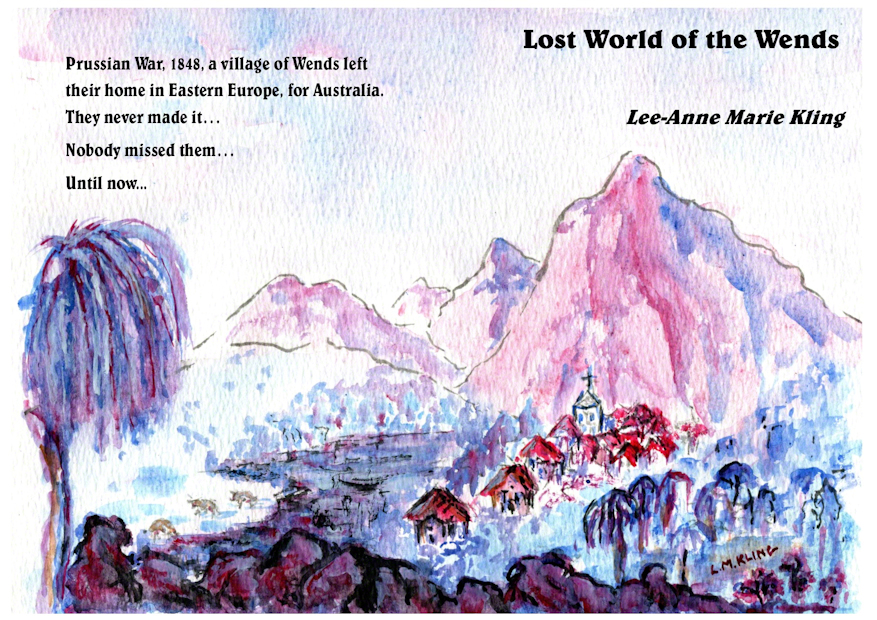
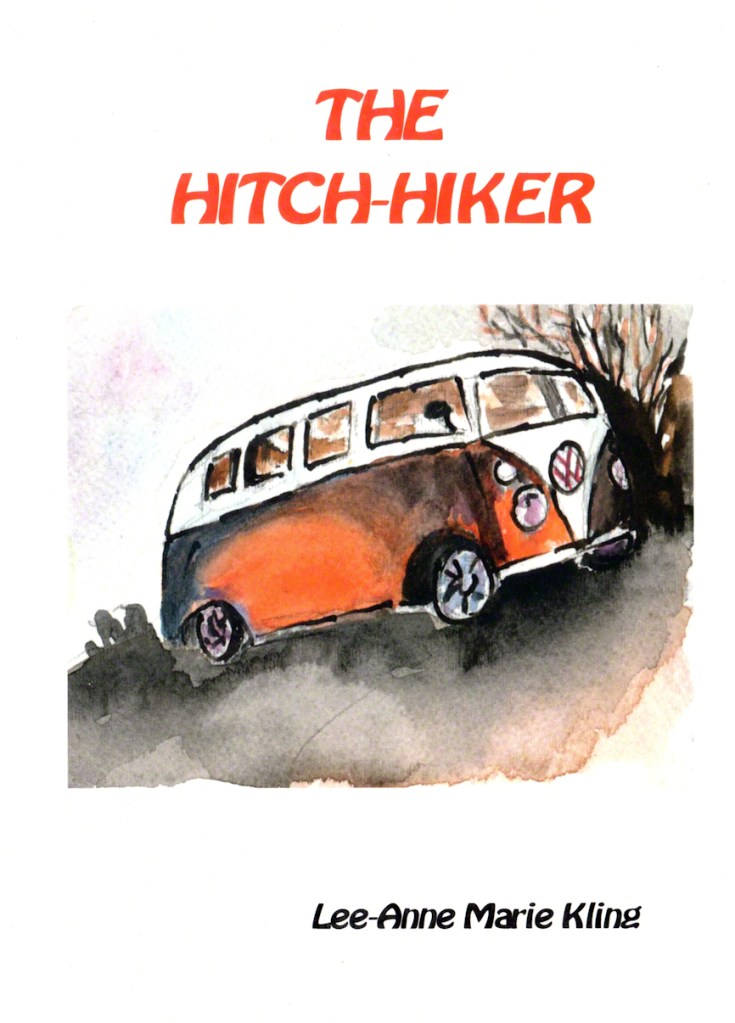
And so, we come to my first novel, Mission of the Unwilling. My team members at Indie Scriptorium advised that although its cover was, well, pleasant, it wasn’t up there, and well, dare I say it again, eye-catching like the covers of my successive books. They said that the covers of my war on Boris Series, The Hitch-hikerand The Lost World of the Wends, being my artwork, had more zing.
I did some research about marketing. Discovered that a book series needs to have features that set it apart and are easily recognisable to the readers who are following the story. Suggestions were: artwork that reflects the genre and story, style, typeface, colours, same size books, and of course, the blurb at the back that hooks the reader.
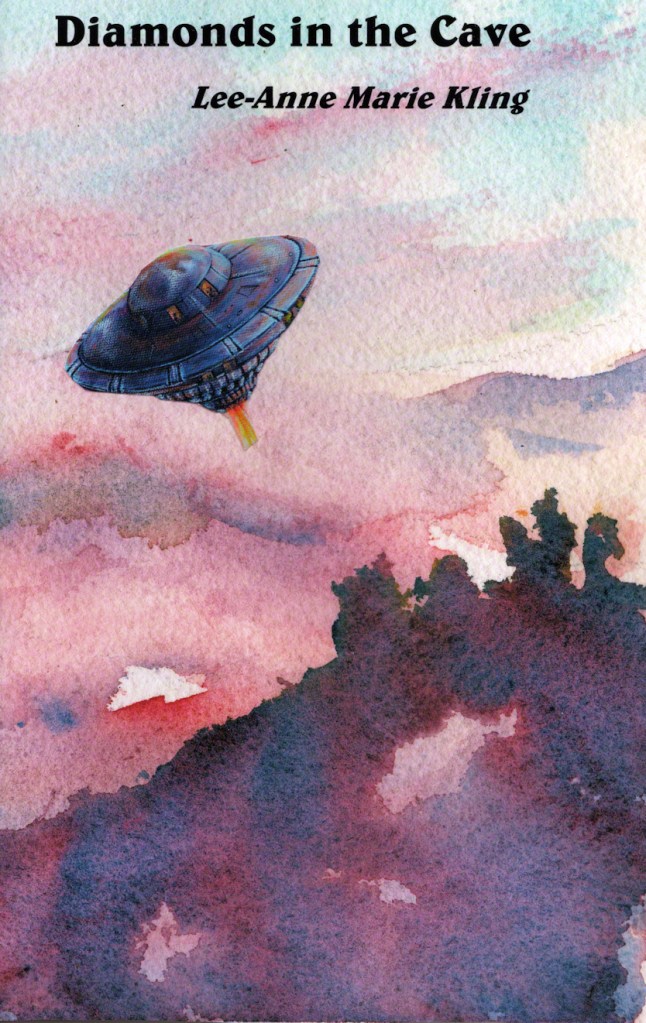
Back to the proverbial “drawing board” or my collection of artworks for a suitable cover for my first novel. After all, I was planning on revising it and releasing a second edition. Around the same time, a fellow artist, Liz Maxted, had painted a UFO scene. Impressed, I asked if I could use it for a cover of one of my future novels. She was thrilled and allowed me to borrow the painting to photograph.
As it has turned out, when working on the new cover for Mission of the Unwilling, Liz’s UFO fits perfectly, hovering over the Sellicks Beach cliffs of my watercolour.
I also changed the blurb to fit with contemporary issues, that being in Mission of the Unwilling’s case, the scourge of bullying and the victim rising above their identity of unworthiness to becoming a hero.
Then, on a roll, I created a cover for the sequel to Mission of the Unwilling, Diamonds in the Cave. And again, Liz Maxted’s UFO fits seamlessly in the mist and clouds of the Mount Martin range of the Pilgrim Planet. In Diamonds in the Cave, my heroine, Minna as a teenage mother, grapples with loss, her mental health, and the issue of witch-hunts plaguing the town.
I’m hoping Diamonds in the Cave will be ready for release soon. Just have to read through it once again, before handing it over to my Indie Scriptorium team to test read and edit. As I said at the beginning, in these competitive times, books are judged by their covers, but the inside needs to match up with good standards too.
For many, many years I was convinced that I “couldn’t write” even though I loved reading, even though I had ideas zooming around in my head, even though I loved words and playing around with them, even though I made up endless stories…
I did write poems, but they were different from stories. My poems were little, short snippets of language where the words were crafted in my head, fiddled around with to get the best ones in the best place, where everything sounded just right before I had to record them on paper. That was fun. There was a sense of achievement.
Stories and essays were a very different kettle of fish. They were hard work. Producing them was a matter of painstaking drudgery that began in Primary school. Back then, at the start of every school year children were issued with a heap of pristine exercise books that had to be taken home, covered and had our own name and the particular subject name written neatly on the front.
The expectation was that the work in each one was to be our very best. No scribbling; no scratching out; no careless, untidy work; no crumpled or torn pages. In other words, by the end of the year that exercise book should be as pristine as it had been on day one but full of work in our very best handwriting. Unattainable perfection for most of us!!
As far as writing was concerned the two that were my nemesis; my tragic downfalls were labelled Handwriting and Composition. The former was bad enough, but it was the latter that led to my conviction: “I can’t write”. Apart from the “Product Perfect” headset the other thing about compositions was that they had to be written straight into the composition book with correct spelling, perfect punctuation, excellent handwriting… no rough copy, no first draft, no preliminary notes. Straight from the brain cells to the page; no muckin’ about.
If I wanted to use a nice long expressive word like ginormous but didn’t know how to spell it correctly, I had to make do with a little short one I could spell (big) because errors were out, frowned upon, seen as evidence of lack of learning, failure… Where was the interest or excitement in that? I was effectively crippled.
Fortunately, education in this area seems to have moved on. Composition books as I knew them have gone the way of the dodo. Teachers and students now talk about first drafts and final copies. Thanks be.
If you can relate to that last paragraph then count your blessings and keep pouring your ideas, thoughts, stories out onto paper or into your computer. If it is the rest (or even part of the rest) and you want to write but think you can’t then ditch the doubts, grab a writing implement – pen, paper, computer – jump in and make a splash. Mistakes and stuffing up are potholes, not impassable roadblocks.
We learn by doing! And lots of practice!! So go to it and good luck.
I’m writing my third novel and still learning. Making my writing more dynamic and engaging is one skill I’m trying to develop. I’ve known while some scenes are full of emotion and action, other parts of my draft tend to wither into bland backstory or boring prose. I need to make my writing Zing.
The rule of “show not tell” is one of the writing rules churned out to fix boring writing. But what do we mean by showing, not telling?
I interpret showing as progressing the storyline by having my character storm around the scene with white lips, beating heart, clenched fists, and flashing eyes. They might be overcome by the smell of roses and hear the plaintive warble of a magpie. Yes, it’s all about the senses. Oh, don’t forget taste, she says with a mouthful of ashes.
Telling is informing your reader that your character is angry, smelt roses, heard a magpie, and has halitosis. Not really Zingy.
I entered a competition with my second novel and received lovely feedback from most of the judges. One judge, however, was less complimentary and hated much of what I had written. Gosh, that hurt. Despite all the warm fuzzy praise, I took the negative critique to heart, then dismissed it. After all, the other judges liked what I had written, and I got into the finals. But after I got over the elation, I took out the negative critique and with trembling hands read the judgement again.
They were right. There was critique I discarded; I honestly felt they were looking for a traditional romantic story and my novel didn’t fit the bill. But their critique of my prose was insightful and confronting and right. I will illustrate this using the actual paragraph the judge picked out to illustrate his/her point.
My line— “Eleanor had more energy and a new zest for life.”
Judges’ line— “Energy sizzled inside her, driving her to paint. Oh, how wonderful it was to pick up a brush and apply paint to a canvas again. Now that she’s accepted the facts, her life had become much better and full of zest.”
The judge’s line is full of Zing. It goes inside Eleanor, makes her feel the energy, expresses her joy, and put her emotion into the action of painting. She actively accepts that she cannot have a child, and acceptance improves her mood and energy.
I believe changing my writing style to make it Zing will require practice. I am writing a first draft of my third novel and have decided that just getting the story down is my priority. But enlivening my prose will take second priority. I will add another layer of editing with the express purpose of Zinging my prose.
Another technique for adding Zing is to use dialogue. Have characters, explain things, pontificate, console, complain, fight, disclose, advise, snub, berate order, and entice. Conversations are fun and show your character’s motivations, desires, beliefs, and points of view. They can also show how a character learns something, amends their belief, and grows as a character. Using secondary characters, friendly or not, will help your character interact and make your writing Zing. Have a look at Agatha Christie, for a masterful example of storytelling using dialogue
Sandy Vaile in her article Clarify, ‘showing for good’ provides excellent advice about aspects of active story telling. I found her ideas about placing characters in challenging situations edifying. If I’m writing a dramatic scene with action my writing Zings, my prose is stronger, and the words flow. But not all my scenes have an elevated level of conflict. In the future, I will plot more scenes with conflict. The conflict could be an internal battle with a problem or emotions or an external conflict with another person or situation but making life difficult for heroes and heroines is my new goal.
Another way to make your writing Zing is to make sure each sentence is active. I’m the queen of the passive voice but I came across a great explanation for active and passive sentences in Sandy Vaile’s’ article. Sandy states you should put the action first and the subject second and gives wonderful examples.
Passive–Tina’s homework was marked in red pen by Mrs. Gleeson. (The subject before the verb/action)
Active–Mrs. Gleeson marked Tina’s homework with a red pen. (The verb/action before the subject)
Passive–The burglar was tackled by the detective.
Active–The detective tackled the burglar.
I’m still learning about active prose. As I’m writing my first draft, some days the words flow and some days they don’t and that is often because of the setting of the scene. Planning more active and challenging situations in my plotting, adding secondary characters who engage my protagonist in active dialogue and making my characters use their senses are all techniques to master. Getting the passive/active voice is also a challenge.
Happy writing.
***
Acknowledgements
Sandy Vaile. Clarify ‘showing for good’ Romance Writers of Australia Hearts Talk August 2022.
Sandy Vaile is a motorbike-riding daredevil who writes romantic-suspense for Simon & Schuster US and supports fiction authors to produce novels they are proud to share with the world (and which get noticed by agents and publishers), through coaching, craft workshops and developmental editing.
Writing Tips: Developing Your Characters and Story
That Question
Question: What makes a story stand out for you? What makes you want to read past the first page? The first chapter? The first book? Or if you are watching shows on your favourite streaming service, what makes you want to forget about all else and binge?
I like crime shows, mostly not-so-real crime such as “Midsomer Murders”, “True Detective” and quirky ones like “Fargo”. Yeah, I could go on, see what I mean? I’ve been bingeing.
You might think, strange for a Sci-Fi (Indie) author. Not surprising, then, I’ve considered doing the reverse of John Wyndham and move genre from Sci-Fi to Crime Fiction. We’ll see…Meanwhile, there’s my travels with the T-Team and the latest the T-Team with Mr. B to look forward to. Funny about that story, Elsie King read it and gave feedback. She suggested the character of Mr. B would fit well into a murder mystery. After initially rejecting the idea, I started working on a character who possessed some of Mr. B’s endearing personality and behaviours in a draft for a future murder mystery.
Anyway, the thing about successful crime shows is how they engage the audience to know the people involved, the characters. The key to the crime (or any genre for that matter) is what the characters want, what they really want, influences their actions, that, in time, lead to tragic consequences. For example, a woman who wants, more than anything else, wealth and security, commits fraud and murder to fulfil her desires.
The question, what your character wants, applies to any story, novel in any genre you write. In one of my recent posts (Choice Bites–Minna) on my website Tru-Kling Creations,Mission of the Unwilling heroine, Minna, in her encounter with Boris came out of an exercise to get to know my characters and what they want most.
Understanding your character’s history helps the reader invest in your character and want to know them more. Whether they are good, like Minna, or an evil antagonist like Boris, exploring your character’s bio, and giving the reader a taste of their history, engages the reader in your character’s life-journey.
Again, the Boris story evolved for me as I delved into the murky depths of Boris’ life; how this alien cockroach as a power-hungry despot destroyed his own world through greed, and then sought to dominate all worlds in the galaxy in the quest to rebuild his empire. I also investigated why he singled out Earth and took revenge on her people.
Then one sunny day, as I sat on my back patio, I made a study of my characters; their personalities, backgrounds, and interactions with each other…and by the end of the afternoon, The Hitch-hiker evolved.
Novels are about people—characters. Stuck with your novel’s progress? Writer’s block? Spend an afternoon developing your characters; interview them, find out what their interests are, their birthdate, parents, likes, dislikes, and what they want most. Soon you’ll have them all sitting at a table in a restaurant, discussing, or arguing with each other. You’ll see their story-lines weave in and out like a tapestry. Conflicts will arise, resolutions made with a twist, and villains and heroes will leap out from your computer screen, or page.
Our novels, our stories are life, and life is people. The reality is no one is an island. Even a convict in solitary confinement had parents, had a journey, a reason he ended up in solitary, and people who put him there.
So, getting back to the question, “What makes a story stand out for you?” Here’s the take-away—even simple entertainment, the characters are the key. Get to know your characters, and they will give you a story.
Begin by asking your character: What do you want most in life?
Your readers want to read the story, to be entertained or informed. They want to finish reading the book with a satisfied smile. If they do that, they may just buy your next novel.
Editing is removing all the mistakes that stop the reader from enjoying your story.
“Assume all your readers are editors.” (Lorena Goldsmith 2013)
You may find that as you write your novel, the words and ideas flow effortlessly. The creative drive is magical. The words fly into your computer or out of your pen and you write and write. (Unless you have writer’s block which we will discuss at another time) I find writing is exhilarating and wonderful. Editing, for me, is far more tedious and definitely much harder.
Editing requires a different mindset from creative writing. I think some people excel at editing. They have the focus to spot the errors and methodically work through a manuscript without getting caught up in the story. If you are like me, I’m good at spotting a few mistakes, but then it all seems to blur, and I get drawn into the story and the editing goes to pot.
Some writers are also exceptional and can write a novel with brilliant flow, use just the right word in the right place, don’t start all their sentences with the same word and make all the myriad bloopers that it’s possible to make. That’s not me–but I’m slowly improving and editing definitely makes me aware of what I’m doing wrong.
It also helps to acknowledge strengths and weaknesses in your writing. I can’t spell and I suck at grammar. I overuse words, adverbs and the passive voice. I often start each sentence with the same word, (as if you didn’t notice) and I make lots of other mistakes. But my strengths are plotting, character development, dialogue, conflict and pacing, and I can write an entertaining story. For me to get my story read and enjoyed I need all the help I can get.
There are three different types of editing:
The structural edit–or the big picture. With this read through, you are looking at the overall construction of the novel or short story. The plot, pacing, setting, points of views, character development, chapter length, use of conflict, cliff hangers and plot holes plus other stuff.
The line or copy edit–which looks at grammar, word usage, spelling, elimination of overused words, elimination of filler words, repetition, sentence length, paragraph starts, incomplete or non-sensible sentences, showing not telling, good dialogue, unnecessary dialogue attributions, cliches, mixed metaphors and poor research, to name a few.
Proof-reading–the final edit which picks up the typos, line spaces and other issues that will disrupt the printing process.
I need the line and proof-reading edits more than the structural. However, I have had good structural feedback from other writers. I have rewritten and changed chapters around. It is a daunting task, but I learnt a lot from the process.
If you struggle with editing, there are also some ways of helping you get your editing cap firmly on your head.
Buy a good reference book and have it on hand at all times. I found Lorena Goldsmith’s Self-Editing Fiction that Sells. (How To Books Ltd. UK 2013) was excellent. I also use the Oxford English–A Guide to the Language compiled by I. C. B. Dear (Guild Publishing 1986). Steven King (yes that Stephen King), swears by William Strunk Jr. The Elements of Style (The Macmillan Company 1959). Stephen King also has a very entertaining informative book, Stephen King-On writing.
(Pocket Books 2002)
I purchased “ProWritingAid”, an online editing program, for $120 a year. I love it, but it takes a while to learn how to use it. Other writers use Grammarly, Scrivener or Hemmingway. I suggest you Google “editing programs for writers” and see what suits you. Many have free trials too. You also have basic editing tools in Microsoft Word.
Find yourself one or two friends who can edit your work if you edit theirs. This person is more than a reader who will give an overall impression of your novel. They will need to have a good idea about what good writing entails. School teachers who specialise in English make talented editors. Give them a red pen and they become eagle eyed warriors for the English language (Bless them)
After I have completed my structural edit, and have had a go at the line editing, I employ a professional. My editor does a wonderful job using track changes in word to make comments and fix my grammar, punctuation, spelling and she’s brilliant at spotting anachronistic words. The cost for an 80,000-word novel is about AU$600 -$800. The cost increases if you supply a rough draft which needs extensive editing.
Thanks to Mary McDee and Lee-Anne Kling for the editing corrections.
Indie Scriptorium-What does it take to become a writer?
Step Two–Writing to be read.
A reader is your audience. Your job as a writer is to give your reader the best possible experience of understanding and enjoying your thoughts, experiences, ideas, and creativity.
To turn your written piece into something that others will read, understand and enjoy requires two further steps, critiquing and editing. You will also need a computer and an understanding of how to create a word document or someone who will help you with this task.
When I first started out writing, I did not understand the need for critiquing and editing and wrote a massive novel of 180,000 words on a typewriter, and then did not know what to do with it. A kind person read it and pointed out that it was too long, overly complex, had too much explanation, didn’t read well, and contained far too many grammatical and spelling errors. I became totally dispirited and deposited my tome in a bottom draw where it still resides today.
Since then, I have written hundreds of small pieces of written texts. Some were essays for study, work projects, small exercises in writer’s groups and short stories for competitions. I have learned from these the craft of writing. I have improved my style and continue to improve. This is a process that never stops. I am learning every time I write, critique and edit.
I am now writing novels to be published with Indie Scriptorium and they need to be as close to perfect as possible. Getting feedback and then editing your work is as important as writing it in the first place and can take up more time and effort. But it will be worth it.
Let’s start with critiquing. What is a critique? My Collins dictionary defines a critique as a “Critical essay” and many people view a critique as a negative criticism of something as it comes from the word critic. But I like the Oxford Languages definition on Google “Critique–a detailed analysis and assessment of something.”
When writing, you want a detailed analysis and a fair assessment of your work. As a writer, you need encouragement and constructive feedback, so it’s important to look for the strengths of the writing as well as the improvements required.
It is difficult to critique your own work. When you are writing for a reader, you need another set of eyes. A trusted person, or persons, who will give you their honest opinion about what they liked and what they didn’t. What worked and what was confusing, what was difficult to understand, or lacked pace and interest. Getting feedback is essential.
I have a lovely friend who reads my first drafts and tells me if she enjoyed the story and the characters. I also have writing friends who give feedback about the plot, characters, writing style, research used, word usage, sentence construction and grammar. Writing groups can provide good feedback, but I would suggest that you ask one or two members to become your critique partners and then share your work fairly amongst yourselves. Writing groups can be too supportive, you need a balance of encouragement and critical evaluation to improve your writing. I also employ a professional editor who provides me with invaluable feedback.
Google-How to find a Critique Partner and there is a plethora of articles that I suggest people read before approaching another writer. Some Writing Organisations will provide critiquing services for a fee or will help you match up with another writer. Entering competitions can provide you with some excellent feedback, especially if the judges are readers. I have found a questionnaire a useful way to gain feedback from readers as it focuses their attention on what aspects of your writing you need to improve.
Critiques strengthen your writing. Reviewing someone else’s work strengthens your writing and leads you to the next step: editing. (To be covered in my next blog in July)
And in the spirit of critiquing, I welcome your feedback for this blog.
Indie Scriptorium—What does it take to become a writer?
Chatting with my new, and delightfully talented, hairdresser, the conversation flowed to my writing aspirations; to get my first novel self-published by August this year.
“Oh, I’ve always wanted to write.” she said.
Many people want to write. Their family history, memoirs, self-help books, picture books for children, cookbooks, books about their interests, passions and creative short stories, poetry and novels. But where do you start?
Indie Scriptorium has been a revelation. What do you need to know to become a published author? What are the steps required? In Indie Scriptorium, we have identified, and are currently collating information that we hope our readers and members will find helpful. But I will start at the beginning.
Step One – Writing for yourself.
Pick up a pen, find some paper and write. Start with a paragraph and then try to set some time aside every day to write some more. Don’t judge your work, just write. If this is rewarding and addictive, you’re on your way to becoming a writer.
Writing for yourself can be rewarding. Keeping a diary of your thoughts and activities, describing events you’ve attended, people you’ve met and places you visit is a record of your life. Jotting down recipes in a book with your impressions of the meal builds up into a great cookbook. Letters to friends and relatives can be enjoyable to write and lovely to receive. They provide wonderful memories and may be helpful to family members interested in genealogy down the track.
Writing can be therapeutic. A way to express your feelings in a safe way. You may be angry or disappointed with someone you love, but can’t tell them. Write it down and get it out of your system. I find this can help define my emotions and sort out what happened.
Even if you are writing for yourself, you can choose to improve your writing skills. A good dictionary and thesaurus are a good idea. If you have a computer, try writing using the Word program. It has a built-in spell checker and thesaurus. There are also books and magazine you can buy or borrow from libraries and if you google improving your writing skills, you will find a plethora of ideas and exercises.
But it doesn’t matter. If you choose to write for yourself, and you alone, what you write and how you write it is entirely your choice. So just write and enjoy.
Tune in for Step 2 -Writing to be read -to be posted 16th June 22
So, you want to publish a novel. Perhaps you have a manuscript ready to go. Or maybe, you have the challenge before you of getting started.
But what makes a good story?
One of my first blog posts come to mind…to encourage and inspire all of us who are writers.
Writers’ Privilege
‘Writing is a lonely craft,’ my university tutor said.
All of us in the group nodded and I thought: Yes, a writer must hide away in their study clacking away on their typewriter. They must concentrate. Those were the days back in the 1980’s…
I recalled as a student, hours locked up in my bedroom, writing my essays, trying to concentrate while my family went about their business, stomping in the passageway, dishes clattering in the kitchen and the television blaring in the lounge room. Not to mention my dear brother lifting weights and dropping the things with the inevitable clunk and thud, in the lounge room. Did I mention trying to concentrate? Yes, trying, but not succeeding. And even now, as I write this blog, can’t go five minutes without interruptions. These days, though, I write my first draft, by hand, in a quiet place at a quiet time, and then I write this blog on the computer as a second draft.
Suffice to say, the statement by my tutor all those years ago, has an element of truth. And compared to being an artist or musician, writing is a lonely craft. I belong to an art group and enjoy going each week as the hall is filled with happy chatter and my fellow artists are friendly and welcoming. And I can imagine a musician, mostly plays their instrument, or sings with others in a band; their craft has to be performed to an audience. The lonely parts of a musician’s life, from my observation, is the process of composing music. Although, many musicians collaborate when they jam together and create new songs together.
On reflection, though, my experiences over time with the process of writing as isolating, no longer resonates with me. I don’t write alone. I have my characters. I go into their world. Call me crazy, but it’s like when I was a child and had imaginary friends. Come to think of it, perhaps because I was lonely, I became a writer. Figures, hours after school, on weekends and holidays to fill. There’s only so many hours my brother, five years older than me, would share with me playing games. And friends, too weren’t with me all the time. So, books became my friends, as well as characters in the world of fantasy I conjured up. I swooned away, sitting in my cubby house, and whole days drifted by in my other life of fiction, science fiction.
As I grew up, I became used to my own space. My loneliness transformed into the joy and peace of being alone. Time to think and explore ideas, the “what if’s” of life’s path, stories of people I’ve met, my story, and the stories of my characters. Time to express these stories, writing them down. Many of these stories remain hidden in my journal, a hand-written scrawl; a mental work-out, sorting out ideas and emotions. Some make it to a Word File on the computer, others a blog post, and a few hundred pages have ended up as works buried on the shelves of Amazon—self-published but published all the same. And for six years, now, there’s my blog, again mostly hidden in the blog-pile of the world-wide web, but more visible today than in 2015 when I started the blogging journey.
Yet, once I’ve written the first draft in quietness and peace, the craft of writing becomes a collaborative process. Good writing needs feedback, editing and proof-reading. An effective piece of work needs a second, third and numerous sets of eyes, and many minds to weed the “gremlins” that beset the plot, content, and pacing. And a keen set of eyes to comb through the text to pick up grammar and spelling issues. The computer’s spell and grammar check are not enough.
I love to go to writers’ group. I heard someone on radio say that reading is the ultimate empathy tool. When we read, we enter another’s world and how they see the world. Exploring another’s world—how much more social can one get? This is what happens at writers’ group. We share our own world through our writing, and we explore other writer’s world as we listen to each other’s stories; a privilege and an honour to be trusted with these gems. As fellow writers we need each other to hone our skills as a writer. We need each other’s feedback. How else will we refine our craft without feedback?
Still, there is an aspect of writing that makes it a lonely existence. As writers we are modern-day prophets, proclaiming words given to us, believing these words can and will make a difference in another’s life. Hoping, the change will be for good. The word is a powerful tool, a double-edged sword. God’s Word is described as a double-edged sword. (Hebrews 4:12) There’s a saying that sticks and stones can break bones, but words cannot hurt me. Not true. Words can hurt. Words can also heal. Spoken words can sting or soothe, and then are gone, but the written word can endure and have power. People believe something is true because it’s in print. Reputations have risen and fallen on the power of the written word.
The printing press revolutionised the fifteenth century. Imagine words once written and hidden in some monastic library, then with the advent of the printed word, being duplicated and spread, and even appearing on church doors, for all to read. In our times we have witnessed the evolution of the power of the word through the internet. Need I say more—the gatekeepers of the past, by-passed, allowing all who are wanting to have a voice, freedom of written expression.
However, with freedom and power to influence, comes responsibility to use our gift and passion to write wisely and for the good of others. As a writer, I have written with good intentions to help others grow, help others see the world differently, change attitudes and effect a positive change in the world. Even so, my good intentions posted on my blog may have affected others in ways I didn’t intend. So, I have an understanding now what it means that writing can be a lonely craft as there will always be someone who doesn’t see the world as I do and may find my public interpretation of life offensive. My voice in the world-wide wilderness of the web may alienate me from others. So, I’m back where I started as a child, alone, with time and space to explore my world of fantasy with my characters as friends.
I guess that’s why I’m drawn to write. With fiction, it’s out there, it’s fantasy and it’s a safe platform to explore ideas, issues, and ways of looking at the world, the other world of “what-ifs”, that help readers open their minds to investigate alternative attitudes and create discussion. And with fact through my travel memoirs, sharing my life and worldview, joys, challenges, and faith. Through this process, I hope to bring goodness and personal growth to all who are willing to join in the journey into my world.






 Indie Scriptorium -- Self Publishing Collective