Historical Research – Making a plot realistic.
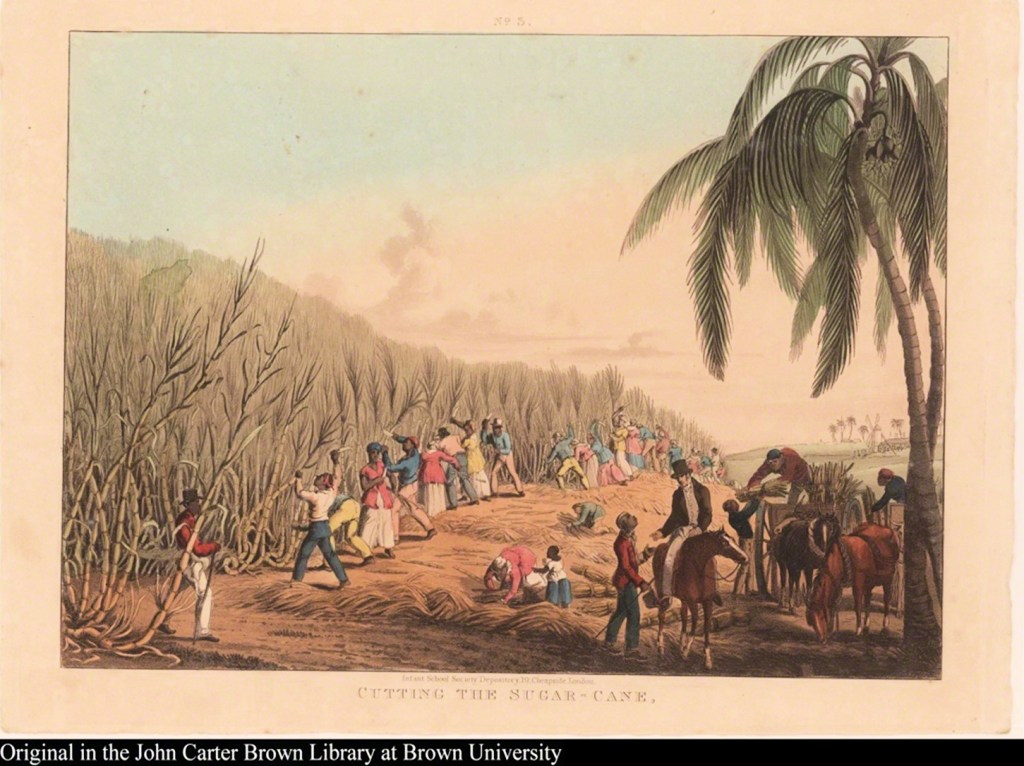
I’m at the tail end of my third novel “A Suitable Passion” (working title). It’s about slavery at the time of the abolition movement and has been the most challenging of my novels so far. It started out as a historical romance and that genre usually has a happy ending. But when a happy ending just doesn’t fit with the history, what do you do?
In a nutshell, the British Jamaican slave trade started in 1655 when the British overthrew the Spanish colonialists and finished on August 1st, 1834, with an Act in the British Parliament that gave slaves in all British colonies freedom. Well sort of, as the wealthy plantation owners in the West Indies managed to finagle an apprenticeship system that gave them free labour for another six years. This system was designed so the slaves could learn to become a paid labour force. Not surprisingly it didn’t work, and the scheme was abandoned 1838 due to the appalling behaviour of the plantation owners and managers. After that, most of the African people in the West Indies walked away, choosing to live in their own villages and grow their own food rather than work for the men who had owned and abused them. The sugar industry collapsed.
To make matters even more unfair, the plantation owners were given compensation for freeing their slaves. Like cows or sheep, slaves were considered property. The slave owners demanded compensation and it cost the British public twenty million pounds (approximately $40,000,000 AU). The money was distributed to some of the richest and most influential families and institutions in Britain. The slaves got nothing. This huge debt was only paid off in 2015.
Into this mix came the abolitionists. The movement started in the mid 1780’s with predominately Quakers establishing committees and making presentations to Parliament. In 1807 the shipping of slaves from Africa to British colonies was banned but slavery continued in British colonies for another twenty-seven years. The abolition movement was slow growing but by the 1820’s the new middle classes became involved. They formed societies throughout Britain to actively work against slavery, many of the societies were organised and ran by women.
The historical research to tackle this book was extensive. I read five different PhD. dissertations to get the social, religious, economic and political dynamics that led to the abolition of slavery. I read first-hand accounts of slaves and the terrible deprivations and punishments they endured. I gleaned information about how the sugar industry worked and even visited sugar museums in Queensland to get a sense of the process of sugar production. I read articles from newspapers at the time and attended a meeting of the Quakers to experience first-hand their remarkable religion.
I set my novel in 1829. The plot revolved around the question:
What if a young heiress discovers her family’s wealth and prestige come from slavery and she is expected to marry a man who will continue the cruel practice of the plantation system in Jamaica? How will she comply with her family’s expectations when she is an abolitionist?
I sent my protagonists to Jamaica where they experienced slavery first hand and confronted their relatives who profited from slaves. I had hoped to end the story on a positive note with my protagonist’s relative having an epiphany and freeing his slaves. But the research could not be denied. There was no happy ending. I could not find one example of a slave owner who showed one iota of compassion and freed his slaves. Avarice abounded and was rewarded and the plight of enslaved people in the West Indies was appalling even after emancipation.
My novel became an exploration of a shameful chapter in British history. I found that I had to follow the history rather than a romantic plot. The romance became a secondary consideration and the history took over. I changed the characters to make the villains more realistic and my protagonists end up together but are powerless to change the outcome for the slaves. A sadder ending than I wanted but I hope the novel sheds light on the history of racism and still delivers a satisfying read.
Elsie King © 2024
Photo attributed to Creative Commons
 Indie Scriptorium -- Self Publishing Collective