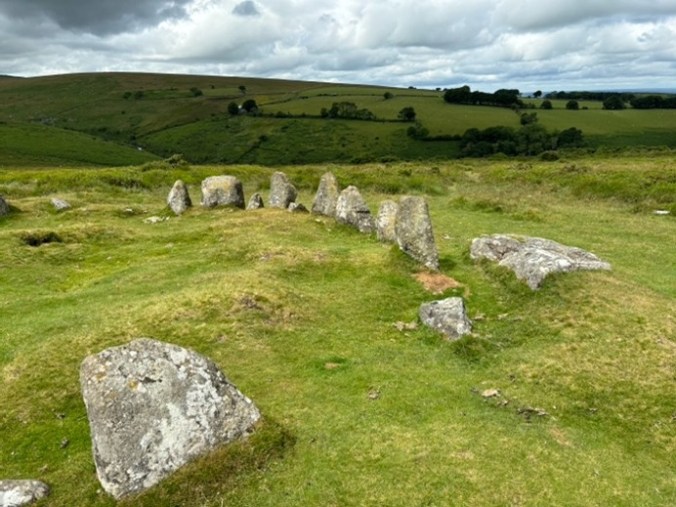
Why is it there? What was the meaning? Who raised the stones? Why? All of these questions foster ideas for a story, poem, an opening scene or a theme for a novel.
Then practice painting this picture with words. Describe the colours, the view, the atmosphere created by the clouds and light. Put a character in there and give them a dilemma.
Add a suitable quote from William Shakespeare:
“And this our life, exempt from public haunt,
Find tongues in trees, books in the running brooks,
A dramatic scene which reminds me that Australian history is ancient, often sacred and secrete. There are Aboriginal myths shared at this site, but their deeper meaning is hidden from new Australians. A caution that, as writers, acknowledging indigenous stories requires sensitivity and care.
But the landscape is awe-inspiring and we can create our own myths when we write.
As expressed by John Keats: (letter to J.H. Reynolds 1818)
“Almost any man may, like the spider, spin from his own inwards his own airy citadel.”
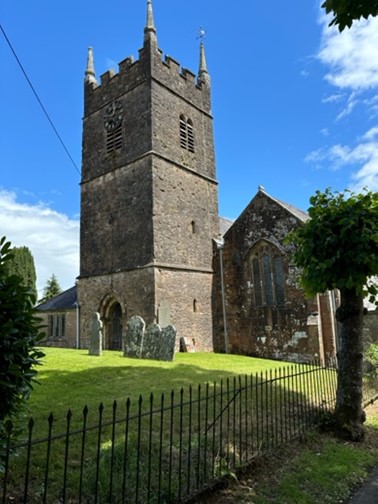
Quaint English villages are the typical settings for Cosy Mysteries, but any small, interesting community will suffice.
I admit that I’d never heard about Cosy Mystery novels until I attended a wonderful presentation by Morgana Best at the Romance Writers of Australia conference in Adelaide 2024. Cracking the Cozy Mystery session opened my eyes to this delightful, popular genre.
I personally love crime books, especially Nordic noir, the darker the better but even this avid reader sometimes finds the desperate situations, vivid descriptions and awful outcomes too much to bear. Waking up in the middle of the night with detailed images of beheadings, disfigurements and accompanying gore is unsettling. Psychopathic villains can haunt my nightmares and leave me looking for a good romance at the library the next day.
Maybe it’s time to read some Cosy Mysteries instead? A murder without mess, a whodunit solved by an untroubled, clever amateur sleuth with a happy outcome.
But there are conventions for writing these very popular tales.
The sleuth must be likeable, unexpectedly clever and an amateur. They might want to hide their brilliance under a bushel.
The investigator must have a strong motivation to solve the crime; a sense of justice, a desperate relative, someone falsely accused or police incompetence.
The mystery must be cleverly crafted with copious red herrings, but the reader discovers all the clues in the end.
Good research is essential into murder techniques, police procedures, coronial enquires, autopsies and medical assessments.
No blood, gore or graphic descriptions of the crime.
No blasphemy, cursing or coarse language.
No sex but a touch of sweet romance is allowed.
The victim must be flawed and/or unlikeable but must still engender some sympathy to warrant the investigation.
The setting is a small, appealing community with lots of quirky residents.
No animals or children should be harmed.
You can add smart dogs, strange cats and unusual but endearing pets/wildlife.
The police should not be involved unless they get it wrong and need to be enlightened.
The mystery/murder must be solved, and everyone live happily ever after until the next victim bites the dust.
These books sell in their millions every year. There are many sub-genres including romantic, historical and paranormal themes. Many Cosy Mystery writers do a series of books and get a following of avid fans.
The genre can be traced back to Agatha Christie, who introduced readers to her clever sleuth, Miss Marple in the 1930s. Other famous historical mystery writers are Dorothy L. Sayers, Margery Allingham and Ngaio Marsh. These four ladies were the Queens of Crime in the early to mid-twentieth century.
Cosy Mystery books have engendered many television series: Death in Paradise, Agatha Raison, Shakespeare and Hathaway, Father Brown and Sister Boniface to name a few.
I certainly will be looking out for some cosy entertainment at the local library. As for writing one, the ideas are circling. A murder of crows over a distant field …
For more reading, I found the following articles informative:
Ingram Spark—What is a Cozy Mystery and why is it so popular? An article by Debbie Young September 2019
Crime reads – Cozy Mysteries aren’t going anywhere, in fact, There’re as Popular as ever. By Olivia Blacke February 2021.
And please have a look at the cat inspired web site of Morgana Best – writer of paranormal cosy mysteries and the lovely lady who inspired this blog.
Incubating an idea for a story is an interesting process. As a novelist my inspiration most often comes from a theme. It might be the rights of women, the importance of family or equality and fairness. At other times the theme emerges as I write.
When I reflect on the themes that are important to me as a writer I can trace the influences on my life. My mother was a strong feminist even before it was a movement. Her actions in life were all about doing things her way, standing up for those less fortunate and being a strong advocate for what she considered right for her family.
My education as a Social Worker strengthened my principles of feminism, justice, equality and being non-judgemental. I learned to respect a person’s self-determination, even if it was outside the norm. I’m also a pacifist and abhor violence and war.
Stop Pushing was a story where the themes emerged without pre-planning. At a writers’ group we were given a ten-minute exercise to complete a piece of writing inspired by a sentence that contained the words stop pushing. I just wrote. Top of my head the story just emerged with flow of consciousness. It wrote itself. I liked the original and took it home to refine. “Stop Pushing” is the final short story and I like to think it is one of my best pieces of writing. I hope readers enjoy it and also look for the themes that are entrenched in the story.
Stop Pushing
It was a peculiar name. Who would ever call a bloke Stop Pushing? Snowy Jones reckoned it was him that got it wrong. Said he had asked the new bloke for his name and got told it was Pushenko, or something foreign like that. Now Snowy was ‘bout eighty-five at the time, deaf as a post and with a few wallabies loose in the top paddock, so it makes sense he got it wrong. Snowy decided it must be Pushing, and that was that.
I never found out where the Stop came from; but it is Australia, and everyone gets called something short that’s fitting. Stop Pushing sort of emerged, settled and became part of the lingo, and that was that.
Stop arrived in the early fifties. Bought Warren, the goat’s old place on the edge of town. The sheila’s tried to do the neighbourly thing and get him to the RSL chook night, but Stop wouldn’t have any of it. But he turned up in the front bar every Friday, have two beers and then go home at closing time, did that all of his life. And he always fronted at the dawn service on Anzac Day, stood at the back, then drifted away like a drizzle on a breeze.
Stop was a funny bloke. You wouldn’t believe he had a sense of humour; and he didn’t! Never smiled or laughed. Ordered his beers with a nod to the barman and said nothing else; to anyone. There were no laughter lines on Stop’s dial. He had deep gauges around his mouth, sunken cheeks and eyes that emerged from the black pits of hell. He was thin as a long dead cadaver and looked no different in forty-odd years.
What Stop did on the small holding we never knew. He kept himself to himself, and we were alright with that. He was quiet, clean, and took up very little room at the bar. After, a few years, his bar stool became a protected zone on Friday nights. “Oi, you can’t sit there, that’s Stops’ corner.”
It was in the nineties and the local fire crew had just mopped up after a blaze that grazed right up to the edge of town. The pub put a couple of hundred on the tab and everyone got plastered, really plastered. A few of the younger fella’s got a bit out of hand; as you do when you face off a fire for the first time. A kerfuffle broke out over some bloke’s missis, and the two Romeos took to some shoving, right into Stops’ corner of the bar.
Stop was jostled, he swayed, then toppled sideways, fell to the floor. The fire chief rushed over and tried for a pulse, but then shook his head sadly. They propped the poor old bastard back up on his stool and raised their glasses in remembrance. Stop Pushing was no more.
Now Stop Pushing could have just faded into obscurity, but a couple of months after the funeral, a bloke in a suit called a meeting in the front bar of the pub. The suit said he was a “lawyer for the deceased known as Stop Pushing.” Turns out Stop was worth a bob or two and left all his money to the town. He was some sort of fancy writer. Not a Steven King type writer, but he did history books which he sold to schools and universities, for a fair bit of money.
Well, the CFS got a new fire truck, the oval got a new stand with change rooms underneath and Warren, the goat’s place, got turned into a community library with meeting rooms and even computers.
He also donated a new park bench at the war memorial. The plaque was short and to the point, “In memory of Stephan Pushenko”
There was a lot of talk about Stop for a few years after his passing. One of the teachers did a bit of digging and found out the poor bloke had come from Poland and done time in Auschwitz. There was some speculation that he was from some rich Jewish family, or he was a Romany or even a poof, but I don’t think that mattered to anyone in the pub.
I reckon Stop found his way to our small place in Australia. He was taken in, given a new name, and left to be himself. He never did anybody any harm and ended up doing everyone a lot of good. Whatever ghosts he needed to bed, he did it quietly.
I like to believe Stop found serenity here. He took in the ordinary life; the fires battled, the footy games won, the cricket games lost, the jokes, the gossip and the yarns. We gave him back a life, and he took what he needed, then gave back in spades.
Visitors to the pub may find it a bit strange but at closing time every Friday, to this day, some joker will raise his glass and shout, “Stop Pushing” and everyone will raise a glass and repeat “Stop Pushing” and have a laugh. For a memorial, you can’t get better than that.
I’ve always been fortunate to have far more ideas for my fiction than I have time to write them into a story or novel. But some writers struggle to find an idea and inspiration. So how do you get inspiration and ideas for what to write? This was my experience.
My first novel was easy to plot and plan. I wanted to set the novel in the Regency era because of my love of Jane Austen and Georgette Heyer. Then, women had no rights and little education and I wanted to promote my ideas about feminism and equality in that era. A Suitable Bride emerged from these basic ideas. I asked what would an intelligent and sensible woman do to ensure she made the best choices to achieve a fulfilled and happy life in a world where woman had no legal rights and little education? The answer informed the storyline of A Suitable Bride. The love that grew between my protagonists against impossible odds gave me the conflict required and the happy ending fulfilled the romance genre.
Family and friends who experienced the sad loss of a baby or suffered infertility inspired my second book A Suitable Heir. Again, I set the novel in the Regency period to capture the additional difficulties of upper-class woman whose main purpose in life was to marry and produce an heir. I asked how would a woman in a society cope with infertility in this era. In addition, I incorporated the issues of depression and loss when a couple remains childless and the joy of having children after a difficult time conceiving.
I’m currently writing my third book, which began when I watched the sad and senseless death of George Floyd. It appalled me to witness his awful murder and made me think what could I do to counter such extreme racism. I returned to my favourite historical period and I learned about the British slavery trade and its aftermath. This became the focus of A Suitable Passion. My protagonists appear to be on the opposite side of the abolition of slavery movement, yet my heroine is coerced into a marriage of convenience with a man she cannot respect. This book has been the most difficult to plot and plan as it required considerable historical research about slavery in the British colonies, a romance and a happy ending. Two rewrites later I am still attempting to incorporate an engaging story with a fascinating but sad history. I’m not sure I will achieve the right balance but love the challenge.
So, my inspiration for novels comes from social issues and themes, which I then incorporate into a favourite historical time to create fictional characters and storylines. I find inspiration for short stories harder but thinking back these are some spurs that have helped me to create my short stories.
Writer’s group exercises. Some of my best short stories started out as a topic for a 10-minute writing exercise at the Woodcroft Writer’s group. Everyone wrote a sentence from a book, poem, article or from our imagination on a scrap of paper and then fold them up and put them in a tin. Each week we’d pull out a sentence and it would inspire us to write on the given topic.
If you can’t attend a group, just grab a book, pick a paragraph or sentence and use that as inspiration.
Some flash fiction web-sites provide topics for short fiction.
Reading is also a significant source of inspiration. You may enjoy a particular genre or author. Ask yourself could I also write like Stephen King, Agatha Christie or Jane Austen and start planning.
You can read articles in newspapers and magazines about actual crimes, daring rescues, sad losses, politics, sport, celebrities and unusual events and use these as inspiration. Change the time, place and names and start writing.
Just overhearing a conversation can inspire a story. So, learn to listen to people talking around you. It will give you ideas and help you create authentic dialogue.
Competitions are a great way to get inspiration. The Romance Writers of Australia have three anthologies published a year each with a particular keyword and theme that inspires the entrants. There are a lot of writing competitions that provide entrants with a theme or keyword.
Photos, films, social media posts can all provide you with ideas.
Research an area of history that fascinates you. As you learn more about the time, you can discover real life people and events that will provide a fabulous story. You can take an event in one era and put it into another. Change the characters’ names, the country they live in and then write it up as fiction.
Your own family or personal experiences can inspire as many a memoir writer will tell you.
Keep a notebook of ideas, or have a desktop folder with writing ideas so when inspiration strikes you can put the idea away for later consideration.
An important step in the creative process is to ask what if or how would? What if that hero in the paper later regretted his actions? What if that murderer wasn’t caught? What if that woman I overheard left her husband? How would a barren wife cope with a demanding husband in the 1800s. How would an abolitionist cope when her family are slave owners.
So, select a topic, make whatever changes you like and ask what if, how would and get writing.



 Indie Scriptorium -- Self Publishing Collective