Writers have it easy these days. Needed facts and figures involve just a few strokes of the keyboard and you have everything you need instantaneously. The wonders of the World Wide Web, Google and Wikipedia. Prior to personal computers, research involved trips to libraries, ploughing through shelves to locate books and journals, photocopying and the dreaded searches through microfiche files. (Microfiche—first invented in 1839 by John Benjamin Dancer.) Research was a tedious process and although I sometimes hate my computer, access to facts, figures, photos and original documents makes writing a breeze.
I enjoy research, and as a writer of historical novels, I spend as much time on research as I do on actual writing. My preferred search engine remains open as I write a scene of my novel. Flipping between research and prose is second nature, as I am always coming up with questions. How long would a journey between Mayfair, London and Ash in Surry take in a carriage and four horses? (Can be done in a day if the weather is good but more comfortable over two days with an overnight stop at Cobham.)
When plotting, I also do considerable research. With my latest novel, I am writing about the Abolition of Slavery in Britain from 1829 to 1833. I have read and noted three PhD. Dissertations and purchased four academic books. I read and study these before commencing plotting the novel. Historical timelines are important to the motivations and actions of my characters. In addition to historical research, it is essential to know the world your characters inhabit. My library contains books that cover politics, housing, etiquette, clothing and transport. I also read novels and essays from original sources.
If possible, visit the locations in which you place your novel. I had a wonderful day exploring Mayfair in London and then another two days at the Victoria and Albert Museum. If you can’t get to a place, explore online and where conceivable use original maps and photos of historic buildings and gardens.
How much research is needed? The iceberg principal is a rough guideline. Research thoroughly and use only that which is essential to your plot. This for me is about a fifth of what I study. Getting the balance right can be tricky, but my novels are about the characters as they navigate through their world, not a history lesson.
However, make sure your research is accurate. Believe that all your readers are experts in the field you are writing and will stop reading, throw your book away and write a negative review if you get anything wrong. Accurate research is important.
[Again, I have been revisiting my first Sci-Fi thriller novel, Mission of the Unwilling, preparing it for a revamp and release of a second edition. So, I have been working on my writing and have been reflecting on what I have learnt makes for a good story.]
Unbelievable to Believable
Unbelievable, that’s what they said about my novel. Unbelievable. Is that why my first novel, Mission of the Unwilling has failed to thrive? Why there’s no feedback? Or is it a case of someone who’s not a Young Adult, and just not into Sci-Fi? Although, some readers who have kindly given feedback on this novel were rather traumatised by some of the horror scenes and wondered what indeed went on in my head.
Whatever, I consider this feedback valid and believable. Over the next few months, I plan to revisit Minna’s world and her adventures at the mercy of Boris and learn from my venture into self-publishing. Nothing is wasted. The take-away from the most recent honest feedback—make my stories believable.
What does this mean for me as I refine the craft of storytelling?
My characters are real to the reader.
The setting is authentic, so that the reader can step into my constructed “world” suspending all disbelief.
The audience buy into the journey they take into that world.
But what does “suspending disbelief” mean. I mean, really? I mean, when I revisit my stories, to me, the characters are alive, the setting an on-site movie set, and I gladly invest in the tale told. Not so for some of my readers, apparently. In truth, I’m too close to my work to view it objectively. I need and appreciate feedback from others. I’d go as far as to say that most writers benefit from a second, third, fourth or umpteenth pair of eyes to make their work the best it possibly can be.
So, from the perspective as a reader, that extra pair of eyes on other works, here’s what I’ve learnt that suspends disbelief and do some unpacking of techniques that make characters, setting and journey more believable.
Believable characters: Someone with whom you connect. You know that person. You’ve met them. You’ve had lunch them. You’ve admired them. They’ve annoyed you with their quirky habits. They’re those people you see across a crowded coffee shop and already you’ve constructed a whole story around them, by observing their posture, expressions and gestures. You invest time following what they’ll do, what will happen to them. Believable characters don’t have to be human, but they do need human qualities and personality for readers to relate to them.
Believable setting: Best woven into the forward-moving action of the story. The writer describes the setting with the five senses, what you: 1) see, 2) hear, 3) touch, 4) smell, and 5) taste. And for the world to be memorable, the author picks up something unique or odd about the place. For example, I may write of Palm Valley in Central Australia, ‘Ghost gums jut out of the tangerine rock-face, and a soft wind rustles through the prehistoric palms.’
Believable Story: You need to convince your readers that such a sequence of events can happen. A skilful writer uses the technique of cause and effect. The character makes a choice, and their actions result in consequences often leading to dilemma that must be resolved. Readers are more likely to engage with proactive characters who influence their environment and others, and who make active choices to change and grow, rather than the passive characters who have every disaster happen to them, and their problems magically solved.
Yes, pile on the misery, pile on the challenges, don’t be afraid to get your characters into strife; that’s what the reader’s looking for. But remember, the chain of events must be believable. An article by Laurence Block, Keeping Your Fiction Shipshape*, describes the relationship between storyteller and audience is like enticing readers onto a cruise ship, keeping them there, and delivering them back to port with a good satisfying end.
It’s the skill of the storyteller to convince the audience. If the characters are believable, the setting is believable, and the action believable, your readers will enjoy the ride and complete the journey you, as the storyteller, takes them on.
As an aside, another crucial piece of feedback given about the book from several readers were that this first novel was too fast paced. In response, I have been doing some research how to manage pacing in my storytelling. This will be a topic for a future post.
[Why Notre dame? Victor Hugo, the author of Hunchback of Notre-Dame, spent the first three-quarters of the book describing the setting. Useful if you visit Paris but does nothing for moving the story forward.
Also, tourists willing to invest in the journey to climb Notre-Dame by waiting several hours in the long line that stretched the length of the Cathedral. What will they see? The gargoyles (characters), a view of Paris (setting) and a climb and walk through the Cathedral (the journey).]
I’m writing my third novel and still learning. Making my writing more dynamic and engaging is one skill I’m trying to develop. I’ve known while some scenes are full of emotion and action, other parts of my draft tend to wither into bland backstory or boring prose. I need to make my writing Zing.
The rule of “show not tell” is one of the writing rules churned out to fix boring writing. But what do we mean by showing, not telling?
I interpret showing as progressing the storyline by having my character storm around the scene with white lips, beating heart, clenched fists, and flashing eyes. They might be overcome by the smell of roses and hear the plaintive warble of a magpie. Yes, it’s all about the senses. Oh, don’t forget taste, she says with a mouthful of ashes.
Telling is informing your reader that your character is angry, smelt roses, heard a magpie, and has halitosis. Not really Zingy.
I entered a competition with my second novel and received lovely feedback from most of the judges. One judge, however, was less complimentary and hated much of what I had written. Gosh, that hurt. Despite all the warm fuzzy praise, I took the negative critique to heart, then dismissed it. After all, the other judges liked what I had written, and I got into the finals. But after I got over the elation, I took out the negative critique and with trembling hands read the judgement again.
They were right. There was critique I discarded; I honestly felt they were looking for a traditional romantic story and my novel didn’t fit the bill. But their critique of my prose was insightful and confronting and right. I will illustrate this using the actual paragraph the judge picked out to illustrate his/her point.
My line— “Eleanor had more energy and a new zest for life.”
Judges’ line— “Energy sizzled inside her, driving her to paint. Oh, how wonderful it was to pick up a brush and apply paint to a canvas again. Now that she’s accepted the facts, her life had become much better and full of zest.”
The judge’s line is full of Zing. It goes inside Eleanor, makes her feel the energy, expresses her joy, and put her emotion into the action of painting. She actively accepts that she cannot have a child, and acceptance improves her mood and energy.
I believe changing my writing style to make it Zing will require practice. I am writing a first draft of my third novel and have decided that just getting the story down is my priority. But enlivening my prose will take second priority. I will add another layer of editing with the express purpose of Zinging my prose.
Another technique for adding Zing is to use dialogue. Have characters, explain things, pontificate, console, complain, fight, disclose, advise, snub, berate order, and entice. Conversations are fun and show your character’s motivations, desires, beliefs, and points of view. They can also show how a character learns something, amends their belief, and grows as a character. Using secondary characters, friendly or not, will help your character interact and make your writing Zing. Have a look at Agatha Christie, for a masterful example of storytelling using dialogue
Sandy Vaile in her article Clarify, ‘showing for good’ provides excellent advice about aspects of active story telling. I found her ideas about placing characters in challenging situations edifying. If I’m writing a dramatic scene with action my writing Zings, my prose is stronger, and the words flow. But not all my scenes have an elevated level of conflict. In the future, I will plot more scenes with conflict. The conflict could be an internal battle with a problem or emotions or an external conflict with another person or situation but making life difficult for heroes and heroines is my new goal.
Another way to make your writing Zing is to make sure each sentence is active. I’m the queen of the passive voice but I came across a great explanation for active and passive sentences in Sandy Vaile’s’ article. Sandy states you should put the action first and the subject second and gives wonderful examples.
Passive–Tina’s homework was marked in red pen by Mrs. Gleeson. (The subject before the verb/action)
Active–Mrs. Gleeson marked Tina’s homework with a red pen. (The verb/action before the subject)
Passive–The burglar was tackled by the detective.
Active–The detective tackled the burglar.
I’m still learning about active prose. As I’m writing my first draft, some days the words flow and some days they don’t and that is often because of the setting of the scene. Planning more active and challenging situations in my plotting, adding secondary characters who engage my protagonist in active dialogue and making my characters use their senses are all techniques to master. Getting the passive/active voice is also a challenge.
Happy writing.
***
Acknowledgements
Sandy Vaile. Clarify ‘showing for good’ Romance Writers of Australia Hearts Talk August 2022.
Sandy Vaile is a motorbike-riding daredevil who writes romantic-suspense for Simon & Schuster US and supports fiction authors to produce novels they are proud to share with the world (and which get noticed by agents and publishers), through coaching, craft workshops and developmental editing.
[Currently, I’m editing Diamonds in the Cave, the next novel in my War on Boris series. This article, though first posted five years ago, is a pertinent reminder of all that the editing process involves.]
Editing—No Writer is an Island
Some time ago, a member of our writers’ group published a book.
‘I don’t want to tell anyone,’ they said, ‘because I needed a lot of help.’
Certain members of the writers’ group ensured they revealed and celebrated the news; their achievement was our achievement. A book doesn’t happen in isolation; it’s a group effort. Just as a village raises a child, for the best outcome, a community or group births a book. There’s the writer with the ideas, then comes the editor, test-readers, friends and family, the proof-reader and finally, the audience, the readers out there in reader-world.
We write stories for readers, that’s why the editing process is vital. A story needs to be readable to be effective. Readers need to understand the story to enjoy it. It’s the reason language, especially written language has rules for grammar, spelling, and the art of storytelling has a structure.
So, you’ve finished your masterpiece, but now the challenge: how will you go about editing your work? That’s where the writers’ group comes in. Fellow writers are your work’s first point of contact. Their reaction to your story will tell you if your creation is a winner or a flop. Either way, there will be more work required to perfect your piece of genius—more pen to paper, more fingers tapping on the keyboard, more pain and hair-pulling before your work can be “birthed”.
Once you have completed your work, file it away in a drawer for about three months. You need distance between you and your “baby”. When you revisit your work, you may be amazed at how brilliant you have been putting all those words together in such a clever way, or be horrified at how the gremlins of grammar, spelling, typos, weasel words, repetitions, and so on have bred and multiplied. With fresh eyes, you’ll see ways to improve your story, thus creating your second draft.
Repeat the process of draft and distance until you feel it’s ready to meet fresh eyes that don’t belong to you. But who?
Ever had trouble getting someone to peruse your work? Suddenly, they’re all busy. Or they take your story and sit on it for months, years… Again, happy are those in a writers’ group. Or be bold and blog. If you are wanting to sell your novel down the track, having a http://www.presence and band of followers may help.
For those finishing-touches to refining your work, you may seek out a professional editor. When paying an editor, ensure that you define the time and rates in a contract. For Trekking With the T-Team, I negotiated an hourly rate and a limit on the number of hours the editor would work on my book.
There are two types of editing: big picture and proof-reading. Big picture editing looks at the plot, pace, character development, language use and content. Proof-reading deals with the technical side of the work such as grammar, spelling, and formatting. But as my friend who’s an editor said, ‘It’s hard to separate the two. If the content and ideas trigger you, then it’s difficult to be objective and it affects how you respond to the piece.’
So, while it may be preferable for an editor to be outside the genre in which you are writing, it may not work for your book. A good editor, of course, is impartial, but they are still human and will approach your story from their worldview. And on the other side, we as writers are human and see the world through a filter of attitudes and the way we see ourselves. A good editor who is paid, then, is only as good as the receptiveness to feedback of the writer who pays them. After all, you are paying for that objective set of eyes, and feedback based on their experience as a reader and what they perceive as good literature or entertainment. In the end, whatever comments an editor makes, it’s up to you, the writer, to implement those changes—it’s your work, your story.
The last step of editing is proof-reading; the nit-picking of the piece before it surfaces for publication. Ernest Hemmingway, in an interview for The Paris Review (1958), said that he rewrote the end of Farewell to Arms 39 times before he was satisfied with it. However, each writer is different. I use five different coloured pencils: 1) grammar, 2) spelling, 3) word-use, 4) formatting, and 5) content. That being said, I am sure I have perused my works near 39 times by the time it reaches the Amazon shelves.
Other tips: • Reading out aloud helps with sentence structure, flow, and the art of storytelling. Even better, if you can bear it, use a voice-recorder as you read out your story, and then play it back. • Line by line editing. Print out your story and then use a ruler under each sentence to concentrate on each word. Effective for exposing typos and formatting flaws. • Start with the last chapter first, and so work through your piece backwards. Again, helps with plot-holes, character consistency and pacing. • Have an English grammar book and a dictionary within reach, for you’ll be reaching for them repeatedly. I’ve discovered that an online dictionary, or Google are also reliable resources, but beware, as dodgy information slips through the cracks of the Internet.
In the end, it’s up to you, but it’s also a group effort. We are all part of the larger community collective of writers, readers, sharers and receivers of ideas. And I cannot stress enough, the more you read, the more effective your writing will become. We learn from each other.
“You need a sparkling synopsis.” ~ Fiona McIntosh 2015
So, what do you need after you have edited your novel? If you intend to submit it for publication or to an agent, a synopsis is a requirement. Even in self-publishing, a synopsis is a great exercise to summarise your novel for marketing and creating your blurb.
A synopsis is more than a summary of your novel. It must capture the attention of a publisher or agent. A working document, it condenses your plot succinctly, introduces the major protagonists, defines the conflict, and ties it all up into a logical and satisfying ending.
Announce the title and mention the genre, word count, setting and era.
The synopsis must be short and easy to read. I recommend one page. Single spaced with a word count of 500-700 words but if submitting a novel for a competition, agent, or publisher check if they have specific requirements.
Grammar, spelling, and word selection must be perfect. The synopsis is selling you as a writer. Get it checked by someone with editing skills.
Write in the third person and use gender neutral language. E.g., police officer, not policeman.
Cover all the major plot points, including spoilers and the ending. There should be no mysteries in a synopsis. The publisher wants to know you have finished the book, and it has a great ending.
Name two or three of major protagonists and their motivations. Bring them alive. Demonstrate how they grow and change and make them shine.
Clearly convey the tone of the novel but the emphasis is the story, allow the theme to sneak in without belabouring the point.
Avoid praising yourself in a synopsis or include positive reader reviews.
Expect to write, rewrite, rewrite and then do it again so give yourself time to get it right.
In 2008, my late uncle who was playwright and author flicked through the wads of paper, an early version of my manuscript called “Mary’s Story”. He didn’t like Science Fiction. He called it “Soap Opera in space”.
‘Well, at least you have only typed on one side of the page—you can use the other side, at least.’
“My baby” judged and found wanting and for very good reason. Uncle outlined all that was wrong with the novel—weasel words, you know the ones ending in “-ly”, and a thesaurus of words other than “said”, a parade of passives and you name it, I did it—wrong—in “my baby”.
‘And,’ he went on, ‘you need to number the pages.’
Good point.
‘But,’ Uncle stressed, ‘and this is a very, very, good idea. I don’t mean very good, I mean very, very, very good.’ He leafed through to near the end of the manuscript and pointed at the paragraph on the Wends. ‘I like the idea about the Wends.’
Then the best advice ever and for which I’m forever grateful to my late Uncle Richard. ‘Join a writers’ group,’ he said.
I did and I love it. Writing is a craft and I needed to hone my skill with the gentle and sometimes not-so-gentle feedback from my writing companions and mentor.
Mary’s Story was shoved in a box and hidden in the closet, never to see the light of a computer screen and I moved on. The group enjoyed my Central Australian Safari story. Yay!
Then in 2010, inspired by the biblical account where Jesus healed the man with the withered arm, I remembered Mary’s Story languishing in the closet. With my honed writing skills, I reworked the novel, plotting, developing characters, and cutting all those not-so-wonderful weasel words. I read successive chapters to the group and they got stuck into that all important helpful feedback. More changes—Mary morphed into Minna, Gunter morphed into a Grey alien and then Fox and then back to Gunter. The Hitch-hiker was born. The back story to Liesel’s itch to touch developed. And the word “was” culled.
Happy with the result in 2011, I emailed “my refined baby” to my mentor. Over our summer break, she pulled “my baby” apart. Not just withered arms, but legs, torso and head too—a vestige of Oliver Cromwell sent back to me in sections labelled: Formatting, Grammar and Spelling, Characters and Plot—Chapter by Chapter. The time, effort, and detail she put into how to fix the novel was a book.
Was there anything right with “my baby”?
I spent the next eighteen months putting the broken and more withered effigy of a novel back together. Again, rather than giving up, I embarked on this project to polish my craft. Story-time with my mum became a regular treat; first for me and then as I improved, for mum too.
When I’d completed putting the pieces back together, I contemplated the prospect of showing the mentor the finished product. But after discussion with another member of the writers’ group, I decided to get a second opinion and engaged another editor. I also re-read “my reworked, unrecognisable baby” to the writers’ group. What a difference! What a change! But still more editing…
In 2014, I recorded my story on audio and then listened to it. Best editing and proof-reading tool ever!
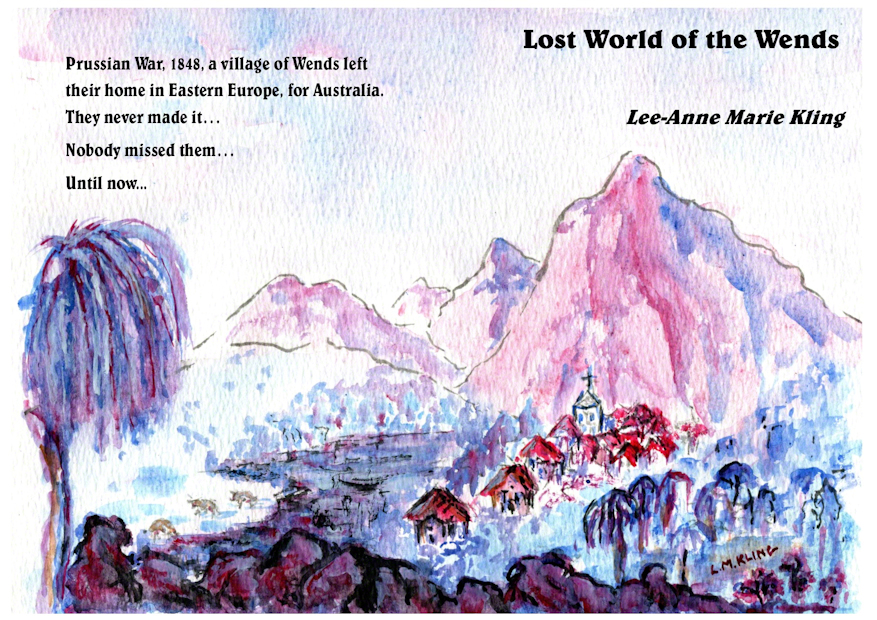
So…after combing through the novels dozens of times…and now all grown up, but perhaps like any of us, not perfect, The Mission of the Unwilling and The Hitch-hiker sit on the Amazon shelves…And now, the book, The Lost World of the Wends which my uncle said was a very, very, no, VERY good idea is, no longer lost, but can be found in the world of published books, too.
And my challenge continues as it has done for the past number of years…Advertising and promotion…and blogging.
Plus, in recent years, the formation of Indie Scriptorium.
I like to celebrate. As a child, when I received full marks for a spelling test, Dad rewarded me with a Kitchener Bun from the Fish ‘n Chip shop/Bakery which in the good old days of my childhood was situated opposite Glenelg Primary School. Years ago, now, when I used to drive my son his course in Magill, my mum and I treated ourselves to lunch at the local hotel.
Every so often, I check my Amazon account. I wipe off the virtual cobwebs of neglect, and dig deep in the files of my mind, retrieving the password to enter. I expect nothing to have changed.
I’ve been busy with my blog and the rewards, small, though they are, compared to the rest of blogging world, but the steady trickle of views, likes and comments, satisfies me. Over the years, the number of followers has steadily grown.
Once long ago, now, I made a daring move, and posted my short story,Boris’ Choice—not for the faint-hearted or while one eats breakfast…After the post, I checked for results on Amazon with my War on Boris Series books?
And…there were. Yes!
Then, I checked the reviews. Now, I don’t know how other writers have fared with reviews, but for months since I published my books, I had received no reviews. Yes, I asked my readers to do the deed and tick the star-boxes and comment, with no results. Yes, they’d say, and the weeks went by and nothing. Were they just being polite? A little research on comments on Amazon yielded answers. This platform is selective in who can give comments. If they think the author is using friends and family to generate positive, five-star comments, they will not publish those comments. Amazon were onto me, I thought.
Eventually, though, feedback and comments began to trickle in.
Anyway, back to checking the reviews…I looked again at one of the countries one of my books sold. The page appeared different. A yellow bar, and a comment. Genuine feedback. Not a great appraisal, but an appraisal all the same. I knew the person responsible for this first-ever comment for my book but was not surprised at their response. I did wonder at the time how my novella would work for them—not well—just as I imagined when they informed me, they’d bought the book on Kindle. As I said before, Boris and his antics are well…not for everyone.
The point is that trusted readers, friends, writers’ group colleagues need to give honest feedback that helps the writer refine their craft. We as writers need to be open to how we can improve our writing.
But, once the work is on a public platform, feedback has a different purpose. Comments from readers can help sell the work, or help prospective readers determine if the story is for them.
Of course, there’s always the Trolls who get a kick out of making hurtful comments. In Amazon and WordPress there’s an option to screen harmful comments out. And of course, there are people who mean well but the story or genre is not for them.
That being said, and for fear that there will be readers who will misunderstand my works, the over-riding theme of my stories are the classic fight of good against evil. How evil, like Boris, can creep into our lives. And when for whatever reason, usually when we maintain and enhance our self, and to avoid discomfort, we allow evil to stay. This evil, however subtle, will drive us to isolated places in our lives, like Boris does in The Hitch-hiker; places we never wanted to go. I want young adults and people young at heart, to make choices and use their energy for goodness and to fight evil, so they can live a full life and be an agent for good in their community and the world.
Indie Scriptorium-What does it take to become a writer?
Step Two–Writing to be read.
A reader is your audience. Your job as a writer is to give your reader the best possible experience of understanding and enjoying your thoughts, experiences, ideas, and creativity.
To turn your written piece into something that others will read, understand and enjoy requires two further steps, critiquing and editing. You will also need a computer and an understanding of how to create a word document or someone who will help you with this task.
When I first started out writing, I did not understand the need for critiquing and editing and wrote a massive novel of 180,000 words on a typewriter, and then did not know what to do with it. A kind person read it and pointed out that it was too long, overly complex, had too much explanation, didn’t read well, and contained far too many grammatical and spelling errors. I became totally dispirited and deposited my tome in a bottom draw where it still resides today.
Since then, I have written hundreds of small pieces of written texts. Some were essays for study, work projects, small exercises in writer’s groups and short stories for competitions. I have learned from these the craft of writing. I have improved my style and continue to improve. This is a process that never stops. I am learning every time I write, critique and edit.
I am now writing novels to be published with Indie Scriptorium and they need to be as close to perfect as possible. Getting feedback and then editing your work is as important as writing it in the first place and can take up more time and effort. But it will be worth it.
Let’s start with critiquing. What is a critique? My Collins dictionary defines a critique as a “Critical essay” and many people view a critique as a negative criticism of something as it comes from the word critic. But I like the Oxford Languages definition on Google “Critique–a detailed analysis and assessment of something.”
When writing, you want a detailed analysis and a fair assessment of your work. As a writer, you need encouragement and constructive feedback, so it’s important to look for the strengths of the writing as well as the improvements required.
It is difficult to critique your own work. When you are writing for a reader, you need another set of eyes. A trusted person, or persons, who will give you their honest opinion about what they liked and what they didn’t. What worked and what was confusing, what was difficult to understand, or lacked pace and interest. Getting feedback is essential.
I have a lovely friend who reads my first drafts and tells me if she enjoyed the story and the characters. I also have writing friends who give feedback about the plot, characters, writing style, research used, word usage, sentence construction and grammar. Writing groups can provide good feedback, but I would suggest that you ask one or two members to become your critique partners and then share your work fairly amongst yourselves. Writing groups can be too supportive, you need a balance of encouragement and critical evaluation to improve your writing. I also employ a professional editor who provides me with invaluable feedback.
Google-How to find a Critique Partner and there is a plethora of articles that I suggest people read before approaching another writer. Some Writing Organisations will provide critiquing services for a fee or will help you match up with another writer. Entering competitions can provide you with some excellent feedback, especially if the judges are readers. I have found a questionnaire a useful way to gain feedback from readers as it focuses their attention on what aspects of your writing you need to improve.
Critiques strengthen your writing. Reviewing someone else’s work strengthens your writing and leads you to the next step: editing. (To be covered in my next blog in July)
And in the spirit of critiquing, I welcome your feedback for this blog.
Indie Scriptorium—What does it take to become a writer?
Chatting with my new, and delightfully talented, hairdresser, the conversation flowed to my writing aspirations; to get my first novel self-published by August this year.
“Oh, I’ve always wanted to write.” she said.
Many people want to write. Their family history, memoirs, self-help books, picture books for children, cookbooks, books about their interests, passions and creative short stories, poetry and novels. But where do you start?
Indie Scriptorium has been a revelation. What do you need to know to become a published author? What are the steps required? In Indie Scriptorium, we have identified, and are currently collating information that we hope our readers and members will find helpful. But I will start at the beginning.
Step One – Writing for yourself.
Pick up a pen, find some paper and write. Start with a paragraph and then try to set some time aside every day to write some more. Don’t judge your work, just write. If this is rewarding and addictive, you’re on your way to becoming a writer.
Writing for yourself can be rewarding. Keeping a diary of your thoughts and activities, describing events you’ve attended, people you’ve met and places you visit is a record of your life. Jotting down recipes in a book with your impressions of the meal builds up into a great cookbook. Letters to friends and relatives can be enjoyable to write and lovely to receive. They provide wonderful memories and may be helpful to family members interested in genealogy down the track.
Writing can be therapeutic. A way to express your feelings in a safe way. You may be angry or disappointed with someone you love, but can’t tell them. Write it down and get it out of your system. I find this can help define my emotions and sort out what happened.
Even if you are writing for yourself, you can choose to improve your writing skills. A good dictionary and thesaurus are a good idea. If you have a computer, try writing using the Word program. It has a built-in spell checker and thesaurus. There are also books and magazine you can buy or borrow from libraries and if you google improving your writing skills, you will find a plethora of ideas and exercises.
But it doesn’t matter. If you choose to write for yourself, and you alone, what you write and how you write it is entirely your choice. So just write and enjoy.
Tune in for Step 2 -Writing to be read -to be posted 16th June 22






 Indie Scriptorium -- Self Publishing Collective