Having read Elsie King’s first two historical romance novels, A Suitable Bride and A Suitable Heir, I can highly recommend them. Both are well researched and are a good read. Hence, when deciding what to post for this week, I couldn’t go further than Elsie’s post on the subject of research.
independent publishing
Some Months of Memoir
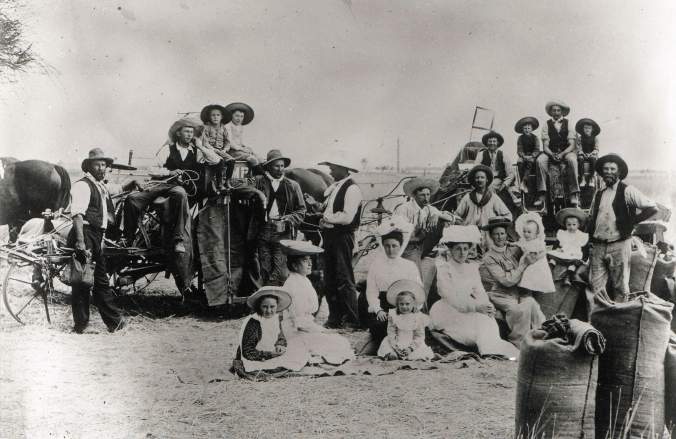
Indie Scriptorium will cover the theme of memoir over the next few months. As we investigate all memoir-related topics, we will explore family history, historical writing, autobiographies, and more.
But, how does an aspiring family historian or memoir writer begin their journey?
For me, it began with years of gathering information. I have discovered that listening is the key to family history research. I needed to listen to my older relatives and collect their stories. Then I was able to build a picture of what life was like for them in generations past.
These are the first steps in my family history journey.
Stay tuned for more family history and memoir ideas in future blogs.
“When people talk, listen completely. Most people never listen.”
― Ernest Hemingway
© Lee-Anne Marie Kling 2025
Feature Photo: Gross Family Gathering circa 1906, near Horsham, Victoria courtesy M.E. Trudinger (nee Gross)
On-Line Reviews
Here’s a post from the past on feedback, or more accurately, “On-line Reviews”; a vital part of refining our work and making our stories the best they can be.

Those On-Line Reviews
I like to celebrate. As a child, when I received full-marks for a spelling test, Dad rewarded me with a Kitchener Bun from the Fish ‘n Chip shop/Bakery which in the good ol’ days of my childhood was situated opposite Glenelg Primary School. A few years ago, now, when I used to drive my son his course in Magill, my mum and I treated ourselves to lunch at the local hotel.
Every so often, I check my Amazon account. I wipe off the virtual cobwebs of neglect, and dig deep in the files of my mind, retrieving the password to enter. I expect nothing much to have changed.
I’ve been busy with my blog and the rewards, small, though they are, compared to the rest of blogging world, but the steady trickle of views, likes and comments, satisfies me. Over the years, the number of followers has steadily grown.
Once long ago, now, I made a daring move, and posted my short story, Boris’ Choice—not for the faint-hearted or while one eats breakfast…After the post, I checked for results on Amazon with my War Against Boris Series books.
And…there were. Yes!
Then, I checked the reviews. Now, I don’t know how other writers have fared with reviews, but for many months since my books were published, I had received no reviews. Yes, I asked my readers to do the deed and tick the star-boxes and comment, with no results. Yes, they’d say, and the weeks went by and nothing. Were they just being polite? I have no illusions, and the reality is that art and literature are subjective—what one person likes another won’t.
Anyway, back to checking the reviews…I looked again at one of the countries one of my books sold. The page appeared different. A yellow bar, and a comment. Genuine feedback. Not a great appraisal, but an appraisal all the same. I knew the person responsible for this first-ever comment for my book but was not surprised at their response. I did wonder at the time how my novella would work for them—not well—just as I imagined when they informed me, they’d bought the book on Kindle. As I said before, Boris and his antics are well…not for everyone.
That being said, and for fear my works may be misunderstood, the over-riding theme of my stories are the classic fight of good against evil. How evil, like Boris, can creep into our lives. And when for whatever reason, usually when we maintain and enhance our self, and to avoid discomfort, we allow evil to stay. This evil, however subtle, will drive us to isolated places in our lives, much like Boris does in The Hitch-hiker; places we never wanted to go. I want young adults and people young at heart, to make choices and use their energy for goodness and to fight evil, so they can live a full life and also be an agent for good in their community and the world.
Especially in these times.
© Lee-Anne Marie Kling 2016; updated 2022; 2025
Feature Photo: The Reward—A Kitchener Bun © L.M. Kling 2024
100-Word Challenge
Summer holidays are over, and school has started again here in Australia. With it, memories of the way things were way back when I was at school, in the 1970’s. Those were the days…

Our Sensei, the Avenger
Timmy hunched over his desk, sobbing.
Luke laughed at him. Simmo slid back on his chair sneering. Bruce barked in the small skinny lad’s ear.
I watched, guarding my books from being flung out of the window, again.
Those boys!
Our Sensei marched into the classroom. We stood.
His face turned crimson. He thumped the blackboard. ‘Da’me Yo! Bad! Very Bad!’
Sensei swooped on Bruce and Simmo. Grasping their shirt collars, one in each hand, he clonked their heads together, forcing them to look at Timmy.
‘Look what you have done! You made him cry! Bad! Very Bad! Dame Yo!’
© Lee-Anne Marie Kling 2020
Feature Photo: Japanese School Students at Ritsurin Koen © L.M. Kling (nee Trudinger) 1985
***
Would you like to join in the 100-word challenge? If you have a story you’d like to share, drop us a line in the comment box. The one requirement: the story must be exactly 100-words.
Author Presentations
Planning a Presentation for a Book Club
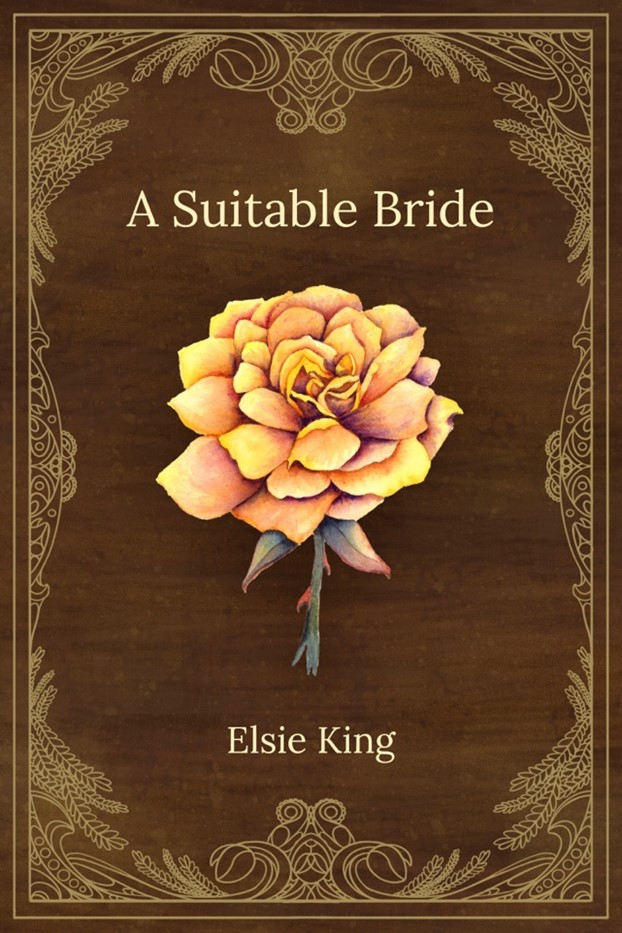
A Suitable Bride available on books2read.com/u/3L8l7D
It’s a wonderful compliment, as an author, to being invited to make a presentation to a book club. But what makes for a good, entertaining presentation?
I was invited to a book club last year to talk about my first published novel, A Suitable Heir.

A Suitable Heir available on https://books2read.com/u/bPLvyr
It was a great evening with a lovely group of ladies and I had a lot of fun but I wasn’t properly prepared and it made me wonder if I could have done better. My second invitation was from a member of one of the writing groups I attend and they had a specific agenda. Time to do some research to improve my book club presentation.
I consulted the internet and discovered “The Author Learning Centre” suggest that an author presentation to a Book Club must “entertain, enlighten, excite and engage.” They also advise having a pre-planned discussion outline which includes a quick introduction and what you want to talk about. You will need to practice the presentation and include marketing.
https://www.authorlearningcenter.com/b/ask-keith/posts/what-are-the-best-ways-to-present-a-book-at-a-reading-or-book-club
An article by Bookish raises a topic that must be seriously considered when accepting an invitation to present to a book club: Do you need to be a part of the book discussion? Book clubs by their nature allow members to openly say what they think of the book. Some readers will love a book and some won’t but having the author present during the review could either suppress the opinions of some members or be confrontational for the author. It becomes important to discuss with the co-ordinator what the book club wants. If it’s to have a robust, critical review of the book the author needs to be prepared for positive and negative evaluations. Alternatively, you can ask that the discussion of the book occurs before or after the author presentation. https://bookish.netgalley.com/book-club/11/2022/do-dont-author-visit-book-club-invite-how-to/
So, what do you talk about in a presentation? Here’s a list of areas to consider in your presentation plan:
For the novel:
• First say, ‘Thank you for the invitation’.
• Introduce yourself, your pen name (if appropriate) and the book title.
• Talk about what inspired you to write the novel. Where did the idea come from?
• Discuss the genre and setting.
• What are the themes of the book?
• Discuss the characters.
• What was the initial question and conflict?
• Research and world building.
• Specific questions from the audience.
About you as a writer:
• My writing history.
• My writing process.
• Why I write.
• My strengths and weaknesses as a writer.
• Plotting or “pantsing” (writing by the “seat of one’s pants”, such as making up the story as you go along)?
• The editing process.
• Publishing options.
• Where to next.
It would be a good idea to discuss with the book club co-ordinator what format is acceptable and then write and practice the presentation. Supply some marketing material (bookmarks and cards) and make sure you have copies of the book to sign and sell.
Further reading:
https://www.bookbrowse.com/bookclubs/advice/index.cfm/fuseaction/inviting_authors
https://www.authormagazine.org/archives/2014/5/1/secrets-to-better-author-presentations
Cheers
Elsie King©2025
Happy Australia Day Or Sorry…
This day, being Australia Day and the nearly 250 years of baggage that goes with it, I made an executive decision to re-blog my missive on the fine line writers literally “walk” when storytelling.
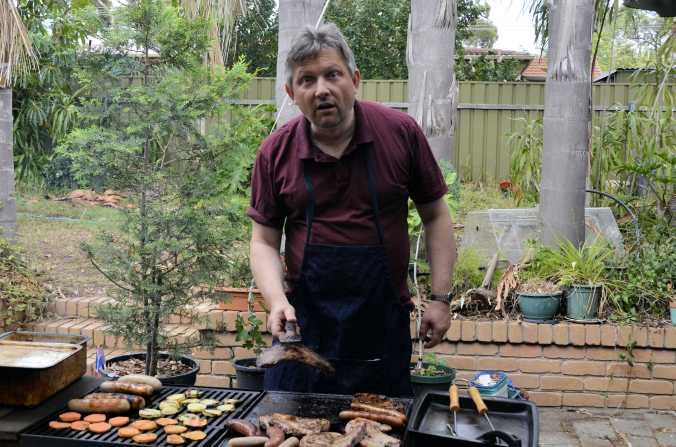
Check out the link below.
~ Lee-Anne Marie Kling
Inspiration-=-Getting Started

Photo: Brighton Jetty, January 19, 2025 (c) L.M. Kling 2025
A Blog from the Past Revisited–Publishing
A discussion with family members about e-books and recently bought Kindles, reminded me of options we have as writers of where to publish our books.
Click on the link above to check out this blog from the past by Elsie King.
Cheers,
Lee-Anne Marie Kling
Merry Christmas
The Indie Scriptorium Team is taking a Christmas–New Year Break.
Wishing you all a Merry Christmas and Happy New Year.

Cheers from the Indie Scriptorium Team.
Writing Resource–Point of View
Points of View in Story-telling
This blog was planned to discuss Deep Point of View (PoV). However, as I went through the previous blogs published by Indie Scriptorium, I realised we had omitted to talk about points of view in general. I decided to do a quick catch up on this important topic for writers.
Point of View in writing identifies who is telling the story. There are three main points of view to choose from: first person, third person and omniscient. The second person point of view can be used but is rare in fiction.
Discussions about PoV’s can be complex and difficult to get your head around so I will try to keep it clear and simple.
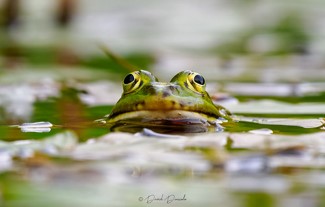
- First person point of view – the story is written through the perspective of one character at a time and follows own their experience with everything else unknown to the reader. It is dominated by: I did, I saw, I thought, I felt etc. In most novels it follows only one protagonist but some books do have multiple first-person points of view. This PoV is mainly used for character development based stories and allows the reader to have an intimate relationship with the protagonists. It can limit the writer by its narrow focus but provides intimacy and immediacy. Applied to a frog it may read thus:
I surfaced into a dull, grey day. The water is cold. My stomach is empty so I look to the sky for an available fly but there are none. I am hungry, cold and lonely. - Third person PoV is a popular choice for novelists and there are a range of options which provide an author with a choice of perspectives.
Third person limited (sometimes called Deep PoV) is when the author writes as if from the inside of the character. Everything is filtered through that character’s senses, thoughts, feelings, experiences and opinions. It is useful to use when you want to focus on one character as they confront the dramatic elements of your plot.
The frog surfaced and felt the cold breeze. It looked around for flies and felt its hunger. There were no sounds of other frogs. It was alone. Third person remote is when the character is described as if from a point away from the character. This style is more useful when you want to focus on the plot and have multiple characters. The frog stuck it’s head out of the water. It looked around for flies but there were none. It went hungry. - Omniscient – or “God view”, in that the story is told by someone who knows and sees everything. It was a popular way of telling a story in the past. Think of Charles Dickens or Jane Austen where the author’s opinions and reflections are important in the telling of the story. Frogs are tailless amphibians, cold blooded and mostly carnivorous with a diet of insects. They live in small groups on both land and water. The frog illustrated has typical bulging eye and appears to be looking for food.
Many writers tend to select the PoV that they find most comfortable for both reading and writing. I love books written from the third person PoV and struggle with first person PoV. So, when I started writing I naturally wrote in third person.
There are also trends in acceptable writing conventions. Historically the omniscient PoV was popular but in modern times first and third person PoV novels are most common. In recent times many people strongly advocate for the third person limited PoV as it engages the reader with the characters and makes the writing zing. In fact, some editors and judges of competition see anything but Deep PoV as poor writing. This has become a rule that deserves a separate blog, so stay tuned.
There are lots of good articles on line with further information about PoV. I found
Complete Guide to Different Types on Point of View: Examples of Point of View in Writing provided examples and exercises. https://www.masterclass.com/articles/complete-guide-to-point-of-view-in-writing-definitions-and-examples
Also look at the Jericho writers blog, Points of View in Fiction Writing by Harry Bingham. https://jerichowriters.com/points-of-view-in-fiction-writing-with-plenty-of-examples/
For a comprehensive discussion about PoV I suggest, Self-Editing for Self-Publishers by Richard Bradburn ©2020 Reen Publishing. (pages 315-335)
Cheers Elsie
Elsie King © 2024
Feature Photo: Frog © This Photo by Unknown Author is licensed under CC BY-NC-ND
 Indie Scriptorium -- Self Publishing Collective