

As a member of Indie Scriptorium one of our duties is to write and publish blogs on aspects of writing, editing, publishing or marketing every three weeks. Two years later we are doing a review of our blogs with the idea of putting them into an anthology.
As we currently only have three members the task of blogging has proved to be onerous. We would love to have some new members but …. Coming up with a topic, doing the research, writing 500-1000 words that make sense can be challenging. Making sure the blog is professionally written, properly edited and provides valuable information can be time consuming.
Indie Scriptorium has posted over a hundred blogs in two years. We have a following of 70 people and occasionally get positive feedback with likes from Facebook. Friends from my writing groups have also said they read the blogs and find them helpful. Yay.
But is the time and effort worthwhile for a busy writer who would rather be working on their next novel or short story?
I was recently asked where I find the time to blog? I responded without thinking. Oh, it’s a pain but I actually get a lot out of blogging. And on reflection that is true.
Doing a regular blog means that I am constantly researching writing skills, how to edit, what steps do you need to do to publish a book do a cover and burb, write a synopsis and market a book. (I need to do more research on this topic) In addition I have learnt about the legal, moral and technical issues to do with writing.
Looking back, I’ve realised that blogging has improved my writing style, made me a better editor and critique partner, has got me two books published and will in the future get my books marketed. The blogs have been like a course in creative writing, done with good friends and we have people who find our efforts helpful. We also will have a book of blogs later in the year for people to buy in the near future. That’s enough good reasons to keep me going.
Cheers
© Elsie King 2024
Tackling the Challenge of Writing

Do you want to write? Wish you could write? Feel you have stories in your head that want to come out, stories you are sure others would enjoy? But you just don’t know where to start!
Many would-be writers seem to think that you must start at the beginning, work your way through the first chapter then the next and the next until you get to the end. Finito! Ready for publication!
This may be the way it is for some; but in my experience, very few. Very, very few. Such folk are rare birds indeed and quite possibly rare birds with a great deal of experience. The rest of us have to do things differently.
One way that is highly recommended and successfully used by many is to work out a plan; make notes for each chapter; shuffle things around a bit if it seems better that way; add or subtract incidents, characters, locations… Then, when you are happy with the big picture you’ve worked out, you can get writing. Many will begin at the beginning and proceed in an orderly manner, chapter by chapter. Others will find it more satisfactory; more useful to jump in the middle somewhere; write the easy bits (or maybe the harder bits!) first up. Doesn’t matter; all equally valid and ultimately successful. So go with what suits you.
I’ve always seen my “early-draft” writing as a sort of jigsaw puzzle – dozens of pieces (ideas) to be fitted together in such a way that they would eventually create a “picture” to be enjoyed or confronted or challenged by or…
As a kid I loved jigsaws; spent hours doing them and devised many different ways of tackling them. The easiest way was to separate out all the edge pieces; assemble the “frame” then fill in the middle. If I wanted a challenge, I’d divide the big heap into little heaps of similar colours and go from there. The ultimate challenge was to do the whole thing using all the pieces reversed, i.e. on a large tray or rectangular pan used for cooking slices or cakes and with the plain backing uppermost. When complete I’d carefully tip the whole lot out to check for success (or failure!).
Using the jigsaw analogy, my initial writing on scraps of paper; on the backs of envelopes or circular letters are the jigsaw pieces. Sometimes it might be great chunks of scribbled prose (or poetry). At other times just a sentence or two, a few words that seemed to sing; to sum up a situation, a feeling, an incident, a character… It’s all grist to the mill; grist that I will re-arrange, add to, change, scrap, enhance, re-locate, delete…
Whenever I begin with a nice, orderly, logical plan or outline I feel it’s like starting the jigsaw with the edge pieces; things flow and there is a comfortable feeling of achievement. Many times, however, I feel I’m wrestling with all the pieces upside down, the blank backs of the bits, no idea of the final picture.
I know my finished product has to have a beginning, a middle and an end. It must flow; have a logical sequence of events; maybe a crisis and resolution; drama, pathos, evince tears or laughter or… But this is the finished work; ready for a reader to enjoy. The completed jigsaw puzzle.
So, how do you tackle your writing? Are you hobbled by the belief that you must start at the beginning and laboriously work your way through in logical progression? Or do you always just jump in the deep end, flounder around, fed up and frustrated? Either way it is far too easy to decide this writing racket is all too hard; you’ve no talent; it’s not for you. Which is sad if you have ideas and stories in your head that you want to share, if you find words fascinating and putting them together in interesting ways a satisfying and fulfilling challenge.
When it comes to grammar and basic sentence structure there ARE rules that need to be obeyed. If you don’t know the rules or your knowledge of them is wobbly, you don’t need to see this as a major roadblock – there are plenty of people willing and able to help tidy up writing for those who see the rules of grammar as a bit of a handicap but don’t let this stop them getting their ideas down onto paper. These people are called editors, and all published authors value the contributions they make to the final success of their literary efforts. There is absolutely no humiliation or shame attached to using the services of an editor. Just make sure you get a kind, caring and, above all, knowledgeable one!!
BUT but, but.
There are no rules at all when it comes the actual writing bit itself. How, when where you do it is up to you; your own choice to suit you and your lifestyle. Do it your way; whatever feels right and comfortable for YOU. But do just grab a pen, pencil, bit of paper and write.
© Mary McDee 2024
Feature Photo: Branches creating a puzzle © L.M. Kling 2023

I came to computing later in life. When I went to university, we didn’t have computers and had to do all our research in libraries from books or journals. I wrote my first novel on an electric typewriter. I probably bought my first computer when I was in my forties.
I started using computers at work, then got a home computer and I slowly got more confident at using one. Then came the smart phones, social media, Google, on-line banking and passwords, passwords, passwords.
Sometimes it feels you only have to blink and something new appears. We now have AI and everything is linked and we can talk to technology and get our heater turned on when we are on the bus home. It seems to me that younger people who grew up with technology fare better with these rapid changes, better than people who didn’t.
Technology makes so many things easier for an author. Research is amazingly fast, getting a book self-published to Amazon, a website on WIX or having an author page is complex but doable. However, technology can also cause so many problems for the unwary.
I have recently self-published my second novel A Suitable Bride. It should have been a joyous occasion but problems with the technology wasted my time and caused distress. My first problem occurred when I decided to get an author page on Meta (I still call it Facebook). I set up one, was happy with the result but then tried to publish my blog from my website on the new author page. Didn’t work.
I’ve never had problems before with uploading a blog to Facebook and I needed to blog to market my new novel. I tried to sort it out with Meta but had no idea what the first step was. I found out the new Facebook business page is set up for marketing and once they have you hooked, they won’t easily let you go. I googled, explored my Facebook account and got into a chat line but couldn’t find the delete button. After hours of wasted time, a friend suggested I try unsubscribing. Finally, back to my old classic Facebook page.
Tried again to get my WIX website blog onto Facebook. No luck. After many wasted hours I found a phone number. Yay a lifeline for the technologically challenged. WIX represented by Jerry in America proved to be magnificent. I’m on an Apple she was on a PC which brought in another level of complication but after an hour we got it sorted. However, a week later and another blog and couldn’t post it again. Back to WIX helpline when I have the time.
My third technology glitch occurred when I uploaded my novel to Amazon. I have previously published with Kindle Direct Publishing, and I have sold a few copies of my novel on-line. I have a wonderful ASIN link for my first novel A Suitable Heir https://www.amazon.com.au/dp/B0CB52VT16
It works. Try it, just press the link and like magic you get to the Amazon page, and you can purchase my novel. Yay.
I was provided with another link for my second novel A Suitable Bride
And guess what? It doesn’t work.
I have no idea why? I have no idea how to fix it and finding help that doesn’t go round and round in a useless chat appears to be beyond Amazon.
IF ANYONE WHO READS THIS CAN HELP, PLEASE MAKE A COMMENT AT THE BOTTOM OF THIS BLOG.
Not being able to get usable links for my book means readers who want an e-book from Amazon can’t be linked from my website. I have been invited to release my book on various platforms but as I don’t have a usable link, I’ve put on-line marketing on hold and I’m concentrating physical book sales of author copies for family and friends.
You can get a print copy and an e-book through Draft2Digital whose links work worldwide. So, if you wish to order A Suitable Bride, please use the D2d link.
Thanks, Draft2digital because your link is working just fine.
Modern technology is brilliant and awful. When it works well it is time saving, easy and helps authors get their stories and ideas into print. When something goes wrong it is a time- wasting nightmare and definitely acts as a roadblock when trying to market your book. The services for getting help are difficult to negotiate and much of the language and instructions used expects a much higher level of computer competence than is available to this little black duck. I will keep on trying to sort this out, but it has been a series of roadblocks that is making my journey much more difficult than expected.
Not so cheerful
Elsie King©2024
Photo attributed to Creative Commons – artist unknown
[Our Indie Scriptorium team have been putting together an anthology of some of our posts over the last two years. As I hunted around my messy computer filing-system for a number of these cheeky posts that went hiding, I came across this gem that somehow got buried in the vast layers of time. Amazing what one finds when searching for something else. So, with a few changes, here it is…Enjoy and be encouraged.]

People spend their lives building their own kingdoms. As creators, we often measure success by how far our name-brand spreads over the “Empire” of the internet, world, community, and how much “gold” (money) we’ve amassed through the sale of our product.
When I first started exhibiting my paintings, friends, family, and fellow artists asked, ‘Have you sold?’ and ‘How many paintings have you sold?’
The fact that I had sold made me an authentic artist.
Same can be true as an author of two self-published works of fiction. Again, like a broken record, those interested asked, ‘How many books have you sold?’
Answer, ‘Er, um…not that many.’
Then the implication I should have gone through the traditional route of getting a publisher.
Yup, maybe, probably…still deciding if I’ll do that with future books, especially the travel ones that have colour photos on glossy pages—the coffee-table variety. Not sure how I’d go…I mean, I’m not an unpublished “virgin” since I’ve gone ahead and self-published on Amazon. I got impatient, afraid I’d remain invisible with a pile of rejection letters, and my novel manuscripts languishing as a PDF-file on my computer hard-drive (the hard copies stored in a box in my closet).
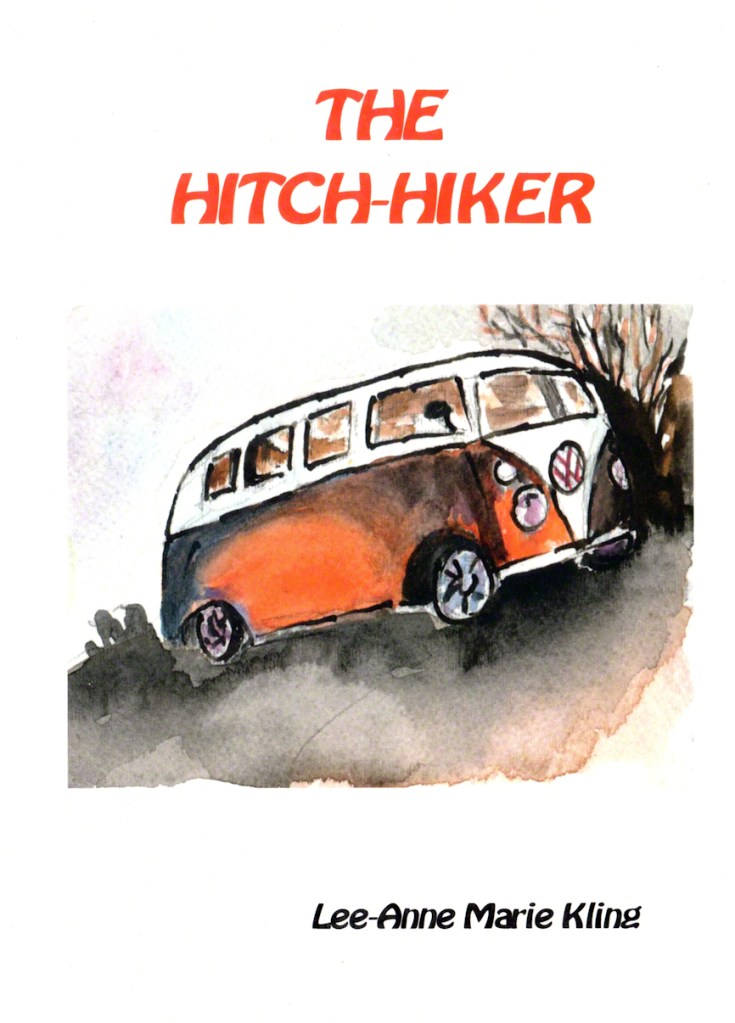
So, I published The Hitch-hiker (a novella) and Mission of the Unwilling (novel), on Amazon. Check them out. You can download them for the cost of a cup of coffee and find out what mischief Boris gets up to.
After publishing, having a little launch in our South Aussie pre-Christmas summer sweltering in 40 degrees Celsius, then a DIY advertising with bookmarks, flyers and emails, I decided to do research on how other Indi-authors built up their e-book kingdoms. There must be a secret method for digging up the buried gold of success in sales.

I discovered a mine of information lighting up my computer screen. I also discovered a precious nugget in an old Australian Artist Magazine—stand-out quality. In today’s language, I assume that means “brand”.
So, when at our SALA exhibition launch, a friend told me they knew which paintings were mine, that I had a unique style, I thanked them. I was on the right track with my “brand”.
But my books? Well, there’s Boris…albeit swamped by millions of other characters on Amazon.
Then, I discovered a gem—blogging. Not in the way I anticipated, though. I was optimistic. With my blogging presence, out there, I expected sales to rise and hundreds of instant visitors to my blogsite. My works were brilliant, right?
My posts drowned under the deluge of millions of other posts, tweets, Facebook pages, and other more successful blogs. For weeks, I remained South Australia’s best kept secret. Even my mum couldn’t find me—not even with my help on her computer.
Fellow writers at my writers’ group suggested I needed to post articles more frequently, get those WWW- “neural”-pathways (Algorithms) working by increasing traffic. Still, the site remained as lively as a cemetery.
Over time, I gathered a band of followers: friends, family, colleagues from church, writers’ and art group. Interest ensued—all Australian—no likes.
Undeterred, I wrote and published posts once or twice a week. Writing, my therapy. The articles available for free, my gift to the world. I prayed that there’d be others out there who’d find my words, and consider them useful, inspirational, amusing.
Week by week, comments and likes (mostly from mum) trickled in. Then, a comment from someone I didn’t know…and a visitor from the United States. Oh, what joy!
A friend encouraged me. I’d improved since they first started reading my blogs. Yes, writing is a craft; the discipline and practice refined my skill to communicate.
I read posts from other bloggers. I liked the posts that resonated with me. I knew I must start commenting. Friends who had websites and blogs said that’s how you make your presence known in the blogging community. I usually read WordPress articles late at night and was concerned my comments would come across as sleep garbled. Eventually, I plucked up the courage to comment. My first comment was about cats.
Each month, slow and steady, the number of followers, likes and visitors grew. My site on WordPress, the first place I visit each day when I open my computer. What countries have visited today? Check the emails. Who has liked me? Who’s following? I visit their sites and see what gems of writing, stories, photos, or paintings they have.
My world has opened; I read stories from every continent…and my stories shared around the globe.

The treasure I found by entering the world of bloggers, is not the gold I collect in my bank account for my own kingdom from my own works, but the cities of gold we share collectively as writers and artists. We put our stories out there and celebrate each other’s works.
So, a heart-felt thank you for all you who have followed, liked and visited my humble site—and thank you all for your stories, insights, artwork and photography.

So, if you’ve started up a blog/website and are waiting for it to be noticed, don’t give up. Keep writing, reading, commenting, liking and following and watch your readership grow.
© Lee-Anne Marie Kling 2016; updated, 2024
Feature Photo: Orange-Golden Sunset (c) L.M. Kling 2024
It’s my opinion a good opening line isn’t essential for your story or novel, but it won’t do it any harm.
My critique group decided to revisit the essentials of writing as a way of everyone learning from the same page and improving our collective efforts at finding the right words for our various projects.
First topic – opening lines.
I realised that when I read a novel I don’t get put off by the opening line hence my opinion that a good opening line is not essential is from my personal experience. However, I love books written in third person in past tense so if the first line has an omniscient POV and is written in the present tense I tend to put it back on the library shelf.
So, what makes a good opening line?
I googled the above question and found some great information.
The Literary Hub presented an article by Allegra Hyde.
Literary Hub
A good opening line “should capture your characters voice, it should carry your style, and it should be relevant and meaningful enough to engage your readers and entice them to read onto the next line.” An, “elegantly balanced dose of clarity and curiosity.”
However, it should not be “so heavy that it weighs on you or so literary that it chases away or confuses the reader.”
Allegra also suggests that the opening lines clarity should provide a sense of time, place, character and plot. The curiosity can involve the element of tragedy, conflict, mystery that fuels your story.
Jericho Writers
Jericho Writers
https://jerichowriters.com › good-opening-sentences
Suggest a short clear sentence that grabs the readers attention.
Use verbs correctly and adjectives sparingly.
Use words that add weight.
It doesn’t have to be loud; subtlety can be effective.
After doing this research I decided that for me a good opening line:
I then found some examples of opening lines I loved:(you can’t beat the classics)
Albert Camus – “Mother died today.”
Jane Austen – “It is a truth universally acknowledged, that a single man in possession of a good fortune, must be in want of a wife.” (apparently the most famous opening line ever)
Charles Dickens – “Marley was dead: to begin with.” (love this one)
So, putting the new knowledge into our own writing I have selected to test out some ideas for my new romantic short story Honeygate.
Just doing this exercise has raised my awareness of the importance of an opening line and given me some directions so I can play around with various types of lines and find the best one.
What I found particularly helpful is that using a first-person POV would work well for this story. My heroine has felt the impact of the hero’s gaze and is discombobulated enough to forget her speech she can have the stage from here on and tell us her story from her perspective.
Hope this makes sense
Cheers Elsie King©2024
The illustration is attributed to an Unknown Author is licensed under CC BY-NC-ND.

–Anton Chekhov
The pictures in an exhibition do not come with a detailed written description. You don’t get paragraphs telling the viewer what the subject matter is, what colours are used and why, what time of day the painting depicts the theme, composition or the medium used. The pictures show all that information. The little accompanying tag tells you the essentials—title, medium, artist name and price. That’s all you need.
In creative writing we use both showing and telling. But what does showing mean? What is telling? How do you differentiate when to show and when to tell? It can be tricky to sort it out, but these are my ideas.
Telling enables the author to provide quick, factual information. It may be important, but you don’t need to go into the information in any depth. It can move a story along efficiently. It’s like the painting tag, brief, factual but essential information. Telling may move the reader to another time, another place, mention the weather, comment on a relationship but it is briefly mentioned. Nothing is happening in the time or place that requires delving into the character or the story.
Telling examples: Twenty years later she found herself back in Rome.
It was a hot night.
He got married twice before he met the love of his life.
Showing is like painting a picture. It gets the reader to look deeply at a scene, often through the characters perspective, thoughts and dialogue. It delves into the character and situation and stirs the heart. It is slower and richer. Showing is the writer’s device to enter into the character, to use their senses, thoughts and emotions. It creates drama and provokes emotions and wonder in the reader.
Some examples:
Rome, the heat was cruel, the smell of dust and onions spiced the air. Nothing had changed in twenty years except there were more people on the streets and the noise of traffic roared in the background. Brenda sniffed, felt the baking, rough stone beneath her fingers. “Hello Rome, I’m back.” She laughed and remembered. I wonder if he’s still alive.
Heat wept from the night sky.
Robert’s heart actually pounded. He was too old for this. She looked like an angel her white hair long, lush and thick, her eyes deep pools of love. Her body strained towards him. I don’t deserve her. He turned to his son with a grin. “I should have bought a dog thirty years ago. Loyal, loving and much cheaper than two wives.”
The balance of showing and telling is something that I hadn’t considered prior to this blog. When you think of it, it should be easy. You show when you write an important dramatic scene but tell when you want to move your story to the next dramatic scene. But too much drama can be overwhelming while too much telling slows the story down and distances the reader.
You also must think about if you want the reader to be moved by what you are writing. Some subject matter is so dramatic it’s better to distance the reader by just telling events.
I’m currently working on a story which is about the very emotive subject of abortion. I’ve written it using more telling than showing and I think this works as it steps the reader back from what may cause distress or anger. The following paragraphs I hope illustrate my technique. The telling is in bold script.
Mavis finished feeding the baby, changed his wet nappy and swaddled him in his blanket. He looked at her with trusting dark blue eyes, his skin a golden colour his little fists fighting to get free of the blanket. But milk, comfort and gentle rocking made wakefulness futile. Mavis tucked him back into the cardboard box and pondered who to contact first.
Abandonment became a movement. The papers took sides. The right-wing journalists condemned the mothers of the children. The left -wing journalists blamed the right for life movement and evangelical churches. The airways rang with strident arguments and the police and social services complained of a lack of resources and put out regular appeals for more funding and foster carers.
“What’s happening to the babies, Caroline?” Mavis asked as she handed over another child from the front porch of an old Congregational Church. She now knew the names of many of the police officers, paramedics, nurses and social workers.
“Oh, Mavis” the woman’s eyes welled with tears. “We can’t get any more foster carers and the adoption process is, well it’s slow because they have to check everything before they can do a legal adoption. It’s a mess, and the entire system is overwhelmed. Lots of these babies have special needs and we can’t get them in with foster parents anyway. They couldn’t cope. We’ve had to open up orphanages and even that isn’t working. These babies need a mom and dad. They don’t do well if they don’t have cuddles and attention. It’s so sad.”
Mavis remembered seeing pictures of abandoned orphans in Russia or was it Romania? Remembered sunken sad eyes, skeletal bodies covered in sores. She felt her heart pound and her stomach clench. Her doctor said it was anxiety, but Mavis knew it for what it was, guilt. They had demanded the abolition of abortion and that was causing this horrible dilemma. They had saved the unborn, but the living children were suffering.
I hope this give other writers some ideas about showing and telling. I am considering doing the above exercise on my writing as another editing technique. It certainly makes you aware of when you are showing and when you are telling and what balance is required for the piece of writing.
Hope you get something out of this too.
The following references were used for this blog. They go into this topic in detail and provide fitting examples and explanations.
Cheers ElsieKing©2024
Photo of Marion Art Group exhibition L.C. Wong©2024

Ever since time began
We’ve been telling tales
Entertaining others
With stories of people and perfidy
Friendship, revenge
Cowardice and bravery…
Imagination soars –
We can see those we create,
Hear their voices,
Eavesdrop their chatting.
We know them so well,
How they dress,
Where they live,
Who they love
Or hate….
What it is that they feel
And why…
When it was that the conflicts
They’re embroiled in began –
For a story must have conflict,
Conflict and resolution.
Ever since we could speak
We’ve been telling tales.
Yarning round campfires;
Huddled in caves
As storms howl;
Rain drowns our world
So we seek comfort,
Seek to pass time,
Seek to get into the mind
Of our mates,
We build shared memories
And forge a community.
Time passed.
Scratchings on stone became letters –
A letter for each sound that we spoke.
Those letters made words
So now we recorded our doings and thoughts,
Our buying and selling, Our songs and our stories…
(c) Mary McDee 2024
Feature Photo: Around the Campfire (c) L.M. Kling 2010

Some time ago we told you the sad story of friends of ours caught up by a so-called “vanity publisher”. When their work was accepted (with a great deal of enthusiasm!) by this publisher, they were over the moon. Slowly, however, joy turned to frustration and financial loss to the tune of more than $30,000-oo. With nothing more to show for it all than only one single copy of their book they were hugely ashamed and embarrassed – not at all surprising as they are very savvy and have always dealt with life in a business-like way.
Fortunately, this bitter experience has not killed the urge to write. But it could well have done so.
However, we have become aware of the fact that, as well as this vanity publishing racket, there are a number of other matters connected with writing that are causing a degree of confusion among those of us who dream and scribble and dream some more.
The two words we want to deal with today are “printing” and “publishing”. They are not the same and they are not inter-changeable. Let me repeat that so you get the message –
THEY ARE NOT INTER-CHANGEABLE
Printing is something you can do yourself. All you need is a laptop; a ream of plain paper; a printer attached to your laptop; card for a cover and a good strong stapler or comb binding machine. Your magnum opus won’t look all that professional, of course, but it will be printed. If you require a better-looking job, you can source a printing business, make an appointment to discuss the details of exactly how you want your book to look; how many copies you would like and how much it will cost. End of story.
You may have ordered only a few copies to give away, in which case you pay up; collect; distribute and (hopefully!) bathe in the glow of all the congratulatory comments. End of story. On with the next.
On the other hand, you may have ordered a hundred copies with a view to selling them. Have you decided on a marketing plan? How do you intend to publicise your book so eager buyers will be aware that it is available for sale? Do you have a list of bookshops that might be willing to stock your deathless prose?
If you decided to jump on this bandwagon, you have now become a publisher. Congratulations!! I really hope you succeed and make at least enough money to cover your costs and maybe have a celebratory dinner as well.
Bottom line: publishers are businesspeople whose essential business is to produce books, market them and make a profit. They do not author books although some do occasionally commission a book on a particular topic from an author they know and believe in. Once they have found a book they consider marketable, the author is offered a contract. After this is signed the publisher works hard to ensure a profitable outcome; hard work that involves, among other things, editing, proofreading, printing and marketing – and that printing is done by a printing firm; a separate business.
Publishers are not printers and printers are NOT publishers. Not a case of “never the twain shall meet”. Far from it. Much more a case of mutual dependence as each cannot function without the other. Think of it as complementary co-existence.
© Mary McDee 2024
Feature Photo: Winter Elm Mirror-Design © L.M. Kling 2020 (artistic design 2024)
Modern marketing is an amazing process. As more people use the internet to find out information about all sorts of things it’s not surprising that buying books is now subject to the same internet marketing strategies of so many other products.
I’ll give you an example from real life. My oven was in desperate need of a clean and especially the glass door. Before the internet I would have phoned my mum or a friend and asked, “How do you clean your glass oven door?” These days I google “How do I clean my glass oven door?” and I get lots of useful and useless answers and many adverts telling me that this particular oven cleaner is perfect for the job.
My original search did not get the product I needed. So, I refine my search and add “How to clean a glass oven door when it’s encrusted with fat?” And then I get more specific products and information. I may also add another keyword “How do I clean my encrusted oven door with an environmentally friendly product?”
The keywords in my search are: clean, glass oven door, encrusted fat, environmentally friendly.
Keywords are what people type into the Google, or alternative search engines. As I explained in my previous blog for marketing it helps to understand how search engines work. Key words are essential.
But, you ask, how does this effect authors?
There are millions of books online in so many genres. And within each genre there are sub categories of genre so key words become important words and/or phrases for readers to find the right book for them on Amazon and other platforms.
Try googling Romance books. You will get a list of different types of romance books. I selected Dark Romance books and got another list of keywords, hottest, extremely dark, possessive dark, dark kidnapping. Select one of these and you will finally get a selection of books in just the right genre sub-category you crave. So, before they get to your cover, blurb and reviews readers will find your book from the millions of other using key words.
Try a few different categories just for practice. I tried Fantasy novels and chose with dragons. I then selected romantic fantasy novels with dragons and finally you get to a list of books that fit close to what I was seeking. That list of books is where you want your novel to appear so it can compete with the others. After coming up on the list your cover and blurb will then win the sale.
Authors can select their keywords when they upload their book on Amazon and other platforms. It is part of the process for getting your book available as an e-book or print version. Before you start it is wise to research what keywords will get your book noticed.
Google keyword selection and you will find a number of websites that provide authors with the best key words for your novel. There are forums (Kindle forum, Reddit) lists of genres (Marie Cole) and my favourite from Draft2digital Specific Genres Literature and Fiction.
But can you change your keywords after you have published your book? The answer is Yes.
Keywords are classed as metadata so can be changed for free. (Unlike actual changes to your book cover or inner material which might incur a fee for changes) Just go to your publishing site and edit the novel metadata and review your keywords. Both Kindle Direct and Draft2digital allow changes to metadata but do check the term and conditions carefully yourself.
I’ve found this foray into keywords enlightening indeed (as one of my Regency romance protagonists would proclaim). I will be doing further research and perhaps update the keywords I so blindly selected when loading my books. Modern marketing is complex. I hope that this blog helps you navigate some of its complexities and increase your chances of your novel being found on-line.
Cheers Elsie
Elsie King©2024
Photo attributed to unknown author from creative commons.
 Indie Scriptorium -- Self Publishing Collective