Indie Scriptorium — Self Publishing Collective

Helping Each Other Publish

Skip to content
  • Home
  • About Us
  • Blog
  • Books For Sale
  • Introducing Indie Scriptorium
  • Links–More for You
Search

proofreading

Writing Journey–My Mission

August 20, 2022August 20, 2022 / lmkling / Leave a comment

My Mission, My Journey

A Very, Very, No, I mean VERY Good Idea

In 2008, my late uncle who was playwright and author flicked through the wads of paper, an early version of my manuscript called “Mary’s Story”. He didn’t like Science Fiction. He called it “Soap Opera in space”.

‘Well, at least you have only typed on one side of the page—you can use the other side, at least.’

“My baby” judged and found wanting and for very good reason. Uncle outlined all that was wrong with the novel—weasel words, you know the ones ending in “-ly”, and a thesaurus of words other than “said”, a parade of passives and you name it, I did it—wrong—in “my baby”.

‘And,’ he went on, ‘you need to number the pages.’

Good point.

‘But,’ Uncle stressed, ‘and this is a very, very, good idea. I don’t mean very good, I mean very, very, very good.’ He leafed through to near the end of the manuscript and pointed at the paragraph on the Wends. ‘I like the idea about the Wends.’

Historical fiction was Uncle’s thing.

Anyway, the next novel I was writing at the time, Diamonds in the Cave, has Wends. Thus began the formulation of a future novel, The Lost World of the Wends.

Then the best advice ever and for which I’m forever grateful to my late Uncle Richard. ‘Join a writers’ group,’ he said.

I did and I love it. Writing is a craft and I needed to hone my skill with the gentle and sometimes not-so-gentle feedback from my writing companions and mentor.

Mary’s Story was shoved in a box and hidden in the closet, never to see the light of a computer screen and I moved on. The group enjoyed my Central Australian Safari story. Yay!

Then in 2010, inspired by the biblical account where Jesus healed the man with the withered arm, I remembered Mary’s Story languishing in the closet. With my honed writing skills, I reworked the novel, plotting, developing characters, and cutting all those not-so-wonderful weasel words. I read successive chapters to the group and they got stuck into that all important helpful feedback. More changes—Mary morphed into Minna, Gunter morphed into a Grey alien and then Fox and then back to Gunter. The Hitch-hiker was born. The back story to Liesel’s itch to touch developed. And the word “was” culled.

Happy with the result in 2011, I emailed “my refined baby” to my mentor. Over our summer break, she pulled “my baby” apart. Not just withered arms, but legs, torso and head too—a vestige of Oliver Cromwell sent back to me in sections labelled: Formatting, Grammar and Spelling, Characters and Plot—Chapter by Chapter. The time, effort, and detail she put into how to fix the novel was a book.

Was there anything right with “my baby”?

I spent the next eighteen months putting the broken and more withered effigy of a novel back together. Again, rather than giving up, I embarked on this project to polish my craft. Story-time with my mum became a regular treat; first for me and then as I improved, for mum too.

When I’d completed putting the pieces back together, I contemplated the prospect of showing the mentor the finished product. But after discussion with another member of the writers’ group, I decided to get a second opinion and engaged another editor. I also re-read “my reworked, unrecognisable baby” to the writers’ group. What a difference! What a change! But still more editing…

In 2014, I recorded my story on audio and then listened to it. Best editing and proof-reading tool ever!

So…after combing through the novels dozens of times…and now all grown up, but perhaps like any of us, not perfect, The Mission of the Unwilling and The Hitch-hiker sit on the Amazon shelves…And now, the book, The Lost World of the Wends which my uncle said was a very, very, no, VERY good idea is, no longer lost, but can be found in the world of published books, too.

And my challenge continues as it has done for the past number of years…Advertising and promotion…and blogging.

Plus, in the last year, the formation of Indie Scriptorium.

© Lee-Anne Marie Kling 2021; updated 2022
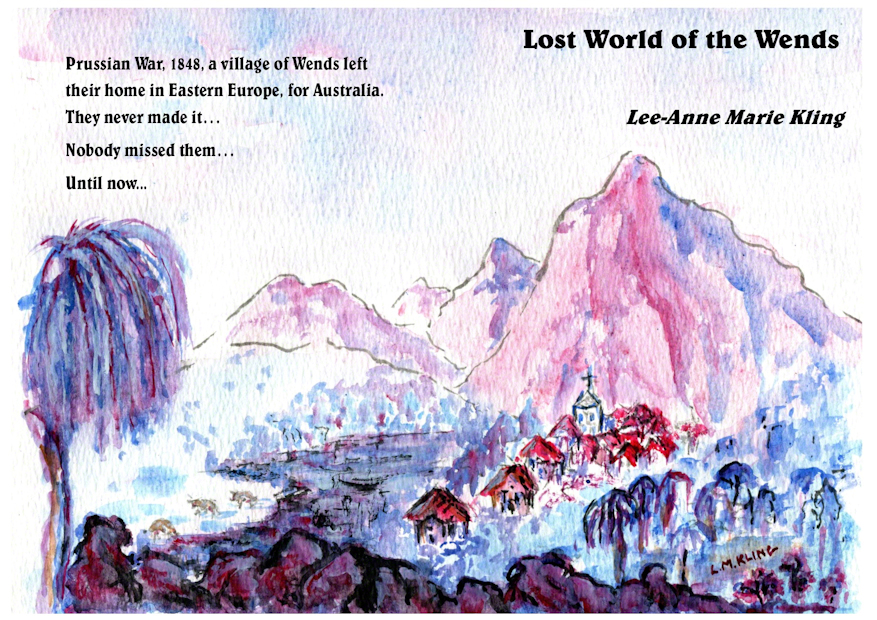
Feature Photo/painting: Luthertal —The Lost World of the Wends


Share this:

  • Share on X (Opens in new window) X
  • Share on Facebook (Opens in new window) Facebook
Like Loading...

Writing Tips–Structuring Your Story

August 5, 2022 / lmkling / Leave a comment

As with Stonehenge, the elements of a novel need to be placed in just the right place and with the links to make the story work.

Editing—The Structural Edit

It’s suggested that after you complete your first draft that you put the manuscript in a drawer and take a break for weeks or even months and then edit with fresh eyes. Re-read your work and ask yourself the following questions.

  • Is the manuscript easy to read?
  • Does it make sense and have a consistent style?
  • Does the novel start at the right time and place? Avoid starting a novel with a backstory. It’s better to get straight into the narrative.
  • Are the chapters in the right order?
  • Eliminate unnecessary repetitions?
  • Search for contrivances, conveniences and plot holes in your story?
  • Add tension from the beginning. Ending chapters and scenes with a cliff-hanger, or an intriguing question which will keep the reader engaged.
  •  Make sure the pacing is consistent throughout the book. Start strong, avoid meandering middles and finish strongly.
  • Look at your setting? Are there enough description of places and people? Have you captured the mood, beliefs, language, and customs of your setting? World building involves research and imagination.
  • Does each scene or chapter have a designated character’s point of view? Avoid head hopping from one person’s POV to another. It can get confusing. It’s easy to slip into another character’s POV without realising so check this carefully.
  • Keep characters to a minimum only include those essential to the story. Ask if your characters are well-defined? Do their names suit them? Let the personality and description of the character emerge gradually. Do your character’s change and grow as the story progresses? Does each character have a unique voice so that when they speak, they are easily identified? Are their motivations sensible? Avoid stereotypes such as grumpy old men, silly secretaries etc. Give your characters challenges, quirks and personality.
  • Research, make sure it is correct and have your sources written down for further reference. Assume all your readers are experts and will get upset with inaccurate information.
  • Avoid rushing your ending. It can be tempting to summarise at the end of a novel so avoid clarifications and show rather than tell.

Structural editing is the big picture. When you do this edit, don’t worry about correcting spelling, grammar and punctuation. If you need to delete chunks of your work or add more narrative, you will need to do another line edit, anyway. I do the line edit after I make structural changes.

Having readers and critique partners is essential for structural editing. It may be helpful to have a list of questions or even formulate a questionnaire so you get consistent feedback from several readers.

Each element of the structural edit is important and needs to be addressed. Use Google and search for topics such as “Pacing your novel”, “Points of View” or “Character development”. You will uncover an abundance of good advice. Your local library will have books covering writing style and plotting a novel. I wish I had taken more time to learn and develop my writing skills before I wrote my first novel. I’m still learning and growing as a writer and I’m no expert, but that’s what we do at Indie scriptorium: we learn, share and grow.

© Elsie King 2022

Photo from Creative Commons

Share this:

  • Share on X (Opens in new window) X
  • Share on Facebook (Opens in new window) Facebook
Like Loading...

Feedback–When Published

July 23, 2022 / lmkling / Leave a comment

Feedback …

When Published

I like to celebrate. As a child, when I received full marks for a spelling test, Dad rewarded me with a Kitchener Bun from the Fish ‘n Chip shop/Bakery which in the good old days of my childhood was situated opposite Glenelg Primary School. Years ago, now, when I used to drive my son his course in Magill, my mum and I treated ourselves to lunch at the local hotel.

Every so often, I check my Amazon account. I wipe off the virtual cobwebs of neglect, and dig deep in the files of my mind, retrieving the password to enter. I expect nothing to have changed.

I’ve been busy with my blog and the rewards, small, though they are, compared to the rest of blogging world, but the steady trickle of views, likes and comments, satisfies me. Over the years, the number of followers has steadily grown.

Once long ago, now, I made a daring move, and posted my short story, Boris’ Choice—not for the faint-hearted or while one eats breakfast…After the post, I checked for results on Amazon with my War on Boris Series books?

And…there were. Yes!

Then, I checked the reviews. Now, I don’t know how other writers have fared with reviews, but for months since I published my books, I had received no reviews. Yes, I asked my readers to do the deed and tick the star-boxes and comment, with no results. Yes, they’d say, and the weeks went by and nothing. Were they just being polite? A little research on comments on Amazon yielded answers. This platform is selective in who can give comments. If they think the author is using friends and family to generate positive, five-star comments, they will not publish those comments. Amazon were onto me, I thought.

Eventually, though, feedback and comments began to trickle in.

Anyway, back to checking the reviews…I looked again at one of the countries one of my books sold. The page appeared different. A yellow bar, and a comment. Genuine feedback. Not a great appraisal, but an appraisal all the same. I knew the person responsible for this first-ever comment for my book but was not surprised at their response. I did wonder at the time how my novella would work for them—not well—just as I imagined when they informed me, they’d bought the book on Kindle. As I said before, Boris and his antics are well…not for everyone.

The point is that trusted readers, friends, writers’ group colleagues need to give honest feedback that helps the writer refine their craft. We as writers need to be open to how we can improve our writing.

But, once the work is on a public platform, feedback has a different purpose. Comments from readers can help sell the work, or help prospective readers determine if the story is for them.

Of course, there’s always the Trolls who get a kick out of making hurtful comments. In Amazon and WordPress there’s an option to screen harmful comments out. And of course, there are people who mean well but the story or genre is not for them.

That being said, and for fear that there will be readers who will misunderstand my works, the over-riding theme of my stories are the classic fight of good against evil. How evil, like Boris, can creep into our lives. And when for whatever reason, usually when we maintain and enhance our self, and to avoid discomfort, we allow evil to stay. This evil, however subtle, will drive us to isolated places in our lives, like Boris does in The Hitch-hiker; places we never wanted to go. I want young adults and people young at heart, to make choices and use their energy for goodness and to fight evil, so they can live a full life and be an agent for good in their community and the world.

Especially currently.

© Lee-Anne Marie Kling 2016; updated 2022

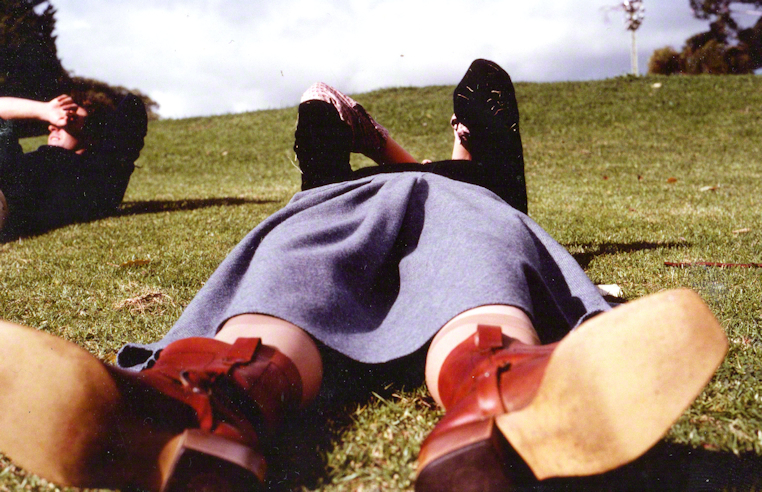
Feature Photo: Tyranny of Golf © L.M. Kling circa 1982

Share this:

  • Share on X (Opens in new window) X
  • Share on Facebook (Opens in new window) Facebook
Like Loading...

Writing Tips–On Editing

July 15, 2022July 17, 2022 / lmkling / 4 Comments

Step Three–Edit, Edit, Edit.

Your readers want to read the story, to be entertained or informed. They want to finish reading the book with a satisfied smile. If they do that, they may just buy your next novel.

Editing is removing all the mistakes that stop the reader from enjoying your story.

“Assume all your readers are editors.” (Lorena Goldsmith 2013)

You may find that as you write your novel, the words and ideas flow effortlessly. The creative drive is magical. The words fly into your computer or out of your pen and you write and write. (Unless you have writer’s block which we will discuss at another time) I find writing is exhilarating and wonderful. Editing, for me, is far more tedious and definitely much harder.

Editing requires a different mindset from creative writing. I think some people excel at editing. They have the focus to spot the errors and methodically work through a manuscript without getting caught up in the story. If you are like me, I’m good at spotting a few mistakes, but then it all seems to blur, and I get drawn into the story and the editing goes to pot.

Some writers are also exceptional and can write a novel with brilliant flow, use just the right word in the right place, don’t start all their sentences with the same word and make all the myriad bloopers that it’s possible to make. That’s not me–but I’m slowly improving and editing definitely makes me aware of what I’m doing wrong.   

It also helps to acknowledge strengths and weaknesses in your writing. I can’t spell and I suck at grammar. I overuse words, adverbs and the passive voice. I often start each sentence with the same word, (as if you didn’t notice) and I make lots of other mistakes. But my strengths are plotting, character development, dialogue, conflict and pacing, and I can write an entertaining story. For me to get my story read and enjoyed I need all the help I can get.

There are three different types of editing:

The structural edit–or the big picture. With this read through, you are looking at the overall construction of the novel or short story. The plot, pacing, setting, points of views, character development, chapter length, use of conflict, cliff hangers and plot holes plus other stuff.

The line or copy edit–which looks at grammar, word usage, spelling, elimination of overused words, elimination of filler words, repetition, sentence length, paragraph starts, incomplete or non-sensible sentences, showing not telling, good dialogue, unnecessary dialogue attributions, cliches, mixed metaphors and poor research, to name a few.

Proof-reading–the final edit which picks up the typos, line spaces and other issues that will disrupt the printing process.

I need the line and proof-reading edits more than the structural. However, I have had good structural feedback from other writers. I have rewritten and changed chapters around. It is a daunting task, but I learnt a lot from the process.

If you struggle with editing, there are also some ways of helping you get your editing cap firmly on your head.

  • Buy a good reference book and have it on hand at all times. I found Lorena Goldsmith’s Self-Editing Fiction that Sells. (How To Books Ltd. UK 2013) was excellent. I also use the Oxford English–A Guide to the Language compiled by I. C. B. Dear (Guild Publishing 1986). Steven King (yes that Stephen King), swears by William Strunk Jr. The Elements of Style (The Macmillan Company 1959). Stephen King also has a very entertaining informative book, Stephen King-On writing.

(Pocket Books 2002)

  • I purchased “ProWritingAid”, an online editing program, for $120 a year. I love it, but it takes a while to learn how to use it. Other writers use Grammarly, Scrivener or Hemmingway. I suggest you Google “editing programs for writers” and see what suits you. Many have free trials too. You also have basic editing tools in Microsoft Word.
  • Find yourself one or two friends who can edit your work if you edit theirs. This person is more than a reader who will give an overall impression of your novel. They will need to have a good idea about what good writing entails. School teachers who specialise in English make talented editors. Give them a red pen and they become eagle eyed warriors for the English language (Bless them)
  • After I have completed my structural edit, and have had a go at the line editing, I employ a professional. My editor does a wonderful job using track changes in word to make comments and fix my grammar, punctuation, spelling and she’s brilliant at spotting anachronistic words. The cost for an 80,000-word novel is about AU$600 -$800. The cost increases if you supply a rough draft which needs extensive editing.

      Thanks to Mary McDee and Lee-Anne Kling for the editing corrections.

      © Elsie King 2022                             Photo from Creative Commons online

Share this:

  • Share on X (Opens in new window) X
  • Share on Facebook (Opens in new window) Facebook
Like Loading...

Improve Your Writing

July 8, 2022July 20, 2022 / lmkling / Leave a comment
IMPROVE YOUR WRITING – ONE METHOD TO TRY

Read your work aloud or, better still, have a friend/writing partner read your piece aloud as you listen with your eyes closed.

1. Choose a (longish) paragraph or “sub-story” to work on

2. Reformat so: 
* double spaced and in a fairly large font, 
* every sentence begins on a new line, 
* you have at least 3 or 4 line spaces between each sentence.

3. Print off and cut up so each sentence is isolated.

4. Rearrange sentences so they make the best sense then: 
* subtract any that don’t belong 
* set aside any that need to be part of another 
paragraph, 
* add extra words/sentences if needed.

5. Review and consider whether any sentences can either be: 
* amalgamated so 2 become one, 
* split to make 2 or 3 shorter ones.

6. Check for: 
* repetition of words/phrases, and hackneyed expressions. 
 
7. Can you find a more vivid or expressive word to replace any mundane, 
ordinary ones?
 
BUT, make very sure you keep your writing in balance – too many “fancy” words is too much (all icing and no cake!!)
 
8. Then read aloud again; or have someone else read your piece aloud to you 
and check how it all sounds now.

© Mary McDee 2022
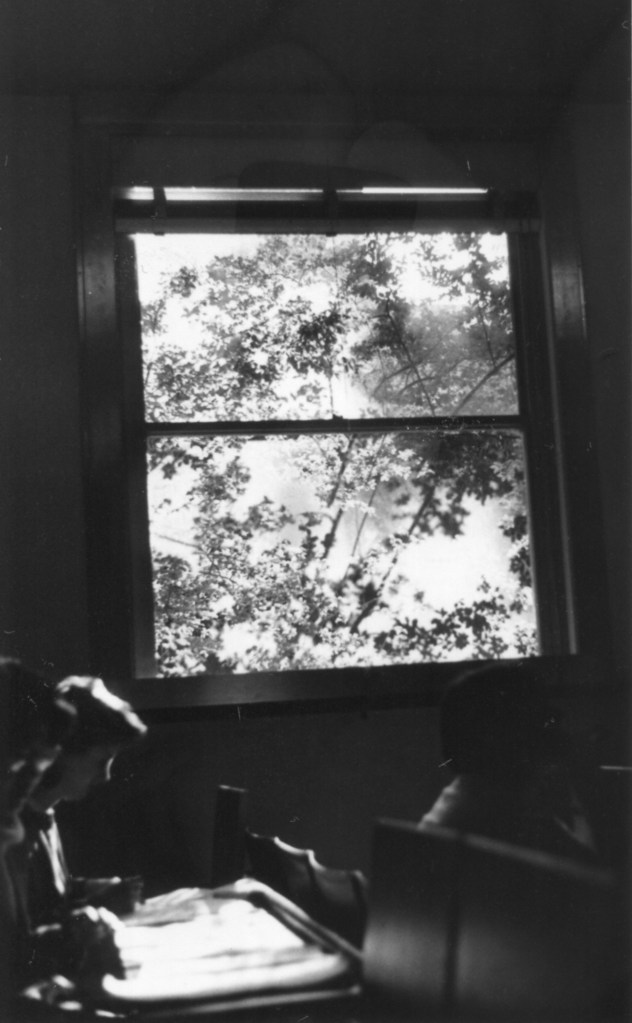
Feature Photo: Window of Learning © L.M. Kling 1985

Share this:

  • Share on X (Opens in new window) X
  • Share on Facebook (Opens in new window) Facebook
Like Loading...

Writing Tips–Feedback

June 25, 2022July 20, 2022 / lmkling / 2 Comments

How to Give Feedback

Embarrassing situations, we’ve all had them. And if we were to be honest, how often feedback, the proverbial “being called out”, or the reverse, the lack of feedback, lurks behind those uncomfortable circumstances.

Feedback, love it or hate it, you can’t live without it. We all have blind spots, secrets in our psyche that not even we are aware of. This is especially true with our writing; we are too close to our work to see the spelling and grammar errors or gaping holes in our story’s plot.

An embarrassing episode often involves an exposition of one of our blind spots where feedback plays a part. For instance, walking around all day at the office with your fly undone and the absence of feedback makes the realisation of the fact so much more embarrassing. If only someone was brave enough to point out your state of undress.

So, the point: Feedback is important for your health, well-being, and growth as a person. And feedback is important for honing your craft of writing. In this article, I’ll focus on giving feedback for writers, but we can use it in most life, art, and work situations.

The way a person gives feedback is vital, which is why we tend to avoid it and avoid giving it truthfully. Nobody wants to be the “Arnold J. Rimmer” in the television series Red Dwarf, who has to tell “Dave Lister” that he has absolutely no talent when it comes to playing the guitar, even though Dave loves playing the guitar and thinks he’s a star. And of course, Rimmer being Arnold J Rimmer, enjoys putting Dave Lister down. I think most of us would admit to leaving honest feedback up to someone else at times for fear of causing embarrassment.

But if we want our writing to improve and our writers’ community to be more than a mutual admiration society, then we need to learn to tackle the skill of giving feedback in a way that makes the recipient feel validated and safe.

So how do we give helpful feedback?

We want our communities, whether it be a writers’ group or other sorts of groups, to be safe places where participants can be themselves, share who they are and excel in their endeavours. So below are examples of feedback that builds up the person and us as writers:

Helpful Feedback

1. Honest and open, given while caring for the recipient’s worth and dignity.
2. Positive—keep tone light and pleasant. We can improve our delivery of feedback when we look for what in the work has been effective and how it can be better. No creative work is a “disaster” that must be torn up and burnt, just as no person is so unworthy that they’re not worth the effort of redemption. However, if the work denigrates another, the writer needs feedback to proceed with caution or risk losing that member to the group, or even litigation down the track.
3. Feedback sandwich—following on from above, the positive—improvement—positive comment approach is an effective way to keep the recipient happy about improvements that they might need to do to their work.
4. Specific—name and highlight specific, good points or improvement needs. “Good,” “excellent” and “I enjoyed it” mean nothing. Requires giving those presenting their work your undivided attention, listening, also having valued the recipient to give a thoughtful response.
5. Humour—if done with respect, can help the recipient manage difficult to manage feedback. e.g., ‘You can’t speak with sparkling eyes’ or ‘Words are your friends.’
6. Role-modelling—showing how an effective piece of work looks/sounds/reads.
7. General address—teaching on a common foible that has arisen in a number of works. e.g., ‘Today we are going to have a look at showing rather than telling,’ the mentor said.
8. An example—like role-modelling where an editor or a more experienced writer may rewrite a first chapter to show how to improve a work. (With the recipient’s consent, of course.)
9. Showing rather than telling — ‘Shall I stop there?’ asks Heinz. ‘No, no, keep going,’ we all say.
10. Genuine Interest — asking how the work is progressing and listening to the writer’s plots, plans and characters, and the like, shows that you value them as a person and their work.
11. Right place — a quiet, safe place with minimal distractions. e.g., Writers’ group.
12. Good timing — no use giving feedback when there are distractions for the recipient.
13. Right voice — keep your tone even, audible, and confident.

Conclusion: When we give feedback with respect valuing the person and their creative endeavour, we help them grow and their work to flourish. What’s more, when we cooperate with each other giving helpful feedback, not only do we have an excellent group that people want to join, but the quality of our product far surpasses what we would’ve had if we keep our writings to ourselves and never seek feedback. At the end of the day, would we want to publish a work that would embarrass us?

© Lee-Anne Marie Kling 2018; updated 2022

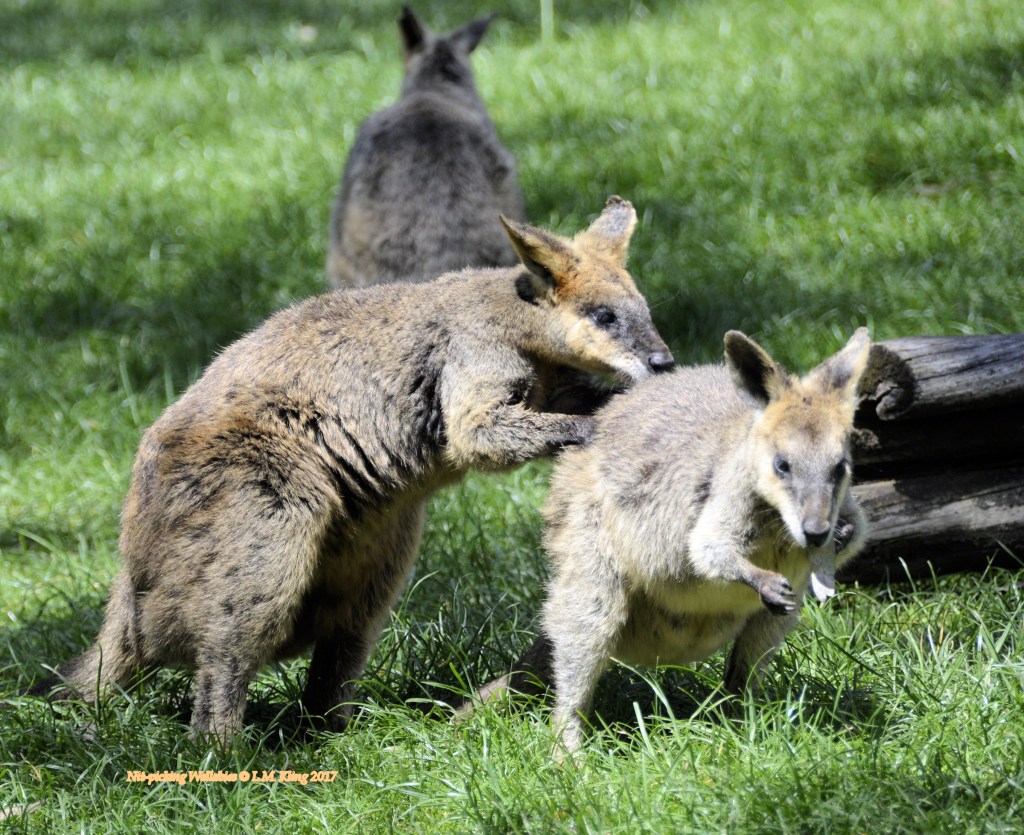
Feature Photo: Nit-Picking Wallabies © L.M. Kling 2017

Share this:

  • Share on X (Opens in new window) X
  • Share on Facebook (Opens in new window) Facebook
Like Loading...

Consider Your Readers

June 17, 2022July 20, 2022 / lmkling / 1 Comment

Indie Scriptorium-What does it take to become a writer?

Step Two–Writing to be read.

A reader is your audience. Your job as a writer is to give your reader the best possible experience of understanding and enjoying your thoughts, experiences, ideas, and creativity.

To turn your written piece into something that others will read, understand and enjoy requires two further steps, critiquing and editing. You will also need a computer and an understanding of how to create a word document or someone who will help you with this task.

When I first started out writing, I did not understand the need for critiquing and editing and wrote a massive novel of 180,000 words on a typewriter, and then did not know what to do with it. A kind person read it and pointed out that it was too long, overly complex, had too much explanation, didn’t read well, and contained far too many grammatical and spelling errors. I became totally dispirited and deposited my tome in a bottom draw where it still resides today.

Since then, I have written hundreds of small pieces of written texts. Some were essays for study, work projects, small exercises in writer’s groups and short stories for competitions. I have learned from these the craft of writing. I have improved my style and continue to improve. This is a process that never stops. I am learning every time I write, critique and edit.

I am now writing novels to be published with Indie Scriptorium and they need to be as close to perfect as possible. Getting feedback and then editing your work is as important as writing it in the first place and can take up more time and effort. But it will be worth it.

Let’s start with critiquing. What is a critique? My Collins dictionary defines a critique as a “Critical essay” and many people view a critique as a negative criticism of something as it comes from the word critic. But I like the Oxford Languages definition on Google “Critique–a detailed analysis and assessment of something.”

When writing, you want a detailed analysis and a fair assessment of your work. As a writer, you need encouragement and constructive feedback, so it’s important to look for the strengths of the writing as well as the improvements required.

It is difficult to critique your own work. When you are writing for a reader, you need another set of eyes. A trusted person, or persons, who will give you their honest opinion about what they liked and what they didn’t. What worked and what was confusing, what was difficult to understand, or lacked pace and interest. Getting feedback is essential.

I have a lovely friend who reads my first drafts and tells me if she enjoyed the story and the characters. I also have writing friends who give feedback about the plot, characters, writing style, research used, word usage, sentence construction and grammar. Writing groups can provide good feedback, but I would suggest that you ask one or two members to become your critique partners and then share your work fairly amongst yourselves. Writing groups can be too supportive, you need a balance of encouragement and critical evaluation to improve your writing. I also employ a professional editor who provides me with invaluable feedback.

Google-How to find a Critique Partner and there is a plethora of articles that I suggest people read before approaching another writer. Some Writing Organisations will provide critiquing services for a fee or will help you match up with another writer. Entering competitions can provide you with some excellent feedback, especially if the judges are readers. I have found a questionnaire a useful way to gain feedback from readers as it focuses their attention on what aspects of your writing you need to improve.

Critiques strengthen your writing. Reviewing someone else’s work strengthens your writing and leads you to the next step: editing. (To be covered in my next blog in July)

And in the spirit of critiquing, I welcome your feedback for this blog.

Elsie King © 2022

Feature photo: Laptop © Stock Photo

Share this:

  • Share on X (Opens in new window) X
  • Share on Facebook (Opens in new window) Facebook
Like Loading...

Good Story Telling

May 23, 2022July 20, 2022 / lmkling / 2 Comments

So, you want to publish a novel. Perhaps you have a manuscript ready to go. Or maybe, you have the challenge before you of getting started.

But what makes a good story?

One of my first blog posts come to mind…to encourage and inspire all of us who are writers.

Writers’ Privilege

‘Writing is a lonely craft,’ my university tutor said.

All of us in the group nodded and I thought: Yes, a writer must hide away in their study clacking away on their typewriter. They must concentrate. Those were the days back in the 1980’s…

I recalled as a student, hours locked up in my bedroom, writing my essays, trying to concentrate while my family went about their business, stomping in the passageway, dishes clattering in the kitchen and the television blaring in the lounge room. Not to mention my dear brother lifting weights and dropping the things with the inevitable clunk and thud, in the lounge room. Did I mention trying to concentrate? Yes, trying, but not succeeding. And even now, as I write this blog, can’t go five minutes without interruptions. These days, though, I write my first draft, by hand, in a quiet place at a quiet time, and then I write this blog on the computer as a second draft.

Suffice to say, the statement by my tutor all those years ago, has an element of truth. And compared to being an artist or musician, writing is a lonely craft. I belong to an art group and enjoy going each week as the hall is filled with happy chatter and my fellow artists are friendly and welcoming. And I can imagine a musician, mostly plays their instrument, or sings with others in a band; their craft has to be performed to an audience. The lonely parts of a musician’s life, from my observation, is the process of composing music. Although, many musicians collaborate when they jam together and create new songs together.

[Painting and Feature: Alone Sellicks Beach (watercolour) © L.M. Kling 2016)

On reflection, though, my experiences over time with the process of writing as isolating, no longer resonates with me. I don’t write alone. I have my characters. I go into their world. Call me crazy, but it’s like when I was a child and had imaginary friends. Come to think of it, perhaps because I was lonely, I became a writer. Figures, hours after school, on weekends and holidays to fill. There’s only so many hours my brother, five years older than me, would share with me playing games. And friends, too weren’t with me all the time. So, books became my friends, as well as characters in the world of fantasy I conjured up. I swooned away, sitting in my cubby house, and whole days drifted by in my other life of fiction, science fiction.

As I grew up, I became used to my own space. My loneliness transformed into the joy and peace of being alone. Time to think and explore ideas, the “what if’s” of life’s path, stories of people I’ve met, my story, and the stories of my characters. Time to express these stories, writing them down. Many of these stories remain hidden in my journal, a hand-written scrawl; a mental work-out, sorting out ideas and emotions. Some make it to a Word File on the computer, others a blog post, and a few hundred pages have ended up as works buried on the shelves of Amazon—self-published but published all the same. And for six years, now, there’s my blog, again mostly hidden in the blog-pile of the world-wide web, but more visible today than in 2015 when I started the blogging journey.

Yet, once I’ve written the first draft in quietness and peace, the craft of writing becomes a collaborative process. Good writing needs feedback, editing and proof-reading. An effective piece of work needs a second, third and numerous sets of eyes, and many minds to weed the “gremlins” that beset the plot, content, and pacing. And a keen set of eyes to comb through the text to pick up grammar and spelling issues. The computer’s spell and grammar check are not enough.

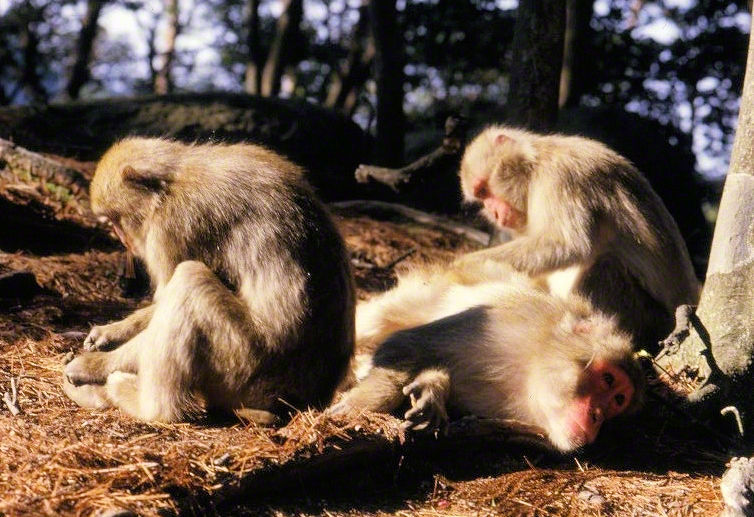
*[Photo 2: Miyajima Monkeys a-grooming © L.M. Kling (nee Trudinger) 1985)

I love to go to writers’ group. I heard someone on radio say that reading is the ultimate empathy tool. When we read, we enter another’s world and how they see the world. Exploring another’s world—how much more social can one get? This is what happens at writers’ group. We share our own world through our writing, and we explore other writer’s world as we listen to each other’s stories; a privilege and an honour to be trusted with these gems. As fellow writers we need each other to hone our skills as a writer. We need each other’s feedback. How else will we refine our craft without feedback?

Still, there is an aspect of writing that makes it a lonely existence. As writers we are modern-day prophets, proclaiming words given to us, believing these words can and will make a difference in another’s life. Hoping, the change will be for good. The word is a powerful tool, a double-edged sword. God’s Word is described as a double-edged sword. (Hebrews 4:12) There’s a saying that sticks and stones can break bones, but words cannot hurt me. Not true. Words can hurt. Words can also heal. Spoken words can sting or soothe, and then are gone, but the written word can endure and have power. People believe something is true because it’s in print. Reputations have risen and fallen on the power of the written word.

The printing press revolutionised the fifteenth century. Imagine words once written and hidden in some monastic library, then with the advent of the printed word, being duplicated and spread, and even appearing on church doors, for all to read. In our times we have witnessed the evolution of the power of the word through the internet. Need I say more—the gatekeepers of the past, by-passed, allowing all who are wanting to have a voice, freedom of written expression.

However, with freedom and power to influence, comes responsibility to use our gift and passion to write wisely and for the good of others. As a writer, I have written with good intentions to help others grow, help others see the world differently, change attitudes and effect a positive change in the world. Even so, my good intentions posted on my blog may have affected others in ways I didn’t intend. So, I have an understanding now what it means that writing can be a lonely craft as there will always be someone who doesn’t see the world as I do and may find my public interpretation of life offensive. My voice in the world-wide wilderness of the web may alienate me from others. So, I’m back where I started as a child, alone, with time and space to explore my world of fantasy with my characters as friends.

[Photo 3: Shikoku Sunset © L.M. Kling (nee Trudinger) 1985]

I guess that’s why I’m drawn to write. With fiction, it’s out there, it’s fantasy and it’s a safe platform to explore ideas, issues, and ways of looking at the world, the other world of “what-ifs”, that help readers open their minds to investigate alternative attitudes and create discussion. And with fact through my travel memoirs, sharing my life and worldview, joys, challenges, and faith. Through this process, I hope to bring goodness and personal growth to all who are willing to join in the journey into my world.

© Lee-Anne Marie Kling 2016; updated 2020; 2022

Feature Photo: Alone Sellicks Beach (watercolour) © L.M. Kling 2016

Share this:

  • Share on X (Opens in new window) X
  • Share on Facebook (Opens in new window) Facebook
Like Loading...

Posts navigation

Newer posts →
Blog at WordPress.com.
  • Subscribe Subscribed
    • Indie Scriptorium -- Self Publishing Collective
    • Join 94 other subscribers
    • Already have a WordPress.com account? Log in now.
    • Indie Scriptorium -- Self Publishing Collective
    • Subscribe Subscribed
    • Sign up
    • Log in
    • Report this content
    • View site in Reader
    • Manage subscriptions
    • Collapse this bar
 

Loading Comments...
 

    %d