I recently had the pleasure of attending an author talk given by Australian rural crime writer, Fleur McDonald. My friend, who is an avid fan of Fleur, booked tickets then invited me along.
I’ve only been to a few author talks at Adelaide Writer’s week but this was a local event at the Hallett Cove Civic Centre and Fleur is a South Australian born writer, so I was happy to attend.
As an emerging author, I also wanted to get some ideas about how to plan an event. You never know I might get invited to talk about my own writing experience some day.
Local author Nina D. Campbell interviewed Fleur. and this worked well. They covered a lot of interesting topics. Much of the talk centred around Fleur’s life as a mother, farmer and aviator. She also touched on her history as a writer, her research, writing processes and delved into a few of her characters. It was a funny and entertaining presentation which was thoroughly enjoyed by the audience, including me.
The organisation of the event was excellent with a comfortable venue, free wine or soft drinks, lots of promotional banners, a local bookstore selling the books and of course book signings. It was a superb night.
It’s a wonderful compliment, as an author, to being invited to make a presentation to a book club. But what makes for a good, entertaining presentation?
I was invited to a book club last year to talk about my first published novel, A Suitable Heir.
It was a great evening with a lovely group of ladies and I had a lot of fun but I wasn’t properly prepared and it made me wonder if I could have done better. My second invitation was from a member of one of the writing groups I attend and they had a specific agenda. Time to do some research to improve my book club presentation.
An article by Bookish raises a topic that must be seriously considered when accepting an invitation to present to a book club: Do you need to be a part of the book discussion? Book clubs by their nature allow members to openly say what they think of the book. Some readers will love a book and some won’t but having the author present during the review could either suppress the opinions of some members or be confrontational for the author. It becomes important to discuss with the co-ordinator what the book club wants. If it’s to have a robust, critical review of the book the author needs to be prepared for positive and negative evaluations. Alternatively, you can ask that the discussion of the book occurs before or after the author presentation. https://bookish.netgalley.com/book-club/11/2022/do-dont-author-visit-book-club-invite-how-to/
So, what do you talk about in a presentation? Here’s a list of areas to consider in your presentation plan:
For the novel: • First say, ‘Thank you for the invitation’. • Introduce yourself, your pen name (if appropriate) and the book title. • Talk about what inspired you to write the novel. Where did the idea come from? • Discuss the genre and setting. • What are the themes of the book? • Discuss the characters. • What was the initial question and conflict? • Research and world building. • Specific questions from the audience.
About you as a writer: • My writing history. • My writing process. • Why I write. • My strengths and weaknesses as a writer. • Plotting or “pantsing” (writing by the “seat of one’s pants”, such as making up the story as you go along)? • The editing process. • Publishing options. • Where to next.
It would be a good idea to discuss with the book club co-ordinator what format is acceptable and then write and practice the presentation. Supply some marketing material (bookmarks and cards) and make sure you have copies of the book to sign and sell.
“The only time I feel alive is when I’m painting.” – Vincent Van Gogh. “I can’t change the fact that my paintings don’t sell. But the time will come when people will recognize that they are worth more than the value of the paints used in the picture.”
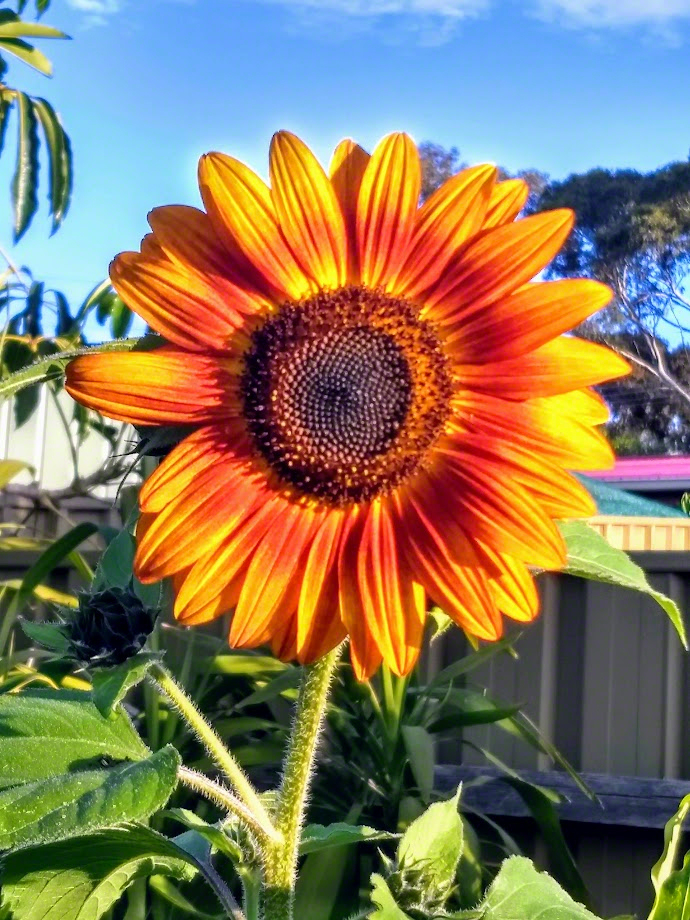
[The Sunflower; a Van Gogh icon (c) L.M. Kling 2018]
A current example of those discouraging times when our books don’t sell; I recall my experience during two years in art exhibitions of not selling—not one, not even a cheaper unframed painting. So, at the time, I could relate to Vincent Van Gogh.
As writers we too feel disheartened when our books don’t sell. We’ve spent hours, weeks, months, maybe years writing, refining and producing our “babies” just to see them sit there on the shelf, unloved, unwanted, buried under millions of competing books in the Amazon ranking list.
Perhaps you were one of those authors who attempted to take the traditional route, sending query letters to potential agents or big-name publishers, only to receive the rejection letter months down the track. And this happened over and over again.
Or maybe like me, you saw the writing on the wall, bypassed all that palaver; went straight to Amazon, Draft to Digital, (or some other online publishing service) and self-published. Whichever way, the result is the same, the product must be sold. Even in traditional publishing, we are selling our books to the publisher then, if we are successful, they expect us to promote our books at book launches, speeches and signings.
Advertising, it’s all about marketing and advertising.
So, here I was, I had my “baby”, (actually “babies” — five books now), and to advertise, I have my blog, my website and most recently, Indie Scriptorium Self-Publishing Collective. Week in, week out I blog and post. I try and keep up with my followers by reading, liking, and following their blogs. Sometimes I offer my books for free on Kindle. I’ve tried a bit of advertising too. Slowly my contingent of followers has grown.
Yet, I see my friends or associates on social media pumped up with successes and bestsellers to their name. There’s influencers who have monetised their websites and now own a portfolio of properties. Then there are the bloggers who have 100,000-plus followers.
How do they do it?
All the while, here’s you and me, the wallflowers, missing out.
Believe me, being a wallflower is discouraging.
But, fellow wallflowers, don’t be discouraged.
Don’t give up.
Persevere.
I keep reminding myself that those success-stories often start with struggle. The people who are successful in sales, most often put themselves and their products out there. They spread the net far and wide, so to speak. They don’t give up when faced rejection. They keep on going. They have goals. And when they fail, they pick themselves up and keep on running.
True, there are some for whom success falls in their laps. But for most of us, we need to make the effort to reap the rewards.
The comment Van Gogh makes resonates with me. Although he sold only one painting in his life, he believed in his work, and the timeless quality of his art, as one can see from his quote at the beginning of this post.
I believe that’s how it is for me when I am writing, and also painting. I feel alive. And echoing what so many of my fellow “creators” say, I would rather be creating than getting bogged down in all the marketing and advertising. Like Van Gogh, I can’t change the fact that my books or paintings don’t sell…
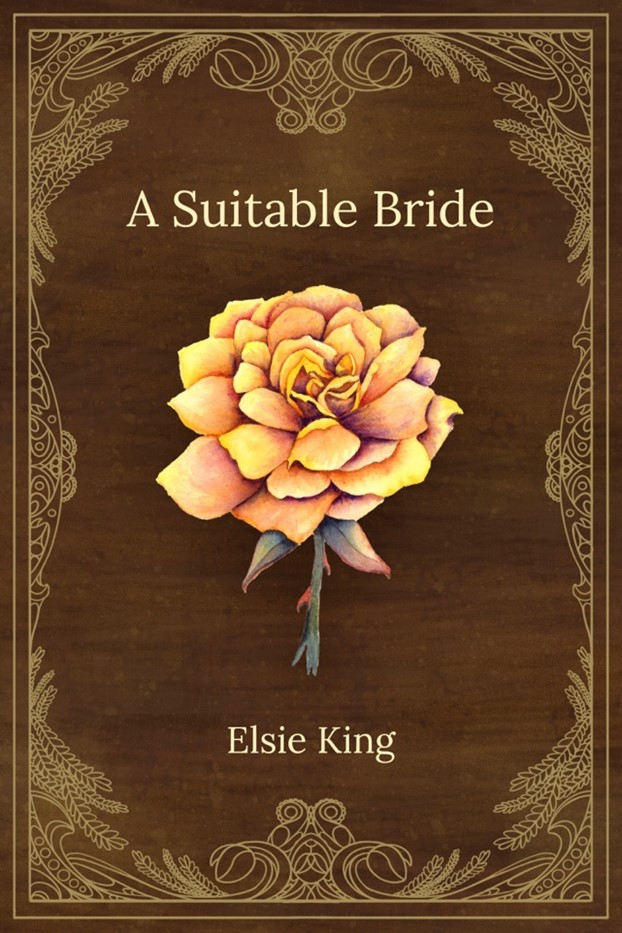
In a previous blog I mentioned that the best form of marketing is to write a second book. I’m about to test that theory and my second book A Suitable Bride is at the proof-reading stage with a release date hopefully soon. (I’m reluctant to name a date until the book has been fully edited as many things tend to intervene and I have to apologise for the delay.)
My first novel A Suitable Heir was marketed to family and friends, through the indie table at the Romance Writers of Australia Conference and on their magazine Hearts Talk. I sold some through my art group. We tried a local market with no success. I sold about fifty books through this process and was reasonably happy with the outcome but hopefully can increase sales for my next book.
My problem, and I think it is a problem for many writers, is that I don’t have the knowledge, inclination or time to devote to marketing. I admire those writers who have taken the plunge and got a large following of readers and are making a good living from their craft but marketing is not my forte. However, as a member of Indie Scriptorium I feel that I have an obligation to get some understanding of the various marketing techniques and report on my findings. I would love to find a book marketer who is able to market my novels for me at a reasonable cost but first I think it’s important to know what sort of marketing you want for your books.
Types of Marketing Services
Getting the book ready for the market- includes cover design, blurb, the correct Search Engine optimisation (SEO), the best keywords for your book, an author bio and reviews of previous books and make the price competitive.
Advertising – can include social media advertising, Amazon advertising, Goodreads and many other platforms
Setting up an author website and learning how to use it effectively.
Having marketing material, banners business cards, bookmarks etc.
Getting an e-mail campaign started
Doing author talks, book launches and making media releases
Listing your book with online distributors such as Amazon, Booktopia and Book depository.
Each of these areas of marketing will need to be extensively researched and require a working knowledge of the various social media and web pages. There are lots of options in most categories. I will do the Google searches, look at countless You-tube videos and try to work out the sometimes-confusing web sites and social media platforms for my own edification and to inform IS followers.
The other option is to hire a book marketer. A quick google search for book marketers in Australia reveals lots of options that all want your e-mail address so they can bombard you with sales pitches for the rest of time. It’s also a matter of buyer beware as some of these book marketers are vanity publishers who promise a lot, take your money and deliver a shoddy product and leave you in the lurch. I will keep searching for book marketers who may provide a good service at a reasonable price and keep you informed.
Indie Scriptorium has provided some blogs about some marketing techniques. See our previous blogs on SEOs, cover designs, blurbs, websites but the above is a very large checklist and we still have a way to go.
I already have a website, business cards, reviews and I’m happy with my cover design, author bio and blurb for my second novel. I will be reviewing my SEO and making sure my keywords are the best for my novel.
My initial focus will be on my social media, look at Amazon and Facebook adverts and explore Goodreads and other book distribution services. Going local and using my existing contacts in Romance Writers of Australia, organising a book launch and networking with local writing and book clubs will also be in my plan. Hopefully I can share what has worked for me, and what didn’t. Stay tuned for more on marketing.
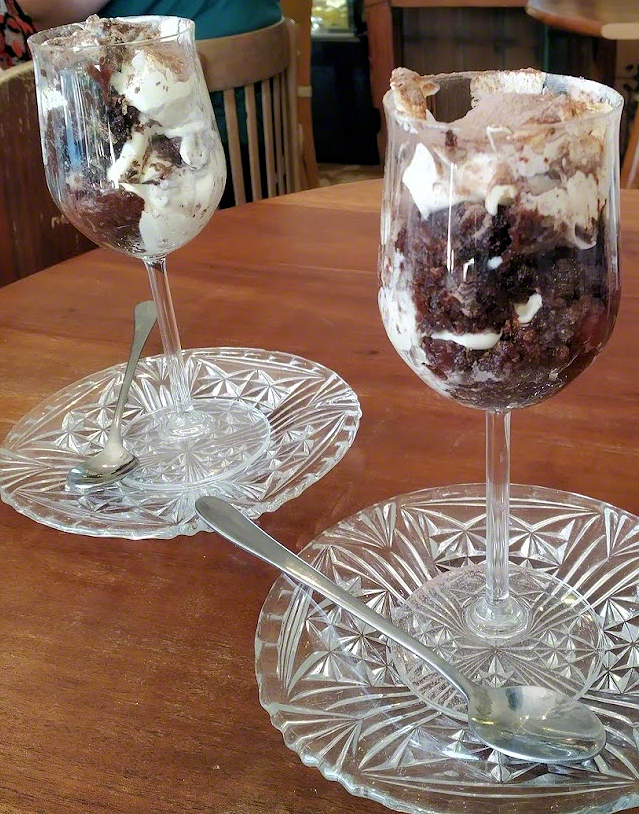
Last Friday, Mary and I attended a party at a local Café that we patronise every Wednesday between Bible study and Writers’ Group. We go there for lunch and have started to get to know some of the regulars there as well as the manageress. She makes a delicious Black Forest Cake.
Anyway, on the way, I remarked, ‘Wow, it’s been a week already since the market.’
So, how did we go? You ask.
What you must understand is that the main stream media did its best to deter people from doing anything—apart from activating their fire-safety plan. Or second to that, heading to the nearest bunker and hunkering down waiting for the apocalyptic storm to pass.
As it turned out, the doom and gloom weather forecasters were out by a couple of days. Clouds shrouded Adelaide by mid-afternoon, even a few spots of rain. The fires never happened. The evening of the market turned into a balmy twenty-something degree Celsius, perfect for strolling in the market or enjoying Christmas festivities.
However, the damage by media had already been done and no one but a hardy few, ventured outside their homes to attend. In the end, traders traded amongst themselves. I bought a native orchid and a couple of Christmas cakes. Elsie bought my significant-zero-number birthday present, a handy art pouch that I can use when painting en plein air.
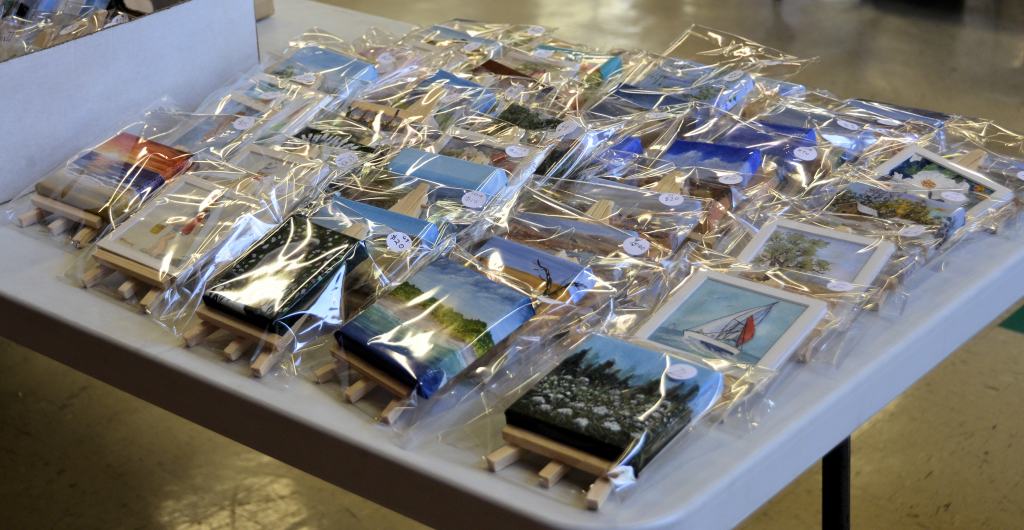
And finally, after no financial transaction action all evening on our stall, a neighbouring vendor bought one of my books, and Elsie’s great nephew one of my miniature paintings. Minutes before, we had sold one of Elsie’s cards while she was away from the table having a break.
Disappointing? No, I don’t think so. I have come to believe that the market experience is more than just buying and selling goods. It’s about community. Building relationships. Being a regular reassuring presence. Being there to listen to people, to connect with people.
Now at times, during the evening, this connecting was difficult to do. We were situated right under the main entertainment; a couple of merry “Elves” singing Christmas songs. They were doing a jolly good job of it, drumming up that seasonal spirit—except that they sang to no one but the vendors most of the time. Where we were the music blared at top volume. When some hapless soul did enter the market and pass our stall, they sped around the tables, glancing only briefly at our books and artwork. Communication, even amongst us concluded in sign language and I resorted to sharing writing in my notebook; a kind of note-passing between friends.
When the music-makers took a break, we had opportunity to connect with potential buyers or people who just wanted someone to listen to what was going on in their world.
While packing up, one of the neighbouring vendors gave some advice; cards don’t sell, they said, and every time is different, so don’t give up. From the brief debrief we had, we decided that in the future, we’ll look at selling smaller paintings and trying to get a stall far, far away from the entertainment.
As for connection, the market is just one way for advertising Indie Scriptorium and our indie-published books. After years of going to this local café I mentioned Mary and I go to every Wednesday, I finally gave one of my books, The T-Team with Mr. B to the manageress to read as a Christmas present. The Lost World of the Wendswas given to a young writer who also comes to this café, and also I gave away a bookmark advertising Indie Scriptorium.
Building the “brand”, the business by networking takes time, especially with the strident voice of professional media, but slowly but surely I feel, people are catching on and it’s happening for Indie Scriptorium.
A heart-felt thank you to all you faithful followers and newcomers to our Indie Scriptorium blog. Merry Christmas and we wish you a successful New Year in your endeavours.
This Friday we, the members of Indie Scriptorium, will be selling our books, artwork and cards at the
Reynella Neighbourhood Centre Inc. Twilight Christmas Market. 164 South Road, Old Reynella Friday 8 December 4 – 7pm
If you are in Adelaide, come and visit us there.
Not only will you be able to see the books and artwork which we have produced, we will be available to discuss with aspiring authors, such topics as: Helpful tips on becoming a writer, publishing your own book, and marketing options.



 Indie Scriptorium -- Self Publishing Collective