Indie Scriptorium — Self Publishing Collective

Helping Each Other Publish

Skip to content
  • Home
  • About Us
  • Blog
  • Books For Sale
  • Introducing Indie Scriptorium
  • Links–More for You
Search

storytelling

Effective Storytelling Tips—Deep Point of view

December 15, 2024 / lmkling / Leave a comment

Deep Point of View

The track was steep and bumpy. It shook his bike, made braking hard on the sharp corners. His eyes watered, his heart thundered. He felt like laughing but had to focus. He’s hadn’t felt this scared since he fell off his first two-wheeler.

Teeth clenched, bones shaken as the bike bucked and slid over rocks. It was impossible to brake, too fast, too hard. The ground tore past, blurred by speed. Cold wind whipped tears into his eyes. Hands curled around the handlebars as if they could be a lifeline. Focus, focus, focus. Blood thundered in ears, sweat sprang and got whipped away. Laughter bubbled and was swallowed. Fear evoked the four-year-old’s memory. Falling, pain, blood and Dad saying. “Get back on. You can do this.”

Above are two attempts at describing the same event. In the first I’ve used pronouns, he, his, he felt. This is me as the writer intruding, describing the action. I’ve also said he felt scared, telling not showing the fear. This is third person subjective.

In the second I’ve got rid of the pronouns, added more sensory information to illustrate fear, added internal dialogue and provided a detailed memory. It required more words but gives a deeper experience for the reader. This is third person subjective deep point of view. (Also known as 3rd person limited or 3rd person close)

Using Deep Point of View (Deep PoV) is a writing style that has become increasingly popular in the past two to three decades. It is tricky to understand, and I’ve found requires a lot of study and practice. The idea is that you tell your story from the perspective of the character, that the story emerges through their experience which includes what they see, hear, feel, taste and smell. Add some thoughts, opinions and memories and then remove the narrator’s voice, (he felt, he thought, she wondered, she saw.)

Changing your natural writing style is challenging work but I think adopting deep PoV can make the writing zing and allows the reader to engage more closely with the characters. But do I need to use deep PoV all the time and for all my characters?

I write Historical novels set in the Regency era. The writing style of authors such as Jane Austin, Charlotte Bronte and Charles Dickens use third person, but the narrator is always popping in with observations and opinions. I want my own novels to reflect the writing style of the era in which they are set but I also like to adopt the modern deeper point of view. It’s a challenge.

Having done some reading into this complex topic I have come to a set of rules that work for me as a writer. It’s a work in progress; I am learning new things all the time and making adjustments, but I thought it might help people if I share my guidelines.

  1. Use deep PoV for major characters. Minor characters don’t need deep PoV, but it could be fun to give the baddie a deep PoV.
  2. Deep PoV can be exhausting. Use it sparingly for pivotal moments in your plot.
  3. Start each scene with deep PoV.
  4. Use deep PoV mostly in the first third of your book. Less is required as the pacing/suspense increases and the readers are hooked into the characters.
  5. Don’t head hop between characters. One deep PoV per chapter or scene.
  6. Use the character’s thoughts, actions, memories, opinions in both internal and spoken dialogue. Emotions are better conveyed by actions and dialogue than described. (show don’t tell)
  7. Use the five senses to give readers a clear picture of the scene from the characters perspective.
  8. Use vivid language (find more interesting words in your thesaurus) and active voice. (I use a soft-ware editing program to highlight passive voice for removal)

These are my recommendations. They will not suit everyone, and they are a work in progress. My idea is that I write the first draft of my novel/short story and select the character who will be the PoV character for the scene/chapter but not focus on creating the deep PoV until I’ve done a structural edit. I will then do an editing sweep looking at strengthening the sensory input, opinions, thoughts, memories and actions in strategic scenes in the book.

Points of view is a complex topic. I found the following articles and books helpful.

https://www.masterclass.com/articles/how-to-write-deep-pov
https://thewritepractice.com/deep-pov/
https://theeditorsblog.net/2011/11/16/deep-pov-whats-so-deep-about-it/

I also used Richard Bradburn’s book Self-Editing for Self-Publishers, Reen Publishing 2020

I’m still finding my way with PoV. I don’t head hop as much, but I can’t say that I am deeply conscious of using deep PoV as I write my first draft, but it’s an effective and powerful tool for introducing new characters. For me it works for one or two characters in a novel and is valuable to use in highly emotive, pivotal scenes. I do enjoy giving my character’s opinions and internal dialogue as it brings the reader closer to the character.

Cheers and Merry Christmas
Elsie King© 2024

Share this:

  • Click to share on X (Opens in new window) X
  • Click to share on Facebook (Opens in new window) Facebook
Like Loading...

Synopsis Revisited

August 25, 2024 / lmkling / Leave a comment

A synopsis is like describing a photo and including every detail that the eye beholds in a couple of paragraphs. It has to be succinct, engaging and include the style and themes of the novel. A pitch is a very short synopsis. An elevator pitch even shorter.

A synopsis is mostly used to sell your novel to an agent or a publisher. It is also useful to summarise your novel for presentations and marketing. However, don’t use a synopsis with potential readers or you will be giving away too much information.

My critique group has recently tackled the difficult issue of writing a synopsis and it spurred me on to revisit this topic. A 300–800-word synopsis is a document that sells your work, hooks the agent/publisher and gets your manuscript out of the slush pile.

So, where do you begin? Start by defining what is happening (the status quo). Bring in the inciting incident, the developments leading to the crisis and finish with the resolution of the crisis.

When writing a synopsis, it is important to include:

  • A clear outline of your plot including the hook at the beginning, big moments in the narrative, plot twists and the ending. You are giving the publisher/agent a full account of your novel so don’t hide anything as they want to know everything and especially that you have a satisfying ending.
  • You should give a description of your main protagonists and reveal how they change and grow throughout the book. Character names can be underlined or made bold, so their importance is shown.
  • Start your synopsis with a strong hook.
  • Showcase how your novel is different with strong themes and unique ideas.
  • Write the synopsis in the 3rd person, present tense and use clear, easily read sentences with immaculate grammar and spelling.
  • Make sure the synopsis document contains your name, the title and synopsis so it is easily found by the agent/publisher.
  • Also include the genre, word count and who you think will be your readers.

Of course you cannot possibly publish the synopsis for your own novels. So, I decided to do a synopsis of a book that most people have read or know the ending through multiple movies and television shows. With abject apologies to Jane Austen, I will attempt a synopsis of Pride and Prejudice.

Pride and Prejudice – Long Synopsis (462 words)

A historical romantic novel of 122,189 words. Suitable for readers of refined literature.

Elizabeth Bennett (Lizzy) is the second eldest of five unmarried sisters whose financial circumstances leaves them all in the unenviable position of needing to marry into money. Lizzy is bold, intelligent, reads extensively and declares she will not marry unless in love.

Mr Darcy an extremely rich, handsome, gentleman accompanies his friend Mr Bingley to Netherfield. The arrival of two eligible men rouses excitement in the Bennett household. While Bingley forms an attachment to older sister Jane, Lizzy quickly concludes that Darcy is cold and proud, and she spurns him despite his large fortune.

Jane and Bingley fall in love and a proposal is expected, then Bingley mysteriously leaves for London. Jane is heartbroken and Lizzy incensed by her sister’s rejection. Her anger intensifies when she is expected to marry her cousin, the incorrigible Mr Collins. She refuses and Mr Collins finds solace with Lizzy’s best friend.

The arrival of the militia to the district brightens the lives of the Bennett sisters. Lizzy meets Wickham an exceedingly handsome but poor Lieutenant and the son of Darcy’s late steward. Wickham accuses Darcy of cheating him out of a legacy. This firms Lizzy’s prejudice against Darcy.

While visiting Mr and Mrs Collins, Lizzy again encounters Darcy who is visiting his aunt, Lady Catherine de Bough. Lizzy is discombobulated to receive an ill-considered marriage proposal from Darcy. She angrily rejects him because he admits that he stopped Bingley marrying her sister.

Darcy realises too late that he has fallen in love with Lizzy. He makes such a hash of his proposal that he fears he has lost any chance of overcoming her prejudice. He does warn her about the sleezy Wickham who’d tried to elope with his younger sister.

An unexpected holiday in Derbyshire with her uncle and aunt allows Lizzy to visit Pemberton, Darcy’s stately home. She is mortified when Darcy arrives and finds her there. This second chance allows Darcy to reveal his love and admiration for Lizzy and her preconceptions mellow. During this renewed courtship Lizzy learns her youngest sister Lydia has absconded with Wickham and her family face ruin. Darcy forsakes Lizzy and their romance seems doomed.

But Darcy searches for, and makes Wickham marry Lydia. He apologises to Bingley for interfering in his courtship and encourages him propose to Jane. Bingley proposes and Jane accepts. Darcy’s actions prove to Lizzy that he loves her.

A visit from the formidable Lady Catherine de Bough, warns Lizzy that Darcy is contemplating marrying her against his family’s wishes. Lady Catherine claims Darcy is engaged to her daughter and demands Lizzy reject her nephew. Lizzy refuses and realises she has fallen in love with Darcy. When he proposes she gladly accepts.

Short Synopsis – 256 words

 Historical romantic novel. 122,189 words.

When Mr Bingley brings his friend Mr Darcy to his new country house, Mrs Bennett expects one of them will marry one of her five unmarried daughters. Jane and Mr Bingley are attracted but Lizzy finds Darcy’s proud contempt insufferable.

Jane is jilted by Bingley leaving Lizzy incensed. Her mood intensifies when she is expected to marry her odious cousin, Mr Collins. Despite Mrs Bennett’s pressure, Lizzy resists, Mr Collins and he marries her best friend instead.

The arrival of the militia to the district brightens the lives of the Bennett sisters. Lizzy is attracted to Lieutenant Wickham, the poor son of Darcy’s steward. Learning that Darcy withheld an inheritance from Wickham firms Lizzy’s prejudice.

A visit to Mr and Mrs Collins forces Lizzy to again spend time with Darcy. He’s fallen in love and proposes but his admission that he stopped Bingley marrying Jane ruins his chances. He warns Lizzy Mr Wickham has a penchant for very young girls.

While holidaying in Derbyshire with her aunt and uncle, Lizzy visits the Darcy stately home. Darcy arrives unexpectedly and Lizzy is mortified but this second chance allows Darcy to court Lizzy. Her preconceptions mellow. Just as the romance blossoms Lizzy learns that Wickham has run off with her youngest sister. This means ruination for her family and Darcy abandons Lizzy.

But Darcy searches for Wickham and makes him marry Lizzy’s sister. He encourages Bingley to propose to Jane. His actions prove his love for Lizzy. When he proposes she gladly accepts.

Elevator Pitch – 19 words

A regency romance revealing that first impressions can be misleading and true love can overcome both pride and prejudice.

Shorter Elevator pitch – 3 words.

Love overcomes prejudice.

Jericho Writers has an excellent web site: How to Write a Novel Synopsis. It includes step by step instructions and clear guidelines.

Cheers!

© Elsie King 2024

Photo: L.C. Wong©2024 – Icelandic reflections.

Share this:

  • Click to share on X (Opens in new window) X
  • Click to share on Facebook (Opens in new window) Facebook
Like Loading...

Storytime on Sunday

March 24, 2024March 24, 2024 / lmkling / Leave a comment

Themes and Storytelling.

Incubating an idea for a story is an interesting process. As a novelist my inspiration most often comes from a theme. It might be the rights of women, the importance of family or equality and fairness. At other times the theme emerges as I write.

When I reflect on the themes that are important to me as a writer I can trace the influences on my life. My mother was a strong feminist even before it was a movement. Her actions in life were all about doing things her way, standing up for those less fortunate and being a strong advocate for what she considered right for her family.

My education as a Social Worker strengthened my principles of feminism, justice, equality and being non-judgemental. I learned to respect a person’s self-determination, even if it was outside the norm. I’m also a pacifist and abhor violence and war.

Stop Pushing was a story where the themes emerged without pre-planning.  At a writers’ group we were given a ten-minute exercise to complete a piece of writing inspired by a sentence that contained the words stop pushing. I just wrote. Top of my head the story just emerged with flow of consciousness. It wrote itself. I liked the original and took it home to refine. “Stop Pushing” is the final short story and I like to think it is one of my best pieces of writing. I hope readers enjoy it and also look for the themes that are entrenched in the story.

Stop Pushing

It was a peculiar name. Who would ever call a bloke Stop Pushing? Snowy Jones reckoned it was him that got it wrong. Said he had asked the new bloke for his name and got told it was Pushenko, or something foreign like that. Now Snowy was ‘bout eighty-five at the time, deaf as a post and with a few wallabies loose in the top paddock, so it makes sense he got it wrong. Snowy decided it must be Pushing, and that was that.

I never found out where the Stop came from; but it is Australia, and everyone gets called something short that’s fitting. Stop Pushing sort of emerged, settled and became part of the lingo, and that was that.

Stop arrived in the early fifties. Bought Warren, the goat’s old place on the edge of town. The sheila’s tried to do the neighbourly thing and get him to the RSL chook night, but Stop wouldn’t have any of it. But he turned up in the front bar every Friday, have two beers and then go home at closing time, did that all of his life. And he always fronted at the dawn service on Anzac Day, stood at the back, then drifted away like a drizzle on a breeze.

Stop was a funny bloke. You wouldn’t believe he had a sense of humour; and he didn’t! Never smiled or laughed. Ordered his beers with a nod to the barman and said nothing else; to anyone. There were no laughter lines on Stop’s dial. He had deep gauges around his mouth, sunken cheeks and eyes that emerged from the black pits of hell. He was thin as a long dead cadaver and looked no different in forty-odd years.

What Stop did on the small holding we never knew. He kept himself to himself, and we were alright with that. He was quiet, clean, and took up very little room at the bar. After, a few years, his bar stool became a protected zone on Friday nights. “Oi, you can’t sit there, that’s Stops’ corner.”

It was in the nineties and the local fire crew had just mopped up after a blaze that grazed right up to the edge of town. The pub put a couple of hundred on the tab and everyone got plastered, really plastered. A few of the younger fella’s got a bit out of hand; as you do when you face off a fire for the first time. A kerfuffle broke out over some bloke’s missis, and the two Romeos took to some shoving, right into Stops’ corner of the bar.

Stop was jostled, he swayed, then toppled sideways, fell to the floor. The fire chief rushed over and tried for a pulse, but then shook his head sadly. They propped the poor old bastard back up on his stool and raised their glasses in remembrance. Stop Pushing was no more.

Now Stop Pushing could have just faded into obscurity, but a couple of months after the funeral, a bloke in a suit called a meeting in the front bar of the pub. The suit said he was a “lawyer for the deceased known as Stop Pushing.” Turns out Stop was worth a bob or two and left all his money to the town. He was some sort of fancy writer. Not a Steven King type writer, but he did history books which he sold to schools and universities, for a fair bit of money.

Well, the CFS got a new fire truck, the oval got a new stand with change rooms underneath and Warren, the goat’s place, got turned into a community library with meeting rooms and even computers.

He also donated a new park bench at the war memorial. The plaque was short and to the point, “In memory of Stephan Pushenko”

There was a lot of talk about Stop for a few years after his passing. One of the teachers did a bit of digging and found out the poor bloke had come from Poland and done time in Auschwitz. There was some speculation that he was from some rich Jewish family, or he was a Romany or even a poof, but I don’t think that mattered to anyone in the pub.

I reckon Stop found his way to our small place in Australia. He was taken in, given a new name, and left to be himself. He never did anybody any harm and ended up doing everyone a lot of good. Whatever ghosts he needed to bed, he did it quietly.

I like to believe Stop found serenity here. He took in the ordinary life; the fires battled, the footy games won, the cricket games lost, the jokes, the gossip and the yarns. We gave him back a life, and he took what he needed, then gave back in spades.

Visitors to the pub may find it a bit strange but at closing time every Friday, to this day, some joker will raise his glass and shout, “Stop Pushing” and everyone will raise a glass and repeat “Stop Pushing” and have a laugh. For a memorial, you can’t get better than that.

© L.C. Wong 2020 (now writes as Elsie King)

Photo © L.C. Wong 2019

Previously submitted to Positive Words 24/11/20 but all rights retained by the author.

Share this:

  • Click to share on X (Opens in new window) X
  • Click to share on Facebook (Opens in new window) Facebook
Like Loading...

Mis-Timed Missive

October 8, 2023 / lmkling / 2 Comments

[Holidays, Swiss relatives visiting from overseas, and a mis-timed meeting at Morialta falls, reminds me of this post I wrote some time ago. I ran out of time for a fresh and pertinent post to publish, so here is this old but timely post—with a few adjustments related to the skill of storytelling.]

WARPED TIME

An argument broke out between two members of our family over time—threatening a war that would rival the epic war of the Time Lords from the Dr Who series.

‘You better allow at least two hours to get from Zurich Airport to Wattwil,’ a member of our family who came from Switzerland warns.

[Photo 1: Zurich from above © L.M. Kling 2014]

‘What? According to Google Maps, it should only take an hour,’ another family member shows their relative the map on their computer screen. ‘See? It’s only sixty kilometres—and we’ve got the freeway.’

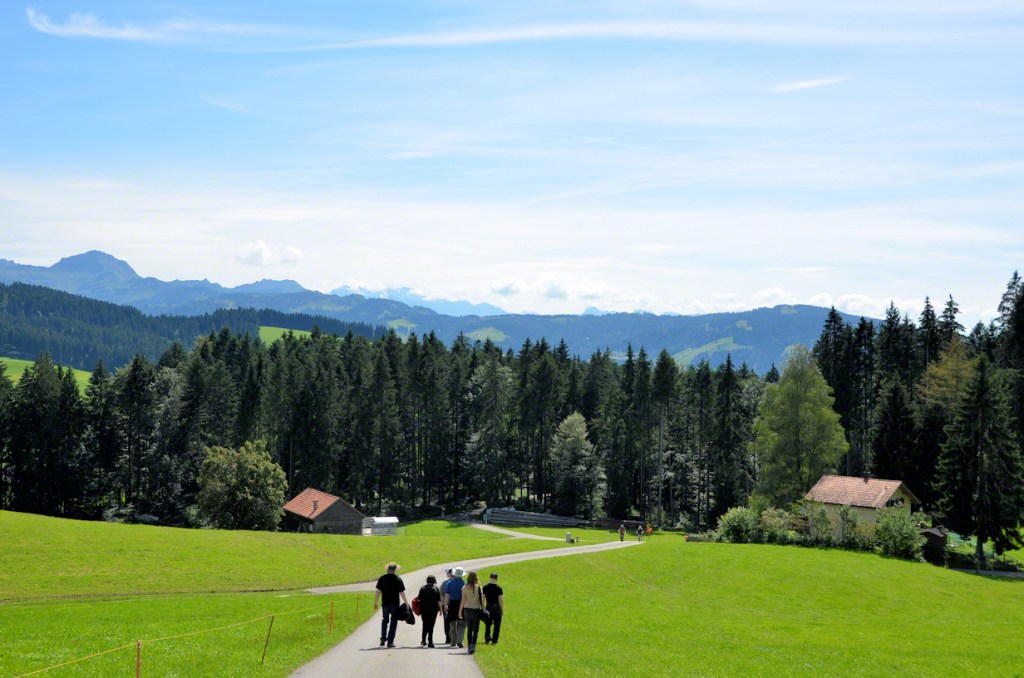
[Photo 2: Countryside near Wattwil © L.M. Kling 2014]

And so, a joke endures in our family that time speeds up in Switzerland, perhaps owing to the mini-black hole created by the Large Hadron Collider.

Fast forward to Zurich Airport August 2014…and we witness not time, but our relatives, fresh off the plane, stand still for an hour and a half, debating where to change Australian dollars into Swiss Francs. Is this what our relative meant when they said all goes slower in Switzerland? For them, perhaps, not us. Up until then, the only impediment to our timekeeping was a wayward Tom Tom who prefers scenic routes to the more expedient ones, and road works—the bane of summertime in Europe.

[Photo 3: Destination Badenweiler, Black Forest after scenic tour into France © L.M. Kling 2014]

So, maybe it wasn’t the mini–Black Hole after all, but I have observed time does speed up or slow down depending on the place and activity. You may have heard the old adage: “Time flies when you’re having fun”. When I’m painting, I’m in the zone, and hours melt away, and a whole afternoon disappears into night. My son will come to me and ask, ‘When’s tea?’

‘Soon,’ I say. ‘Just need to do a few more dabs.’

Another hour slips by and my husband comes and says, ‘It’s nine o’clock, when are we eating?’

Fine then. I put down my brushes and admire my work…for another half an hour.

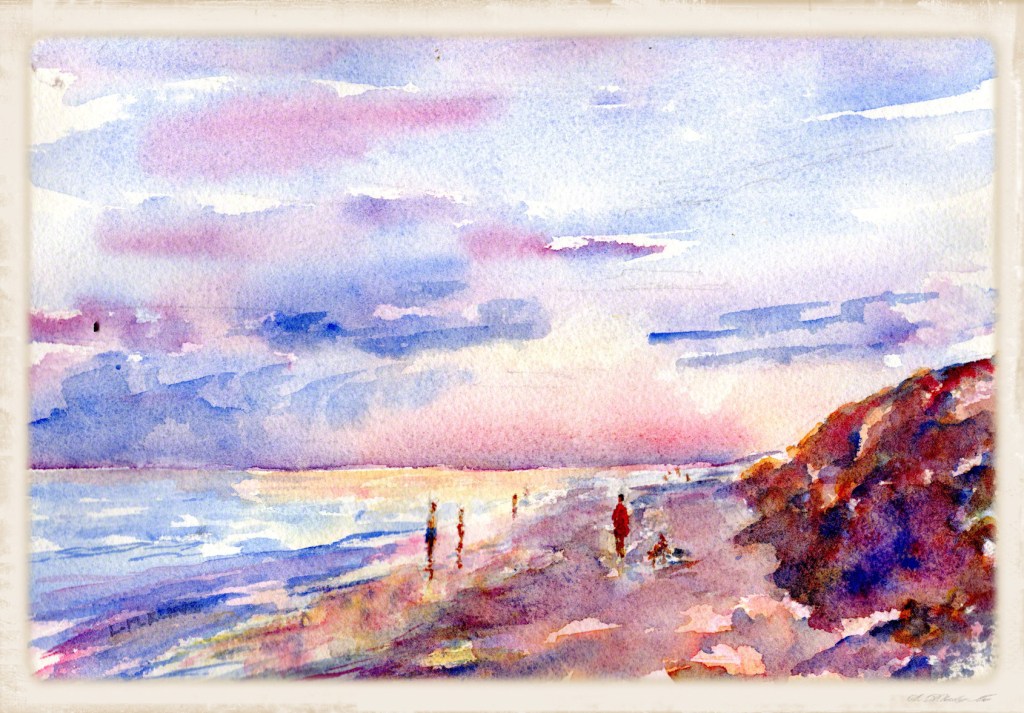
[Painting 1: Somerton Beach sunset © L.M. Kling 2018]

Yet there are places where time slows and stretches almost into eternity. My mother and I are convinced that Magill, a suburb east of Adelaide city, is one of those places. We love our “Magill time”—a leisurely lunch, then a slow snoop at the Salvos, then the bookshop, and still time to do the grocery shopping before we pick up my son from his guitar-making workshop.

However, for my son, “Magill time” doesn’t exist. For him, the time spent on his craft vanishes into the sawdust—much like when I paint, I guess.

My son theorises that time is relative to age. When a person is young, say, one year old, they haven’t experienced much time so the time they have lived seems a long and drawn out. But for an eighty-year-old, one year is one of eighty and thus seems short in comparison.

[Photo 4: Timeless, Morialta Falls just a few kilometres from Magill © L.M. Kling 2013]

I guess there’s something to be said that time is related to energy. Young people possess a greater amount of energy; they pack so much more into a day, and still don’t tire. Have you noticed, as you get older, young people speak faster? Or if you are younger, you wonder why older people speak so slow. What’s going on there? Young people complain about being bored and needing to fill in each minute of the day, so as not to waste time. Screen time fills in the gaps when “nothing” is happening.

[Photo 5: Screen time Christmas © L.M. Kling 2016]

In contrast, I believe there is a phenomenon called “older people’s time”. I observed this with my aging relatives. They complain time speeds up, but from my point of view they are just slowing down. They compensate for their slow movement in time, by preparing in advance for events, and arriving early so as not to miss out. It’s not unusual for the older generation to arrive at a venue an hour early so as to be on time.

Now that we have reached that golden age, Hubby still needs to learn this skill. Just fifteen minutes late to a rendezvous with the younger relatives today, and poof, they were off. Never caught up to them. They must have been doing a cracking pace, while we (or should I say, I) ambled to the first falls at a “knee-cracking” pace, what with my dodgy knee and my wonderful kind hubby keeping me company.

[Photo 6: Grandpa Nap time © L.M. Kling 2008]

And in contrast to their youth, older people prefer to sit for hours pondering, their memories perusing their past. For them, days blend together, years vanish into a succession of Christmases. ‘Oh, dear, how time has flown,’ they say. Some think they’ve lived so long, they experienced the pre-Industrial Revolution. Not sure what’s going on there.

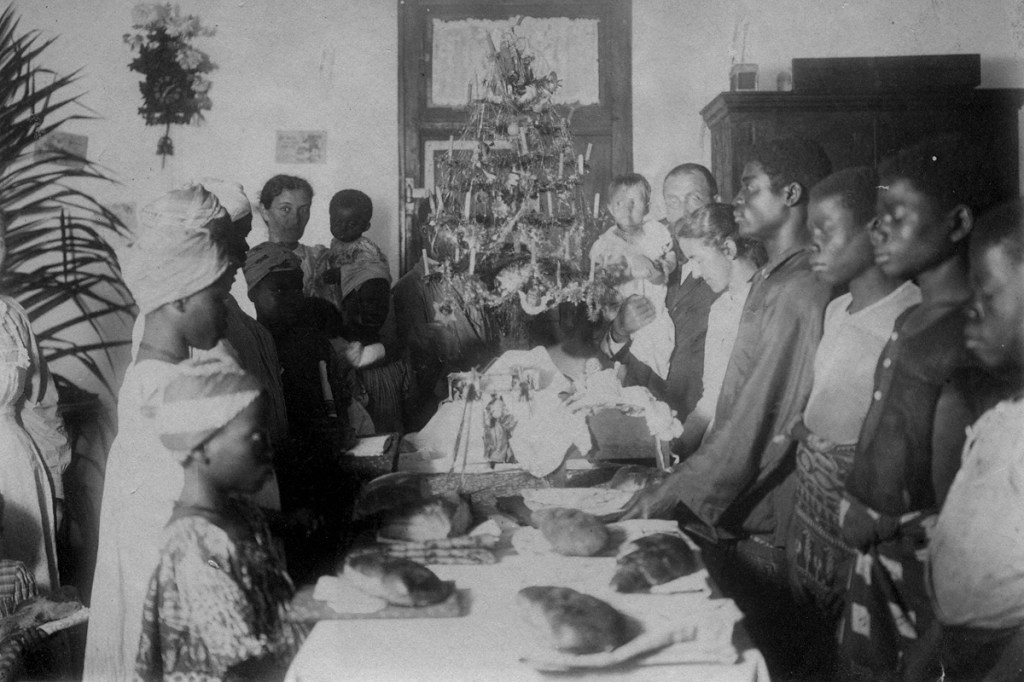
[Photo 7: The good ol’ days way back when… On Mission in the Cameroons © F.W. Basedow circa 1899]

How does this relate to writing a story? Well, pacing comes to mind. I have observed that the younger generation enjoy a faster pace, many characters all interacting. I’m amazed at how they keep track of so many characters.

Meanwhile, as we age, we savour a slower, gentler pace. Time to breathe between the dramas and crisis in a story. And as for characters, it’s fair to say, from my experience with the older and wiser of us, we appreciate a character list if a book has too many characters.

Also, when planning a story, or novel, a timeline is helpful to avoid timing issues and plot holes.

So, after a busy day hiking (or hobbling in my case), then finally meeting the Swiss relatives for dinner, it’s time to say “goodnight”.

© Lee-Anne Marie Kling 2016; updated 2020; 2023

Feature Photo: Seacliff Sunset © L.M. Kling 2017 (or some such time)

***

Share this:

  • Click to share on X (Opens in new window) X
  • Click to share on Facebook (Opens in new window) Facebook
Like Loading...
Blog at WordPress.com.
  • Subscribe Subscribed
    • Indie Scriptorium -- Self Publishing Collective
    • Join 95 other subscribers
    • Already have a WordPress.com account? Log in now.
    • Indie Scriptorium -- Self Publishing Collective
    • Subscribe Subscribed
    • Sign up
    • Log in
    • Report this content
    • View site in Reader
    • Manage subscriptions
    • Collapse this bar
 

Loading Comments...
 

    %d