Swamped

Word Meaning Analysis

For many of us, the word “swamp” doesn’t have much in the way of appealing connotations with its implications of boggy, muddy, and probably smelly too. Many a frustrated mother has applied the word to a child’s bedroom along with orders, “Clean it up! Or at least keep the door shut! Please!”

The Macquarie Dictionary tells us that a swamp is: “a piece or tract of wet spongy land; marshy ground; an area of still, often stagnant water, infit for cultivation”.

Nothing appealing there, is there?

Words are powerful. How we use them; the pictures we get in our head when hearing them are often beyond our conscious control—we hear, we respond (and at times react. Sometimes in quite unexpected ways!)

In the far South East of our state of South Australia, “swamp” has a vastly different meaning. Here the land is flat, seemingly as level as a tabletop. Apart from the many acreages that were cleared and planted with pines, the country is studded with magnificent, giant red gums: Eucalyptus Camaldulensis.

You could see this part of the world as upside down; a reverse of “normal” where usually so-called “flat land” is actually a series of low, rolling hills and shallow valleys. Here, mile after mile of the South East however, there is not a hill to be seen, not even a gentle rise. Instead of the “gentle rises” there are dips: downs rather than ups, huge shallow bowls in the land surface. As it is so flat there are no rivers of streams but in winter all those lower parts can function as drainage sumps. Again, due entirely to that word “sump”, a less that appealing picture.

The very earliest settlers must’ve found these vast stretches of winter water an impediment, their animals could well have trampled round and in and through creating bog holes while areas for cultivation and cropping were dictated by the sheets of water impeding their workaday world. To those folk, “swamp” would surely have been seen as appropriate.

Late settlers, however, learned to work around all the water. They learned to appreciate the myriad of water birds that flocked to their swamps. They saw beauty in all those clear, still sheets reflecting the giant gums so often standing alongside.

The children of these settlers had a magical childhood where they could catch tadpoles and tortoises; paddle around in homemade rafts; climb the nearby trees; construct cubbies; build boats; and, on a convenient bank, dig out dockyards for those boats.

This was also my childhood too and it was truly magical. Along with that magical childhood, I also learned how words can be used in a way that varies their meaning—there is much more to them than mere definitions in a dictionary.

“Lake” would be far more appropriate word for the magnificent sheets of water teeming with life that were an integral part of my younger years. But “swamp”, for South Easterners like us stuck.

Such is life!

Those of us who write, however, must always be careful with our words. We cannot assume our reader will interpret what we have written in the same way that we intend. And yet we mustn’t go into long, convoluted explanations—a sure and certain way to ensure we’ll have not readers! It is truly a balancing act demanding skill, awareness, and sensitivity.

Nobody has ever said that skillful writing, effective writing is, to put it colloquially, a walk in the park. It takes time, care. And consideration—lots of that! The rewards: the satisfaction; the sense of achievement outweigh the pain and frustration many times over though, don’t they?

So just keep on writing.

© Mary McDee 2024

Feature Photo: Swamp? Or Lake? Mt. Gambier, South Australia © L.M. Kling 2001
Words–When a House is a Home

WORKING WITH WORDS

We writers consider words as our stock-in-trade; valuable servants to our need for self-expression; treasured allies in our creative pursuits.  They have meanings that give messages; messages that, at times, are subtle or can be misinterpreted or confusing. Consequently they must be treated with care and respect if we are aiming for clarity and impact when we use them.

I learned this lesson many decades ago so let me tell you how it happened.

“A house is not a home.”  My father was adamant.

I must have been about ten or twelve years old; it was a mealtime and I had been sounding off about something or other.  I have no idea what I’d said to elicit this from Dad but my memory of that situation and his response to me is very clear.  He was firm, very firm.  But gently so as he went on to explain what he saw as the difference.

“A house is a building”, he said; “nothing more – bricks and mortar; walls and a roof.  A house is not a home until people are occupying this sheltering structure.  Even then it is not a proper home if those residing there do not care about each other; were not considerate, respectful of each other; welcoming to strangers and willing to share whatever they had, however little that might be.

A shed, a tent or a bark humpy could be just as much a home as a fancy mansion.  Indeed, a fancy mansion where there is no peace; where people are always fighting, abusive, rude, or out to take others down is no home at all.  A place where everything is only for show, designed to impress; aligned to elicit awe and admiration from visitors but is, in fact, a veneer for misery could never ever be a home.”

My parents lived their beliefs and, apart from the values such conversations inculcated in me, this particular episode stuck.  It gave me a great respect for the importance of accuracy in my use of language as well as triggering a lifelong fascination for the subtle differences in the meanings of words.

A few years later, a High School English teacher emphasised the point but in a different way. He was talking about the nature of poetry and told us that, in essence, poetry was:         

“The very best words arranged in the very best order”                                                                                        

As a budding writer I remember thinking, “Surely that applies to anything I write, not just poetry?”  At the time, like Brer Rabbit, I just lay low and said nuffin’ – I was far too shy to question someone I saw as an expert.  But those words stuck and became a guiding light; a light that is far from easy to follow all the time, believe me!!

Many, many years later my sister-in-law, Nancy, completely and unintentionally in this matter of word precision, turned the tables by setting me straight on the use of another word (as well as the importance of care when conversing with littlies). 

This time it was her grandchildren who were involved.  They’d been excitedly telling me about something planned for their father that was to be a surprise.  I’d responded along the lines of “So you’re being careful to keep it a secret?”  At which point Nancy told me that, in their home, they don’t talk about “having secrets”.  It was always “Keep the surprise”.

Discussing it later, out of earshot of the small ones, she told me that they wanted to ensure the children were brought up in an atmosphere where openness was the norm as they felt that “keeping secrets” could lead to trouble down the track. 

Despite my fascination with words and unrelenting passion for accurate usage, it was something I’d never thought of before!  Point taken!  And appreciated!!

Language is communication.  It can be subtle and suggestive.  Words are powerful.  And the implications of those words can be even more powerful.  So it behoves us as writers to consider every word we write with the utmost care – but not in the initial first draft stage where we simply spit out our ideas; get it all down out of our heads and onto paper. 

The “working with words” bit is part of the editing process.  But that is another story for another day.

© Mary McDee 2024

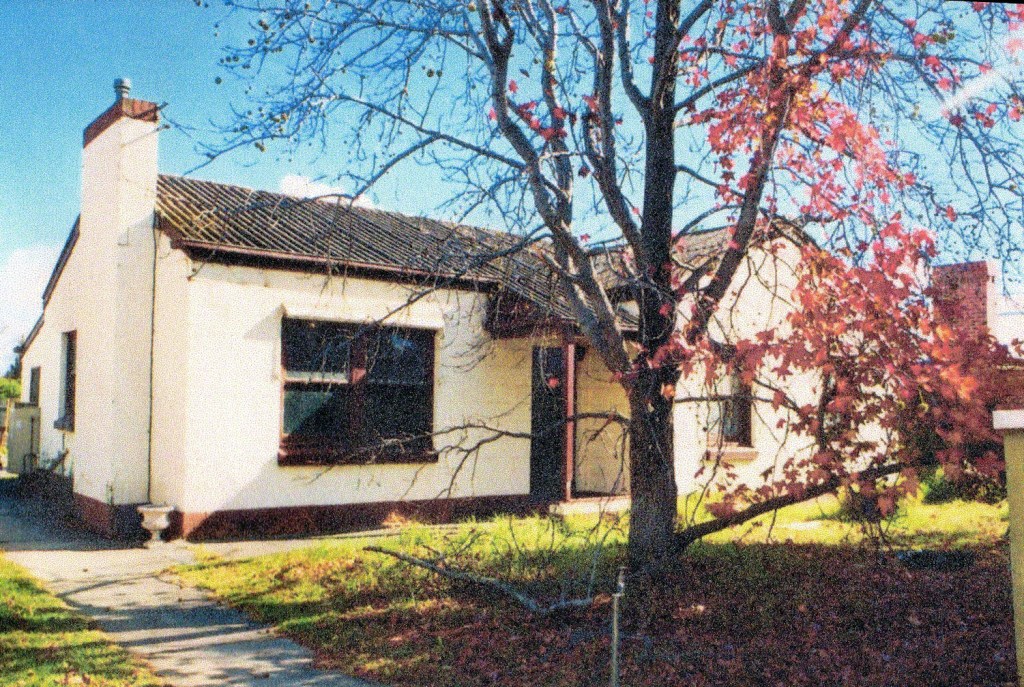
Feature photo: Somerton Park Trust Home © L.M. Kling 2005