Indie Scriptorium is beginning a new tradition in 2024. Every fourth Sunday of the month we will be featuring a guest writer.
This week, the Indie Scriptorium team have invited fellow Adelaide artist and writer, Robert Richardson to share a poem from his recently published book on poetry, Words and Rhyme.
Some months ago, Mary McDee wrote a post giving tips on writing good poetry. We had quite a bit of interest in the article and some further questions pertaining to the mechanics of an effective poem.
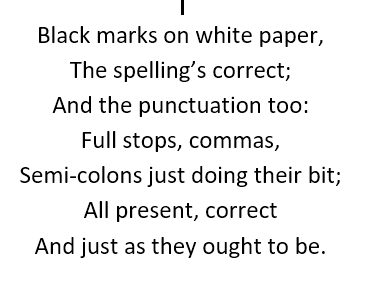
The following poem by Robert Richardson is an excellent and catchy summary of the main types of poetry and how to write them.
If you’d like to read more of Robert Richardson’s poetry book, click on the link below:
Cheers,
Lee-Anne Marie Kling (c) 2024
Feature Photo: Words and Rhyme cover(c) Robert Richardson 2023
Do you write poetry? Do you wish you could write poetry but are not sure how to go about it? And just what is poetry anyway; what is it that makes it different from ordinary prose?
It might help if we start with a definition. The Macquarie Dictionary tells us that poetry is:
1. A literary work in metrical form.
2. The art of rhythmical composition, written or spoken, for exciting pleasure by beautiful, imaginative or elevated thoughts.
There are two phrases in there that are the nub of the matter: “metrical form” and “rhythmical composition” both of which seem more applicable to music than to stringing words together (which is, after all, what we do when we’re writing). But this is as it should be for poetry and music have a lot in common – not only rhythm and metre but performance.
As far as music is concerned this is obvious. As far as poetry is concerned however many of us don’t realise that it is meant to be either recited or read aloud in such a way that one can feel the rhythm; a rhythm that can be quite subtle; a rhythm that can change to reflect a change of mood… But a rhythm that must be there.
In order to achieve this we have to, at times, adjust or deviate from the conventional rules we must adhere to when writing prose in order to maintain the rhythm and/or produce a desired effect. There are many ways to do this: by omitting a word like ”a” or “the”; repeating a word or words; using a word with a different number of syllables; using a word with a different sound e.g. changing a short vowel to a long one or vice versa…
Breaking the rules in this way is called poetic license and is perfectly acceptable when writing poetry – so long as it is done carefully and with good reason.
By way of example consider and compare the first (abandoned!) version of one of the verses from the poem “I want to be a writer but how do I do it?” that we blogged recently.
When I read this aloud to myself it didn’t “sing” right; it sounded clunky, clumsy and the reading didn’t flow easily. So it was “back to the drawing board” and I wound up with:
Much better, easier to read, flowed well to my mind. However, on re-reading since then I realise “precise” at the end of line 3 should be ditched, done away with, not necessary… Read it aloud both ways for yourself and see what you think re that word; those seven letters.
As with all writing – a work in progress!
By the way; poetry can rhyme; in fact rhymes often add a dimension and a level of enjoyment that would be lost in some poems. But rhyme is not the essential pre-requisite that rhythm is. Non-rhyming poetry is known as blank verse and is a legitimate form of writing; produced by such skilled practitioners as Milton (“Paradise Lost”) and Shakespeare.



 Indie Scriptorium -- Self Publishing Collective