Indie Scriptorium — Self Publishing Collective

Helping Each Other Publish

Skip to content
  • Home
  • About Us
  • Blog
  • Books For Sale
  • Introducing Indie Scriptorium
  • Links–More for You
Search

Writing trends

Writing Resource–Point of View

November 24, 2024 / lmkling / Leave a comment

Points of View in Story-telling
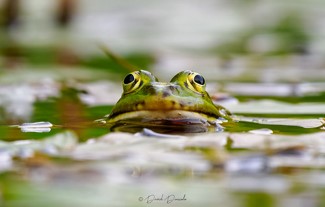
[This Photo by Unknown Author is licensed under CC BY-NC-ND]

This blog was planned to discuss Deep Point of View (PoV). However, as I went through the previous blogs published by Indie Scriptorium, I realised we had omitted to talk about points of view in general. I decided to do a quick catch up on this important topic for writers.

Point of View in writing identifies who is telling the story. There are three main points of view to choose from: first person, third person and omniscient. The second person point of view can be used but is rare in fiction.

Discussions about PoV’s can be complex and difficult to get your head around so I will try to keep it clear and simple.

  1. First person point of view – the story is written through the perspective of one character at a time and follows own their experience with everything else unknown to the reader. It is dominated by: I did, I saw, I thought, I felt etc. In most novels it follows only one protagonist but some books do have multiple first-person points of view. This PoV is mainly used for character development based stories and allows the reader to have an intimate relationship with the protagonists. It can limit the writer by its narrow focus but provides intimacy and immediacy. Applied to a frog it may read thus:
    I surfaced into a dull, grey day. The water is cold. My stomach is empty so I look to the sky for an available fly but there are none. I am hungry, cold and lonely.
  2. Third person PoV is a popular choice for novelists and there are a range of options which provide an author with a choice of perspectives.
    Third person limited (sometimes called Deep PoV) is when the author writes as if from the inside of the character. Everything is filtered through that character’s senses, thoughts, feelings, experiences and opinions. It is useful to use when you want to focus on one character as they confront the dramatic elements of your plot.
    The frog surfaced and felt the cold breeze. It looked around for flies and felt its hunger. There were no sounds of other frogs. It was alone. Third person remote is when the character is described as if from a point away from the character. This style is more useful when you want to focus on the plot and have multiple characters. The frog stuck it’s head out of the water. It looked around for flies but there were none. It went hungry.
  3. Omniscient – or “God view”, in that the story is told by someone who knows and sees everything. It was a popular way of telling a story in the past. Think of Charles Dickens or Jane Austen where the author’s opinions and reflections are important in the telling of the story. Frogs are tailless amphibians, cold blooded and mostly carnivorous with a diet of insects. They live in small groups on both land and water. The frog illustrated has typical bulging eye and appears to be looking for food.

Many writers tend to select the PoV that they find most comfortable for both reading and writing. I love books written from the third person PoV and struggle with first person PoV. So, when I started writing I naturally wrote in third person.

There are also trends in acceptable writing conventions. Historically the omniscient PoV was popular but in modern times first and third person PoV novels are most common. In recent times many people strongly advocate for the third person limited PoV as it engages the reader with the characters and makes the writing zing. In fact, some editors and judges of competition see anything but Deep PoV as poor writing. This has become a rule that deserves a separate blog, so stay tuned.

There are lots of good articles on line with further information about PoV. I found
Complete Guide to Different Types on Point of View: Examples of Point of View in Writing provided examples and exercises. https://www.masterclass.com/articles/complete-guide-to-point-of-view-in-writing-definitions-and-examples

Also look at the Jericho writers blog, Points of View in Fiction Writing by Harry Bingham. https://jerichowriters.com/points-of-view-in-fiction-writing-with-plenty-of-examples/

For a comprehensive discussion about PoV I suggest, Self-Editing for Self-Publishers by Richard Bradburn ©2020 Reen Publishing. (pages 315-335)

Cheers Elsie

Elsie King © 2024
Feature Photo: Frog © This Photo by Unknown Author is licensed under CC BY-NC-ND
Share this:

  • Share on X (Opens in new window) X
  • Share on Facebook (Opens in new window) Facebook
Like Loading...

Over-Exposed–Can There Be Too Much Showing?

August 11, 2024 / lmkling / Leave a comment

[This piece is so freshly written that the ink, if it were printed, would still be drying. It’s my thoughts on the subject of the value of “telling” in a writing world dominated by “showing”. I relate, here my own experiences as a writer and, being late at night here in Adelaide, South Australia, it hasn’t had the rigorous checks from the Indie Scriptorium team, or my mother. Please excuse any mistakes. They will be corrected in the next day or two.]

Telling vs Showing

I remember my early days in Writers’ group. Every time one of the members had a “telling passage” or a “was” in their sentence, the mentor went into meltdown.

So memorable her reaction to such writing offences, that, like the good writing students that we were, we avoided “telling” and “wases” as if they were the plague.

This “showing’ trend has flavoured storytelling since, I’m guessing, the advent of visual media, television and movies. So, at least the last hundred years. Before such time, literature was soaked in “telling”, passive voice and let’s not forget, the stodgy weasel words of the adverb and adjective kind. Read old news reports from the nineteenth century which you can on Trove, and you’ll see what I mean—weasel words as thick as treacle.

Why? In the past before television and movies, readers relied on minute descriptions to visualise the story. However, these days, “telling” all that detail sends the modern-day reader asleep. These days, readers prefer and enjoy “showing”. After all, isn’t visual media all showing?

Now, showing is fine. I attempted to find an article on the value of telling, especially since I believed that historical pieces and memoir would be more accurate and effective as telling—especially if a reader is researching and needs to gather facts as quickly and efficiently as possible.

Could I find it?

No. Na-na!

Gone with the wind and tide of proverbial algorithms to the bottom of the sea of blogs and posts. Thus, galvanising the rule that “showing” trumps “telling”.

So, as I was saying, for years I trained my storytelling craft to show and not tell. My first published novel Mission of the Unwilling is testimony to the triumph of showing over telling at all costs, an exemplar of page-turning, heart racing, showing and non-stop action in space.

The feedback? It was exhausting! Too fast-paced and gory images that the poor reader can never erase from their mind. Oh, well, the first is the worst, so they say.

As time progressed, the mentor moved on and the writers’ group grew up, I mean, matured as writers. Telling and the word “was” crept into our prose. When questioned, the more experienced, wiser writers replied, “What’s wrong with was?” Or “Telling moves the story on—as long as it’s not too much.”

I began to notice television shows such as “Arrested Development” and also famous people authoring their memoirs, use loads of “wases”, have heaps of telling, weasel words galore, plus plenty of passive sentences. And do you know what? I enjoyed watching these shows and reading these narratives.

But still, I soldiered on with showing with the avoidance of telling. I produced another four books which I published on Amazon. Yet, as time progressed, the occasional “was” crept in and stayed. Some telling did too. As did the weasel words. Was I getting slack in my old writing-age? No, such techniques balanced the storytelling and give the prose flow and rhythm.

Then, last year, I pulled out an old manuscript from 2010. Each week I revised, edited and then read a chapter from this story. No one complained. They nodded and said, “We can’t wait to hear what happens next.” I gave them all a completed copy to read as beta readers.

And here is where the story of that old manuscript becomes unhinged. Elsie King and my mother also received a beta copy. Now, keep in mind that this manuscript was written in the days when “show” was at its zenith in my writers’ group, and “telling” was to be hunted down and burnt at the stake.

Elsie’s report on the manuscript was scathing. She pulled the book to shreds and, apart from the idea I had, there was nothing redeemable in the manuscript.

Then, the nail in the coffin, mum started reading the story. “This is a disaster,” she said. “the prose is all jerky.”

Needless to say, I will not inflict the story on you readers for another ten years or so. Will take that long to fix it all up.

We figured out, however, that the main problem with this manuscript was that there was too much telling. Again, like Mission of the Unwilling, too fast paced with no place for the reader to rest. As for the “jerky” prose, that was also down to too much showing to avoid the passive sentences and “was”.

I might add here, I put the manuscript through the Microsoft Word editor, and it didn’t have anything good to say about the words written.

To conclude, what I learnt through this experience, was that telling does have its place. Telling is useful for pacing and to give the reader a rest after fast-paced action or high drama. In addition, telling, the use of the occasional adverb or adjective, or even “was” can help the words flow in the art of storytelling.

© Lee-Anne Marie Kling 2024

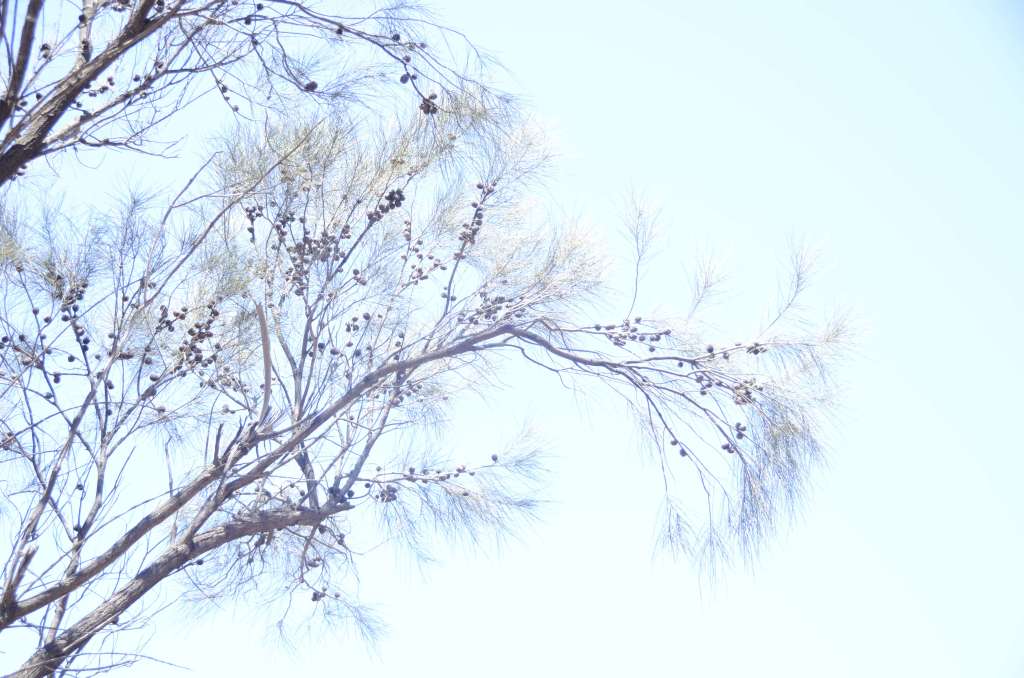
Feature Photo: Over-Exposed Native pine branches, Alligator Gorge Flinders Ranges © L.M. Kling 2024

Share this:

  • Share on X (Opens in new window) X
  • Share on Facebook (Opens in new window) Facebook
Like Loading...
Blog at WordPress.com.
  • Subscribe Subscribed
    • Indie Scriptorium -- Self Publishing Collective
    • Join 95 other subscribers
    • Already have a WordPress.com account? Log in now.
    • Indie Scriptorium -- Self Publishing Collective
    • Subscribe Subscribed
    • Sign up
    • Log in
    • Report this content
    • View site in Reader
    • Manage subscriptions
    • Collapse this bar
 

Loading Comments...
 

    %d