With the first day of 2023, comes resolutions…Maybe to start writing the book you have inside you. Here’s a quote from Martin Luther King found on Mrs T’s blog.
Recently, a friend from writers group asked me to find some information about the famous German writer, Goethe. While doing my own research on my ancestry and the Kaiser Hof Hotel Sonne in Nördlingen, I discovered that Goethe lived there for a year in 1788.
It’s amazing how life works and how the threads of our lives weave in and out. How our attitudes and values are influenced by how we see the world, and who we see in it. While Goethe was living in Nördlingen, Captain Cook in the Endeavour claimed Australia as belonging to Britain (as one would back then). And I wonder what Goethe thought of Nördlingen and my ancestors. Did he give much thought to the discovery of Australia and that someday, a little over a century hence, a descendant of those ancestors, or perhaps a relative who may have visited the hotel, would be emigrating to Australia with their family.
Or was Goethe instead mulling over Faust and completing the manuscript?
And then I consider my novels and the War Against Boris series, and how the evil character of Boris grew and developed in my imagination. Where did he come from?
And I think of Johann Wolfgang von Goethe’s quote from Faust that captures that we are the sum of our past, including ancestry, present and future, our destiny by how we see the world.
“A man sees in the world what he carries in his heart.” ― Johann Wolfgang von Goethe, Faust, First Part
I made it a goal to have a website by the end of this year. Achieving the goal is proving to be much more difficult and time intensive than expected.
The website builders are very keen to reassure that they can have a wonderful, professional looking website in a jiffy. That it’s an easy five, seven or ten-step process. That the website building is effortless and should take not much longer than 15 minutes, a couple of hours or a couple of days. It is all lies!
Building a website involves a stroll through an intuitive program, which guides you step by step to achieving your goal. They advise you get a template and just drag-and-drop things (from where I ask) replace their text and pictures with your own (but cannot tell you where the delete button is so you can get rid of the damned pictures.) Text boxes move, you get pushed into templates you never wanted and it’s very easy to delete hours of work for no apparent reason and it’s just hard work.
I’m halfway through building a site with WIX. I have a preconceived idea what I want my website to look like and am battling with a system that hates you having any creative innovations that don’t fit the bill. HELP.
Asking, do I really need a website makes quitting a viable option? But I want a website so I can put a web address on my business cards and attach them to my art and give them away to fellow writers and prospective readers. I want a web address on the back of my Christmas cards. I need a website for when I publish my books, organise an art exhibition or arrange a book launch. Web sites are important.
Ok, so I will persist and let you know how to find me on the web next year. Merry Christmas.
[Today I spent a few hours researching. Although I discovered some interesting facts, my experience became fraught with frustration as some topics related to family history and a hotel in Bavaria that my ancestors owned, were hijacked by sites advertising accommodation etc. It reminded me that certain computer hacks give precedence for traffic to go their way, leaving the blogs less visited languishing unseen.
With this in mind, here’s part 2 of How to Blog (without reinventing the wheel)]
Part 2 — Connecting with Others
Right, Networking — Think of your own life and how you live it. If you sit in your room and never go out and about, never go to parties or gatherings, never join clubs or interest groups, how is anyone going to know that you exist? I was out the other day with my mum and cousin. My cousin and I are both extroverts and have wide-ranging networks. At the restaurant, I bumped into a friend from art group. And at the bookshop across the road, my cousin met a friend. ‘I’m amazed,’ my mum said to my cousin and me, ‘everywhere we go, you meet people you know.’ It’s the same with blogging. It’s a worldwide community. But how is anyone going to know that your blog exists, if you don’t promote it? The simplest way to develop an online presence is to visit other bloggers’ websites and blog posts, like and comment. I have found that as I do this, Word Press (my platform of choice), sends the blogger a message to invite them to check out my blog post/website.
Right, Content — As with any publication, be respectful and avoid anything that might be offensive. A turn-off for me is rude words. Too many words of the four-letter and “F” variety, and some people won’t read or follow that blog. The Oxford English dictionary has officially 171,476 words, so surely, a writer of substance can find more effective alternatives to vent their frustration. Just my opinion. Another turn-off is the eternally looo-ng post. 500 – 1000 words has worked for me, both ways.
Right, Views — Photos, ones that grab attention and draw the reader in have worked in my experience, especially for my travel blogs. Readers love that virtual travel adventure. However, keep the photo files down around 1 MB, if posting a number of them. Otherwise, the post can take forever to load. Which can put off some readers.
Right, Guest Posts — What about inviting other bloggers to be a guest author on your website? I haven’t done this personally on mine, except for a few re-blogs of posts from other bloggers. But I have been a guest author on other bloggers’ websites and it has worked for me to increase my readership. It works both ways, though. A guest author gives fresh content and attracts more readers to the website. One website that works well for this is a website belonging to Mohamed Al Karbi.
Right Links — Facebook and Twitter have done this well in the past. There’s buttons and tick boxes in settings to set this all up so it happens automatically. Instagram, meh, hasn’t worked for me as it won’t link to my WordPress posts. The main advice here is to stick to one platform and allow the links to feed into it. It all depends on your audience and how they manage their social networks. These days I regularly get views from readers through Facebook, but most of my readers still come from WordPress.
Finally, this whole WWW thing is constantly moving and changing. Rather than give up and crawl into the foetal position under your doona, get out there, connect with others online, face to face, persevere and do your best.
Right Worldview — I like to think of the blogging community as a group, a world-wide group. Think of the local writers’ group you attend if you’re a writer. Then imagine that group spanning the globe comprising of every imaginable country and culture. That’s the breadth and beauty of blogging. But remember, each one of your potential followers are people, real people.
Right Mindset — Gathering those real people, followers takes time. Marketing likes to depersonalise the whole experience and calls those visits from readers “traffic”. They are not traffic, they are individuals who have searched for your particular topic of interest and taken the time to read it. When I first began blogging 7 years ago, one of my first international visitors was from the Bahamas. I imagined that person sitting on the beach sipping their mint julep, reading from their jewel-studded iPad, and dreaming of the Central Australian adventure I had written. Just one person but imagining that person made all the difference to me, that they had connected with my story.
Right Attitude — My first like (besides my faithful friends and mother) was a well-known Romanian blogger. He has written many posts on how to blog, so I feel, I don’t need to repeat his good advice in this article. The following is a link to Christian Mihai’s website, The Art of Blogging. My main takeaway from one article I read from there, was that if we don’t have the right attitude to blogging, if we are amateurish in our approach, we may spread our web of information wide, but we won’t touch many in a way that is meaningful or truly influential. And the reality about developing authentic relationships that change and grow us and others, is that they take time.
Right Timing — I think there’s enough on the internet about how to set up a blog and post, so, I won’t go into detail about that. Check out Wiki how for setting up a blog, or website. But what you need to do is be regular. Followers, once you get them, are creatures of habit and if you post once a week on a Tuesday, for instance, they will look for your post, once a week on a Tuesday. One of the frustrating things I found when I first entered the blogging community, was finding those bloggers who I liked. Some would seem to vanish into the vortex of the world wide web, never to be seen again. It took me a while to figure out that if I “followed” these bloggers, they would turn up in my “Reader Feed”. Other bloggers have mentioned that this is the reason they “like” posts. They then look at their “likes” to find their favourite bloggers again. Regular posting, I found, helped raise my profile in the plethora of websites and posts and make those blessed algorithms work for me. I knew that my blogs were rising like cream when I observed a reader emerging out of “Search Engine” in the stats of my post. When starting up my blog, though, I invited as many friends and family to follow my blog through email, and Facebook.
Right, Don’t Give Up — It’s three months into you’re blogging venture, and nothing; not a hump, nor a bump raising those statistics. ‘I don’t know,’ my mother said, ‘no one has visited my posts in ages. I think I’ll give up.’ And yeah, it seemed as though the WWW “gods” were doing everything in their power to squash my mother’s enthusiasm to continue. As they tried to do some years before with my blog. As they have done with a number of writer friends of mine who have set up blogsites or websites and then with a failure to thrive, they have silently let them slide into obscurity. Again, it takes time for your website or blogsite to gain traction. Just be patient.
So, you’ve finished, or nearly finished, your novel. It’s written, rewritten, edited probably at least five times, given to beta readers for feedback, critiqued by writing friends or in writing groups and taken up a large part of your life.
Whether it took you years or months, a novel is a major investment in time, energy, sweat and tears and when the manuscript is finished, you don’t want it to languish in a bottom drawer. It needs to be read.
Marketing is the hardest part of self-publishing. It’s estimated that there are over three million books on Amazon. They publish 50,000 books a month and they are the largest company for self-publishing authors in the world. They release a new book every five minutes. It’s a lot of competition. Your book has to be seen, talked about and hopefully bought in order for it to get ahead of the thousands of other books being published. Marketing is the way to get your book noticed.
Before coming up with your marketing plan, it may be helpful to consider what you want for your finished book.
Do you want to make writing your career? Intend to write many books and earn enough money from sales to give up your day job. This means a commitment of long hours for the rest of your life. Writing will become a business and a passion, and you will need to build up your name to ensure you have lots of buyers for your products.
You may enjoy writing fiction as a passion, an activity that gives you pleasure, and you want your books read by an audience. This is the category where I am. I want my books to be the best they can be, to achieve a professional standard, but I’m not dependent on an income. I don’t want to put pressure on myself to write what sells and have to achieve deadlines.
The third type of writer may want to write their memoir or family history, or contribute a non-fiction book. These authors may have a smaller audience, although some biographies and memoirs sell well on the open market.
Another author may write for purely personal reasons, using the medium of writing to express their creativity. Often these writers contribute to anthologies in writing groups or may have a body of work that they want a book to share with family and friends.
All of these authors can self-publish a brilliant book, but their goal for book distribution may differ from a professional writer.
Back to the question: Do you need a website? If you want your book read and consider writing more books in the future, a website is a good idea and is worth the effort to get one up and running.
A website in simple terms is your address on-line. It’s where people can find you by searching online for your name and what you do. For example: www. elsieking/author.com (not in operation yet). You can sell your books from the website, advertise books you are writing, you can tell your readers about your life, passions and ideas. A website may also be a blog or newsletter where you share your writing tips. The website lets you connect with your readers and get reviews.
A website can be a simple page with minimal details (a landing or home page) or a more complex beast with links to social media, e-mail marketing, newsletters and contacts with other authors.
I’m a newbie with websites. I know they can be expensive to have made for you, but much cheaper to make one of your own using a website host such as WordPress, Square Space, or Wix. Don’t believe the adverts about creating your own websites. It is not as easy as they say. But it is fun to experiment with some website builders.
My advice, consider if you need a website. Research some of your favourite author websites and look at the plethora of YouTube videos that tell you how to create a website. (I found most of them too quick and get through too much information. They also use acronyms which they don’t explain. Find one that works for you)
If you decide to try it, be prepared with a catchy by-line, have a succinct but interesting author bio ready and think about what graphics, fonts and colours you want.
I’m a techno dinosaur, so I expect it will take me many weeks to construct my website. I’m learning as I go and have discovered you can create a website, delete it and start again and play without having to commit to publishing until you have it just right. When I get it right, I will do another blog to discuss the process, I found helpful.
If anyone reading this blog has some personal experience with building a website, please write an e-mail to scriptoriumpublishing@gmail.com We’d love to hear from you.
A relative mentioned how in choosing a book to read, they kept on overlooking and dismissing one with a rather plain cover. Finally, they ran out of options and decided to give this book a chance. To their amazement, they thoroughly enjoyed the story—a real gem. They recommended we read the book.
Although we are taught from young to “not judge a book by its cover”, in the reality of today’s world of competition, advertising and marketing, the cover of our books is vital. Plain cover—overlooked. An eye-catching cover—a potential sale.
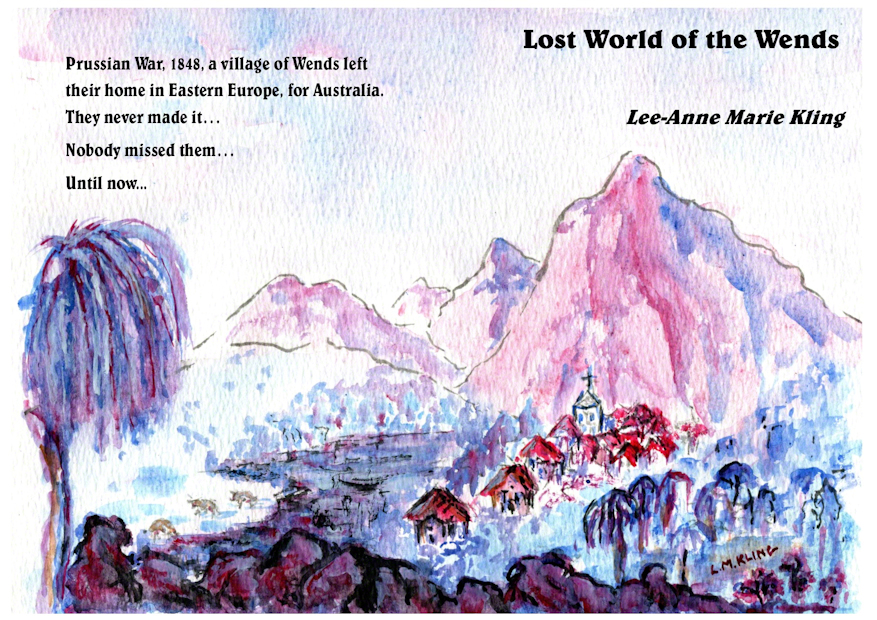
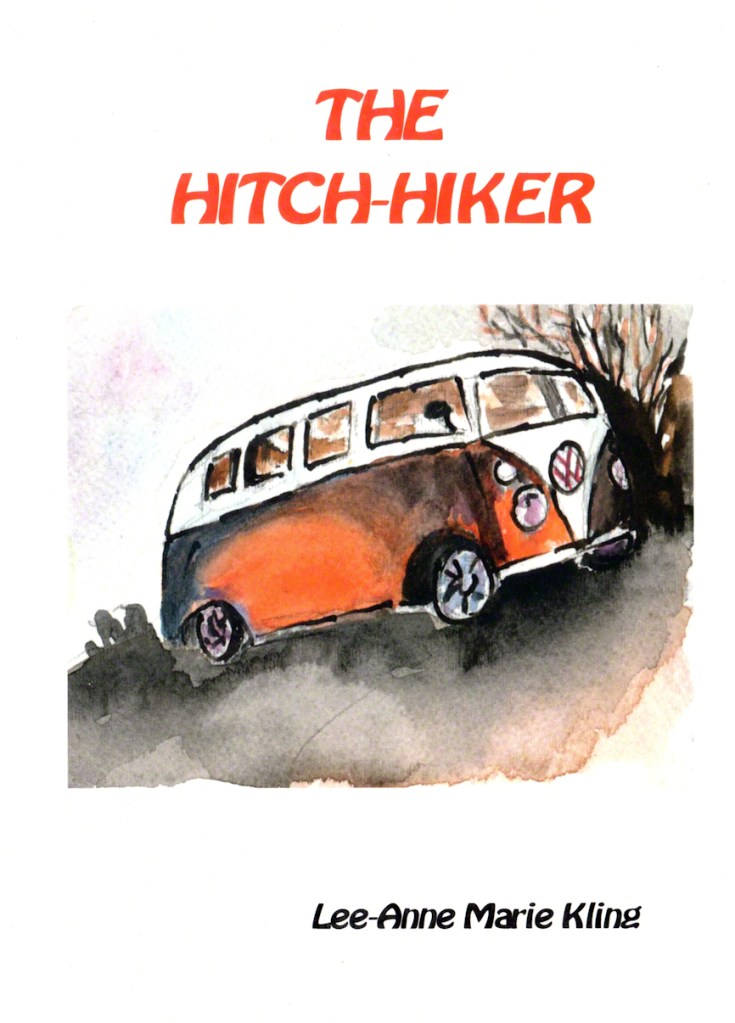
And so, we come to my first novel, Mission of the Unwilling. My team members at Indie Scriptorium advised that although its cover was, well, pleasant, it wasn’t up there, and well, dare I say it again, eye-catching like the covers of my successive books. They said that the covers of my war on Boris Series, The Hitch-hikerand The Lost World of the Wends, being my artwork, had more zing.
I did some research about marketing. Discovered that a book series needs to have features that set it apart and are easily recognisable to the readers who are following the story. Suggestions were: artwork that reflects the genre and story, style, typeface, colours, same size books, and of course, the blurb at the back that hooks the reader.
Back to the proverbial “drawing board” or my collection of artworks for a suitable cover for my first novel. After all, I was planning on revising it and releasing a second edition. Around the same time, a fellow artist, Liz Maxted, had painted a UFO scene. Impressed, I asked if I could use it for a cover of one of my future novels. She was thrilled and allowed me to borrow the painting to photograph.
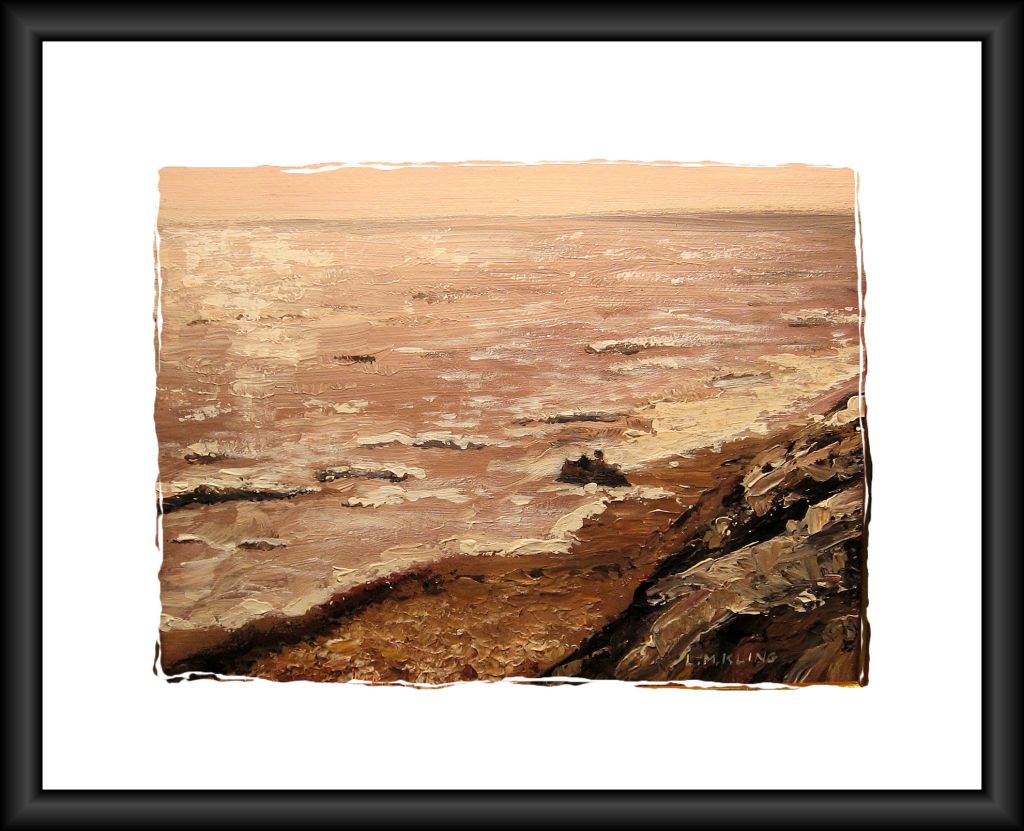
As it has turned out, when working on the new cover for Mission of the Unwilling, Liz’s UFO fits perfectly, hovering over the Sellicks Beach cliffs of my watercolour.
I also changed the blurb to fit with contemporary issues, that being in Mission of the Unwilling’s case, the scourge of bullying and the victim rising above their identity of unworthiness to becoming a hero.
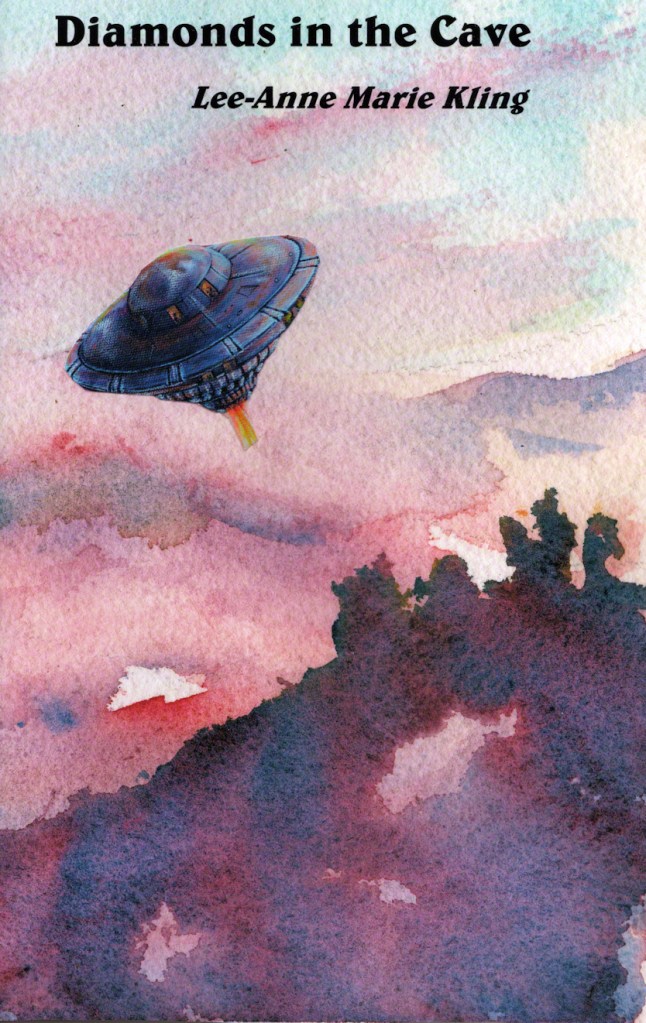
Then, on a roll, I created a cover for the sequel to Mission of the Unwilling, Diamonds in the Cave. And again, Liz Maxted’s UFO fits seamlessly in the mist and clouds of the Mount Martin range of the Pilgrim Planet. In Diamonds in the Cave, my heroine, Minna as a teenage mother, grapples with loss, her mental health, and the issue of witch-hunts plaguing the town.
I’m hoping Diamonds in the Cave will be ready for release soon. Just have to read through it once again, before handing it over to my Indie Scriptorium team to test read and edit. As I said at the beginning, in these competitive times, books are judged by their covers, but the inside needs to match up with good standards too.
[Currently, I’m editing Diamonds in the Cave, the next novel in my War on Boris series. This article, though first posted five years ago, is a pertinent reminder of all that the editing process involves.]
Editing—No Writer is an Island
Some time ago, a member of our writers’ group published a book.
‘I don’t want to tell anyone,’ they said, ‘because I needed a lot of help.’
Certain members of the writers’ group ensured they revealed and celebrated the news; their achievement was our achievement. A book doesn’t happen in isolation; it’s a group effort. Just as a village raises a child, for the best outcome, a community or group births a book. There’s the writer with the ideas, then comes the editor, test-readers, friends and family, the proof-reader and finally, the audience, the readers out there in reader-world.
We write stories for readers, that’s why the editing process is vital. A story needs to be readable to be effective. Readers need to understand the story to enjoy it. It’s the reason language, especially written language has rules for grammar, spelling, and the art of storytelling has a structure.
So, you’ve finished your masterpiece, but now the challenge: how will you go about editing your work? That’s where the writers’ group comes in. Fellow writers are your work’s first point of contact. Their reaction to your story will tell you if your creation is a winner or a flop. Either way, there will be more work required to perfect your piece of genius—more pen to paper, more fingers tapping on the keyboard, more pain and hair-pulling before your work can be “birthed”.
Once you have completed your work, file it away in a drawer for about three months. You need distance between you and your “baby”. When you revisit your work, you may be amazed at how brilliant you have been putting all those words together in such a clever way, or be horrified at how the gremlins of grammar, spelling, typos, weasel words, repetitions, and so on have bred and multiplied. With fresh eyes, you’ll see ways to improve your story, thus creating your second draft.
Repeat the process of draft and distance until you feel it’s ready to meet fresh eyes that don’t belong to you. But who?
Ever had trouble getting someone to peruse your work? Suddenly, they’re all busy. Or they take your story and sit on it for months, years… Again, happy are those in a writers’ group. Or be bold and blog. If you are wanting to sell your novel down the track, having a http://www.presence and band of followers may help.
For those finishing-touches to refining your work, you may seek out a professional editor. When paying an editor, ensure that you define the time and rates in a contract. For Trekking With the T-Team, I negotiated an hourly rate and a limit on the number of hours the editor would work on my book.
There are two types of editing: big picture and proof-reading. Big picture editing looks at the plot, pace, character development, language use and content. Proof-reading deals with the technical side of the work such as grammar, spelling, and formatting. But as my friend who’s an editor said, ‘It’s hard to separate the two. If the content and ideas trigger you, then it’s difficult to be objective and it affects how you respond to the piece.’
So, while it may be preferable for an editor to be outside the genre in which you are writing, it may not work for your book. A good editor, of course, is impartial, but they are still human and will approach your story from their worldview. And on the other side, we as writers are human and see the world through a filter of attitudes and the way we see ourselves. A good editor who is paid, then, is only as good as the receptiveness to feedback of the writer who pays them. After all, you are paying for that objective set of eyes, and feedback based on their experience as a reader and what they perceive as good literature or entertainment. In the end, whatever comments an editor makes, it’s up to you, the writer, to implement those changes—it’s your work, your story.
The last step of editing is proof-reading; the nit-picking of the piece before it surfaces for publication. Ernest Hemmingway, in an interview for The Paris Review (1958), said that he rewrote the end of Farewell to Arms 39 times before he was satisfied with it. However, each writer is different. I use five different coloured pencils: 1) grammar, 2) spelling, 3) word-use, 4) formatting, and 5) content. That being said, I am sure I have perused my works near 39 times by the time it reaches the Amazon shelves.
Other tips: • Reading out aloud helps with sentence structure, flow, and the art of storytelling. Even better, if you can bear it, use a voice-recorder as you read out your story, and then play it back. • Line by line editing. Print out your story and then use a ruler under each sentence to concentrate on each word. Effective for exposing typos and formatting flaws. • Start with the last chapter first, and so work through your piece backwards. Again, helps with plot-holes, character consistency and pacing. • Have an English grammar book and a dictionary within reach, for you’ll be reaching for them repeatedly. I’ve discovered that an online dictionary, or Google are also reliable resources, but beware, as dodgy information slips through the cracks of the Internet.
In the end, it’s up to you, but it’s also a group effort. We are all part of the larger community collective of writers, readers, sharers and receivers of ideas. And I cannot stress enough, the more you read, the more effective your writing will become. We learn from each other.
“You need a sparkling synopsis.” ~ Fiona McIntosh 2015
So, what do you need after you have edited your novel? If you intend to submit it for publication or to an agent, a synopsis is a requirement. Even in self-publishing, a synopsis is a great exercise to summarise your novel for marketing and creating your blurb.
A synopsis is more than a summary of your novel. It must capture the attention of a publisher or agent. A working document, it condenses your plot succinctly, introduces the major protagonists, defines the conflict, and ties it all up into a logical and satisfying ending.
Announce the title and mention the genre, word count, setting and era.
The synopsis must be short and easy to read. I recommend one page. Single spaced with a word count of 500-700 words but if submitting a novel for a competition, agent, or publisher check if they have specific requirements.
Grammar, spelling, and word selection must be perfect. The synopsis is selling you as a writer. Get it checked by someone with editing skills.
Write in the third person and use gender neutral language. E.g., police officer, not policeman.
Cover all the major plot points, including spoilers and the ending. There should be no mysteries in a synopsis. The publisher wants to know you have finished the book, and it has a great ending.
Name two or three of major protagonists and their motivations. Bring them alive. Demonstrate how they grow and change and make them shine.
Clearly convey the tone of the novel but the emphasis is the story, allow the theme to sneak in without belabouring the point.
Avoid praising yourself in a synopsis or include positive reader reviews.
Expect to write, rewrite, rewrite and then do it again so give yourself time to get it right.








 Indie Scriptorium -- Self Publishing Collective