I WANT TO BE A WRITER BUT HOW DO I DO IT??

Feature photo: Tassie Trees Lake St. Clair, Tasmania © L.M. Kling 2016
Feature photo: Tassie Trees Lake St. Clair, Tasmania © L.M. Kling 2016
When asked to write on this topic, I thought, What am I going to say that is new and enlightening? Another “reinventing the wheel” moment was creeping up on me and I seriously considered deferring the topic for a later date.
Glad I didn’t.
After some research, mostly on the trusty internet, I discovered some gems of information that I never knew before or had forgotten. Or is it a case of changing trends?
I first published, indie-style, back in 2015 through CreateSpace. After diligently doing my research on formatting and fonts for producing a hopefully professional quality print book, and then following the advice given on CreateSpace, I converted my Word document to PDF and uploaded it to the scrutiny of CreateSpace. After a week of uploading several more corrected copies of my book, getting the margins, formatting right and ridding the document of that mysterious phenomena, embedded text, finally “they” were happy and congratulated me on successfully publishing my book.
Ah, those were the days.
Since then, CreateSpace has been taken over by Amazon. Which is fine. Amazon also has plenty of advice and a step-by-step process to make the whole ordeal of uploading one’s precious work for publishing a pleasant experience.
So, asked to do fonts and formatting and I thought, Simple; for formatting, use template provided by Amazon, or whoever one chooses to go with to print one’s books, and select a popular and familiar font that is reader-easy. How hard is that?
When I began the research, I began to understand why. In the eight years since I published The Hitch-hiker and Mission of the Unwilling, changes in how to present one’s body of work had crept in.
So, thus enlightened, here are…
10 new, and maybe not so new, facts I have learnt about fonts and formatting:
Fonts that come with Publisher do not have license restrictions, which means they can be embedded in your publication and printed anywhere. Fonts that do not come with Publisher, however, might be restricted.
Well, that’s good to know. After all, we pay a yearly subscription for Microsoft Office, so there should be some benefits.
4. Popular font “Garamond” has been around since the 16th Century and was invented by Claude Garamond who was a Parisian engraver.
5. Avoid downloading free fonts. You might end up downloading a virus.
6. Your font is recommended to be 12pt in size. Well, that’s news to me. Way back in 2015, the recommended size of font was 11pt. Are readers’ eyes needing a larger font?
7. Line spacing is recommended now to be 1.5 spacing. I must confess that a little more space between the lines is easier on the eye. Now, with my novella, The Hitch-hiker, I formatted with double spacing and I felt that the book looked like it was aimed at junior high school level. However, with my other books, I had the normal 1 space to minimise the number of pages. More pages in a book, more the book costs.
8. A popular print book size is 15cm wide x 23cm tall. That’s with the book closed. When put into print form on the page, the spread of the two pages side by side is 30cm across. However, there are options for variation. Your professional printer or publishing platform should provide you with the options. For breathing space, set your margins to 2.5cm on all sides. I remember reading a very popular fantasy book bought from a well-known bookstore. The margins in that book were too narrow. After reading for hours, I suffered cramp in my thumb after pressing the spine to hold the book open to read this very thick book. So, be kind to your readers and don’t give them thick-book-narrow-margin thumb. Again, your printer/publishing platform should have parameters for you to follow. They might even provide a template into which you can copy and paste the body of your text.
9. For fiction writing, indent paragraphs by 1cm. For non-fiction, paragraphs can be divided by one line space. Check other books in your genre to see what the formatting conventions are and follow suit.
10. Don’t forget to insert page numbers. No need to number the title page, though. Odd numbers are on the right hand page, and even numbers on the left.
What do you know, once I get started, I virtually can keep on going. However, there’s plenty of information offered on the internet, or in books on the subject. Below I have listed references I have found useful to help you on your way to publishing your book/s.
Wishing you all the best as you tackle this next stage in indie publishing.
© Lee-Anne Marie Kling 2023
Feature Photo: an example of my MAG newsletter editing © Lee-Anne Marie Kling 2023
We writers all want to be published, don’t we?
Feel the pride and joy of seeing the product of our labours (complete with our name on the cover) flying off the shelves of bookshops. A dream come true!
But first we have to deal with the process of publication itself – no easy undertaking for most of us. The thing to understand before launching ourselves into this world is that there are essentially three roads to choose.
The first is the so-called “vanity publishers” who, like ravening wolves, are out there ready to prey on the innocent and uninformed. A few weeks ago we told you of a friend of ours caught by one. It cost her a great deal of worry, financial loss she could ill-afford and, along with lies and empty promises, only a single copy of her work. These people are out and out rogues; sweet talkers who make sure they operate within the law so you have no redress. Avoid them – your dreams will be shattered.
The second road is right at the other end of the scale, eminently honest, respectable, ethical and helpful IF you are fortunate enough to have your work accepted – and that’s the rub, the sticking point! Getting accepted when you are a newbie writer or do not yet have a reputation in the wider world is not impossible. But highly unlikely.
I’m talking here about the big, well established publishing houses e.g. Penguin, Random House etc, etc. These people are in business which means they must make a profit. If they don’t they will be unable to stay in business. Consequently they will not accept anything they not fully convinced will sell and sell well. Anything they do accept they will work very hard to ensure is saleable. And they will expect you to work along with them to achieve this. That is the reality of the situation.
The other reality they have to deal with is that they receive a great many submissions from hopeful authors, often to the point of inundation. These are assigned to what has been elegantly termed “the slush pile” to be looked at (maybe assessed) sometime in the future when things are a bit quiet or when someone, for some unaccountable reason, has a little time on their hands or when… Your submission may not surface for many moons; you may never hear from them. Sad but true. Just remember, they are running a business and if a business is not run in a businesslike way it will not survive.
However, if by some magical happenstance your work is accepted you will be offered a contract which is a binding legal document so you must read it carefully before signing, regardless of how excited, delighted, up in the air, over the moon you are. At that point your precious manuscript will be given to one of their editors whereupon you may be tempted to feel this picky person does not appreciate the deathless prose you laboured over so long and so hard. However, you will be expected to be polite, to acknowledge that this person is good at their job and has years of successful experience behind to back it up. It behoves you to listen and co-operate!’/
The publisher deals with the printer, pays the bills and arranges distribution. This last (distribution) is an aspect of the whole shebang that you will probably be expected to contribute to by being part of author signing events in bookshops; by giving talks about your book or maybe being interviewed. If you do happen to make it onto this road – heartiest congratulations.
Not many do though – make it on to that second road, that is.
In which case, you will probably choose the third road – self-publication. Nowadays this is a viable and worthwhile road to embark on. But one with many ins and outs which we plan to go into in full in future blogs.
© Mary McDee 2023
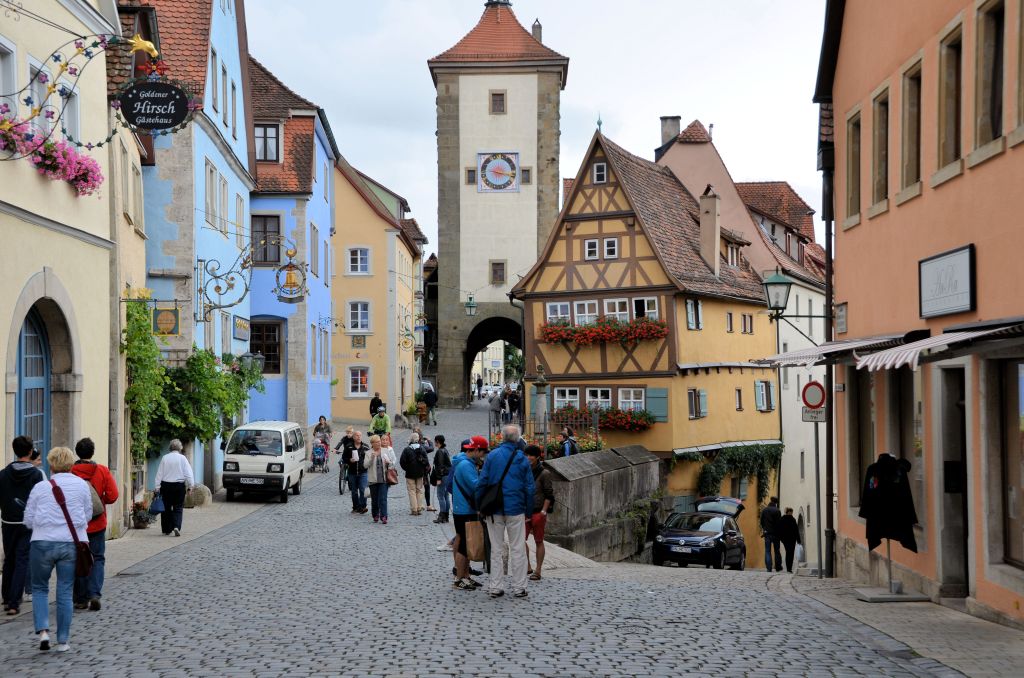
Feature Photo: Where two roads meet–Rothenburg ob der Tauber © L.M. Kling 2014
Tips to Keep in Mind when Planning on Publishing

Writing is a solitary affair. At times we just want to get onto paper all the stuff that is going round and round in our heads; clogging brain cells; clouding thinking; preventing us moving on. Writing can be very effective for dealing with all this. In which case it is the end of the story; a done deal; filed away and forgotten. We get on with life.
However, for most of us, most of the time our efforts are not therapy but creative, stimulating, exciting and fulfilling. When we write this way, virtually all of us want those products of our creativity to be out in the wider world; read by others; appreciated and responded to. Don’t we all want our babies to be admired?
So it’s at this point that we enter the world of publishers and publication – a world that can be fraught with danger, difficulty and potential disaster.
A couple of weeks ago we told the sad story of friends of ours caught up by a vanity publisher. The joy of having been “accepted” by a “publisher” has turned to frustration and financial loss for them. Fortunately, for them, the disappointment and disillusionment has not killed the urge to write – but it could well have done so.
We have become aware that there seems to be a lot of confusion and misinformation among newbie writers; those of us with big dreams but little experience. This is a confusion we hope to be able to clarify for those of you who are finding the whole thing a bit of a puzzle and are not sure which way to go.
Point #1:
All this publication stuff is a big and complex issue. It will take some time and more than a few words to explain what is involved so we hope you’ll be able to stay the course and give us feedback if we do not make things clear and understandable.
Point #2:
Publication is linked to “publicity” – a word my big fat Macquarie dictionary tells me means (among other things!) “the measures, process or business of securing public notice” and also (but denser and less comprehensible) “the state of being brought to public notice by announcement; by mention in the mass media or by other means serving to effect the purpose”.
Point #3: Printers and publishers are different; connected but different; playing different roles; fulfilling different niches in the whole deal. They must never be spoken of as if they are interchangeable because they are NOT. Publishers use printers but printers are not publishers. They are merely one aspect of the publishing business; one cog in the system as it were, – a critically important cog to be sure but one that, as part of their own business has nothing to do with publicity; i.e. “securing public notice”.
In future blogs we will go into detail about various specific aspects of this whole deal.
© Mary McDee 2023
Feature Photo: Scene for inspiration, Glenelg South Beach © L.M. Kling 2023

If you have made yourself a website, please pat yourself on the back and feel proud. The experience is challenging, but it is a wonderful way to boost your skills on the computer and get to understand the way modern businesses operate.
You need to know how to use your website and make it popular. Some people are happy to use a website to communicate with an audience, to inform, educate and entertain, but they will still want to know if they have an audience. However, most people with websites will have something they want to advertise and sell from their website.
Indie Scriptorium is mainly a self-help information website that shares the trials and tribulations of our members as we learn about the complex business of self-publishing. But it is linked to our individual web sites where we sell and advertise our novels and art.
The Indie Scriptorium website is built with WordPress, a popular web building site that can be started up for free. The WordPress program allows you to view who is using the site, where they come from in the world, how long they stay on the site and what are the most popular pages of the site. WordPress also allows people to follow the website. The goal of any website is to get more and more followers.
Analytics–the first step in building a better website is to learn how to access data about who is using your site, and then gain an understanding which part of your website attracts the most attention. What’s working and what isn’t.
WordPress has built in analytics, which provide quick reports on what traffic is coming to your site. It is a program called Jetpack Stats. For more complex analysis, you can also use Google Analytics, which provides a more complex analysis of how visitors to your site use the site.
As a newbie to my own WIX site, I’m still learning how to read the traffic reports. I’ve found it’s a matter of logging into the WIX login page and the site takes you to the Analytics page first. If you then click on the site sessions and post views graphs WIX takes you to another screen and gives you a breakdown of how many people visited, how many were unique and how long they stayed on the site. It also provides a lovely map of where your visitors live in the world. I also use the blog activity graph which provides information about how many people visited each blog so you can work out what is popular for future blog posts.
A good way of attracting visitors to your website is by posting regular interesting blogs that attract regular followers. It is recommended that when you blog you use key-words that attract the right attention. For example: Indie Scriptorium is aimed at people who want to self-publish their books. Our blog titles are therefore important and should contain key-words that attract people searching for self-publishing information. Blogs are most effective when posted regularly. They need to be researched, timely and well written.
There are many ways to build a better website. I have discovered a wonderful website ran by the Queensland Government, which provides excellent information for new businesses. Try browsing https://www.business.qld.gov.au/running-business/marketing-sales/marketing/websites-social-media/building-managing-website
I will do additional research as I try to master the whole new world of websites, marketing and getting your books into the world.
Please let us know if you find our articles helpful and provide any tips, ideas or suggestions to share with us at Indie Scriptorium.
Cheers Elsie
© Elsie King 2023
Feature Photo from Creative Commons
Search Engine Optimisation
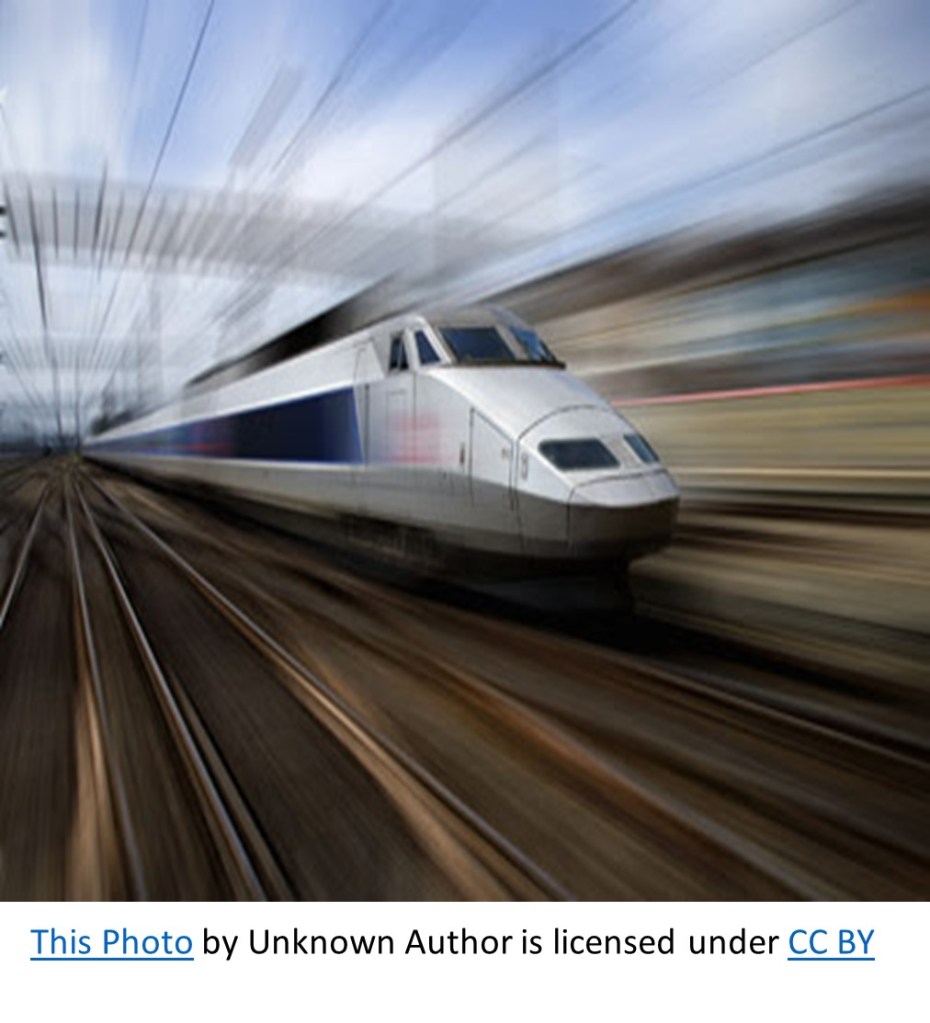
When it comes to a search engine optimisation (SEO) you want a bullet train rather than a puffing billy train. The speed of someone finding your site is important apparently, and I wondered why?
Search Engine Optimisation is best described as a process for getting the right people, and more of them, to your website. This is very important if you want to sell something. For authors it may be a newly published novel, a book launch or a date for an author signing. For artists, it may be a painting for sale, news about an exhibition or sets of your original artworks printed as cards for sale.
Not all websites are about selling. Blogs can build your personal brand online, becoming an influencer, or just sharing your thoughts and ideas.
So, you may need to think about SEOs when you start up your website. My goal was to have a place where a person can look at my novels, have a link to buy one and find out about me as a person and writer. So yes, eventually I would like to bring people to my website to increase my sales of books and possibly art as well.
There are about thirty different big world-wide search engines and many more that offer specialized and local information searches, but the biggest is certainly Google.
I love Google. I’m constantly using it for many things, weird, wonderful, entertaining and useful. As a writer, I zip in and out of Google all the time. Lots of other people do too. It is the most visited website in the world and enjoys 92% of the SEO market. It’s rather magical really, how you put a few words in a box, press a button and Wham-O you get the information you need. But it does more than that. It can give you pages and pages of options to browse through until you find the best one, and that one site probably has the best SEO and comes up number one on page one. And that’s where you want your website to be when someone is looking for a book to buy.
It’s not magic that gets your website up the front, but it is a complex process involving crawling spiders, algorithms, keywords and black and white hatted hackers. Too much information for this little black duck, but do browse Wikipedia’s SEO explanation for all the details.
Having decided that my aim is to sell my books and art (publishing will happen later in this year) what I needed was some tips for making my website a good place to visit now. Good old Google comes up with a wonderful list of tips for getting your website noticed. (Optimize your site for search engines for beginners.) They provide some simple guidelines which I will briefly mention here.
WIX also has some good short tutorials about SEOs and marketing. I will address these ideas in my next blog.
If anyone reading this wants to share their own experience with building up visitors to your web sites, then please contact us at Indie Scriptorium. We would love to hear from you.
Cheers Elsie King
©Elsie King 2023
Photo supplied by Creative Commons
Marketing Books and Monopoly—My Journey around the Board

Recently, my brother introduced me to “Monopoly for Sore Losers”. Since, in my family I have the reputation from childhood, reinforced and maintained by those around me as a “sore loser”, I had to get it. As I played the game, I realised how much marketing and being a dominant player on the internet, is like Monopoly and Mr. Monopoly from the “Sore Loser” edition, like the “Best Sellers” on Amazon.
Now, about marketing, I’m not an expert by any means. But, since I began this indie-publishing journey back in late 2015, I have learnt what works for me.
This last summer, for me in Australia, I have been concentrating on the “housekeeping” side of marketing my books. Thus, my first, Mission of the Unwilling, had a makeover and re-released as a second edition. Then all four books cycled through their five-day free promotion on Amazon. Next I’m looking into paying some money for advertising.
It seems my marketing skills have a way to go in gaining a monopoly on Amazon shelves and being sold. You see, marketing and advertising one’s product, my books and artwork, takes time. The issue with time is that I’d rather be creating than slogging away pushing my product in an already saturated market.
When I started on this journey, I, like many a writer, thought that mine was the great (insert country) novel, that readers will be hanging out to get their hands on. The book would sell itself. It didn’t happen, as I dreamed.
A foray into the publishing world, and its history reveals an unexpected picture. Although amazing authors and brilliant books exist, and are sold in abundance world-wide, the literary world is full of mediocre tomes stacked on the shelves of bookshops and online distributers. Some are bestsellers.
How, is this so?
Answer, effective marketing. Often, especially with traditional publishing, the writers have a “platform”. Traditional publishing is a business and they go for the safe option—someone who is famous or becomes famous through their authored works. They bank on reader curiosity, who sells well, has a “brand” and longevity.
Needless to say, I didn’t have a “platform”. However, I have been developing a network and influence through my “blogsite” and Website, “Tru-Kling Creations”, and most recently this publishing collective, “Indie Scriptorium”.
The challenge with my blogsite when I first started was to make it visible. Way back in 2015, it was so buried by the competition, that I couldn’t even find it—even when I typed in the precise address.
After embarking on some more research, I discovered a phenomena called “algorithms”. To put it simply, think of Monopoly; the more properties you acquire, the more likely someone is to land on you.
In my blogsite’s case, the more visitors you get, the more visible your site becomes. The “Mr. Monopolies” of the cyberworld actually employ computer experts to manipulate the algorithms. That is how a mediocre book can become a bestseller.
So, how do we, the so called “Plebs” of the internet, compete with these “Mr. Monopolies”? How do we get our blog/webpage onto page 1? How can our masterpieces rise to the top like cream and become bestsellers like they ought to be?
Well, first make sure our books are the best they can be. Start with good editing and proofreading. Check out Indie Scriptorium’s posts on editing. Then once you and your test-readers are satisfied with your product, then the next step is marketing and advertising. This includes doing your research, figuring out who your audience is, and pitching to your potential readers.
As I wrote before, I found that blogging and setting up a webpage has worked for me. I now have over 550 followers of my blog. But it has taken time. I found that inviting friends and family to follow, visit and like my posts helped boost activity. This then led to a wider-worldwide audience. I persevered. I’m still in the game. Even though I am not like some bloggers who have thousands of followers, I am encouraged when I get visitors who come via the “Search Engine” as it means my blogs are visible.
It’s the same with our books and the competition from the big sellers, those Mr. Monopolies of the book world. True, the mediocre best sellers will have their time in the sun. But, it won’t last. Good literature, I believe will shine through in the end. I realise now, that my novels are not the great Australian work I had dreamed they were, but for some who have read them, they have found great enjoyment, and are asking, ‘When’s the next one coming out?’
© Lee-Anne Marie Kling 2023
Feature Photo: Product placement; another way of advertising (and it’s not just Monopoly) © L.M. Kling 2023
[In response to Elsie King’s post on Website building, fellow writer, Mary McDee shares her insights on the challenges of technology.
I have abbreviated this Shakespearean quote somewhat, out of respect for space…and cats. Especially ones who get caught up in webs as my cat Storm has the habit of doing. ~ Website Editor—Lee-Anne Marie Kling]

I don’t know about you but, as an acclaimed techno klutz, I found last week’s blog “Building a Website” totally fascinating, easy to follow and, I must admit, thought provoking.
I admire Elsie King’s honesty in addressing her difficulties and the downsides of her ‘adventure’. Publicly admitting to being ‘technologically challenged’ does not go down at all well with many in this day and age as I well know!
There is absolutely no doubt that computers, indeed the whole current techno world of today, has brought many advantages with it: made life easier, more efficient and, in many instances, much faster. I’m also sure we’re all well aware of the pestilential problem of hackers – a major downside of the current techno revolution.
To my mind however, this business of hackers is far from being the only downside of our brave new world. Let me explain by telling you of the revelation re computers that hit me a few years ago.
At the time I was coming to the end of a Permaculture Design Course I’d been doing for quite some time and was thoroughly enjoying. It was assessment time! This involved working with a partner or small group to develop; then present to the whole group an actual practical design based on our own real life situation that had brought us to being part of that course.
I live on a very steep, small acreage in the Adelaide Hills. Two others also lived on hills acreages so we three linked up and decided to work on a plan for the other woman’s land as her place seemed the simplest and most straight forward. We got on well together and quickly decided to present a series of maps illustrating the steps we felt would be the best way to develop her land. We also felt this would be most effectively presented as a series of overlays, one on top of the other; building up from the basic fenced-paddock-with-a-house (where she was currently living) to her dream of self-sufficiency.
We thought this was a great idea and felt very chuffed with ourselves. So we set about implementing it.
My partners were both computer literate and tech savvy so automatically began developing the required maps and sorting things out so each map, at the press of a button, would become superimposed on its predecessor.
And this was where the rot set in!!
They spent hours on the problem but all to no avail. I’ve no doubt that any kid of today with a modern laptop would do it in a flash with little or no difficulty. But this was a number of years ago and computers have come a long way since then.
At first I was simply a fascinated spectator; unable to contribute anything useful. But slowly I became more and more fed up with all the hours of unproductive discussion and experimentation. I did hold my tongue though. Eventually they had to give up; stymied and frustrated. We’d have to come up with some other way of presenting. And time was running out.
It was then I remembered we’d been told there was a wide range of equipment available for us to use including an overhead projector. As an ex-Primary school teacher I was very familiar with these things and as soon as I explained how it could solve our problem my two partners leapt on board: — using transparencies, we were able to present as we had planned. And we received enthusiastic congratulations from those running the course – I maybe wrong but I got the feeling they were a tad relieved to see something other than a computer production!
Anyway, to go back to the beginning and why I have been telling you this seemingly irrelevant tale. It seems to me that we are not looking beyond computers to solve all our problems; to run our lives; to communicate with all and sundry… We are losing many skills and techniques that used to be second nature; losing flexibility; losing touch with the real world with all its messiness.
As you are reading these blogs you are no doubt a writer so you will be very computer competent; familiar with Facebook and tweeting and emails and… Maybe even have your own website; maybe publish your work through Amazon…
But there are other ways of publishing your work. Google is not the only research tool available to us. Computer editing programmes have a place but they are, of necessity, run-of-the-mill. There is no room for creativity; original thinking; an unusual juxtapositioning of words…
By way of reinforcing the point I’m making: my computer doesn’t recognize that ‘juxta…’ word; has underlined it with squiggly red as if to insist I replace it with something more mundane. But I’m not going to – my big, two volume Oxford dictionary lists that word along with its meaning and a couple of other permutations of it.
Let’s not lose variety and richness; the things that have served us well in times past. Please.
© Mary McDee 2023
Feature Photo: Storm caught in the WWW © L.M. Kling 2023

Take the first step in faith. You don’t have to see the whole staircase. Just take the first step. Martin Luther King,
Feature Photo: Courtesy Pexel.com
Quote of the Week – First Step — Mrs T
With the first day of 2023, comes resolutions…Maybe to start writing the book you have inside you. Here’s a quote from Martin Luther King found on Mrs T’s blog.
Thank you, Mrs. T
 Indie Scriptorium -- Self Publishing Collective