Writing is a solitary affair. At times we just want to get onto paper all the stuff that is going round and round in our heads; clogging brain cells; clouding thinking; preventing us moving on. Writing can be very effective for dealing with all this. In which case it is the end of the story; a done deal; filed away and forgotten. We get on with life.
However, for most of us, most of the time our efforts are not therapy but creative, stimulating, exciting and fulfilling. When we write this way, virtually all of us want those products of our creativity to be out in the wider world; read by others; appreciated and responded to. Don’t we all want our babies to be admired?
So it’s at this point that we enter the world of publishers and publication – a world that can be fraught with danger, difficulty and potential disaster.
A couple of weeks ago we told the sad story of friends of ours caught up by a vanity publisher. The joy of having been “accepted” by a “publisher” has turned to frustration and financial loss for them. Fortunately, for them, the disappointment and disillusionment has not killed the urge to write – but it could well have done so.
We have become aware that there seems to be a lot of confusion and misinformation among newbie writers; those of us with big dreams but little experience. This is a confusion we hope to be able to clarify for those of you who are finding the whole thing a bit of a puzzle and are not sure which way to go.
Point #1:
All this publication stuff is a big and complex issue. It will take some time and more than a few words to explain what is involved so we hope you’ll be able to stay the course and give us feedback if we do not make things clear and understandable.
Point #2:
Publication is linked to “publicity” – a word my big fat Macquarie dictionary tells me means (among other things!) “the measures, process or business of securing public notice” and also (but denser and less comprehensible) “the state of being brought to public notice by announcement; by mention in the mass media or by other means serving to effect the purpose”.
Point #3: Printers and publishers are different; connected but different; playing different roles; fulfilling different niches in the whole deal. They must never be spoken of as if they are interchangeable because they are NOT. Publishers use printers but printers are not publishers. They are merely one aspect of the publishing business; one cog in the system as it were, – a critically important cog to be sure but one that, as part of their own business has nothing to do with publicity; i.e. “securing public notice”.
In future blogs we will go into detail about various specific aspects of this whole deal.
After a long hot week—the first “heatwave” since 2019, I sat at my computer, blank for blogging inspiration. Finally, I discovered this little gem in my collection…
THROW AWAY THE CRITICAL PARENT IN YOUR HEAD
February, your New Years’ resolution, a not-so-distant memory, and you stare at the computer screen full of resolve. Time to start that great [nominate your country] novel. It’s a job, right? Hammer away on the keys eight hours a day. Right? You shift your weight in that padded, ergonomic office chair you bought for your project. Now what? Think!…
Check social media and the news. Pay a few bills. Back to your Word page, crack your knuckles and…time for a coffee. Get rid of that brain fog. Last week’s weather played havoc with your brain. Limber the old grey cells up with some solitaire. Or perhaps a quick crossword.
Back to the blank screen…and sigh!
You tap out a sentence. The first sentence, the hook. Must engage those millions of readers on Amazon, or that elusive publisher. You stop. Reread the sentence. Blah! It’s rubbish. You delete sentence.
You gaze out the window. Birds warble. The sky’s clear and blue. Maybe go outside with a paper and pen? There’s connection between you, the pen and paper. Outside, white paper on pad dazzles you. First sentence in black ink. What? Who’s going to want to read that?
An hour later, sun on your face and surrounded by scrunched up wads of paper, you nap. Nice with the sun on the back of your neck…and another morning of good writing-intentions wasted.
Brain Freeze and Platitudes
It strikes, anywhere, anytime. A work mate is leaving, or a friend is having a birthday. Some wise-guy buys a card and circulates it. Card arrives on your lap. You have two minutes to write some warm and witty sentiments. What do you do?
‘You’re a wordsmith, Lee-Anne, go on,’ my mum says.
But the clever words refuse to bubble to the surface of my brain. I locate the blank space where my wishes will go and then check out the preceding words of well-wishing. Pity, if I’m the first one to write this card.
I blame a relative of mine. Back as a teenager, I attended a funeral. The relative approached me and said, ‘I think you should go and comfort your aunty. But please don’t give her platitudes.’
Ever since, whenever I need to produce formal comfort or congratulations, that relative’s advice comes back to haunt me and all I can think of are platitudes.
It’s the “pink elephant” effect. When told not to think of “pink elephants”, what does our brain do? Yep, pink elephants in abundance.
So, when we stare at the blank screen or paper and remember our school days; our English teacher saying, ‘Don’t do this and that, and so on’, we sit there, frozen with our mental doors barred to the creative zone.
How do you get started? What works for you?
Some Suggestions
What works for me:
· First of all, and this is legitimate. Years ago, a writing mentor advised us. They said, ‘Pack up your critical parent that is in your mind, you know the one who’s never satisfied, no matter how hard you try? Yes, that’s right, tie them up, gag them, and wrap them up like an Egyptian mummy. Then, in your mind, take them to the jetty and throw them in the sea.’
· Then, have fun with your inner, natural child and with the story. You have permission not to put a jot on your computer screen or paper. Go outside, sit under a tree, or go for a walk. Imagine, daydream and if you wish, talk to yourself. This is the incubation phase.
· After cooking the ideas for however long it takes you to be ready, pick up a pen and paper, and go to your favourite place, and brainstorm. Probably a good idea to stay away from the computer and the temptation to check social media, news, or play solitaire. Well, I need to anyway.
· Find your characters, or should I say, allow them to find you. Do lots of reading. Also, observe others say in a coffee shop, beach, on the street, and even on television. You may find some interesting characters out there. You may be surprised at how these characters reveal themselves to you and even become your imaginary friends. Just like when we were children. Some people I know, okay, I confess, me, have created characters out of people I have known—usually a blend of a couple of people I know, from way back in my past, I mean.
· Imagine having a drink with those characters or going for a walk with them. Ask them questions as you would a new friend. Warning: I do find this dangerous as I soon have a story, or at least a back-story.
· Then put your character together in a restaurant, playing ten-pin bowling or going on a road trip. Now the ideas will flow, the story will flow and as the Borg in Star Trek say, “Resistance is Futile”.
· Finally, write the story. It’s your first draft. Your mind’s critical parent is at the bottom of the sea, so allow your inner natural child to have free reign. Write as you’d tell the story to a friend on a camping trip or a child. Get the words down. I emphasise, it’s a first draft, you have permission to make mistakes while the ideas flow. Editing will and does come later.
· Another suggestion: why stick to writing? If drawing, storyboard, or voice-recording works for you, do that. It’s your story. It’s your “child”.
Try this:
Create an oral story. You may do this as a game with friends, around the table as a family, or with your writers’ group. One person begins the story with two or three sentences. The next person continues the story and so on around the group, until the last person concludes the story.
For example:
Gnomes, they appeared everywhere; all over the seaside town of Glenelg. They popped up in odd places. Gnomes, stuck up poles, perched on tree branches, and even balancing rather precariously on television antennas….
In the Zone Challenge: Write your continuation of this oral story. Or create your own to share.You are invited to send us a linkin our comments section.
We have just discovered that a writer friend of ours has been taken in by a couple of publishers. She has lost a lot of money (nearly $30,000), is confused upset and angry. All she’s got out of it is one single copy of the book she was so proud of.
“She must be pretty thick” I hear you saying.
Not so. Not at all. She’s vibrant, intelligent, educated; a businesswoman all her working life and still, in her retirement, involved in theatre. But she’s been conned by experts. It could happen to any of us which is why we feel it is important to fill you in.
Let me tell you how it happened.
Long ago writing became an interest for her but only as a sideline, an enjoyable hobby. For a long time she operated on a “lone wolf” basis but a few years ago she joined our writing group. Occasionally she referred to a book she had written and the publisher she was dealing with. We never took her up on any of the details; our group concentrates on works in progress and critiquing each other’s efforts. That book of hers was done and dusted – on to the next level so beyond our current concerns.
However, a couple of days ago she made another comment and was obviously unhappy about things. We’d finished our readings and given our feedback early so this time took her up on it: who was the publisher, what was going on… And, eventually, how on earth did this happen?
Very easily as it turned out.
Publishing was a totally foreign field to her so she did what most of us do these days – she went on the internet. Not very long after her internet search she began getting phone calls. There were people in the USA who were interested in her work; keen to look at it; keen to publish!!
She was thrilled, sent her stuff to them – it was a children’s story illustrated with her own delightful artwork. They rang and talked terms, explained the “situation” and were enthusiastic about possibilities. The world opened up; she was thrilled, excited.
But she was an innocent abroad, abroad in a world of which she knew nothing; nothing at all. She sent them money as requested (Pay Pal is a wonderful innovation when dealing with those who are far away!) and waited expectantly. There were phone calls relating progress. She paid more money.
Things dragged on. The months became years. She began to have concerns; to worry. But reassuring phone calls, explanations, progress reports allied her fears. She received a single copy of her book.
She was told it was in bookshops in the UK; bookshops that were part of a large chain with stores all over the country and that it was selling well. But she was getting paid only a few cents very occasionally. She wondered and began to worry again.
With friends and family in the UK, she asked them to go to a few of these bookshops and check them out. No sign of any copies of her book anywhere. Then she somehow found out that Amazon was supposed to be involved – she’d had no contact with Amazon; none at all.
At no time throughout this saga had she been offered a contract; at no time had she been asked to sign anything. All she’d ever had was phone contact. So she asked for them to communicate with her in writing. Despite repeated requests, they never have.
She realised there was something seriously wrong; that she had been conned. She was hugely embarrassed and loath to admit to what she saw as her own stupidity. We keep telling her that action coming from lack of knowledge can never be classified as stupidity. She’s finding that hard to accept though and still feels dreadful about the whole thing.
Sadly, there are many out there operating this way; skilled in taking advantage of the uninformed; the unwary; those of us with dreams. In the world of publishing they are labelled “Vanity Publishers”. It is doubtful if what they do is illegal – they’d be very sure it wasn’t!! But it is certainly immoral. All they will ever do is flatter you; con you; extort money from you. In short, use you then spit you out,
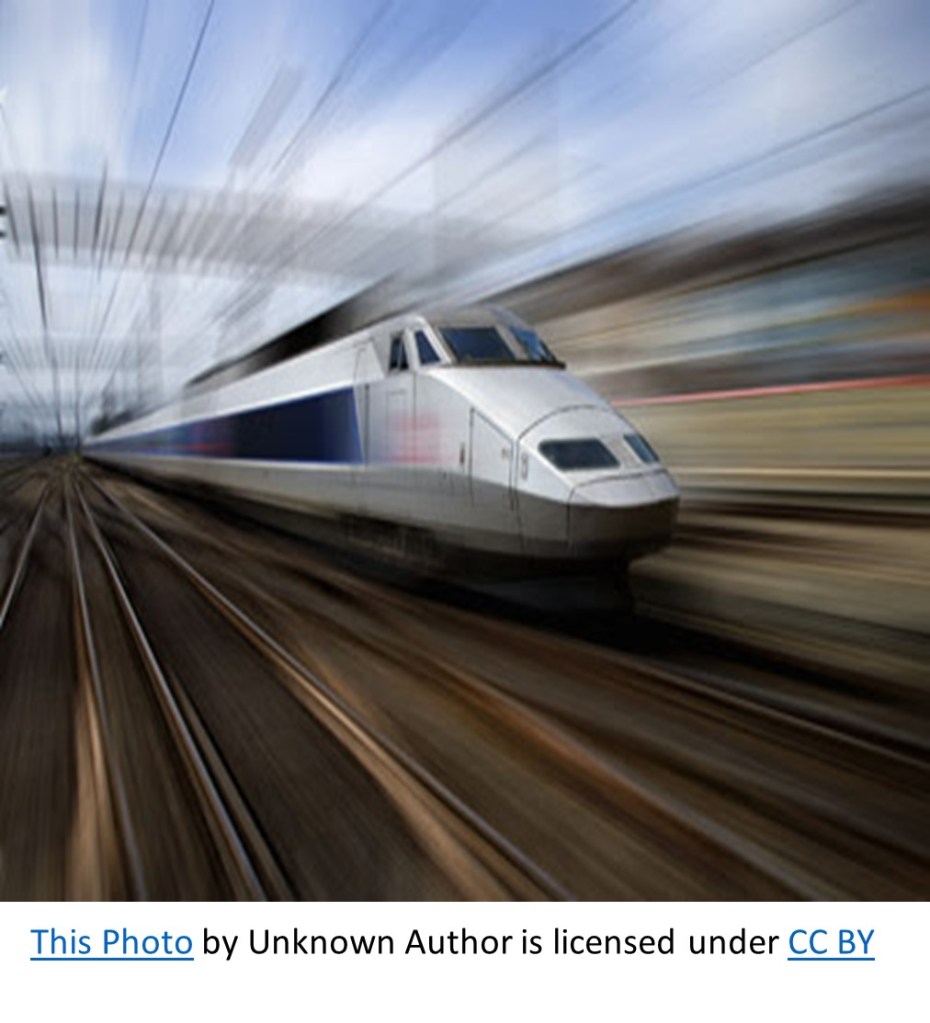
When it comes to a search engine optimisation (SEO) you want a bullet train rather than a puffing billy train. The speed of someone finding your site is important apparently, and I wondered why?
Search Engine Optimisation is best described as a process for getting the right people, and more of them, to your website. This is very important if you want to sell something. For authors it may be a newly published novel, a book launch or a date for an author signing. For artists, it may be a painting for sale, news about an exhibition or sets of your original artworks printed as cards for sale.
Not all websites are about selling. Blogs can build your personal brand online, becoming an influencer, or just sharing your thoughts and ideas.
So, you may need to think about SEOs when you start up your website. My goal was to have a place where a person can look at my novels, have a link to buy one and find out about me as a person and writer. So yes, eventually I would like to bring people to my website to increase my sales of books and possibly art as well.
There are about thirty different big world-wide search engines and many more that offer specialized and local information searches, but the biggest is certainly Google.
I love Google. I’m constantly using it for many things, weird, wonderful, entertaining and useful. As a writer, I zip in and out of Google all the time. Lots of other people do too. It is the most visited website in the world and enjoys 92% of the SEO market. It’s rather magical really, how you put a few words in a box, press a button and Wham-O you get the information you need. But it does more than that. It can give you pages and pages of options to browse through until you find the best one, and that one site probably has the best SEO and comes up number one on page one. And that’s where you want your website to be when someone is looking for a book to buy.
It’s not magic that gets your website up the front, but it is a complex process involving crawling spiders, algorithms, keywords and black and white hatted hackers. Too much information for this little black duck, but do browse Wikipedia’s SEO explanation for all the details.
Having decided that my aim is to sell my books and art (publishing will happen later in this year) what I needed was some tips for making my website a good place to visit now. Good old Google comes up with a wonderful list of tips for getting your website noticed. (Optimize your site for search engines for beginners.) They provide some simple guidelines which I will briefly mention here.
Use accurate descriptive titles for your pages.
Use a different page for different products and clearly name them in your menu.
Mention everything that you sell or offer.
Update your content regularly so your readers know when to visit your site.
Keep your site up to date. Remove references to things that are in the past.
Use text as much as possible as Google understands text better than images.
Get referrals from other places. If you are in a writer’s group, ask that they have links to your site or share links with other authors you know.
WIX also has some good short tutorials about SEOs and marketing. I will address these ideas in my next blog.
If anyone reading this wants to share their own experience with building up visitors to your web sites, then please contact us at Indie Scriptorium. We would love to hear from you.
[In response to Elsie King’s post on Website building, fellow writer, Mary McDee shares her insights on the challenges of technology.
I have abbreviated this Shakespearean quote somewhat, out of respect for space…and cats. Especially ones who get caught up in webs as my cat Storm has the habit of doing. ~ Website Editor—Lee-Anne Marie Kling]
Thoughts on Website Building
I don’t know about you but, as an acclaimed techno klutz, I found last week’s blog “Building a Website” totally fascinating, easy to follow and, I must admit, thought provoking.
I admire Elsie King’s honesty in addressing her difficulties and the downsides of her ‘adventure’. Publicly admitting to being ‘technologically challenged’ does not go down at all well with many in this day and age as I well know!
There is absolutely no doubt that computers, indeed the whole current techno world of today, has brought many advantages with it: made life easier, more efficient and, in many instances, much faster. I’m also sure we’re all well aware of the pestilential problem of hackers – a major downside of the current techno revolution.
To my mind however, this business of hackers is far from being the only downside of our brave new world. Let me explain by telling you of the revelation re computers that hit me a few years ago.
At the time I was coming to the end of a Permaculture Design Course I’d been doing for quite some time and was thoroughly enjoying. It was assessment time! This involved working with a partner or small group to develop; then present to the whole group an actual practical design based on our own real life situation that had brought us to being part of that course.
I live on a very steep, small acreage in the Adelaide Hills. Two others also lived on hills acreages so we three linked up and decided to work on a plan for the other woman’s land as her place seemed the simplest and most straight forward. We got on well together and quickly decided to present a series of maps illustrating the steps we felt would be the best way to develop her land. We also felt this would be most effectively presented as a series of overlays, one on top of the other; building up from the basic fenced-paddock-with-a-house (where she was currently living) to her dream of self-sufficiency.
We thought this was a great idea and felt very chuffed with ourselves. So we set about implementing it.
My partners were both computer literate and tech savvy so automatically began developing the required maps and sorting things out so each map, at the press of a button, would become superimposed on its predecessor.
And this was where the rot set in!!
They spent hours on the problem but all to no avail. I’ve no doubt that any kid of today with a modern laptop would do it in a flash with little or no difficulty. But this was a number of years ago and computers have come a long way since then.
At first I was simply a fascinated spectator; unable to contribute anything useful. But slowly I became more and more fed up with all the hours of unproductive discussion and experimentation. I did hold my tongue though. Eventually they had to give up; stymied and frustrated. We’d have to come up with some other way of presenting. And time was running out.
It was then I remembered we’d been told there was a wide range of equipment available for us to use including an overhead projector. As an ex-Primary school teacher I was very familiar with these things and as soon as I explained how it could solve our problem my two partners leapt on board: — using transparencies, we were able to present as we had planned. And we received enthusiastic congratulations from those running the course – I maybe wrong but I got the feeling they were a tad relieved to see something other than a computer production!
Anyway, to go back to the beginning and why I have been telling you this seemingly irrelevant tale. It seems to me that we are not looking beyond computers to solve all our problems; to run our lives; to communicate with all and sundry… We are losing many skills and techniques that used to be second nature; losing flexibility; losing touch with the real world with all its messiness.
As you are reading these blogs you are no doubt a writer so you will be very computer competent; familiar with Facebook and tweeting and emails and… Maybe even have your own website; maybe publish your work through Amazon…
But there are other ways of publishing your work. Google is not the only research tool available to us. Computer editing programmes have a place but they are, of necessity, run-of-the-mill. There is no room for creativity; original thinking; an unusual juxtapositioning of words…
By way of reinforcing the point I’m making: my computer doesn’t recognize that ‘juxta…’ word; has underlined it with squiggly red as if to insist I replace it with something more mundane. But I’m not going to – my big, two volume Oxford dictionary lists that word along with its meaning and a couple of other permutations of it.
Let’s not lose variety and richness; the things that have served us well in times past. Please.
With the first day of 2023, comes resolutions…Maybe to start writing the book you have inside you. Here’s a quote from Martin Luther King found on Mrs T’s blog.
Recently, a friend from writers group asked me to find some information about the famous German writer, Goethe. While doing my own research on my ancestry and the Kaiser Hof Hotel Sonne in Nördlingen, I discovered that Goethe lived there for a year in 1788.
It’s amazing how life works and how the threads of our lives weave in and out. How our attitudes and values are influenced by how we see the world, and who we see in it. While Goethe was living in Nördlingen, Captain Cook in the Endeavour claimed Australia as belonging to Britain (as one would back then). And I wonder what Goethe thought of Nördlingen and my ancestors. Did he give much thought to the discovery of Australia and that someday, a little over a century hence, a descendant of those ancestors, or perhaps a relative who may have visited the hotel, would be emigrating to Australia with their family.
Or was Goethe instead mulling over Faust and completing the manuscript?
And then I consider my novels and the War Against Boris series, and how the evil character of Boris grew and developed in my imagination. Where did he come from?
And I think of Johann Wolfgang von Goethe’s quote from Faust that captures that we are the sum of our past, including ancestry, present and future, our destiny by how we see the world.
“A man sees in the world what he carries in his heart.” ― Johann Wolfgang von Goethe, Faust, First Part
Following on from “Raised commas aka Dratted apostrophes” back in September, we thought you might enjoy the following text of a children’s story featuring these pesky punctuation marks (taken to a somewhat bizarre level, we must admit). Bizarre as they are, in this piece we can assure you that this is grammatically correct.
Jan and her Gran
Jan has a Gran,
Gran belongs to Jan
And Jan has fun with her Gran.
Jan’s Gran has a van.
The van belongs to Gran,
Gran belongs to Jan
And Jan has fun with her Gran.
Jan’s Gran’s van had wings,
the wings belonged to the van,
the van belongs to Gran,
Gran belongs to Jan
and Jan has fun with her Gran.
Jan’s Gran’s van’s wings had nuts.
The nuts belonged to the wings,
the wings belonged to the van,
the van belongs to Gran,
Gran belongs to Jan
and Jan has fun with her Gran.
Jan’s Gran’s van’s wings nuts held the wings onto Jan’s Gran’s van
so Jan and her Gran could hop in the van and go off on trips.
Writers have it easy these days. Needed facts and figures involve just a few strokes of the keyboard and you have everything you need instantaneously. The wonders of the World Wide Web, Google and Wikipedia. Prior to personal computers, research involved trips to libraries, ploughing through shelves to locate books and journals, photocopying and the dreaded searches through microfiche files. (Microfiche—first invented in 1839 by John Benjamin Dancer.) Research was a tedious process and although I sometimes hate my computer, access to facts, figures, photos and original documents makes writing a breeze.
I enjoy research, and as a writer of historical novels, I spend as much time on research as I do on actual writing. My preferred search engine remains open as I write a scene of my novel. Flipping between research and prose is second nature, as I am always coming up with questions. How long would a journey between Mayfair, London and Ash in Surry take in a carriage and four horses? (Can be done in a day if the weather is good but more comfortable over two days with an overnight stop at Cobham.)
When plotting, I also do considerable research. With my latest novel, I am writing about the Abolition of Slavery in Britain from 1829 to 1833. I have read and noted three PhD. Dissertations and purchased four academic books. I read and study these before commencing plotting the novel. Historical timelines are important to the motivations and actions of my characters. In addition to historical research, it is essential to know the world your characters inhabit. My library contains books that cover politics, housing, etiquette, clothing and transport. I also read novels and essays from original sources.
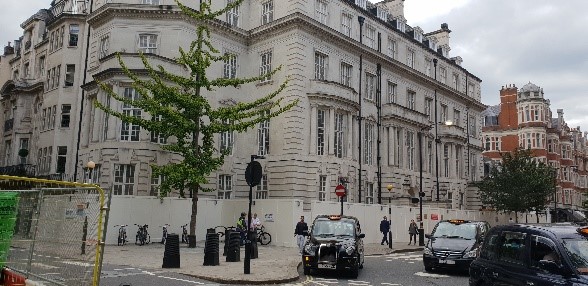
If possible, visit the locations in which you place your novel. I had a wonderful day exploring Mayfair in London and then another two days at the Victoria and Albert Museum. If you can’t get to a place, explore online and where conceivable use original maps and photos of historic buildings and gardens.
How much research is needed? The iceberg principal is a rough guideline. Research thoroughly and use only that which is essential to your plot. This for me is about a fifth of what I study. Getting the balance right can be tricky, but my novels are about the characters as they navigate through their world, not a history lesson.
However, make sure your research is accurate. Believe that all your readers are experts in the field you are writing and will stop reading, throw your book away and write a negative review if you get anything wrong. Accurate research is important.





 Indie Scriptorium -- Self Publishing Collective