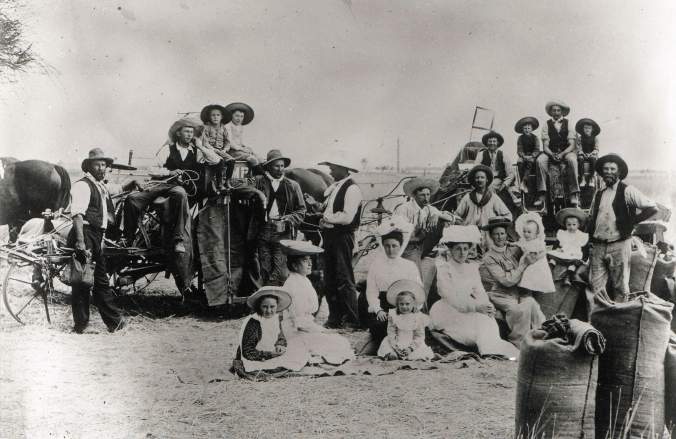
[I have spent hours reading the diary of my Great Aunt Dora. The story begins all full of the hopes of a young 18-year-old first-generation Australian girl whose parents had migrated from Germany to South Australia around 1877. I know her story, I knew and loved my great Aunt Dora. She will never marry. One of many women of her time, when, after World War 1, there were not enough men to go around. I imagine this is what life in the 1920’s was like for her, a maiden aunt caring for her parents.]
Dora
She had one once. Before the war. He came from Hamburg. A distant relative from the family. But the Great War intruded. He was the enemy. Interned. Never to return. She perched on the bench in the Royal Botanical Gardens. Watching. Men promenading in pale pinstriped suits, on their arms women in their frilly-white Sunday best, giggling. Easy for the men, she thought. Pick and choose. Pick and choose. Even the damaged men, the cripples, have a chance. She sniffed. What about me? Is that my future? Caring for my aging parents? No choice but to be an old maid?
Having read Elsie King’s first two historical romance novels, A Suitable Bride and A Suitable Heir, I can highly recommend them. Both are well researched and are a good read. Hence, when deciding what to post for this week, I couldn’t go further than Elsie’s post on the subject of research.
Indie Scriptorium will cover the theme of memoir over the next few months. As we investigate all memoir-related topics, we will explore family history, historical writing, autobiographies, and more.
But, how does an aspiring family historian or memoir writer begin their journey?
For me, it began with years of gathering information. I have discovered that listening is the key to family history research. I needed to listen to my older relatives and collect their stories. Then I was able to build a picture of what life was like for them in generations past.
These are the first steps in my family history journey.
Stay tuned for more family history and memoir ideas in future blogs.
“When people talk, listen completely. Most people never listen.” ― Ernest Hemingway
Here’s a post from the past on feedback, or more accurately, “On-line Reviews”; a vital part of refining our work and making our stories the best they can be.
Those On-Line Reviews
I like to celebrate. As a child, when I received full-marks for a spelling test, Dad rewarded me with a Kitchener Bun from the Fish ‘n Chip shop/Bakery which in the good ol’ days of my childhood was situated opposite Glenelg Primary School. A few years ago, now, when I used to drive my son his course in Magill, my mum and I treated ourselves to lunch at the local hotel.
Every so often, I check my Amazon account. I wipe off the virtual cobwebs of neglect, and dig deep in the files of my mind, retrieving the password to enter. I expect nothing much to have changed.
I’ve been busy with my blog and the rewards, small, though they are, compared to the rest of blogging world, but the steady trickle of views, likes and comments, satisfies me. Over the years, the number of followers has steadily grown.
Once long ago, now, I made a daring move, and posted my short story, Boris’ Choice—not for the faint-hearted or while one eats breakfast…After the post, I checked for results on Amazon with my War Against Boris Series books.
And…there were. Yes!
Then, I checked the reviews. Now, I don’t know how other writers have fared with reviews, but for many months since my books were published, I had received no reviews. Yes, I asked my readers to do the deed and tick the star-boxes and comment, with no results. Yes, they’d say, and the weeks went by and nothing. Were they just being polite? I have no illusions, and the reality is that art and literature are subjective—what one person likes another won’t.
Anyway, back to checking the reviews…I looked again at one of the countries one of my books sold. The page appeared different. A yellow bar, and a comment. Genuine feedback. Not a great appraisal, but an appraisal all the same. I knew the person responsible for this first-ever comment for my book but was not surprised at their response. I did wonder at the time how my novella would work for them—not well—just as I imagined when they informed me, they’d bought the book on Kindle. As I said before, Boris and his antics are well…not for everyone.
That being said, and for fear my works may be misunderstood, the over-riding theme of my stories are the classic fight of good against evil. How evil, like Boris, can creep into our lives. And when for whatever reason, usually when we maintain and enhance our self, and to avoid discomfort, we allow evil to stay. This evil, however subtle, will drive us to isolated places in our lives, much like Boris does in The Hitch-hiker; places we never wanted to go. I want young adults and people young at heart, to make choices and use their energy for goodness and to fight evil, so they can live a full life and also be an agent for good in their community and the world.
A dramatic scene which reminds me that Australian history is ancient, often sacred and secrete. There are Aboriginal myths shared at this site, but their deeper meaning is hidden from new Australians. A caution that, as writers, acknowledging indigenous stories requires sensitivity and care.
But the landscape is awe-inspiring and we can create our own myths when we write.
As expressed by John Keats: (letter to J.H. Reynolds 1818)
“Almost any man may, like the spider, spin from his own inwards his own airy citadel.”
Summer holidays are over, and school has started again here in Australia. With it, memories of the way things were way back when I was at school, in the 1970’s. Those were the days…
Our Sensei, the Avenger
Timmy hunched over his desk, sobbing.
Luke laughed at him. Simmo slid back on his chair sneering. Bruce barked in the small skinny lad’s ear. I watched, guarding my books from being flung out of the window, again.
Those boys!
Our Sensei marched into the classroom. We stood.
His face turned crimson. He thumped the blackboard. ‘Da’me Yo! Bad! Very Bad!’
Sensei swooped on Bruce and Simmo. Grasping their shirt collars, one in each hand, he clonked their heads together, forcing them to look at Timmy.
‘Look what you have done! You made him cry! Bad! Very Bad! Dame Yo!’
Would you like to join in the 100-word challenge? If you have a story you’d like to share, drop us a line in the comment box. The one requirement: the story must be exactly 100-words.
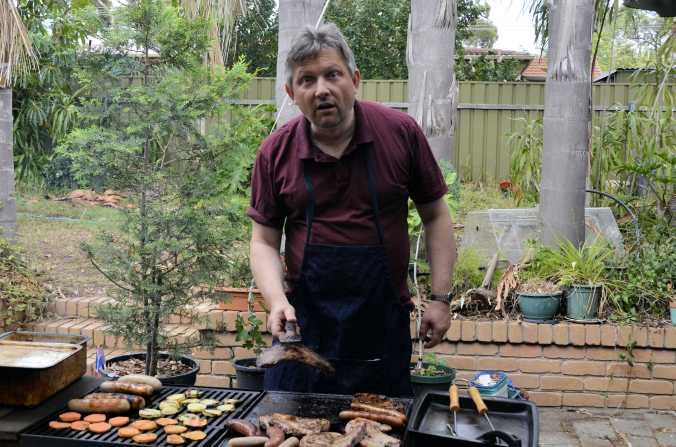
This day, being Australia Day and the nearly 250 years of baggage that goes with it, I made an executive decision to re-blog my missive on the fine line writers literally “walk” when storytelling.
Feature Photo: An Australia Day tradition: the Barbeque (c) L.M. Kling 2015




 Indie Scriptorium -- Self Publishing Collective