Indie Scriptorium — Self Publishing Collective

Helping Each Other Publish

Skip to content
  • Home
  • About Us
  • Blog
  • Books For Sale
  • Introducing Indie Scriptorium
  • Links–More for You
Search

Publishing Pointers–The Book Cover

April 22, 2023 / lmkling / 1 Comment

Think of the book cover as your best marketing tool.

Imagine a potential reader is browsing the shelves or a table at your local bookseller. They love historical romance and they browse to find their favourite authors. None there, so then they browse for similar books to try out. It is the cover that will attract this reader, so it has to be right.

The book cover is the full wrap-around. It includes the title, artwork and author’s name. The Spine provides the title and author and the back includes the blurb, the ISBN and publishing details.

What makes an excellent cover?

  • It should scream out the genre through the use of design photos, images and art.
  • Display the title and author in a striking but easy-to-read font and style.
  • It must be beautiful and use colours that reflect the contents.
  • The design should grab attention, be unique, but also contain elements that are popular in the genre. It pays to do the research.

Can you make your own cover?

Most self-publishing groups recommend you hire a professional to design your cover, especially if you are not an artist or a technical wizard using a computer. I suggest you save up some money and pay a professional.

Finding a designer is a matter of a few easy searches on Google using the keywords, “book cover designs” and there will appear a long list of companies offering to make a wonderful book cover just for you. The prices vary a lot and can be anywhere between $500 and $800 dollars.

You can also buy book covers that are pre-made. If you add something like “Paranormal Romance book cover” in your Google search, you will find an array of potential designs where you just add your title and the author’s name to a pre-made design.

Pre-made designs include the front cover, back cover and spine, and each design is unique. Browse the designs and choose one that suits your book, and this may be a simple and cost-effective way for you to cover your book. Remember that you will need your back cover blurb, ISBN, reviews and whatever author information you wish to include. The costs of using a pre-made is cheaper than having your cover made up from scratch. The average price for an e-book and a print edition is between $100 – $300, but there is a lot of variation.

If you want something unique, contact a graphic designer and/or illustrator. What’s the difference, you ask? A graphic designer uses licensed stock photos and images. An illustrator will create your cover design using your characters and ideas from your book.

But what if you want to be the designer? You may have a specific design that is not on offer anywhere, or you want to have full artistic control over your book. Perhaps it is a matter of cost. Be warned that designing a book cover for self-publishing requires time to master the elements of book cover designs and technical skills. Not for the faint-hearted, but yes, it is doable. More on this next time.

Places to look for more information: Reedsy.com>book-cover-art -, Canva for design templates. Elite Authors, Paper and Sage Book Cover design. Explore their websites as they have some interesting and informative articles.

Cheers: ©Elsie King 2023

Book cover photo from Creative Commons


Share this:

  • Share on X (Opens in new window) X
  • Share on Facebook (Opens in new window) Facebook
Like Loading...

Publishing Pointers–The Third Road to Publication

April 15, 2023 / lmkling / Leave a comment

THE THIRD ROAD TO PUBLICATION

We’ve told you about vanity publishers – the smooth-talking rogues who take your money and give you little or nothing in return.  Keep right away from them, however desperate you are to have your precious work published.  They are bad news; really, really bad news.

We’ve told you about the legit, big-name publishers who will give you a contract, provide editorial advice and pay you based on sales of your book.  These people are in business; the point of business is to make a profit so they will (very sensibly!) only accept for publication work which they can be pretty sure will help their bottom line – making money.  I don’t wish to discourage you, but unknown newbies probably have a better chance of winning the lottery.  By all means give it a go.  But with eyes wide open.

Which leaves us with the third option: self-publishing.  This is a perfectly respectable road to travel which many have, very successfully, done so already.  As with most things in life there can be pitfalls however.

There are essentially two alternative ways to go if you choose to embark on a self-publishing venture.  The first is the publishing platform route such as Amazon of which I have no experience.  In a future blog, Lee-Anne intends to discuss this option as she has practical knowledge.

The other way is to handle the whole business yourself using a local printer.  There are a great many steps between completed manuscript and final product.  So let’s get down to business.

Editing.  You MUST have your work checked by a competent person not closely involved with your work; someone with a dispassionate, clear-eyed view; someone who is able to judge writing critically; someone with a nit-picking eye for detail.  Above all someone who is kind. 

I’m sure you will have gone over and over your words; changing, omitting, adding, clarifying…  The sad fact of the matter is that none of us has a completely discriminating approach to our own work as we are both emotionally involved with those words and phrases and also “see what we expect to see”.  This last is a psychological reality we all need to accept. 

Editors question factual allusions; check for consistency of names, events, places, relationships… as well as the overall “tone” of the writing.  They look at the big pic as well as smaller details.

Many people confuse editing and proofreading.  The two are quite different: this last deals with spelling, grammar, typos, layout etc.  in short, the general appearance and readability of the finished work.  Editing and proofreading could be seen as bookends: editing is the first step after completing your manuscript; proofreading the last before the final print run that yields you a box of books ready for sale.

You should ideally engage the services of a professional editor and be prepared to pay for his/her time, expertise and advice.  By and large a friend or relative who is an avid reader or a high school English teacher will not cut the mustard, however keen such a person is to help you out.  Use them as a reader/commentator; value their input but do not confuse them with an editor!

Next you have to decide on such details as size and format for your book (portrait or landscape)* font and font size; back cover blurb; ISBN; the “reverse title” page information.  We will give you specific details re each of these in future blogs.

Then it is off to your selected printer – again, specific details in a future blog.  By rights, you should be given a dummy copy (Proof) to check out and proofread before giving the final O.K.  This checking step is critical, (point of no return, as it were!) so do it carefully.  Please.

Now you can order the number of copies you think you can sell and know you can pay for.

Finally, finally you pay the printer; receive a box (or boxes!) of books and gloat over them.  You have achieved your dream to see your work published; your name (or chosen “nom-de-plume”) adorning the cover.  Wow!!

However, there is still one last step; for some of us the most difficult of all: sales.  This involves publicity, distribution, record keeping.  Again, more in a future blog.

Good luck.  Have fun.  And get stuck into creating your next book.

*Note:

“portrait” format means the vertical is longer than the horizontal, taller more than wide.                                                          “landscape” format means the reverse (width is more than the height)and is usually reserved for picture books, with or without text.

© Mary McDee 2023

Feature Photo: Road back from Mannum, Pallamana, South Australia © L.M. Kling 2020

Share this:

  • Share on X (Opens in new window) X
  • Share on Facebook (Opens in new window) Facebook
Like Loading...

Advertising–My Journey So Far

April 9, 2023 / lmkling / Leave a comment

Advertising On Amazon—My Journey

How do you get your work “out there”?

So, you’ve written your book, and maybe you’ve progressed as far as self-publishing the book on Amazon or Goodreads or some such platform for indie authors and their books. Then, you sit back and watch the royalties roll in. Except, they don’t.

You check on your stats and there’s nothing. Just one long flat line.

You check your book’s rating. It’s so buried under the weight of millions of competing books on the shelf, it doesn’t even have a rating.

This is not right, you think, my book is brilliant. It should be a best seller. Something’s wrong with the platform. You complain to the relevant platform on the community chat forum. And you discover you’re not the only one.

Advice comes in. Get reviews, they say. Easier said than done, these days. You discover that the heady days of the early internet when reviews were free and easy to come by, now are screened by certain seller platform’s review scrooges. Any hint of association in real life or friendship, and the review is banned. Reviews are also not published on such platforms that are well-known but remain not mentioned, if the reviewer has not bought more than $50 worth of goods from that selling platform.

So, again, the question, “How do we get our work out there? Noticed?”

Having been given this task to share with you my wisdom, I considered doing some research and conveying the wisdom of other, more successful experts in the field of advertising. I decided against that as “reinventing the wheel” so to speak, is not my thing. If you want to get your head around advertising, there’s plenty to offer on the internet.

Instead, I’ll share with you my journey with advertising and getting my books and paintings noticed. Here are a few pointers:

  • Word of Mouth—many, many years ago, my brother started up his own business as a mechanic. He never placed an ad in the paper (such were the times before the internet), yet his business grew. Satisfied customers recommended him to friends and family. I leant from this example the basic lesson of marketing, do an excellent job (key word here is excellent) and your business grows by word of mouth. This principle, then, I used when growing my tutoring business.
  • Networking—when I’m out and about, and I’m chatting with people, inevitably, they ask, “What do you do?” So, I tell them what I do. When this happens to you, make sure you have a few business cards handy, and some of your work/books handy. I’m not one for pounding the footpath and asking bookshops to consign my books, but I have a friend who has done just that with her book with some success. The thing is, is to be social, meet new people and don’t be afraid to show them your books.
  • Online presence—I think Indie Scriptorium has covered this particular aspect in detail. These days with the prevalence of the internet, look at having a blog or website as another avenue of networking. Just remember, building your online presence takes time, effort and some risk. But to get your book out there, if you are prudent and discerning, the risk is worth the reward of getting the fruits of your labour, your book, noticed.
  • Advertise—a friend who has their own business once said, “You need to spend money to make money.” Meaning that money spent advertising will be rewarded with sales. I also heard an advertising expert speaking on the radio once say that a person needs to be exposed to a product seven times before they notice its existence. Which means many times more exposure to buy the product.

At this present time, I have a couple of my books being advertised. I have Trekking with the T-Team: Central Australian Safari 1981 nominated for Prime Reading with Amazon, and I’m trialling The Hitch-Hiker with Amazon Ads. The Prime Reading has yielded some sales, mainly through the Kindle Lending Library, some nibbles, but no sales yet from the Amazon Ads for The Hitch-Hiker.

What I like about the Prime Reading is that it’s like a cat (generally, not my cat, but most other cats); they take care of themselves. I nominate, and the Prime Reading programme does the rest and I get some sales and royalties.It’s all done for me, and I don’t have any control over when and where the advertising takes place. Much like a cat.

However, the Amazon Ads is different. You could say, keeping with the pet analogy, it’s like a dog. You have to feed it—money and walk it—check on its progress and adjust your settings to how you want to advertise and how much you want it to bid for you to make the advertising happen. You have more control. With Amazon Ads, you limit the cost so that you don’t go over-budget, and you can regulate the pace at which the advertising occurs. You can have a fast-moving campaign, or one that moves at a slower pace. Much like owning a dog, depending on what breed of dog you have, I guess. Never owned a dog, actually.

The main takeaway is to get your work out there. If its hidden in a drawer, or file on your computer, waiting for it to be perfect, no one is going to see it. If its buried under a load of competitors on the internet, it’s up to you to take it to the next level and make it visible. Tell your friends and family, network face to face, and online, and advertise.

Stay tuned for future blogs where we will take a closer look at branding, digital platforms and getting yourself recognised.

Happy Easter!

© Lee-Anne Marie Kling 2023

Feature Photo: Schrodinger’s Cat © L.M. Kling (nee Trudinger) circa 1984

Share this:

  • Share on X (Opens in new window) X
  • Share on Facebook (Opens in new window) Facebook
Like Loading...

Publishing Pointers–Back of Title Page

April 1, 2023 / lmkling / 2 Comments

Back of Title Page

It’s a strange name, but it’s where you will usually find the page of your book or novel that sets out the information that asserts you as the author and owner of copyright.

Also known as the Copyright Page, it isn’t a legal requirement to include, but highly recommended.

Copyright covers you as soon as a piece of writing is written, typed or otherwise transcribed by an author. The copyright is for your entire life plus 70 years. It is common practice to sign your work with a copyright symbol, © (On an android computer press keys Ctrl and Alt together and press letter C. On a Mac computer press Option then G) Follow this with the date and the authors name (or pen name)

Information on the back of the title page can also include:

  1. The publisher’s name, address, website and trademark if they apply
  2. Copyright – © (publication year) followed by the author’s name or pen name.
  3. A disclaimer–for a novel, this may include that all names, characters, places and events are fictitious and any resemblance to persons living or dead is coincidental. (I suggest that you have a look at the title pages of several books similar to your own for ideas about what you want to include) The disclaimer is to protect an author from lawsuits about libel and plagiarism. If in doubt get a legal opinion.
  4. All rights reserved. –This protects your book from being stolen. Also recommended to include: No part of the publication can be reproduced in any form (electronic, mechanical, photocopied, recorded) without the written permission of the publisher/author. Some copyright pages mention that unauthorised use may result in criminal prosecution and/or civil damages. A statement asserting the author’s moral rights can be included. (In these days of electronic and AI factors, it may be advisable to ensure extensive protection for your book.) This book is not in the public domain is another protective statement. The National Library of Australia have a list of Books that are no longer under copyright protection (remember the life of the author + 70 years) which can be reproduced unless the copyright is extended by a relative, publisher or someone managing the author’s estate.
  5. Include the ISBN number.
  6. Add the date of the first printing and the dates of subsequent editions.
  7. You may choose to add that the book, including e-books, record is in the National Library of Australia. The library provides a neat logo and the statement “A catalogue record for this work is available from the National Library of Australia.” Go to the National Library of Australia website, publisher services and get full instructions for this process. Getting your work in the catalogue will ensure its availability to all libraries in Australia. (In addition, all authors and publishers have a legal obligation to submit a copy of their book to the National Library and also the library in your state and territory)
  8. Acknowledge copyright for the cover design and any art works or borrowed material in your book. You may also wish to add information about formatting if using a copyrighted format.
  9. You can add your website, social media contacts and/or contact information.
  10. Some authors use the copyright page to acknowledge their team and referenced material, but if this is extensive, a separate Acknowledgements page will work better.

There is a wide variety of copyright page formats. Some authors use a minimal amount of information, while others include detailed information covering all potential problems. I suggest looking online for examples, check out similar books to your own and do the research. You can also access the Australian Society of Authors who provide information for authors. I would also suggest joining this organisation if you intend publishing and marketing books. They have a wide range of services, including legal advice for members.

The self-publishing phenomenon has meant that there are millions of books out in the market and unfortunately, there are scammers and other criminals who will take advantage. Taking your time and investigating what information you want to include on your copyright page is important and it may stop a lot of heartbreak and expense.

The information provided in this blog is of a general nature and will hopefully give you some basic information about copyright pages. If in doubt about any required, inclusions and copyright issues, or if you believe that your book has been pirated then seek out legal advice.

Citations:

© Elsie King 2023

  1. Australian Society of Authors – website – find an answer/questions about copyright
  2. National Library of Australia – website- services for publishers- Legal deposit – Prepublication data service.
  3. Donna Munro – How to Self-Publish in Oz – Warm Witty Publishing 2021 – pages 23-24.
  4. Authority Pub – website – https://authority.pub/book-copyright-page – pages 10-11 

Feature Photo creation: Bellerive Marina photo under copyright © L.M. Kling 2023

Share this:

  • Share on X (Opens in new window) X
  • Share on Facebook (Opens in new window) Facebook
Like Loading...

Publishing Pointers–Three Roads to Publication

March 25, 2023 / lmkling / 1 Comment

Three Roads to Publication

We writers all want to be published, don’t we? 

Feel the pride and joy of seeing the product of our labours (complete with our name on the cover) flying off the shelves of bookshops.  A dream come true!

But first we have to deal with the process of publication itself – no easy undertaking for most of us.  The thing to understand before launching ourselves into this world is that there are essentially three roads to choose.

The first is the so-called “vanity publishers” who, like ravening wolves, are out there ready to prey on the innocent and uninformed.  A few weeks ago we told you of a friend of ours caught by one.  It cost her a great deal of worry, financial loss she could ill-afford and, along with lies and empty promises, only a single copy of her work.  These people are out and out rogues; sweet talkers who make sure they operate within the law so you have no redress.  Avoid them – your dreams will be shattered.

The second road is right at the other end of the scale, eminently honest, respectable, ethical and helpful IF you are fortunate enough to have your work accepted – and that’s the rub, the sticking point!  Getting accepted when you are a newbie writer or do not yet have a reputation in the wider world is not impossible.  But highly unlikely.

I’m talking here about the big, well established publishing houses e.g. Penguin, Random House etc, etc.  These people are in business which means they must make a profit.  If they don’t they will be unable to stay in business.  Consequently they will not accept anything they not fully convinced will sell and sell well.  Anything they do accept they will work very hard to ensure is saleable.  And they will expect you to work along with them to achieve this.  That is the reality of the situation.

The other reality they have to deal with is that they receive a great many submissions from hopeful authors, often to the point of inundation. These are assigned to what has been elegantly termed “the slush pile” to be looked at (maybe assessed) sometime in the future when things are a bit quiet or when someone, for some unaccountable reason, has a little time on their hands or when…  Your submission may not surface for many moons; you may never hear from them.  Sad but true.  Just remember, they are running a business and if a business is not run in a businesslike way it will not survive.

However, if by some magical happenstance your work is accepted you will be offered a contract which is a binding legal document so you must read it carefully before signing, regardless of how excited, delighted, up in the air, over the moon you are.  At that point your precious manuscript will be given to one of their editors whereupon you may be tempted to feel this picky person does not appreciate the deathless prose you laboured over so long and so hard.  However, you will be expected to be polite, to acknowledge that this person is good at their job and has years of successful experience behind to back it up.  It behoves you to listen and co-operate!’/

The publisher deals with the printer, pays the bills and arranges distribution.  This last (distribution) is an aspect of the whole shebang that you will probably be expected to contribute to by being part of author signing events in bookshops; by giving talks about your book or maybe being interviewed.  If you do happen to make it onto this road – heartiest congratulations.

Not many do though – make it on to that second road, that is.

In which case, you will probably choose the third road – self-publication.  Nowadays this is a viable and worthwhile road to embark on.  But one with many ins and outs which we plan to go into in full in future blogs.

© Mary McDee 2023

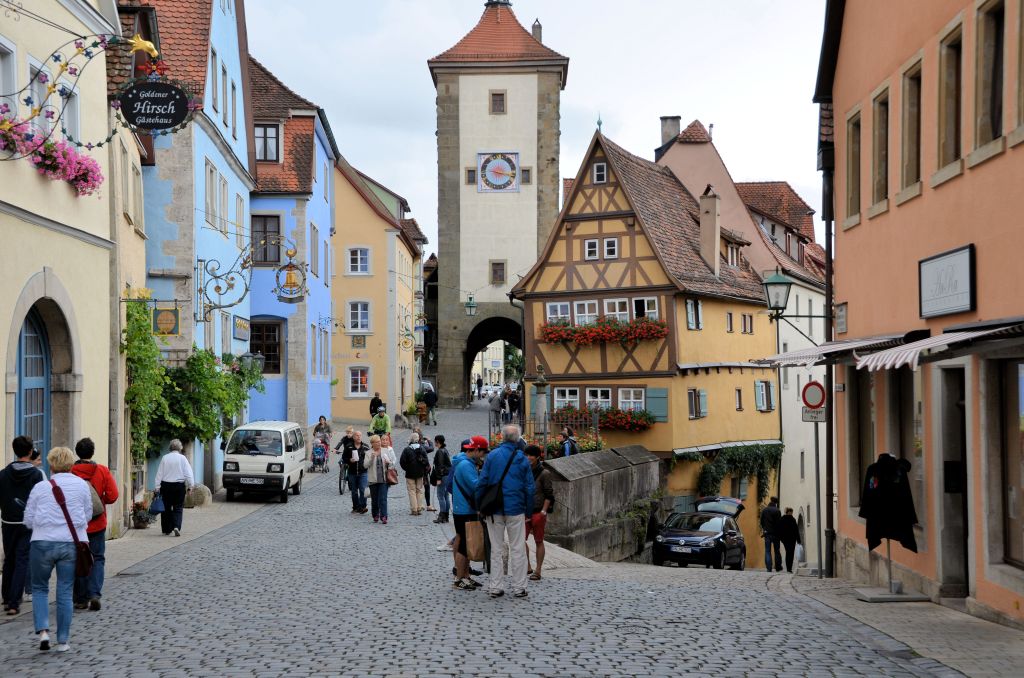
Feature Photo: Where two roads meet–Rothenburg ob der Tauber © L.M. Kling 2014

Share this:

  • Share on X (Opens in new window) X
  • Share on Facebook (Opens in new window) Facebook
Like Loading...

10 Facts About ISBN

March 18, 2023 / lmkling / Leave a comment

10 Interesting Facts About ISBN

This week our Indie Scriptorium group assigned me to write about that mysterious number listed in published books, the ISBN. What is it? Why do books need it? How do you get it?

A quick internet search reveals plenty of information, so I will endeavour not to reinvent the proverbial wheel. A simple and straightforward site which deals with the basics of ISBN can be found in Self-Publishing Australia. A more detailed explanation is offered in Wikipedia.

Hence, here are ten points of ISBN interest:

  1. The acronym ISBN stands for International Standard Book Number. It’s a system designed to allocate a unique number to every book published.
  2. This system was conceived in 1965 by British booksellers wanting to have a system for identifying and finding books. The current format was designed in the UK by David Whitaker in 1967 and was developed in collaboration with Emery Koltay in the United States
  3. Emery Koltay, was a refugee from Transylvania, had been a survivor and escapee of not just one, but several communist concentration camps. After developing the ISBN number, he then went on to become the director of the US ISBN agency R.R-Bowker.
  4. The ISBN code was introduced in 1970.
  5. Each country has an ISBN agency responsible for managing ISBNs for that country. In Australia the agency is Thorpe-Bowker.
  6. Books published after 2007, have an ISBN that is 13 digits long.
  7. The final number in the ISBN sequence is the “check”; a control that ensures that the ISBN has been record correctly. From what I can understand of the mathematical process, there is a formula that the ISBN has to go through to make sure it is correct.
  8. It is not compulsory to have an ISBN, but most mainline bookshops will not accept books for sale unless they have an ISBN. Also, an ISBN is handy when you first publish your book online as you can find it by typing in its ISBN in the “search” section of the browser. I have found that on Amazon, when I first published back in 2015, the book was so far down in ranking that it was invisible. Having the ISBN to type in helped me and others find my book.
  9. You can obtain a free ISBN for your book through some publishing platforms such as Amazon, Lulu or Smashwords. The problem with that, though is that those platforms then own the publishing rights which can come with restrictions to publishing elsewhere, or take your book off the “bookshelf”, as a relative of mine found out. Hence, if you want freedom to be able to print your books with ever whom and wherever you like, it is best to a buy private ISBN.
  10. From personal experience, when registering your book for a private ISBN, it is more economical to buy a block of ISBN numbers. In Australia, as mentioned, the go to is Thorpe-Bowker. Their website is easy to navigate, especially once you sign up and register an account. I suggest if all things computer confound you, fix yourself a cup of tea or coffee, sit down make yourself comfortable, then taking things slowly, follow the step by step instructions. You may find having ready all the details pertaining to your book, for example: synopsis, cover, dimensions, idea of price etc., will help with a smooth process. And, if you get stuck, don’t panic, you are able to save your progress, have a break, collect the information you need, and come back later.

© Lee-Anne Marie Kling 2023

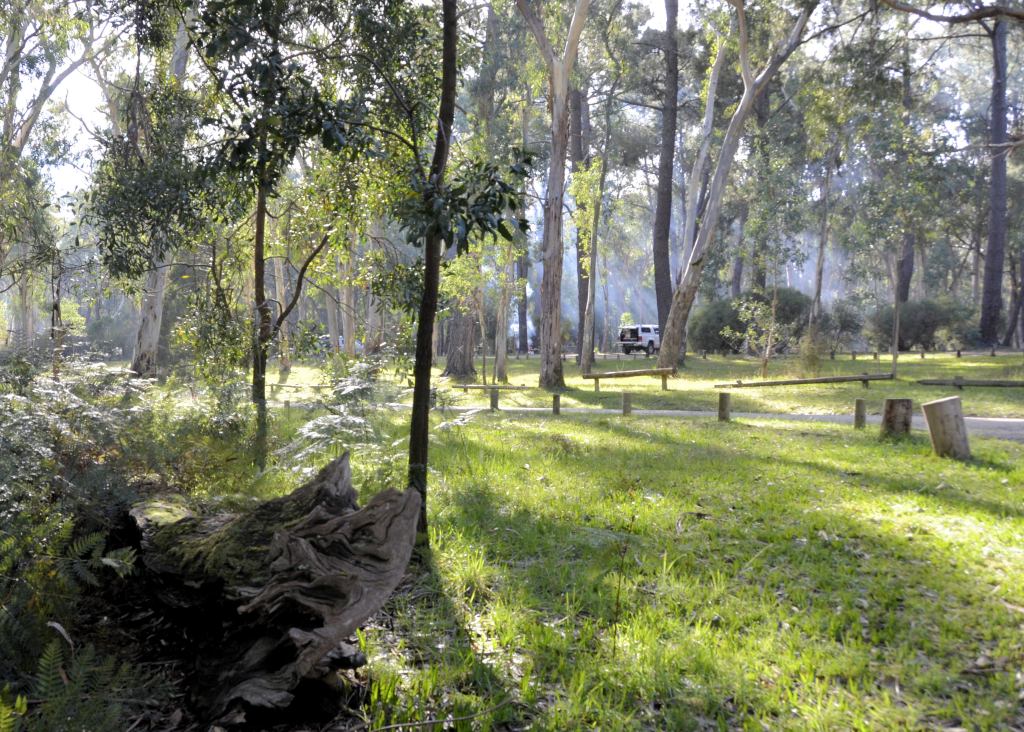
Feature Photo: Seeing the wood for the trees, Chookarloo Camping Ground, near Kuitpo Forest © L.M. Kling 2017

[Kuitpo Forest is a forest plantation ensuring sustainable timber for South Australia. Relevance? Print books are made with paper which comes from trees.]

Share this:

  • Share on X (Opens in new window) X
  • Share on Facebook (Opens in new window) Facebook
Like Loading...

Responsible Publishing

March 11, 2023 / lmkling / 2 Comments

Responsible Publishing – Legal and Moral Considerations

So, you’ve written a short story, an essay, a non-fiction book, a memoir, or a novel. You’ve done the plotting, the research, created worlds and words and honed it to a very fine piece of writing. You’ve used Beta readers, editors, proof-readers, formatters and designed a wonderful cover and a tight blurb and finished it with an author bio. It’s ready to publish, and that’s so very exciting but scary too.

Putting a manuscript out for publishing, no matter if you use a traditional or hybrid publisher or go totally Indie, it is your work, and you are responsible for how it is received in the wider world.

Legal considerations

Before publishing, it may be a good idea to think about what you have written. We all know the pitfalls of plagiarism, making sure all the ideas and words are yours alone. If not, then other contributions must be acknowledged fully and honestly, preferably in the authors’ note or in a bibliography. If you refer to actual events and people, you have to be one hundred percent accurate or risk the ire of your knowledgeable readers. The adage, think about every reader as an expert and an editor is sound advice.

If you change historical dates and timelines, fudge a fact for the sake of a better story, make sure you fess up to this in your author notes. It’s acceptable but acknowledge changes to the public record and why you made the changes.

The legal issues to consider before publishing include copyright, permissions to use another person’s image or writing, and defamation. The Australian Society of Authors and the Australian Copyright Council have information sheets that you can download.

Defamation laws were amended recently, the same laws now apply to all Australian states. The act of defamation involves making false statements, either written or verbal, that damage a person’s reputation. Make sure your written piece is accurate and the truth. A person who believes you have damaged their reputation can sue and the outcome may be costly. If you include real people in your written piece, maybe get it checked out for a legal appraisal.

In addition, you have a legal obligation to make a National Library of Australia deposit of your published book, but an ISBN is not mandatory but highly recommended. Indie Scriptorium will have more information on ISBNs in a later blog.

Moral considerations

As an author, it is imperative to consider how your work, fiction or non-fiction, impact on your readers. You may include scenes of violence, rape, incest, murder and other challenging tropes but have you considered how a vulnerable reader could be disturbed by your storyline. I’m not advocating censorship, but as writers, it makes sense to reflect on how readers may be affected when they read about the violence and distress of your characters. You may need to ask, is it essential to the plot or gratuitous violence? Can you write a scene without graphic descriptions but leave the reader with an impression of the damage wreaked by your protagonist? You need to consider if your storyline can justify or inform deviant behaviour or increase racial and sexual vilification. If a book or scene is overtly graphic and potentially disturbing, consider a warning that the content may cause distress for some readers. Include it in the blurb. I presume that some warnings may intrigue some readers and encourage sales.

Sensitivity readers are in the news at present because of the controversy over re writing the Roald Dahl books, but they are a useful type of editor to use if your book involves some contentious issues. For example, if you are writing a book which includes references to indigenous people, then a sensitivity reader can provide expert information about the accuracy and consequences of your work. Again, it is not about censorship, but it is about consideration and empathy and ensuring that your work will not cause distress.

Writing cannot all be all pleasant subjects and happy endings but consider the legal and moral pitfalls to avoid. The best antidote is to get honest feedback from other writers, editors, beta readers and whoever else will read your manuscript. And kill your darling’s if you need to–but not with too much gratuitous violence.

Cheers

Elsie King © 2023

Image– The Thinker © Creative Commons

Share this:

  • Share on X (Opens in new window) X
  • Share on Facebook (Opens in new window) Facebook
Like Loading...

Publishing Pointers

March 4, 2023 / lmkling / Leave a comment

Tips to Keep in Mind when Planning on Publishing

Writing is a solitary affair.  At times we just want to get onto paper all the stuff that is going round and round in our heads; clogging brain cells; clouding thinking; preventing us moving on.  Writing can be very effective for dealing with all this.  In which case it is the end of the story; a done deal; filed away and forgotten.  We get on with life.

However, for most of us, most of the time our efforts are not therapy but creative, stimulating, exciting and fulfilling.  When we write this way, virtually all of us want those products of our creativity to be out in the wider world; read by others; appreciated and responded to.  Don’t we all want our babies to be admired?

So it’s at this point that we enter the world of publishers and publication – a world that can be fraught with danger, difficulty and potential disaster.

A couple of weeks ago we told the sad story of friends of ours caught up by a vanity publisher.  The joy of having been “accepted” by a “publisher” has turned to frustration and financial loss for them.  Fortunately, for them, the disappointment and disillusionment has not killed the urge to write – but it could well have done so.

We have become aware that there seems to be a lot of confusion and misinformation among newbie writers; those of us with big dreams but little experience.  This is a confusion we hope to be able to clarify for those of you who are finding the whole thing a bit of a puzzle and are not sure which way to go.

Point #1:                                                                                                                                                     

All this publication stuff is a big and complex issue.  It will take some time and more than a few words to explain what is involved so we hope you’ll be able to stay the course and give us feedback if we do not make things clear and understandable.

Point #2:                                                                                                                                                        

Publication is linked to “publicity” – a word my big fat Macquarie dictionary tells me means (among other things!) “the measures, process or business of securing public notice” and also (but denser and less comprehensible) “the state of being brought to public notice by announcement; by mention in the mass media or by other means serving to effect the purpose”.

Point #3:                                                                                                                                                                           Printers and publishers are different; connected but different; playing different roles; fulfilling different niches in the whole deal. They must never be spoken of as if they are interchangeable because they are NOT.  Publishers use printers but printers are not publishers.  They are merely one aspect of the publishing business; one cog in the system as it were, – a critically important cog to be sure but one that, as part of their own business has nothing to do with publicity; i.e. “securing public notice”.

In future blogs we will go into detail about various specific aspects of this whole deal.

© Mary McDee 2023

Feature Photo: Scene for inspiration, Glenelg South Beach © L.M. Kling 2023

Share this:

  • Share on X (Opens in new window) X
  • Share on Facebook (Opens in new window) Facebook
Like Loading...

Writing Tips–Getting Started

February 25, 2023 / lmkling / 2 Comments

After a long hot week—the first “heatwave” since 2019, I sat at my computer, blank for blogging inspiration. Finally, I discovered this little gem in my collection…

THROW AWAY THE CRITICAL PARENT IN YOUR HEAD

February, your New Years’ resolution, a not-so-distant memory, and you stare at the computer screen full of resolve. Time to start that great [nominate your country] novel. It’s a job, right? Hammer away on the keys eight hours a day. Right? You shift your weight in that padded, ergonomic office chair you bought for your project. Now what? Think!…

Check social media and the news. Pay a few bills. Back to your Word page, crack your knuckles and…time for a coffee. Get rid of that brain fog. Last week’s weather played havoc with your brain. Limber the old grey cells up with some solitaire. Or perhaps a quick crossword.

Back to the blank screen…and sigh!

You tap out a sentence. The first sentence, the hook. Must engage those millions of readers on Amazon, or that elusive publisher. You stop. Reread the sentence. Blah! It’s rubbish. You delete sentence.

You gaze out the window. Birds warble. The sky’s clear and blue. Maybe go outside with a paper and pen? There’s connection between you, the pen and paper. Outside, white paper on pad dazzles you. First sentence in black ink. What? Who’s going to want to read that?

An hour later, sun on your face and surrounded by scrunched up wads of paper, you nap. Nice with the sun on the back of your neck…and another morning of good writing-intentions wasted.

Brain Freeze and Platitudes

It strikes, anywhere, anytime. A work mate is leaving, or a friend is having a birthday. Some wise-guy buys a card and circulates it. Card arrives on your lap. You have two minutes to write some warm and witty sentiments. What do you do?

‘You’re a wordsmith, Lee-Anne, go on,’ my mum says.

But the clever words refuse to bubble to the surface of my brain. I locate the blank space where my wishes will go and then check out the preceding words of well-wishing. Pity, if I’m the first one to write this card.

I blame a relative of mine. Back as a teenager, I attended a funeral. The relative approached me and said, ‘I think you should go and comfort your aunty. But please don’t give her platitudes.’

Ever since, whenever I need to produce formal comfort or congratulations, that relative’s advice comes back to haunt me and all I can think of are platitudes.

It’s the “pink elephant” effect. When told not to think of “pink elephants”, what does our brain do? Yep, pink elephants in abundance.

So, when we stare at the blank screen or paper and remember our school days; our English teacher saying, ‘Don’t do this and that, and so on’, we sit there, frozen with our mental doors barred to the creative zone.

How do you get started? What works for you?

Some Suggestions

What works for me:

·         First of all, and this is legitimate. Years ago, a writing mentor advised us. They said, ‘Pack up your critical parent that is in your mind, you know the one who’s never satisfied, no matter how hard you try? Yes, that’s right, tie them up, gag them, and wrap them up like an Egyptian mummy. Then, in your mind, take them to the jetty and throw them in the sea.’

·         Then, have fun with your inner, natural child and with the story. You have permission not to put a jot on your computer screen or paper. Go outside, sit under a tree, or go for a walk. Imagine, daydream and if you wish, talk to yourself. This is the incubation phase.

·         After cooking the ideas for however long it takes you to be ready, pick up a pen and paper, and go to your favourite place, and brainstorm. Probably a good idea to stay away from the computer and the temptation to check social media, news, or play solitaire. Well, I need to anyway.

·         Find your characters, or should I say, allow them to find you. Do lots of reading. Also, observe others say in a coffee shop, beach, on the street, and even on television. You may find some interesting characters out there. You may be surprised at how these characters reveal themselves to you and even become your imaginary friends. Just like when we were children. Some people I know, okay, I confess, me, have created characters out of people I have known—usually a blend of a couple of people I know, from way back in my past, I mean.

·         Imagine having a drink with those characters or going for a walk with them. Ask them questions as you would a new friend. Warning: I do find this dangerous as I soon have a story, or at least a back-story.

·         Then put your character together in a restaurant, playing ten-pin bowling or going on a road trip. Now the ideas will flow, the story will flow and as the Borg in Star Trek say, “Resistance is Futile”.

·         Finally, write the story. It’s your first draft. Your mind’s critical parent is at the bottom of the sea, so allow your inner natural child to have free reign. Write as you’d tell the story to a friend on a camping trip or a child. Get the words down. I emphasise, it’s a first draft, you have permission to make mistakes while the ideas flow. Editing will and does come later.

·         Another suggestion: why stick to writing? If drawing, storyboard, or voice-recording works for you, do that. It’s your story. It’s your “child”.

Try this:

Create an oral story. You may do this as a game with friends, around the table as a family, or with your writers’ group. One person begins the story with two or three sentences. The next person continues the story and so on around the group, until the last person concludes the story.

For example:

Gnomes, they appeared everywhere; all over the seaside town of Glenelg. They popped up in odd places. Gnomes, stuck up poles, perched on tree branches, and even balancing rather precariously on television antennas….

In the Zone Challenge: Write your continuation of this oral story. Or create your own to share. You are invited to send us a link in our comments section.

© Lee-Anne Marie Kling 2017; updated 2023

Feature Photo: Gnome under our lemon tree that took 15 years to get started © L.M. Kling 2013

Share this:

  • Share on X (Opens in new window) X
  • Share on Facebook (Opens in new window) Facebook
Like Loading...

The Challenge of Website Building

February 18, 2023February 18, 2023 / lmkling / Leave a comment

Building a better website

If you have made yourself a website, please pat yourself on the back and feel proud. The experience is challenging, but it is a wonderful way to boost your skills on the computer and get to understand the way modern businesses operate.

You need to know how to use your website and make it popular. Some people are happy to use a website to communicate with an audience, to inform, educate and entertain, but they will still want to know if they have an audience. However, most people with websites will have something they want to advertise and sell from their website.

Indie Scriptorium is mainly a self-help information website that shares the trials and tribulations of our members as we learn about the complex business of self-publishing. But it is linked to our individual web sites where we sell and advertise our novels and art.

The Indie Scriptorium website is built with WordPress, a popular web building site that can be started up for free. The WordPress program allows you to view who is using the site, where they come from in the world, how long they stay on the site and what are the most popular pages of the site. WordPress also allows people to follow the website. The goal of any website is to get more and more followers.

Analytics–the first step in building a better website is to learn how to access data about who is using your site, and then gain an understanding which part of your website attracts the most attention. What’s working and what isn’t.

WordPress has built in analytics, which provide quick reports on what traffic is coming to your site. It is a program called Jetpack Stats. For more complex analysis, you can also use Google Analytics, which provides a more complex analysis of how visitors to your site use the site.

As a newbie to my own WIX site, I’m still learning how to read the traffic reports. I’ve found it’s a matter of logging into the WIX login page and the site takes you to the Analytics page first. If you then click on the site sessions and post views graphs WIX takes you to another screen and gives you a breakdown of how many people visited, how many were unique and how long they stayed on the site. It also provides a lovely map of where your visitors live in the world. I also use the blog activity graph which provides information about how many people visited each blog so you can work out what is popular for future blog posts.

A good way of attracting visitors to your website is by posting regular interesting blogs that attract regular followers. It is recommended that when you blog you use key-words that attract the right attention. For example: Indie Scriptorium is aimed at people who want to self-publish their books. Our blog titles are therefore important and should contain key-words that attract people searching for self-publishing information. Blogs are most effective when posted regularly. They need to be researched, timely and well written.

There are many ways to build a better website. I have discovered a wonderful website ran by the Queensland Government, which provides excellent information for new businesses. Try browsing https://www.business.qld.gov.au/running-business/marketing-sales/marketing/websites-social-media/building-managing-website

I will do additional research as I try to master the whole new world of websites, marketing and getting your books into the world.

Please let us know if you find our articles helpful and provide any tips, ideas or suggestions to share with us at Indie Scriptorium.

Cheers Elsie

© Elsie King 2023

Feature Photo from Creative Commons

Share this:

  • Share on X (Opens in new window) X
  • Share on Facebook (Opens in new window) Facebook
Like Loading...

Posts navigation

← Older posts
Newer posts →
Blog at WordPress.com.
Indie Scriptorium — Self Publishing Collective
Blog at WordPress.com.
  • Subscribe Subscribed
    • Indie Scriptorium -- Self Publishing Collective
    • Join 94 other subscribers
    • Already have a WordPress.com account? Log in now.
    • Indie Scriptorium -- Self Publishing Collective
    • Subscribe Subscribed
    • Sign up
    • Log in
    • Report this content
    • View site in Reader
    • Manage subscriptions
    • Collapse this bar
 

Loading Comments...
 

    %d