Indie Scriptorium — Self Publishing Collective

Helping Each Other Publish

Skip to content
  • Home
  • About Us
  • Blog
  • Books For Sale
  • Introducing Indie Scriptorium
  • Links–More for You
Search

apostrophes

Apostrophes Revisited–Well, we’ll…

August 27, 2023 / lmkling / Leave a comment

He’ll…Oh, Hell…

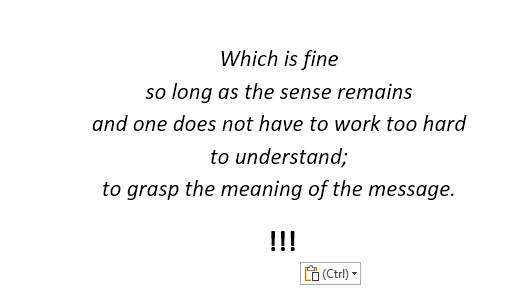
A while ago we gave you a blog about apostrophes and the two apparently different jobs they do.  In actual fact, however, their jobs are not so very different as both uses indicate something has been left out thus effectively shortening the statement – a thing we tend to do when talking.  Which is fine so long as the sense remains and one does not have to work too hard to understand; to grasp the meaning of the message.

Back then we concentrated on the apostrophe of possession (AKA the apostrophe of ownership or belonging) and gave you the example of how a string of apostrophised words can make perfect sense with the little nonsense story of “Jan and Her Gran”.

The other use of the apostrophe (also known as a “raised comma” but in grammatical circles is referred to as the “apostrophe of contraction”) is, in a sense, simpler as it reflects what we all do when talking: run words together so that two or three sound like one.  This means that, when writing, we omit a letter (or letters) along with the space between the words.

I’ve become aware for several years of a move to dump apostrophes all together as the correct use of them is seen as too hard; confusing; not necessary; writing would be simpler…; too many people don’t know how to use them…

If they are taught well all these objections are virtually non-existent.  In my experience as a school-marm all my working life I know that pretty well every eight or nine year old can learn to use them appropriately.

What fascinates me is the effect ditching the apostrophe of contraction could well have on our reading of such words as he’ll, she’ll, we’ll, she’d, we’d, can’t, won’t, I’ll.  Pause a moment and consider each of these minus its apostrophe. 

Reading written English can be a challenge at the best of times due to a number of factors I won’t go into here.  So why on earth make it harder than it need be?  Surely what we really need is simple, effective teaching that explains things clearly.

Just in case you had a bit of trouble visualising the effect of omitting the apostrophe on the short list I gave you above:                                                               

he’ll = hell/ she’ll = shell/ we’ll = well/ she’d = shed/ we’d = wed/ can’t = cant…

Admittedly, this last is not commonly used these days. But, according to my big, fat, two volume Shorter(!!) Oxford Dictionary there are no less than ten separate, distinct meanings for “cant” varying from “dispose of by auction” and “jargonistic” through “bold, brisk, lively, hearty” to “push or pitch sideways”…  Just to list but a few of those ten!!

To recap what I said in the beginning about making changes to the language:                                                                            
© Mary McDee 2023

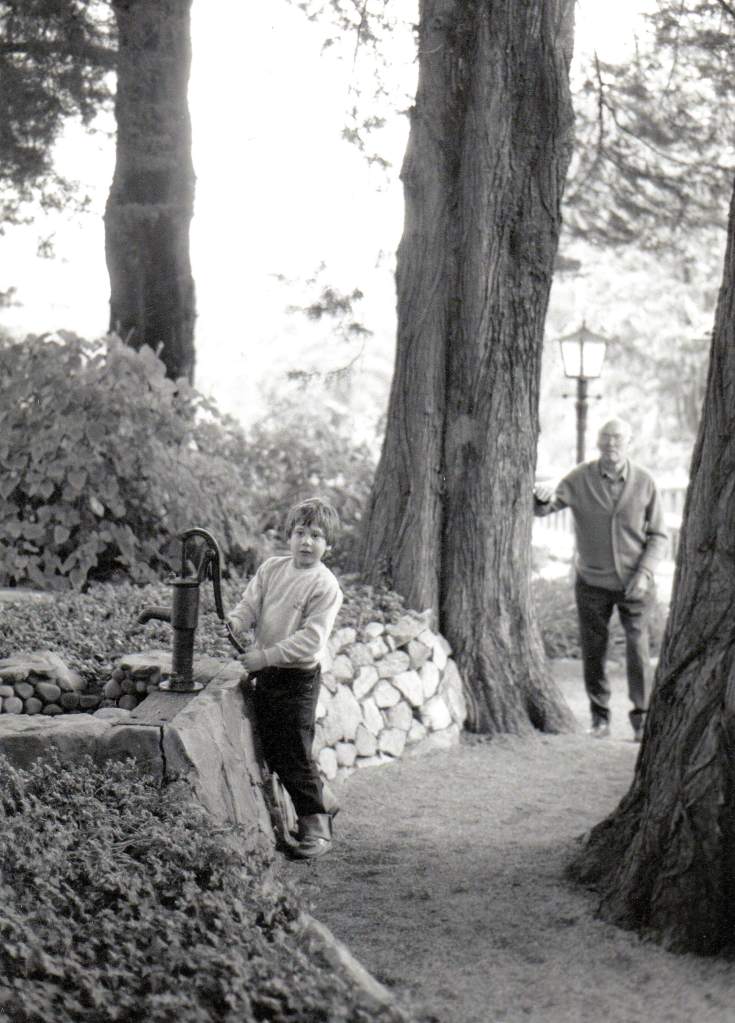
Feature Photo: Boy at the well © L.M. Kling 1984
Share this:

  • Click to share on X (Opens in new window) X
  • Click to share on Facebook (Opens in new window) Facebook
Like Loading...

Grammar Made Easy–Jan’s Gran’s Van

October 29, 2022 / lmkling / Leave a comment

Jan’s Gran’s Van

Following on from “Raised commas aka Dratted apostrophes” back in September, we thought you might enjoy the following text of a children’s story featuring these pesky punctuation marks (taken to a somewhat bizarre level, we must admit). Bizarre as they are, in this piece we can assure you that this is grammatically correct.

Jan and her Gran

Jan has a Gran,

Gran belongs to Jan

And Jan has fun with her Gran.

Jan’s Gran has a van.

The van belongs to Gran,

Gran belongs to Jan

And Jan has fun with her Gran.

Jan’s Gran’s van had wings,

the wings belonged to the van,

the van belongs to Gran,

Gran belongs to Jan

and Jan has fun with her Gran.

Jan’s Gran’s van’s wings had nuts.

The nuts belonged to the wings,

the wings belonged to the van,

the van belongs to Gran,

Gran belongs to Jan

and Jan has fun with her Gran.

Jan’s Gran’s van’s wings nuts held the wings onto Jan’s Gran’s van

so Jan and her Gran could hop in the van and go off on trips.

They would jump in that van

and then they were off,

up, up and off.

            Off to spots that were cold

            and spots that were hot.

Spots that were wet

and spots that were not—

up, up and off

                  to fun spots galore.

Then it was spring and a trip was planned.

They packed lots of things—

        Drinks…

            lunches…

                        rugs…

                                  maps…

BUT!

When they checked the van

            the nuts fell off.

            When the nuts fell off

            the wings fell off.

           When the wings fell off

                       they could not

                                    be up, up and off.

So that trip was off.

Jan was sad.

Jan’s Gran was sad.

But the van would still go—

NOT up, up and up

but still…

                        it WOULD go.

That van could still go on trips—

lots and lots.

            So Jan and her Gran

            plugged up the spots where the wings fell off.

Then—

            in they hopped

            and off they went,

Jan and her Gran

in the van with no wings.

They went

            to spots that were cold

            and spot that were hot,         

            spots that were wet

            and spots that were not—

Fun spots galore!

        And Jan…

            STILL has fun with her Gran.

© Mary McDee 2022

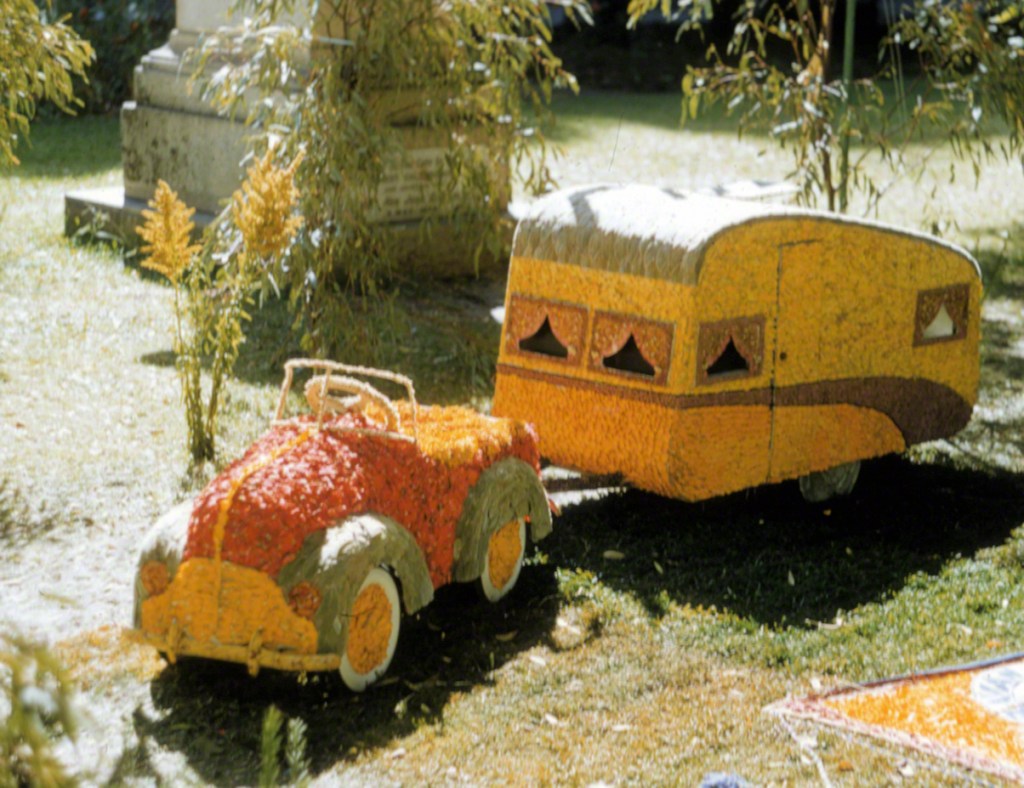
Feature Photo: Floral Caravan and Car at Adelaide flower festival © Sam Gross circa 1960

Share this:

  • Click to share on X (Opens in new window) X
  • Click to share on Facebook (Opens in new window) Facebook
Like Loading...

Grammar Made Easy–Apostrophes

September 17, 2022September 17, 2022 / lmkling / Leave a comment

RAISED COMMAS  aka  “DRATTED APOSTROPHES”

These little things seem to cause more angst, confusion and errors than any other feature of our written language.  There is even a move afoot to eliminate them altogether.  Which would be tragic as they play a critical role in clarifying meaning.  By way of demonstration, can you decode the precise meaning of each of the following phrases:

1. The dog’s collar;                                                                                                                                

2. The dogs’ collars;                                                                                                                                  

3. The dog’s collars;                                                                                                                   

 4. The dogs’ collar.

Three words; the only differences being that two of the final words end in ‘s’ and also the position of the apostrophe.  Yet each of those four has a very different meaning and, lacking that little squiggle, the meaning would be, not only obscure, but impossible to work out.  Context could help of course but not necessarily.  Why make life harder than it need be?

Let’s see if I can clarify the issue.  Apostrophes have one job to do, and one only.  Part of the confusion lies in the fact that this one job has two different aspects to it.

The one job is that it indicates something has been left out so therefore it is a form of abbreviation.  

This happens when we turn speech into writing. When speaking we tend to hurry things along a bit – it’s much easier to say can’t and didn’t than cannot and did not.  Used in this way our squiggle is termed an “Apostrophe of Contraction” because we have left out, not only the space between two words, but one or more of the sounds and  therefore, the letters that represent those sounds, when we put it into writing.

The second instance is called the “Apostrophe of Possession” and is somewhat more complex.  But not impossible as there is a rule you can follow that simplifies things beautifully.  Before we get onto this “rule” let’s sort out just what is left out though.

Possession means someone or something belongs to someone or something; alternatively there is an owner and who or what is owned by that owner.  Thus it always involves two naming words (i.e. nouns in grammar speak).  For instance “Jane’s brooch” tells us that Jane owns the brooch; the brooch belongs to Jane.  Thus it is the words denoting ownership that have been omitted.

Well then, what is this rule that is going to simplify things?                                                                   

Take a deep breath and follow the steps:                                                                                                                        

1.  Work out who or what is the owner and what is being owned.                                            

 2.  Write down the name of the owner and nothing else.  If it is a person then the name is easy but if it happens to be more than one thing (e.g. a couple of dogs; a herd of cows; a fleet of yachts…) the owner is plural so that is what you must write down.                                                                                                                                    

3.  Add the apostrophe.                                                                                                                        

 4.  Say the phrase aloud (owner and what it is that belongs to that owner) listening carefully.  If you hear yourself saying “s” (or an extra “s” if the owner’s name happens to end in “s”) on the end of the owner then add it.                                                                                        

5.  Write down what is owned.

Done!  And done correctly.

The result can, on occasion look quite bizarre.  By way of example consider the following:  A visitor arrives, is welcomed and asked to take a seat; heads for a comfortable looking chair but host says, “Sorry, please don’t sit there.  That’s puss’s chair”.  Go through the steps and you’ll see this is grammatically correct, both spoken and written

Were you able to sort out the dogs and collars puzzle I gave you in the beginning?               

If not, here is the solution:                                                                            

1.  The dog’s collar (one dog and one collar – presumably that collar belongs to that dog).                                                                                                                                                                                 

2.  The dogs’ collars (several dogs each with its own collar).                                                                  

3.  The dog’s collars (obviously a pampered pooch with a whole wardrobe of collars!!).                                                                                                                                                            

4.  The dogs’ collar (possibly a succession of family dogs with the same collar serving several generations.  Or maybe – sad to say – several dogs having to share the same collar!!).                                                                  

© Mary McDee 2022

Feature Photo: The Dogs’ Collars © L.M. Kling 2013

Share this:

  • Click to share on X (Opens in new window) X
  • Click to share on Facebook (Opens in new window) Facebook
Like Loading...
Blog at WordPress.com.
  • Subscribe Subscribed
    • Indie Scriptorium -- Self Publishing Collective
    • Join 95 other subscribers
    • Already have a WordPress.com account? Log in now.
    • Indie Scriptorium -- Self Publishing Collective
    • Subscribe Subscribed
    • Sign up
    • Log in
    • Report this content
    • View site in Reader
    • Manage subscriptions
    • Collapse this bar
 

Loading Comments...
 

    %d