“The only time I feel alive is when I’m painting.” – Vincent Van Gogh. “I can’t change the fact that my paintings don’t sell. But the time will come when people will recognize that they are worth more than the value of the paints used in the picture.”
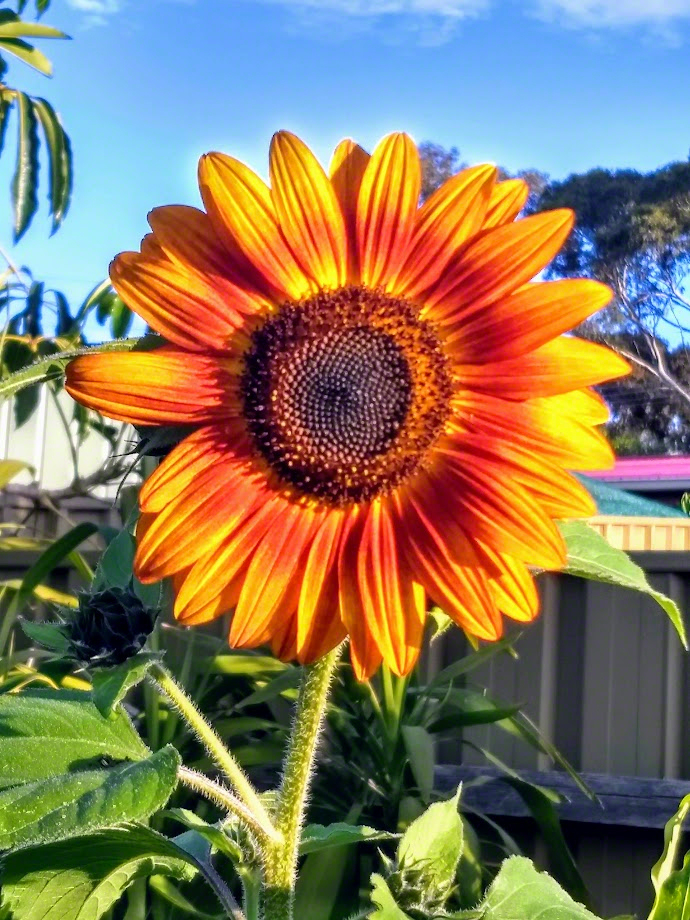
[The Sunflower; a Van Gogh icon (c) L.M. Kling 2018]
A current example of those discouraging times when our books don’t sell; I recall my experience during two years in art exhibitions of not selling—not one, not even a cheaper unframed painting. So, at the time, I could relate to Vincent Van Gogh.
As writers we too feel disheartened when our books don’t sell. We’ve spent hours, weeks, months, maybe years writing, refining and producing our “babies” just to see them sit there on the shelf, unloved, unwanted, buried under millions of competing books in the Amazon ranking list.
Perhaps you were one of those authors who attempted to take the traditional route, sending query letters to potential agents or big-name publishers, only to receive the rejection letter months down the track. And this happened over and over again.
Or maybe like me, you saw the writing on the wall, bypassed all that palaver; went straight to Amazon, Draft to Digital, (or some other online publishing service) and self-published. Whichever way, the result is the same, the product must be sold. Even in traditional publishing, we are selling our books to the publisher then, if we are successful, they expect us to promote our books at book launches, speeches and signings.
Advertising, it’s all about marketing and advertising.
So, here I was, I had my “baby”, (actually “babies” — five books now), and to advertise, I have my blog, my website and most recently, Indie Scriptorium Self-Publishing Collective. Week in, week out I blog and post. I try and keep up with my followers by reading, liking, and following their blogs. Sometimes I offer my books for free on Kindle. I’ve tried a bit of advertising too. Slowly my contingent of followers has grown.
Yet, I see my friends or associates on social media pumped up with successes and bestsellers to their name. There’s influencers who have monetised their websites and now own a portfolio of properties. Then there are the bloggers who have 100,000-plus followers.
How do they do it?
All the while, here’s you and me, the wallflowers, missing out.
Believe me, being a wallflower is discouraging.
But, fellow wallflowers, don’t be discouraged.
Don’t give up.
Persevere.
I keep reminding myself that those success-stories often start with struggle. The people who are successful in sales, most often put themselves and their products out there. They spread the net far and wide, so to speak. They don’t give up when faced rejection. They keep on going. They have goals. And when they fail, they pick themselves up and keep on running.
True, there are some for whom success falls in their laps. But for most of us, we need to make the effort to reap the rewards.
The comment Van Gogh makes resonates with me. Although he sold only one painting in his life, he believed in his work, and the timeless quality of his art, as one can see from his quote at the beginning of this post.
I believe that’s how it is for me when I am writing, and also painting. I feel alive. And echoing what so many of my fellow “creators” say, I would rather be creating than getting bogged down in all the marketing and advertising. Like Van Gogh, I can’t change the fact that my books or paintings don’t sell…
I have been mulling over what stops us. What makes us stall from reaching our potential? Our potential to write that novel in our heads. Finish that story. Take up the challenge we are given and run with it to the end. Often, it’s the way we see ourselves. Our limitations. When faced with the challenge, our song is, “I can’t. I’m not good enough.” We reinforce our self concept with the chorus, “I failed that (insert challenge) at school.” Or “I was sacked when I did (that particular challenge)”. It got me thinking that when we define ourselves by our limitations, we work ourselves into a corner.
One fun activity that our Writers’ group found useful was the 100-word challenge. This little task helps fire up the creative juices, refine writing skills, and simply work around the limitations we writers put on ourselves.
Below is an example from my collection.
Worked…
…Into a Corner
All afternoon, our backyard echoed with the hum of the cement-mixer, and intermittent scraping. Dad, armed with a trowel, smoothed the cement over an area pegged to become the back patio. Metre by metre, he pasted his way back.
Mum stood on the porch, and with hands on her hips, remarked, ‘And how are you going to get out of this one?’
In an ocean of soft cement, Dad looked around him, lost. ‘Er…um…I’ll work it out.’
Tracks back to the lawn-edge smoothed, Dad stood and admired his DIY job.
Next morning, paw-prints made their way to the rainwater tank.
Our Indie Scriptorium Team has been busy this week preparing for a fantastic local author event, Wordfest. If you happen to be in Adelaide, come to Woodcroft Library, 3 to 7pm this Tuesday September 10.
Indie Scriptorium Self-Publishing Collective Anthology 2024 will be available in print from this date.
As well as the anthology, we will be selling our print copies of our books which include:
[Our Indie Scriptorium team have been putting together an anthology of some of our posts over the last two years. As I hunted around my messy computer filing-system for a number of these cheeky posts that went hiding, I came across this gem that somehow got buried in the vast layers of time. Amazing what one finds when searching for something else. So, with a few changes, here it is…Enjoy and be encouraged.]
BURIED GOLD
People spend their lives building their own kingdoms. As creators, we often measure success by how far our name-brand spreads over the “Empire” of the internet, world, community, and how much “gold” (money) we’ve amassed through the sale of our product.
When I first started exhibiting my paintings, friends, family, and fellow artists asked, ‘Have you sold?’ and ‘How many paintings have you sold?’
The fact that I had sold made me an authentic artist.
Same can be true as an author of two self-published works of fiction. Again, like a broken record, those interested asked, ‘How many books have you sold?’
Answer, ‘Er, um…not that many.’
Then the implication I should have gone through the traditional route of getting a publisher.
Yup, maybe, probably…still deciding if I’ll do that with future books, especially the travel ones that have colour photos on glossy pages—the coffee-table variety. Not sure how I’d go…I mean, I’m not an unpublished “virgin” since I’ve gone ahead and self-published on Amazon. I got impatient, afraid I’d remain invisible with a pile of rejection letters, and my novel manuscripts languishing as a PDF-file on my computer hard-drive (the hard copies stored in a box in my closet).
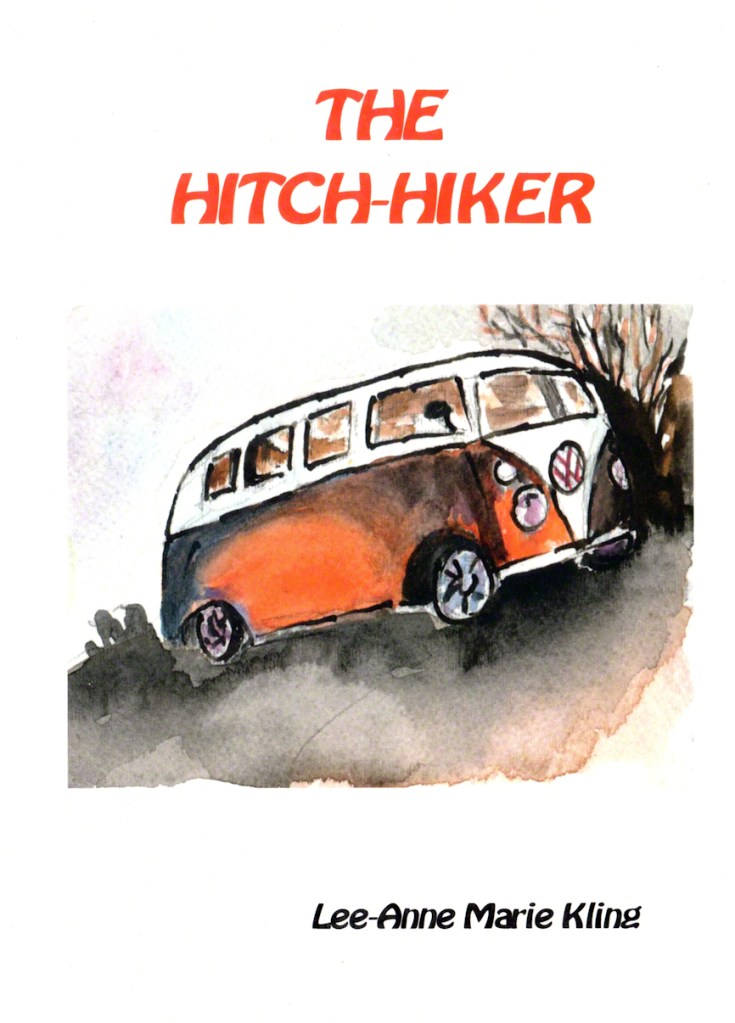
So, I published The Hitch-hiker (a novella) and Mission of the Unwilling(novel), on Amazon. Check them out. You can download them for the cost of a cup of coffee and find out what mischief Boris gets up to.
[Photo 1: The Hitch-Hiker (c) L.M. Kling 2015]
After publishing, having a little launch in our South Aussie pre-Christmas summer sweltering in 40 degrees Celsius, then a DIY advertising with bookmarks, flyers and emails, I decided to do research on how other Indi-authors built up their e-book kingdoms. There must be a secret method for digging up the buried gold of success in sales.
[Photo 2: Mission of the Unwilling (c) L.M. Kling 2015]
I discovered a mine of information lighting up my computer screen. I also discovered a precious nugget in an old Australian Artist Magazine—stand-out quality. In today’s language, I assume that means “brand”.
So, when at our SALA exhibition launch, a friend told me they knew which paintings were mine, that I had a unique style, I thanked them. I was on the right track with my “brand”.
But my books? Well, there’s Boris…albeit swamped by millions of other characters on Amazon.
Then, I discovered a gem—blogging. Not in the way I anticipated, though. I was optimistic. With my blogging presence, out there, I expected sales to rise and hundreds of instant visitors to my blogsite. My works were brilliant, right?
My posts drowned under the deluge of millions of other posts, tweets, Facebook pages, and other more successful blogs. For weeks, I remained South Australia’s best kept secret. Even my mum couldn’t find me—not even with my help on her computer.
Fellow writers at my writers’ group suggested I needed to post articles more frequently, get those WWW- “neural”-pathways (Algorithms) working by increasing traffic. Still, the site remained as lively as a cemetery.
Over time, I gathered a band of followers: friends, family, colleagues from church, writers’ and art group. Interest ensued—all Australian—no likes.
Undeterred, I wrote and published posts once or twice a week. Writing, my therapy. The articles available for free, my gift to the world. I prayed that there’d be others out there who’d find my words, and consider them useful, inspirational, amusing.
Week by week, comments and likes (mostly from mum) trickled in. Then, a comment from someone I didn’t know…and a visitor from the United States. Oh, what joy!
A friend encouraged me. I’d improved since they first started reading my blogs. Yes, writing is a craft; the discipline and practice refined my skill to communicate.
I read posts from other bloggers. I liked the posts that resonated with me. I knew I must start commenting. Friends who had websites and blogs said that’s how you make your presence known in the blogging community. I usually read WordPress articles late at night and was concerned my comments would come across as sleep garbled. Eventually, I plucked up the courage to comment. My first comment was about cats.
Each month, slow and steady, the number of followers, likes and visitors grew. My site on WordPress, the first place I visit each day when I open my computer. What countries have visited today? Check the emails. Who has liked me? Who’s following? I visit their sites and see what gems of writing, stories, photos, or paintings they have.
My world has opened; I read stories from every continent…and my stories shared around the globe.
Photo 3: Screenshot, My Stats for the Year (c) L.M. Kling 2024
The treasure I found by entering the world of bloggers, is not the gold I collect in my bank account for my own kingdom from my own works, but the cities of gold we share collectively as writers and artists. We put our stories out there and celebrate each other’s works.
So, a heart-felt thank you for all you who have followed, liked and visited my humble site—and thank you all for your stories, insights, artwork and photography.
Photo 4: Screenshot, visitors from all over the world (c) L.M. Kling 2024
So, if you’ve started up a blog/website and are waiting for it to be noticed, don’t give up. Keep writing, reading, commenting, liking and following and watch your readership grow.
It’s my opinion a good opening line isn’t essential for your story or novel, but it won’t do it any harm.
My critique group decided to revisit the essentials of writing as a way of everyone learning from the same page and improving our collective efforts at finding the right words for our various projects.
First topic – opening lines.
I realised that when I read a novel I don’t get put off by the opening line hence my opinion that a good opening line is not essential is from my personal experience. However, I love books written in third person in past tense so if the first line has an omniscient POV and is written in the present tense I tend to put it back on the library shelf.
So, what makes a good opening line?
I googled the above question and found some great information.
The Literary Hub presented an article by Allegra Hyde.
A good opening line “should capture your characters voice, it should carry your style, and it should be relevant and meaningful enough to engage your readers and entice them to read onto the next line.” An, “elegantly balanced dose of clarity and curiosity.”
However, it should not be “so heavy that it weighs on you or so literary that it chases away or confuses the reader.”
Allegra also suggests that the opening lines clarity should provide a sense of time, place, character and plot. The curiosity can involve the element of tragedy, conflict, mystery that fuels your story.
Suggest a short clear sentence that grabs the readers attention.
Use verbs correctly and adjectives sparingly.
Use words that add weight.
It doesn’t have to be loud; subtlety can be effective.
After doing this research I decided that for me a good opening line:
Is a short sentence where every word has weight and substance.
Intrigues the reader
Clarifies if the novel is written in first person, third person or omniscient.
Provides the tone of the book
Pulls the reader into the situation
Infuses them with curiosity about what comes next.
I then found some examples of opening lines I loved:(you can’t beat the classics)
Albert Camus – “Mother died today.”
Jane Austen – “It is a truth universally acknowledged, that a single man in possession of a good fortune, must be in want of a wife.” (apparently the most famous opening line ever)
Charles Dickens – “Marley was dead: to begin with.” (love this one)
So, putting the new knowledge into our own writing I have selected to test out some ideas for my new romantic short story Honeygate.
He stood at the back of the hall his face shrouded by a deep hoodie. (Does capture the tone of the story but too descriptive with no hook)
Magical, menacing mesmerising. (Fuels the curiosity but doesn’t provide any clarity about who’s talking or the situation)
I couldn’t see his face but his gaze stole my well-rehearsed words and left me floundering. (clearly defines the characters point of view, raises curiosity, puts it into a context and suggests the potential conflict between the protagonists)
Just doing this exercise has raised my awareness of the importance of an opening line and given me some directions so I can play around with various types of lines and find the best one.
What I found particularly helpful is that using a first-person POV would work well for this story. My heroine has felt the impact of the hero’s gaze and is discombobulated enough to forget her speech she can have the stage from here on and tell us her story from her perspective.
A huge apology for being a day late posting this week’s blog. As Mary McDee says (often), “Technology, you can’t trust it.” She says this while spending the week chasing Dorper sheep (Goat-Sheep Cross), from the neighbour’s yard back into her own. They are more stupid than actual sheep, much like she thinks computers are.
Anyway, ‘twas a computer crisis at Mrs. T’s (my mum), that sent the weekend into wobble-world. That with the default of chasing ancestors down familial rabbit holes, I have done little in the way of preparing an article to post, let alone any idea what to post on the chosen topic, World Building.
Then inspiration struck. At the proverbial last-minute. Why not do a spot of World Building from one of my developing novels? Why not, indeed!
I searched around for a worthy template—one that was interesting, not too many questions (just enough for the exercise) and one that was memorable. I didn’t have to look far on the World Wide Web, to find this little beauty: GRAPES.
“G” for Geography
“R” for Religion
“A” for Achievements
“P” for Politics
“E” for Economics
“S” for social Structure
There’s even a colourful chart with two or three questions under each heading to help with the process, courtesy of Amanda Schlindwein. Thank you, Amanda, for posting this helpful model which you can see if you click on the link to her website.
So, here goes. I will use the book that I have been posting serially on Wattpad, Diamonds in the Caveas my world building muse. (I won’t be addressing every question in the GRAPE help. The post would end up being too long, otherwise.)
Geography
How does the region’s climate and placement affect the characters in your story? The village of Luthertal on Pilgrim Planet (approximately 20 light years from earth) suffers extremes of temperature and weather conditions because of orbiting two suns. After emigrating from Eastern Europe from the 19th century, where climate was more stable, they find the change confronting, confusing, hard on their stamina and they become angry. They need to vent their anger and frustration. As a primarily farming community, the droughts, fires and floods that fail their crops, and kill their livestock, cause them to seek someone to blame. Hence a perfect storm for parties of evil intent to stir up the idea of witch hunts.
Religion
What do your characters believe in?
One God and the founder of European Protestantism, Martin Luther. But they, being Wends, are synchronistic, never having relinquished the superstitions, magic and healing practices from their “heathen” ancestors. So, there’s this conundrum; a person who fails to attend church each Sunday is called a “heathen”, but it’s okay to believe that breaking a wishbone of cooked chicken and the person getting the larger portion can make a wish. Or a character must trust in God to heal them, and the church prays for them, but it’s acceptable to treat the sick with herbal remedies as according to the long tradition of apothecary. I might digress here that my two-times great grandfather came from the region of Lusatia (which is where the Wends come from). Before he became a doctor he studied, at Herrnhut, the base of the Moravian Brethren, (so we’re talking seriously Christian here), the medicinal art of apothecary. Maybe some Lutherans would’ve had a problem with that, but we’re talking about a particular community, the Wends or Sorbs. So, writing from my own family history experience, which is partially Wend, I can see this community of Luthertal being more open to magic and the supernatural. One day I might write on these supernatural experiences that my family and relatives have experienced.
Achievements
What has this civilisation created that has withstood the test of time?
As mentioned above, being an agricultural community, the Wends are robust and healthy. They have their Wendish culture of dress and traditions. They are remembered as an industrious people, but also as a deeply religious God-fearing people. In fact, they feared God so much they escaped the persecution and oppressive norms put upon their religious practices that they planned to emigrate to South Australia. Unfortunately, an evil alien called, Boris who pretended to be God’s ambassador, led them astray and transported them to the Pilgrim Planet with plans to enslave them and breed an army from them.
Politics
Who controls the society and how do they control it?
Although in Diamonds in the Cave the Wendish community are emerging from the ruthless fascist control of Boris, having been saved from his clutches by the good guys Intergalactic Space Force (IGSF), in my previous book, The Lost World of the Wends, they are still politically and structurally fragile and finding their way. They have reverted to the ways of old where the Burgermeister runs the village and decisions are made by all villagers gathering in the church. The Wend community is by this time a theocracy. However, Boris still has his influence with a couple of his agents hiding in plain sight in the village. These agents are stirring up the Wend community to seek out witches and burn them.
Economics
What is considered valuable? And how are products bought and sold?
Apart from food and the products from farming used to be self-sustaining, as was the custom back in Eastern Europe in the mid-nineteenth century, mining minerals and ore for power and energy for space travel is taking off. Mutants who have been freed from slavery under Boris have been brought in to help develop the village building houses and mining in the local mountain range of Mount Martin. The Wend villagers begin to regard the mutants with suspicion and they become targets for witch-burnings.
The currency that the Wend community use are “pfennig” (pennies) and thalers, like what they used in Saxony in the mid-nineteenth century. Products are bought and sold at market which is open every day except Sunday. Sunday is the Lord’s day, a day of rest.
Social Structure
Who are the most important people?
The Burgermeister (Herr Biar), the pastor and the doctor (Dr. Zwar), who in Diamonds in the Cave is the pastor. Prestige is shown by the assets the high-status ones have. The doctor owns a Mercedes. Herr Biar has a beautiful, large brick house and large farm.
Least important people?
The mutants, old single women (Gertrude) and women who don’t fit in the community (the female heroine, Minna). They are the prime targets for witch-burnings.
***
That’s all for my little exercise for starters. I found it helpful to clarify my ideas for the world in which my characters live in Diamonds in the Cave.
Have a go yourself using the GRAPE template or click on the links below to try one of the other templates that looked useful.
Let us know how you go? Or if you have found a template that works for you, send us a link.
My stories begin long before I put pen to paper or print words on a screen. They start in my head. Dreaming. Often with a dream. Or a vision. Or a “what if”. Or a memory.
My latest novel venture into crime fiction, began with a dream. Then developed with a “what if” and some memory thrown in. Fourteen years ago, my mum and I would discuss what if a child were given up for adoption, traced their birth parents and the reunion wasn’t the rosy one imagined it would be for the child. We had a certain character in mind when musing this situation. This person had their life together and would see their former “mistake” as an intrusion and something they’d rather forget.
Around this time, I had a dream about finding a body under a bridge. It was so vivid that I drafted a short story about the “experience”. I read out the story at writers’ group and received both honest feedback and harsh criticism for my efforts. The story was filed away.
Years went by and the ideas of the story percolated. Meanwhile I concentrated on my Sci-fi “War on Boris” series and the “Intrepid T-Team Travel Memoir” series. I travelled with my family and got on with life. In the background, I mulled over the characters and the world in which my Under the Bridge characters lived. I allowed the characters to move about and interact in the world of my imagination. I realised that I could marry the idea of an adoption reunion gone wrong with the body found under the bridge.
As ideas and situations emerged, I shared them with my mum and others. Along the way I began research into the issues around my crime fiction story. I familiarised myself with the genre. Read books and newspaper articles, watched crime shows, and listened to podcasts. All this absorption of information helped with the percolation process.
Five years ago, I sat down with pen and paper and began planning. After writing a sentence encapsulating the main idea of the book, I fleshed out the characters on paper. By this time in writers group, we had been given a sheet of paper that had set out how to write a character profile. I found this helpful in describing what my characters looked like, their main motivation and desires, their habits, personality, backstory and even fears. As I did this, the characters began to interact with each other, and the story began to take shape.
I decided to set Under the Bridge, being my first crime novel, in a place in which I was familiar. My home town, Adelaide. After all, the city has much going for it, and could be equated with “Midsommer” in the British Midsommer Murder series. It does have the reputation for the strangest and grizzliest of crimes—the Beaumont children (never solved), the Family murders, the Truro murders, and the bodies in the barrel murders, just to name a few. Come to think about it, I don’t know how I’ve managed to survive in Adelaide.
Into this I spent time planning the story line, timeline and chapters. Last year I wrote a synopsis and shared it with my Indie Scriptorium big-picture editing friend, Elsie King. She loved the premise, but gave helpful feedback on developing the characters more, giving them depth.
So back to the process of percolating, dreaming, visioning and having conversations with my characters in the shower…And research. As I have mentioned previously, part of that research has been delving into my family history. Although, in doing so, I have opened a Pandora’s Box of more stories that have started to percolate. Watch this space…We have so far: riches to rags (more than once), destitute to convict to doctor, missing on the Russian Front (or is he?), and mistreated orphans (sounds like another Dickens tale only this time it’s Dutch). I hope to write up short stories of these ancestors over time and after sufficient research and again, percolation.
Back to Under the Bridge, I then began to plot the chapters and timeline of the story. But I will deal with this part of the World-building process in Part 2.
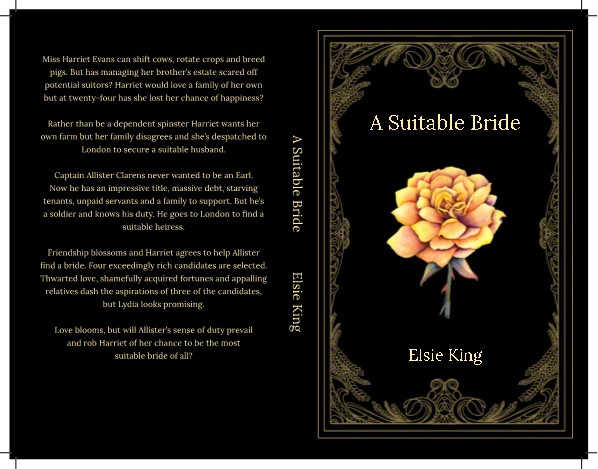
Welcome to my new novel, A Suitable Bride. Impossible love, the dire need for an arranged marriage and a happy ending firmly place this novel into the Romance genre. And yes it’s set in the Regency era.
I got lovely feedback from my first novel A Suitable Heir so I hope my readers will enjoy this second foray into my favourite time in history.
The book will be available from the 30th April in both e-book and print copies. Please visit my website www.elsiekingauthorartist.com for links to purchase on-line.
I read an article by Draft2digital that said the best marketing for your first book is to publish a second. I certainly hope that this is true. Enjoy.









 Indie Scriptorium -- Self Publishing Collective