Indie Scriptorium — Self Publishing Collective

Helping Each Other Publish

Skip to content
  • Home
  • About Us
  • Blog
  • Books For Sale
  • Introducing Indie Scriptorium
  • Links–More for You
Search

skill sharing

Marketing–Building a Website

November 13, 2022 / lmkling / 4 Comments

Marketing—Do you need a website?

So, you’ve finished, or nearly finished, your novel. It’s written, rewritten, edited probably at least five times, given to beta readers for feedback, critiqued by writing friends or in writing groups and taken up a large part of your life.

Whether it took you years or months, a novel is a major investment in time, energy, sweat and tears and when the manuscript is finished, you don’t want it to languish in a bottom drawer. It needs to be read.

Marketing is the hardest part of self-publishing. It’s estimated that there are over three million books on Amazon. They publish 50,000 books a month and they are the largest company for self-publishing authors in the world. They release a new book every five minutes. It’s a lot of competition. Your book has to be seen, talked about and hopefully bought in order for it to get ahead of the thousands of other books being published. Marketing is the way to get your book noticed.

Before coming up with your marketing plan, it may be helpful to consider what you want for your finished book.

  1. Do you want to make writing your career? Intend to write many books and earn enough money from sales to give up your day job. This means a commitment of long hours for the rest of your life. Writing will become a business and a passion, and you will need to build up your name to ensure you have lots of buyers for your products.
  2. You may enjoy writing fiction as a passion, an activity that gives you pleasure, and you want your books read by an audience. This is the category where I am. I want my books to be the best they can be, to achieve a professional standard, but I’m not dependent on an income. I don’t want to put pressure on myself to write what sells and have to achieve deadlines.
  3. The third type of writer may want to write their memoir or family history, or contribute a non-fiction book. These authors may have a smaller audience, although some biographies and memoirs sell well on the open market.
  4. Another author may write for purely personal reasons, using the medium of writing to express their creativity. Often these writers contribute to anthologies in writing groups or may have a body of work that they want a book to share with family and friends.

All of these authors can self-publish a brilliant book, but their goal for book distribution may differ from a professional writer.

Back to the question: Do you need a website? If you want your book read and consider writing more books in the future, a website is a good idea and is worth the effort to get one up and running.

A website in simple terms is your address on-line. It’s where people can find you by searching online for your name and what you do. For example: www. elsieking/author.com (not in operation yet). You can sell your books from the website, advertise books you are writing, you can tell your readers about your life, passions and ideas. A website may also be a blog or newsletter where you share your writing tips. The website lets you connect with your readers and get reviews.

A website can be a simple page with minimal details (a landing or home page) or a more complex beast with links to social media, e-mail marketing, newsletters and contacts with other authors.

I’m a newbie with websites. I know they can be expensive to have made for you, but much cheaper to make one of your own using a website host such as WordPress, Square Space, or Wix. Don’t believe the adverts about creating your own websites. It is not as easy as they say. But it is fun to experiment with some website builders.

My advice, consider if you need a website. Research some of your favourite author websites and look at the plethora of YouTube videos that tell you how to create a website. (I found most of them too quick and get through too much information. They also use acronyms which they don’t explain. Find one that works for you)

If you decide to try it, be prepared with a catchy by-line, have a succinct but interesting author bio ready and think about what graphics, fonts and colours you want.

I’m a techno dinosaur, so I expect it will take me many weeks to construct my website. I’m learning as I go and have discovered you can create a website, delete it and start again and play without having to commit to publishing until you have it just right. When I get it right, I will do another blog to discuss the process, I found helpful.

If anyone reading this blog has some personal experience with building a website, please write an e-mail to scriptoriumpublishing@gmail.com We’d love to hear from you.

Elsie King ©2022                                            

Feature Photo: Image from creative commons

Share this:

  • Share on X (Opens in new window) X
  • Share on Facebook (Opens in new window) Facebook
Like Loading...

My Cover Journey

November 5, 2022November 7, 2022 / lmkling / 2 Comments

Covering the Cover

A relative mentioned how in choosing a book to read, they kept on overlooking and dismissing one with a rather plain cover. Finally, they ran out of options and decided to give this book a chance. To their amazement, they thoroughly enjoyed the story—a real gem. They recommended we read the book.

Although we are taught from young to “not judge a book by its cover”, in the reality of today’s world of competition, advertising and marketing, the cover of our books is vital. Plain cover—overlooked. An eye-catching cover—a potential sale.

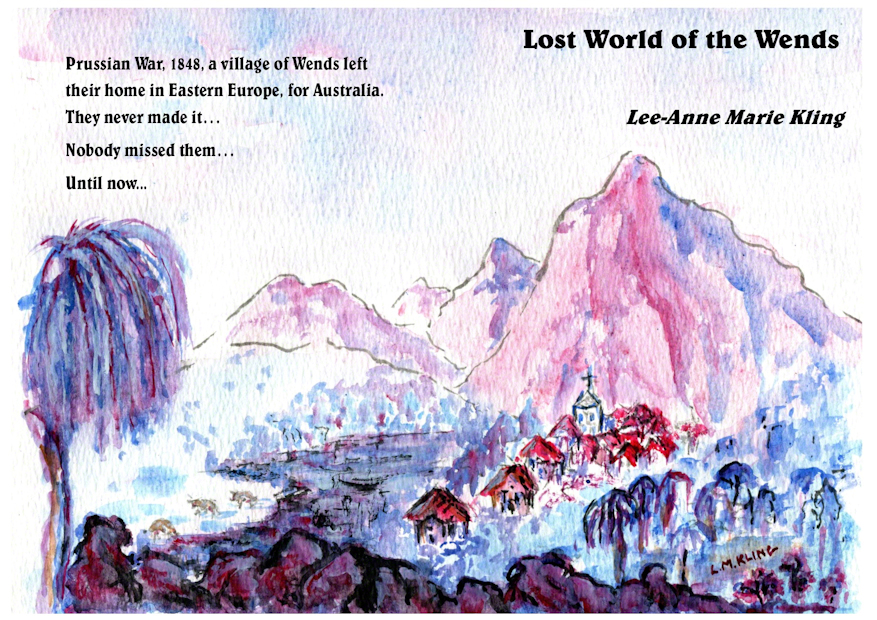
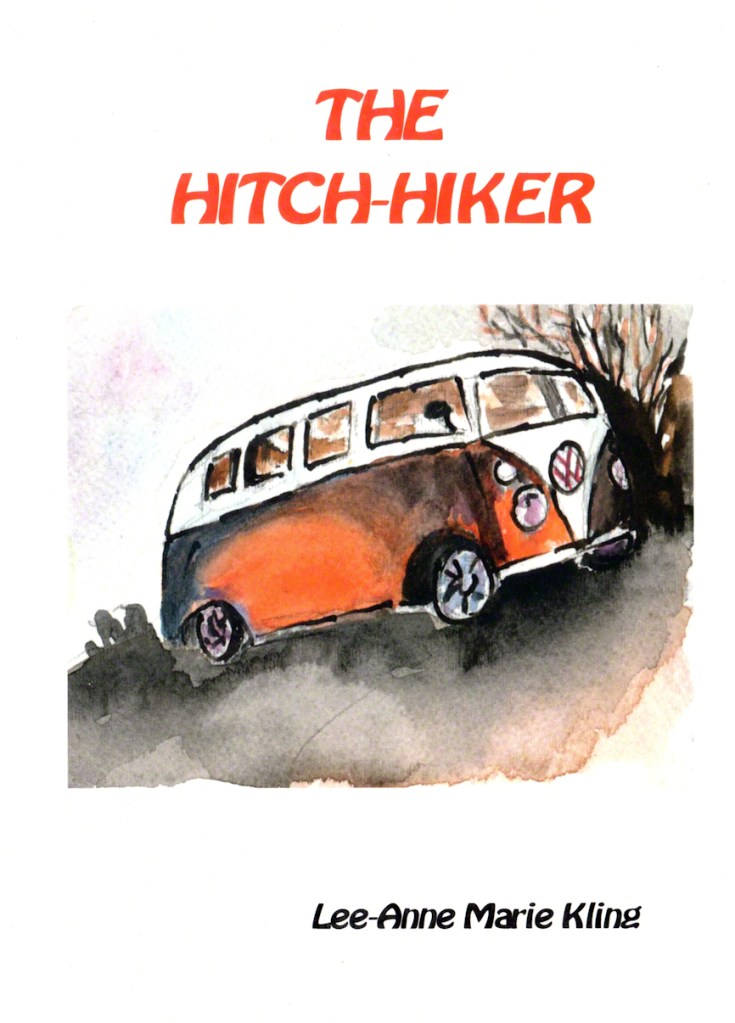
And so, we come to my first novel, Mission of the Unwilling. My team members at Indie Scriptorium advised that although its cover was, well, pleasant, it wasn’t up there, and well, dare I say it again, eye-catching like the covers of my successive books. They said that the covers of my war on Boris Series, The Hitch-hiker and The Lost World of the Wends, being my artwork, had more zing.

I did some research about marketing. Discovered that a book series needs to have features that set it apart and are easily recognisable to the readers who are following the story. Suggestions were: artwork that reflects the genre and story, style, typeface, colours, same size books, and of course, the blurb at the back that hooks the reader.

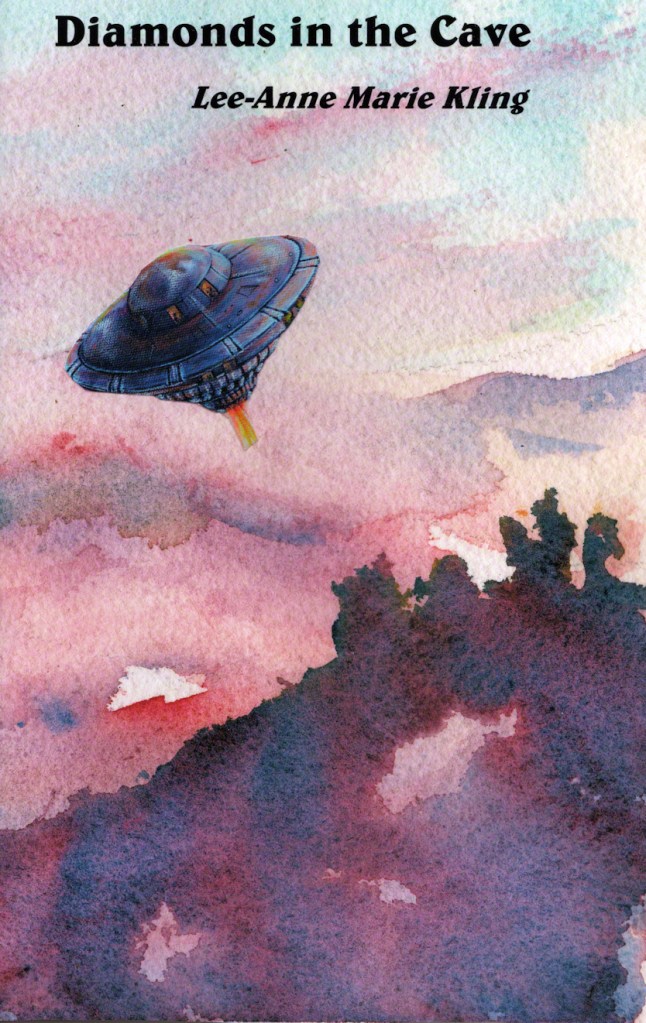
Back to the proverbial “drawing board” or my collection of artworks for a suitable cover for my first novel. After all, I was planning on revising it and releasing a second edition. Around the same time, a fellow artist, Liz Maxted, had painted a UFO scene. Impressed, I asked if I could use it for a cover of one of my future novels. She was thrilled and allowed me to borrow the painting to photograph.

As it has turned out, when working on the new cover for Mission of the Unwilling, Liz’s UFO fits perfectly, hovering over the Sellicks Beach cliffs of my watercolour.

I also changed the blurb to fit with contemporary issues, that being in Mission of the Unwilling’s case, the scourge of bullying and the victim rising above their identity of unworthiness to becoming a hero.

Then, on a roll, I created a cover for the sequel to Mission of the Unwilling, Diamonds in the Cave. And again, Liz Maxted’s UFO fits seamlessly in the mist and clouds of the Mount Martin range of the Pilgrim Planet. In Diamonds in the Cave, my heroine, Minna as a teenage mother, grapples with loss, her mental health, and the issue of witch-hunts plaguing the town.

I’m hoping Diamonds in the Cave will be ready for release soon. Just have to read through it once again, before handing it over to my Indie Scriptorium team to test read and edit. As I said at the beginning, in these competitive times, books are judged by their covers, but the inside needs to match up with good standards too.

© Lee-Anne Marie Kling 2022

Share this:

  • Share on X (Opens in new window) X
  • Share on Facebook (Opens in new window) Facebook
Like Loading...

Grammar Made Easy–Jan’s Gran’s Van

October 29, 2022 / lmkling / Leave a comment

Jan’s Gran’s Van

Following on from “Raised commas aka Dratted apostrophes” back in September, we thought you might enjoy the following text of a children’s story featuring these pesky punctuation marks (taken to a somewhat bizarre level, we must admit). Bizarre as they are, in this piece we can assure you that this is grammatically correct.

Jan and her Gran

Jan has a Gran,

Gran belongs to Jan

And Jan has fun with her Gran.

Jan’s Gran has a van.

The van belongs to Gran,

Gran belongs to Jan

And Jan has fun with her Gran.

Jan’s Gran’s van had wings,

the wings belonged to the van,

the van belongs to Gran,

Gran belongs to Jan

and Jan has fun with her Gran.

Jan’s Gran’s van’s wings had nuts.

The nuts belonged to the wings,

the wings belonged to the van,

the van belongs to Gran,

Gran belongs to Jan

and Jan has fun with her Gran.

Jan’s Gran’s van’s wings nuts held the wings onto Jan’s Gran’s van

so Jan and her Gran could hop in the van and go off on trips.

They would jump in that van

and then they were off,

up, up and off.

            Off to spots that were cold

            and spots that were hot.

Spots that were wet

and spots that were not—

up, up and off

                  to fun spots galore.

Then it was spring and a trip was planned.

They packed lots of things—

        Drinks…

            lunches…

                        rugs…

                                  maps…

BUT!

When they checked the van

            the nuts fell off.

            When the nuts fell off

            the wings fell off.

           When the wings fell off

                       they could not

                                    be up, up and off.

So that trip was off.

Jan was sad.

Jan’s Gran was sad.

But the van would still go—

NOT up, up and up

but still…

                        it WOULD go.

That van could still go on trips—

lots and lots.

            So Jan and her Gran

            plugged up the spots where the wings fell off.

Then—

            in they hopped

            and off they went,

Jan and her Gran

in the van with no wings.

They went

            to spots that were cold

            and spot that were hot,         

            spots that were wet

            and spots that were not—

Fun spots galore!

        And Jan…

            STILL has fun with her Gran.

© Mary McDee 2022

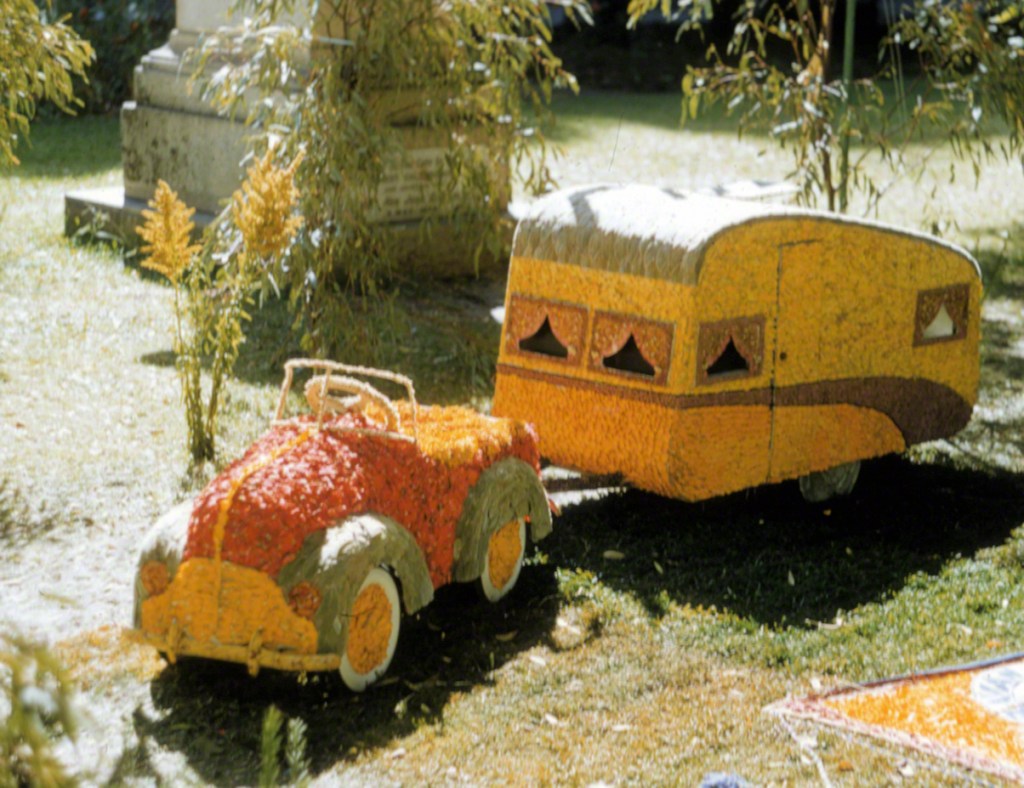
Feature Photo: Floral Caravan and Car at Adelaide flower festival © Sam Gross circa 1960

Share this:

  • Share on X (Opens in new window) X
  • Share on Facebook (Opens in new window) Facebook
Like Loading...

Writing Tips–Research

October 22, 2022 / lmkling / Leave a comment


The Importance of Research

Feature Photo: Victoria and Albert Museum London © L.C. Wong 2022

Writers have it easy these days. Needed facts and figures involve just a few strokes of the keyboard and you have everything you need instantaneously. The wonders of the World Wide Web, Google and Wikipedia. Prior to personal computers, research involved trips to libraries, ploughing through shelves to locate books and journals, photocopying and the dreaded searches through microfiche files. (Microfiche—first invented in 1839 by John Benjamin Dancer.) Research was a tedious process and although I sometimes hate my computer, access to facts, figures, photos and original documents makes writing a breeze.

I enjoy research, and as a writer of historical novels, I spend as much time on research as I do on actual writing. My preferred search engine remains open as I write a scene of my novel. Flipping between research and prose is second nature, as I am always coming up with questions. How long would a journey between Mayfair, London and Ash in Surry take in a carriage and four horses? (Can be done in a day if the weather is good but more comfortable over two days with an overnight stop at Cobham.)

When plotting, I also do considerable research. With my latest novel, I am writing about the Abolition of Slavery in Britain from 1829 to 1833. I have read and noted three PhD. Dissertations and purchased four academic books. I read and study these before commencing plotting the novel. Historical timelines are important to the motivations and actions of my characters. In addition to historical research, it is essential to know the world your characters inhabit. My library contains books that cover politics, housing, etiquette, clothing and transport. I also read novels and essays from original sources.

Photo: Mayfair London © L.C. Wong 2022

If possible, visit the locations in which you place your novel. I had a wonderful day exploring Mayfair in London and then another two days at the Victoria and Albert Museum. If you can’t get to a place, explore online and where conceivable use original maps and photos of historic buildings and gardens.

How much research is needed? The iceberg principal is a rough guideline. Research thoroughly and use only that which is essential to your plot. This for me is about a fifth of what I study. Getting the balance right can be tricky, but my novels are about the characters as they navigate through their world, not a history lesson.

However, make sure your research is accurate. Believe that all your readers are experts in the field you are writing and will stop reading, throw your book away and write a negative review if you get anything wrong. Accurate research is important.

© Elsie King 2022                            

Photos in this post © L.C. Wong 2022

Share this:

  • Share on X (Opens in new window) X
  • Share on Facebook (Opens in new window) Facebook
Like Loading...

On Writing–Getting Going

October 15, 2022October 15, 2022 / lmkling / Leave a comment

CRIPPLED BY THE SYSTEM – BUT NOT ANYMORE!

For many, many years I was convinced that I “couldn’t write” even though I loved reading, even though I had ideas zooming around in my head, even though I loved words and playing around with them, even though I made up endless stories…

I did write poems, but they were different from stories.  My poems were little, short snippets of language where the words were crafted in my head, fiddled around with to get the best ones in the best place, where everything sounded just right before I had to record them on paper.  That was fun.  There was a sense of achievement.

Stories and essays were a very different kettle of fish.  They were hard work.  Producing them was a matter of painstaking drudgery that began in Primary school.  Back then, at the start of every school year children were issued with a heap of pristine exercise books that had to be taken home, covered and had our own name and the particular subject name written neatly on the front.

The expectation was that the work in each one was to be our very best.  No scribbling; no scratching out; no careless, untidy work; no crumpled or torn pages.  In other words, by the end of the year that exercise book should be as pristine as it had been on day one but full of work in our very best handwriting.  Unattainable perfection for most of us!!

As far as writing was concerned the two that were my nemesis; my tragic downfalls were labelled Handwriting and Composition.  The former was bad enough, but it was the latter that led to my conviction: “I can’t write”.  Apart from the “Product Perfect” headset the other thing about compositions was that they had to be written straight into the composition book with correct spelling, perfect punctuation, excellent handwriting… no rough copy, no first draft, no preliminary notes. Straight from the brain cells to the page; no muckin’ about.

If I wanted to use a nice long expressive word like ginormous but didn’t know how to spell it correctly, I had to make do with a little short one I could spell (big) because errors were out, frowned upon, seen as evidence of lack of learning, failure…  Where was the interest or excitement in that?  I was effectively crippled.

Fortunately, education in this area seems to have moved on.  Composition books as I knew them have gone the way of the dodo.  Teachers and students now talk about first drafts and final copies.  Thanks be.

If you can relate to that last paragraph then count your blessings and keep pouring your ideas, thoughts, stories out onto paper or into your computer.  If it is the rest (or even part of the rest) and you want to write but think you can’t then ditch the doubts, grab a writing implement – pen, paper, computer – jump in and make a splash.  Mistakes and stuffing up are potholes, not impassable roadblocks.

We learn by doing!  And lots of practice!!  So go to it and good luck.

© Mary McDee 2022

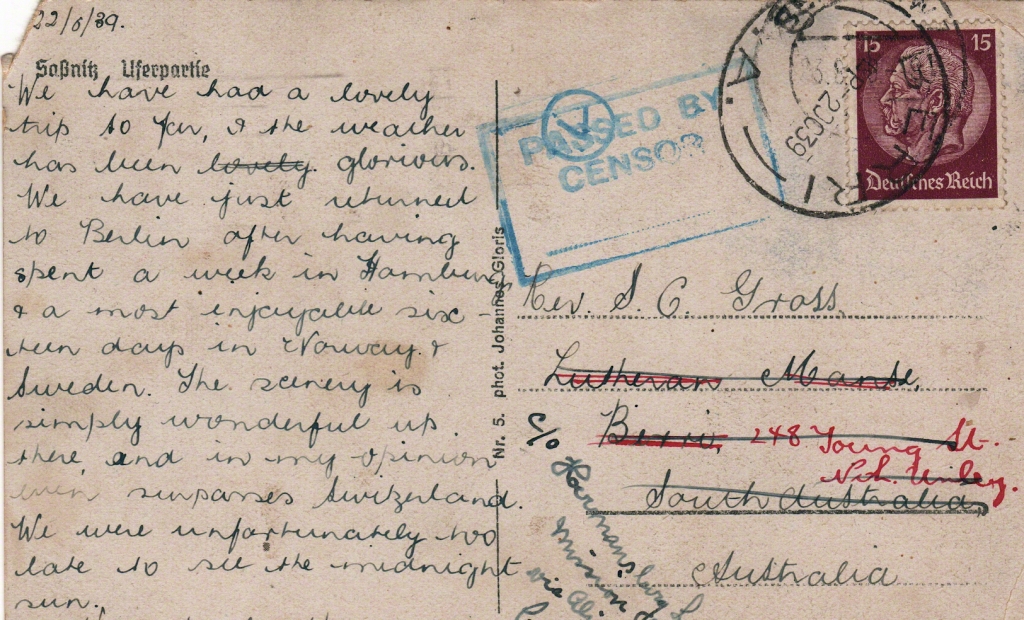
Feature Photo: Censored 1939 courtesy of L.M. Kling — Postcard sent from the Deutsches Reich 1939 (an example of perfect? handwriting).

Share this:

  • Share on X (Opens in new window) X
  • Share on Facebook (Opens in new window) Facebook
Like Loading...

Effective Writing–Make it Zing

October 1, 2022October 2, 2022 / lmkling / Leave a comment

Make your writing Zing!

I’m writing my third novel and still learning. Making my writing more dynamic and engaging is one skill I’m trying to develop. I’ve known while some scenes are full of emotion and action, other parts of my draft tend to wither into bland backstory or boring prose. I need to make my writing Zing.

The rule of “show not tell” is one of the writing rules churned out to fix boring writing. But what do we mean by showing, not telling?

I interpret showing as progressing the storyline by having my character storm around the scene with white lips, beating heart, clenched fists, and flashing eyes. They might be overcome by the smell of roses and hear the plaintive warble of a magpie. Yes, it’s all about the senses. Oh, don’t forget taste, she says with a mouthful of ashes.

Telling is informing your reader that your character is angry, smelt roses, heard a magpie, and has halitosis. Not really Zingy.

I entered a competition with my second novel and received lovely feedback from most of the judges. One judge, however, was less complimentary and hated much of what I had written. Gosh, that hurt. Despite all the warm fuzzy praise, I took the negative critique to heart, then dismissed it. After all, the other judges liked what I had written, and I got into the finals. But after I got over the elation, I took out the negative critique and with trembling hands read the judgement again.

They were right. There was critique I discarded; I honestly felt they were looking for a traditional romantic story and my novel didn’t fit the bill. But their critique of my prose was insightful and confronting and right. I will illustrate this using the actual paragraph the judge picked out to illustrate his/her point.

My line— “Eleanor had more energy and a new zest for life.”

Judges’ line— “Energy sizzled inside her, driving her to paint. Oh, how wonderful it was to pick up a brush and apply paint to a canvas again. Now that she’s accepted the facts, her life had become much better and full of zest.”

The judge’s line is full of Zing. It goes inside Eleanor, makes her feel the energy, expresses her joy, and put her emotion into the action of painting. She actively accepts that she cannot have a child, and acceptance improves her mood and energy.

I believe changing my writing style to make it Zing will require practice. I am writing a first draft of my third novel and have decided that just getting the story down is my priority. But enlivening my prose will take second priority. I will add another layer of editing with the express purpose of Zinging my prose.

Another technique for adding Zing is to use dialogue. Have characters, explain things, pontificate, console, complain, fight, disclose, advise, snub, berate order, and entice. Conversations are fun and show your character’s motivations, desires, beliefs, and points of view. They can also show how a character learns something, amends their belief, and grows as a character. Using secondary characters, friendly or not, will help your character interact and make your writing Zing. Have a look at Agatha Christie, for a masterful example of storytelling using dialogue

Sandy Vaile in her article Clarify, ‘showing for good’  provides excellent advice about aspects of active story telling. I found her ideas about placing characters in challenging situations edifying. If I’m writing a dramatic scene with action my writing Zings, my prose is stronger, and the words flow. But not all my scenes have an elevated level of conflict. In the future, I will plot more scenes with conflict. The conflict could be an internal battle with a problem or emotions or an external conflict with another person or situation but making life difficult for heroes and heroines is my new goal.

Another way to make your writing Zing is to make sure each sentence is active. I’m the queen of the passive voice but I came across a great explanation for active and passive sentences in Sandy Vaile’s’ article. Sandy states you should put the action first and the subject second and gives wonderful examples.

Passive–Tina’s homework was marked in red pen by Mrs. Gleeson. (The subject before the verb/action)

Active–Mrs. Gleeson marked Tina’s homework with a red pen. (The verb/action before the subject)

Passive–The burglar was tackled by the detective.

Active–The detective tackled the burglar.

I’m still learning about active prose. As I’m writing my first draft, some days the words flow and some days they don’t and that is often because of the setting of the scene. Planning more active and challenging situations in my plotting, adding secondary characters who engage my protagonist in active dialogue and making my characters use their senses are all techniques to master. Getting the passive/active voice is also a challenge.

Happy writing.

***

Acknowledgements

Sandy Vaile. Clarify ‘showing for good’ Romance Writers of Australia Hearts Talk August 2022.

Sandy Vaile is a motorbike-riding daredevil who writes romantic-suspense for Simon & Schuster US and supports fiction authors to produce novels they are proud to share with the world (and which get noticed by agents and publishers), through coaching, craft workshops and developmental editing.  

Connect with  

Sandy Vaile

www.linktr.ee/fearlessprose

© Elsie King 2022

Feature Photo: A Difficult Environment © L.C. Wong

Share this:

  • Share on X (Opens in new window) X
  • Share on Facebook (Opens in new window) Facebook
Like Loading...

On Editing–No Writer is an Island

September 24, 2022September 24, 2022 / lmkling / Leave a comment

[Currently, I’m editing Diamonds in the Cave, the next novel in my War on Boris series. This article, though first posted five years ago, is a pertinent reminder of all that the editing process involves.]

Editing—No Writer is an Island

Some time ago, a member of our writers’ group published a book.

‘I don’t want to tell anyone,’ they said, ‘because I needed a lot of help.’

Certain members of the writers’ group ensured they revealed and celebrated the news; their achievement was our achievement. A book doesn’t happen in isolation; it’s a group effort. Just as a village raises a child, for the best outcome, a community or group births a book. There’s the writer with the ideas, then comes the editor, test-readers, friends and family, the proof-reader and finally, the audience, the readers out there in reader-world.

We write stories for readers, that’s why the editing process is vital. A story needs to be readable to be effective. Readers need to understand the story to enjoy it. It’s the reason language, especially written language has rules for grammar, spelling, and the art of storytelling has a structure.

So, you’ve finished your masterpiece, but now the challenge: how will you go about editing your work? That’s where the writers’ group comes in. Fellow writers are your work’s first point of contact. Their reaction to your story will tell you if your creation is a winner or a flop. Either way, there will be more work required to perfect your piece of genius—more pen to paper, more fingers tapping on the keyboard, more pain and hair-pulling before your work can be “birthed”.

Once you have completed your work, file it away in a drawer for about three months. You need distance between you and your “baby”. When you revisit your work, you may be amazed at how brilliant you have been putting all those words together in such a clever way, or be horrified at how the gremlins of grammar, spelling, typos, weasel words, repetitions, and so on have bred and multiplied. With fresh eyes, you’ll see ways to improve your story, thus creating your second draft.

Repeat the process of draft and distance until you feel it’s ready to meet fresh eyes that don’t belong to you. But who?

Ever had trouble getting someone to peruse your work? Suddenly, they’re all busy. Or they take your story and sit on it for months, years… Again, happy are those in a writers’ group. Or be bold and blog. If you are wanting to sell your novel down the track, having a http://www.presence and band of followers may help.

For those finishing-touches to refining your work, you may seek out a professional editor. When paying an editor, ensure that you define the time and rates in a contract. For Trekking With the T-Team, I negotiated an hourly rate and a limit on the number of hours the editor would work on my book.

There are two types of editing: big picture and proof-reading. Big picture editing looks at the plot, pace, character development, language use and content. Proof-reading deals with the technical side of the work such as grammar, spelling, and formatting. But as my friend who’s an editor said, ‘It’s hard to separate the two. If the content and ideas trigger you, then it’s difficult to be objective and it affects how you respond to the piece.’

So, while it may be preferable for an editor to be outside the genre in which you are writing, it may not work for your book. A good editor, of course, is impartial, but they are still human and will approach your story from their worldview. And on the other side, we as writers are human and see the world through a filter of attitudes and the way we see ourselves. A good editor who is paid, then, is only as good as the receptiveness to feedback of the writer who pays them. After all, you are paying for that objective set of eyes, and feedback based on their experience as a reader and what they perceive as good literature or entertainment. In the end, whatever comments an editor makes, it’s up to you, the writer, to implement those changes—it’s your work, your story.

The last step of editing is proof-reading; the nit-picking of the piece before it surfaces for publication. Ernest Hemmingway, in an interview for The Paris Review (1958), said that he rewrote the end of Farewell to Arms 39 times before he was satisfied with it. However, each writer is different. I use five different coloured pencils: 1) grammar, 2) spelling, 3) word-use, 4) formatting, and 5) content. That being said, I am sure I have perused my works near 39 times by the time it reaches the Amazon shelves.

Other tips:
• Reading out aloud helps with sentence structure, flow, and the art of storytelling. Even better, if you can bear it, use a voice-recorder as you read out your story, and then play it back.
• Line by line editing. Print out your story and then use a ruler under each sentence to concentrate on each word. Effective for exposing typos and formatting flaws.
• Start with the last chapter first, and so work through your piece backwards. Again, helps with plot-holes, character consistency and pacing.
• Have an English grammar book and a dictionary within reach, for you’ll be reaching for them repeatedly. I’ve discovered that an online dictionary, or Google are also reliable resources, but beware, as dodgy information slips through the cracks of the Internet.

In the end, it’s up to you, but it’s also a group effort. We are all part of the larger community collective of writers, readers, sharers and receivers of ideas. And I cannot stress enough, the more you read, the more effective your writing will become. We learn from each other.

© Lee-Anne Marie Kling 2017; 2022
Feature Photo: Le Mont St. Michel, France © Lee-Anne Marie Kling 1998

Share this:

  • Share on X (Opens in new window) X
  • Share on Facebook (Opens in new window) Facebook
Like Loading...

Grammar Made Easy–Apostrophes

September 17, 2022September 17, 2022 / lmkling / Leave a comment

RAISED COMMAS  aka  “DRATTED APOSTROPHES”

These little things seem to cause more angst, confusion and errors than any other feature of our written language.  There is even a move afoot to eliminate them altogether.  Which would be tragic as they play a critical role in clarifying meaning.  By way of demonstration, can you decode the precise meaning of each of the following phrases:

1. The dog’s collar;                                                                                                                                

2. The dogs’ collars;                                                                                                                                  

3. The dog’s collars;                                                                                                                   

 4. The dogs’ collar.

Three words; the only differences being that two of the final words end in ‘s’ and also the position of the apostrophe.  Yet each of those four has a very different meaning and, lacking that little squiggle, the meaning would be, not only obscure, but impossible to work out.  Context could help of course but not necessarily.  Why make life harder than it need be?

Let’s see if I can clarify the issue.  Apostrophes have one job to do, and one only.  Part of the confusion lies in the fact that this one job has two different aspects to it.

The one job is that it indicates something has been left out so therefore it is a form of abbreviation.  

This happens when we turn speech into writing. When speaking we tend to hurry things along a bit – it’s much easier to say can’t and didn’t than cannot and did not.  Used in this way our squiggle is termed an “Apostrophe of Contraction” because we have left out, not only the space between two words, but one or more of the sounds and  therefore, the letters that represent those sounds, when we put it into writing.

The second instance is called the “Apostrophe of Possession” and is somewhat more complex.  But not impossible as there is a rule you can follow that simplifies things beautifully.  Before we get onto this “rule” let’s sort out just what is left out though.

Possession means someone or something belongs to someone or something; alternatively there is an owner and who or what is owned by that owner.  Thus it always involves two naming words (i.e. nouns in grammar speak).  For instance “Jane’s brooch” tells us that Jane owns the brooch; the brooch belongs to Jane.  Thus it is the words denoting ownership that have been omitted.

Well then, what is this rule that is going to simplify things?                                                                   

Take a deep breath and follow the steps:                                                                                                                        

1.  Work out who or what is the owner and what is being owned.                                            

 2.  Write down the name of the owner and nothing else.  If it is a person then the name is easy but if it happens to be more than one thing (e.g. a couple of dogs; a herd of cows; a fleet of yachts…) the owner is plural so that is what you must write down.                                                                                                                                    

3.  Add the apostrophe.                                                                                                                        

 4.  Say the phrase aloud (owner and what it is that belongs to that owner) listening carefully.  If you hear yourself saying “s” (or an extra “s” if the owner’s name happens to end in “s”) on the end of the owner then add it.                                                                                        

5.  Write down what is owned.

Done!  And done correctly.

The result can, on occasion look quite bizarre.  By way of example consider the following:  A visitor arrives, is welcomed and asked to take a seat; heads for a comfortable looking chair but host says, “Sorry, please don’t sit there.  That’s puss’s chair”.  Go through the steps and you’ll see this is grammatically correct, both spoken and written

Were you able to sort out the dogs and collars puzzle I gave you in the beginning?               

If not, here is the solution:                                                                            

1.  The dog’s collar (one dog and one collar – presumably that collar belongs to that dog).                                                                                                                                                                                 

2.  The dogs’ collars (several dogs each with its own collar).                                                                  

3.  The dog’s collars (obviously a pampered pooch with a whole wardrobe of collars!!).                                                                                                                                                            

4.  The dogs’ collar (possibly a succession of family dogs with the same collar serving several generations.  Or maybe – sad to say – several dogs having to share the same collar!!).                                                                  

© Mary McDee 2022

Feature Photo: The Dogs’ Collars © L.M. Kling 2013

Share this:

  • Share on X (Opens in new window) X
  • Share on Facebook (Opens in new window) Facebook
Like Loading...

Publishing Tips–Writing a Standout Synopsis

September 10, 2022 / lmkling / 1 Comment
“You need a sparkling synopsis.” ~ Fiona McIntosh 2015

So, what do you need after you have edited your novel? If you intend to submit it for publication or to an agent, a synopsis is a requirement. Even in self-publishing, a synopsis is a great exercise to summarise your novel for marketing and creating your blurb.

A synopsis is more than a summary of your novel. It must capture the attention of a publisher or agent. A working document, it condenses your plot succinctly, introduces the major protagonists, defines the conflict, and ties it all up into a logical and satisfying ending.

There is a plethora of web pages devoted to the art of writing a perfect synopsis. It is well worth Googling “how to write a synopsis for a novel.” You will find a treasure trove of information. I found two web sites helpful when writing this piece for the Indie Scriptorium blog. https://jericowriters.com and https://www.masterclass.com/articles/how-to-write-a-novel-synopsis-step-by-step-guide and have summarised their information.

  • Start with a pitch line that demands attention.
  • Announce the title and mention the genre, word count, setting and era.
  • The synopsis must be short and easy to read. I recommend one page. Single spaced with a word count of 500-700 words but if submitting a novel for a competition, agent, or publisher check if they have specific requirements.
  • Grammar, spelling, and word selection must be perfect. The synopsis is selling you as a writer. Get it checked by someone with editing skills.
  • Write in the third person and use gender neutral language. E.g., police officer, not policeman.
  • Cover all the major plot points, including spoilers and the ending. There should be no mysteries in a synopsis. The publisher wants to know you have finished the book, and it has a great ending.
  • Name two or three of major protagonists and their motivations. Bring them alive. Demonstrate how they grow and change and make them shine.
  • Clearly convey the tone of the novel but the emphasis is the story, allow the theme to sneak in without belabouring the point.
  • Avoid praising yourself in a synopsis or include positive reader reviews.

Expect to write, rewrite, rewrite and then do it again so give yourself time to get it right.

Elsie King © 2022                                                                  Photo © L.C. Wong 2022

Share this:

  • Share on X (Opens in new window) X
  • Share on Facebook (Opens in new window) Facebook
Like Loading...

Writing: That Question–Characters

September 3, 2022September 4, 2022 / lmkling / 1 Comment

Writing Tips: Developing Your Characters and Story

That Question

Question: What makes a story stand out for you? What makes you want to read past the first page? The first chapter? The first book? Or if you are watching shows on your favourite streaming service, what makes you want to forget about all else and binge?

I like crime shows, mostly not-so-real crime such as “Midsomer Murders”, “True Detective” and quirky ones like “Fargo”. Yeah, I could go on, see what I mean? I’ve been bingeing.

You might think, strange for a Sci-Fi (Indie) author. Not surprising, then, I’ve considered doing the reverse of John Wyndham and move genre from Sci-Fi to Crime Fiction. We’ll see…Meanwhile, there’s my travels with the T-Team and the latest the T-Team with Mr. B to look forward to. Funny about that story, Elsie King read it and gave feedback. She suggested the character of Mr. B would fit well into a murder mystery. After initially rejecting the idea, I started working on a character who possessed some of Mr. B’s endearing personality and behaviours in a draft for a future murder mystery.

Anyway, the thing about successful crime shows is how they engage the audience to know the people involved, the characters. The key to the crime (or any genre for that matter) is what the characters want, what they really want, influences their actions, that, in time, lead to tragic consequences. For example, a woman who wants, more than anything else, wealth and security, commits fraud and murder to fulfil her desires.

The question, what your character wants, applies to any story, novel in any genre you write. In one of my recent posts (Choice Bites–Minna) on my website Tru-Kling Creations, Mission of the Unwilling heroine, Minna, in her encounter with Boris came out of an exercise to get to know my characters and what they want most.

Understanding your character’s history helps the reader invest in your character and want to know them more. Whether they are good, like Minna, or an evil antagonist like Boris, exploring your character’s bio, and giving the reader a taste of their history, engages the reader in your character’s life-journey.

Again, the Boris story evolved for me as I delved into the murky depths of Boris’ life; how this alien cockroach as a power-hungry despot destroyed his own world through greed, and then sought to dominate all worlds in the galaxy in the quest to rebuild his empire. I also investigated why he singled out Earth and took revenge on her people.

Then one sunny day, as I sat on my back patio, I made a study of my characters; their personalities, backgrounds, and interactions with each other…and by the end of the afternoon, The Hitch-hiker evolved.

Novels are about people—characters. Stuck with your novel’s progress? Writer’s block? Spend an afternoon developing your characters; interview them, find out what their interests are, their birthdate, parents, likes, dislikes, and what they want most. Soon you’ll have them all sitting at a table in a restaurant, discussing, or arguing with each other. You’ll see their story-lines weave in and out like a tapestry. Conflicts will arise, resolutions made with a twist, and villains and heroes will leap out from your computer screen, or page.

Our novels, our stories are life, and life is people. The reality is no one is an island. Even a convict in solitary confinement had parents, had a journey, a reason he ended up in solitary, and people who put him there.

So, getting back to the question, “What makes a story stand out for you?” Here’s the take-away—even simple entertainment, the characters are the key. Get to know your characters, and they will give you a story.

Begin by asking your character: What do you want most in life?

© Lee-Anne Marie Kling 2016; updated 2022

Jetty Boys © M.E. Trudinger circa 1958

***

We invite you, as our audience to respond.

What makes a story stand out for you?

Share this:

  • Share on X (Opens in new window) X
  • Share on Facebook (Opens in new window) Facebook
Like Loading...

Posts navigation

← Older posts
Newer posts →
Blog at WordPress.com.
Indie Scriptorium — Self Publishing Collective
Blog at WordPress.com.
  • Subscribe Subscribed
    • Indie Scriptorium -- Self Publishing Collective
    • Join 95 other subscribers
    • Already have a WordPress.com account? Log in now.
    • Indie Scriptorium -- Self Publishing Collective
    • Subscribe Subscribed
    • Sign up
    • Log in
    • Report this content
    • View site in Reader
    • Manage subscriptions
    • Collapse this bar
 

Loading Comments...
 

    %d