Indie Scriptorium — Self Publishing Collective

Helping Each Other Publish

Skip to content
  • Home
  • About Us
  • Blog
  • Books For Sale
  • Introducing Indie Scriptorium
  • Links–More for You
Search

website

Marketing on Websites–Improving Your SEO

May 12, 2024May 13, 2024 / lmkling / Leave a comment

Part One – Understanding how search engines work

Having a website is a great idea for authors. It allows them to showcase their books and builds relationships with readers. You can sell your books on-line through links to your book publisher. You can write blogs or newsletters for distribution, provide information about your life and writing career, advertise future releases and connect to social media. You can advertise author events and book signings. It is a marketing tool with a personal focus and while it can be tricky to set up it gave me a lot of satisfaction having a website. But mine hasn’t performed and languishes unread. Time to make some changes.

But where do you begin? There are millions of author websites in existence, and they all are competing for attention and sales. So how do you get your website noticed? Let’s find out.

Let’s start with the biggie, SEARCH ENGINE OPTIMISATION – SEO

When I want to research a topic, I fire up Google and then work out what information I want. For example: I want to find out about SEOs. So, I type in “what is a SEO?”

(Some popular alternatives to Google are DuckDuckGo, Bing, Yahoo but there are over 1500 others to choose from including one called Dogpile?)

The response to my search is overwhelming. I initially got a very long and complicated one sentence explanation which didn’t make much sense. I then scrolled down to 76 (enough, there were more) companies giving explanations about SEOs. There were also several You-tube videos available with lovely people wanting me to find out visually what SEO’s are all about. They all invited me to click on their website and swallowed up in their advertising and sign up for expensive services to improve my website’s SEO.

I scrolled down to Wikipedia. I love Wikipedia and regularly donate when they put out requests. Yes, I know it’s not perfect but it’s a great first stop that can provide you with good information and directions for further research.

Wikipedia defines SEO as the “Process of improving the quality and quantity of website traffic to a website or web page from search engines.”

Okay, what do I, as an Australian author need to improve my website’s SEO. Well, the Key Words are Australian and author. These narrow down my search to what is relevant to me. I Google again and get another long list of companies and individuals who want me to look at their websites and sign me up for their services.

 I chose three web sites to explore:

  1. Australian Writers Centre – it looked professional and offered a course on SEOs.
  2. Jin and Co. Caught my eye with the proclamation “Two simple steps for authors to found in Google with SEO.
  3. Amazon SEO for authors.

I chose the Australian Writers Centre because it looked professional. The tag “Two Simple steps…” caught my attention as it offered a quick and simple solution. I chose Amazon because they are a big brand and should know what they are talking about.

So, these services and companies drew me in with their presentation, that includes their titles, their choice of words to advertise themselves and their brand name. It is these factors that draw readers and potential customers. It is these factors that you must address to improve your own website.

The other big consideration is, Do I want to pay for a SEO improvement service or do it myself?

 There are information websites for free. These are referred to as “organic” or “natural” traffic and is hard to find amidst the other monetarised websites. Many YouTube videos fall into this category, as does Wikipedia. I also found a Business.gov.au website and looked at Wix and LinkedIn sites for free information.

The second, and more prolific websites available are called direct traffic, which is really advertising. Advertising on-line includes emails (think Spam) Banner advertising where an advert decorates the bottom of a page. Pop – ups jump out at you at unexpected times, some webpages encourage you to join in a chat with a robot. The aim of these services is to get your money, which is fair enough if they provide a good service and you can afford them. All these websites are geared to draw you in and some of them make it difficult to escape from their greedy clutches. Ever found yourself in a website without a log out or delete button and you keep on going around and around looking for a X.

All these multiple forms of websites are guided by Algorithms.

Algorithms have been around since 2500BC in Babylonia. They are formulas that take complex date from a variety of sources and make it more user friendly.

In modern times algorithms are programmed by computers to work out what words and sentences are popular and gain the attention of browsers. They do this primarily through keywords, and getting the right key words, the name and the visual presentation of the site. It’s what draws attention to your website and, the books that you hope to sell.

Website marketing is a huge area to research and understand. I have found just this first step edifying. Watch out for more blogs on this complex topic.

References used in this Blog:

  1. Wikipedia
  2. LinkedIn SEO – 6 steps to optimise your profile.
  3. Wix – Free SEO tutorials
  4. Australian Government – Business.gov.au – Improve your search engine rankings.

Cheers Elsie King©2024

Photo: Attributed to Stock photos
Share this:

  • Click to share on X (Opens in new window) X
  • Click to share on Facebook (Opens in new window) Facebook
Like Loading...

All About SEO means Getting Noticed

January 28, 2023 / lmkling / Leave a comment

Search Engine Optimisation

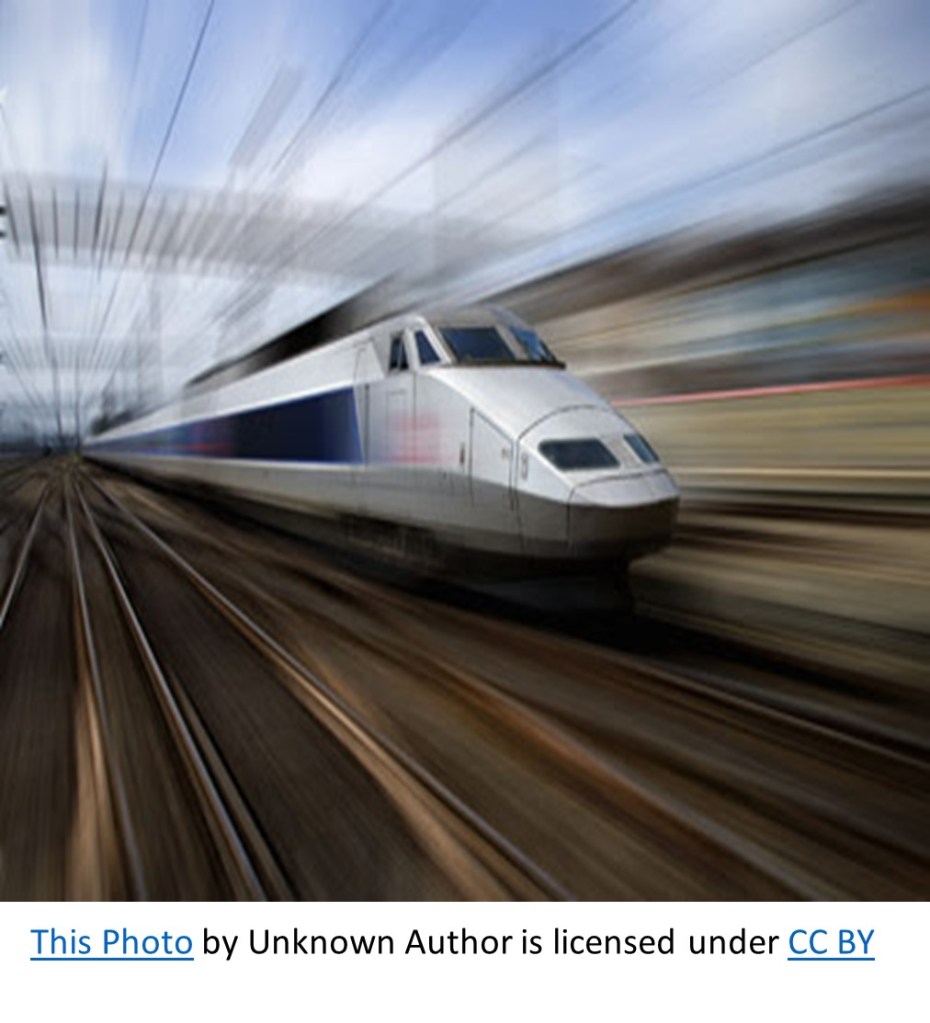
When it comes to a search engine optimisation (SEO) you want a bullet train rather than a puffing billy train. The speed of someone finding your site is important apparently, and I wondered why?

Search Engine Optimisation is best described as a process for getting the right people, and more of them, to your website. This is very important if you want to sell something. For authors it may be a newly published novel, a book launch or a date for an author signing. For artists, it may be a painting for sale, news about an exhibition or sets of your original artworks printed as cards for sale.

Not all websites are about selling. Blogs can build your personal brand online, becoming an influencer, or just sharing your thoughts and ideas.

So, you may need to think about SEOs when you start up your website. My goal was to have a place where a person can look at my novels, have a link to buy one and find out about me as a person and writer. So yes, eventually I would like to bring people to my website to increase my sales of books and possibly art as well.

There are about thirty different big world-wide search engines and many more that offer specialized and local information searches, but the biggest is certainly Google.

I love Google. I’m constantly using it for many things, weird, wonderful, entertaining and useful. As a writer, I zip in and out of Google all the time. Lots of other people do too. It is the most visited website in the world and enjoys 92% of the SEO market. It’s rather magical really, how you put a few words in a box, press a button and Wham-O you get the information you need. But it does more than that. It can give you pages and pages of options to browse through until you find the best one, and that one site probably has the best SEO and comes up number one on page one. And that’s where you want your website to be when someone is looking for a book to buy.

It’s not magic that gets your website up the front, but it is a complex process involving crawling spiders, algorithms, keywords and black and white hatted hackers. Too much information for this little black duck, but do browse Wikipedia’s SEO explanation for all the details.

Having decided that my aim is to sell my books and art (publishing will happen later in this year) what I needed was some tips for making my website a good place to visit now. Good old Google comes up with a wonderful list of tips for getting your website noticed. (Optimize your site for search engines for beginners.) They provide some simple guidelines which I will briefly mention here.

  • Use accurate descriptive titles for your pages.
  • Use a different page for different products and clearly name them in your menu.
  • Mention everything that you sell or offer.
  • Update your content regularly so your readers know when to visit your site.
  • Keep your site up to date. Remove references to things that are in the past.
  • Use text as much as possible as Google understands text better than images.
  • Get referrals from other places. If you are in a writer’s group, ask that they have links to your site or share links with other authors you know.

 WIX also has some good short tutorials about SEOs and marketing. I will address these ideas in my next blog.

If anyone reading this wants to share their own experience with building up visitors to your web sites, then please contact us at Indie Scriptorium. We would love to hear from you.

Cheers Elsie King

©Elsie King 2023

Photo supplied by Creative Commons

Share this:

  • Click to share on X (Opens in new window) X
  • Click to share on Facebook (Opens in new window) Facebook
Like Loading...

More Ways…Cat

January 14, 2023January 14, 2023 / lmkling / Leave a comment

[In response to Elsie King’s post on Website building, fellow writer, Mary McDee shares her insights on the challenges of technology.

I have abbreviated this Shakespearean quote somewhat, out of respect for space…and cats. Especially ones who get caught up in webs as my cat Storm has the habit of doing. ~ Website Editor—Lee-Anne Marie Kling]

Thoughts on Website Building

I don’t know about you but, as an acclaimed techno klutz, I found last week’s blog “Building a Website” totally fascinating, easy to follow and, I must admit, thought provoking.

I admire Elsie King’s honesty in addressing her difficulties and the downsides of her ‘adventure’.  Publicly admitting to being ‘technologically challenged’ does not go down at all well with many in this day and age as I well know!

There is absolutely no doubt that computers, indeed the whole current techno world of today, has brought many advantages with it: made life easier, more efficient and, in many instances, much faster.  I’m also sure we’re all well aware of the pestilential problem of hackers – a major downside of the current techno revolution. 

To my mind however, this business of hackers is far from being the only downside of our brave new world.  Let me explain by telling you of the revelation re computers that hit me a few years ago.

At the time I was coming to the end of a Permaculture Design Course I’d been doing for quite some time and was thoroughly enjoying.  It was assessment time!  This involved working with a partner or small group to develop; then present to the whole group an actual practical design based on our own real life situation that had brought us to being part of that course.

I live on a very steep, small acreage in the Adelaide Hills.  Two others also lived on hills acreages so we three linked up and decided to work on a plan for the other woman’s land as her place seemed the simplest and most straight forward.  We got on well together and quickly decided to present a series of maps illustrating the steps we felt would be the best way to develop her land.  We also felt this would be most effectively presented as a series of overlays, one on top of the other; building up from the basic fenced-paddock-with-a-house (where she was currently living) to her dream of self-sufficiency.

We thought this was a great idea and felt very chuffed with ourselves.  So we set about implementing it.

My partners were both computer literate and tech savvy so automatically began developing the required maps and sorting things out so each map, at the press of a button, would become superimposed on its predecessor.

  And this was where the rot set in!!

They spent hours on the problem but all to no avail.  I’ve no doubt that any kid of today with a modern laptop would do it in a flash with little or no difficulty.  But this was a number of years ago and computers have come a long way since then.

At first I was simply a fascinated spectator; unable to contribute anything useful.  But slowly I became more and more fed up with all the hours of unproductive discussion and experimentation.  I did hold my tongue though. Eventually they had to give up; stymied and frustrated.  We’d have to come up with some other way of presenting.  And time was running out.

It was then I remembered we’d been told there was a wide range of equipment available for us to use including an overhead projector.  As an ex-Primary school teacher I was very familiar with these things and as soon as I explained how it could solve our problem my two partners leapt on board: — using transparencies, we were able to present as we had planned.  And we received enthusiastic congratulations from those running the course – I maybe wrong but I got the feeling they were a tad relieved to see something other than a computer production!

Anyway, to go back to the beginning and why I have been telling you this seemingly irrelevant tale.  It seems to me that we are not looking beyond computers to solve all our problems; to run our lives; to communicate with all and sundry…  We are losing many skills and techniques that used to be second nature; losing flexibility; losing touch with the real world with all its messiness.

As you are reading these blogs you are no doubt a writer so you will be very computer competent; familiar with Facebook and tweeting and emails and…  Maybe even have your own website; maybe publish your work through Amazon…

But there are other ways of publishing your work.  Google is not the only research tool available to us.  Computer editing programmes have a place but they are, of necessity, run-of-the-mill.  There is no room for creativity; original thinking; an unusual juxtapositioning of words… 

By way of reinforcing the point I’m making: my computer doesn’t recognize that ‘juxta…’ word; has underlined it with squiggly red as if to insist I replace it with something more mundane.  But I’m not going to – my big, two volume Oxford dictionary lists that word along with its meaning and a couple of other permutations of it.

Let’s not lose variety and richness; the things that have served us well in times past.  Please.

© Mary McDee 2023

Feature Photo: Storm caught in the WWW © L.M. Kling 2023

Share this:

  • Click to share on X (Opens in new window) X
  • Click to share on Facebook (Opens in new window) Facebook
Like Loading...

Building a Website (2)

January 7, 2023January 7, 2023 / lmkling / Leave a comment

Elsie King shares her trials and triumphs building a website

My original website, built on WordPress about four years ago, showcased my artwork. It was free, and I enjoyed creating it and adding to it. I wrote blogs giving tips on painting. The website appeared on Facebook and people regularly sent me friendly messages about my blog. Then Facebook became complicated and my website disappeared. After unsuccessful attempts to resurrect it, I just let it die a natural death. Facebook continued to send me messages with obscure recommendations, which sounded like I needed to spend money and time in order to revive my site.

This year I decided I wanted to create a new website using my pen name, Elsie King, which would put my books and artwork online.

I used WordPress thinking I had deleted my old website and I could create another one with a bonus of one year free. Big mistake. The algorithms remember everything. If you use the same e-mail address to sign up a second website, they will immediately give your freebee to the previous website and charge you $60 for the new one. Being technologically challenged, I pressed something and spent $60 on something that I didn’t sign up for. After several days of e-mails toing and froing, I convinced WordPress to give me a refund. WordPress had become a bit too complicated for this little black duck.

I researched lots of website builders and decided that WIX looked safe for the confused and unwary. The following steps helped me build a website of which I am proud as punch. I figure that if I can build a website anyone can, but it takes time and persistence. The following ideas helped me get started.

  1. Have a look at the websites of your favourite authors or artists. This gives you a good idea of what you want to include and gives you a concept of a design.
  2. Write up what you want to say. Have text for your home page and an about page ready to run. I put my bio photo and artworks in a file on the desktop for easy access. Prepare your first blog as well.
  3. The WIX site allows you to play with designing a website and you can then delete what you’ve done until you get it right. Keep playing with the templates, drag-and-drop features, adding text, changing the fonts and layout, adding media and moving between pages. You can also make a menu and put information into the header and footer. The most important place to find in the edit area is the delete site button in the Site actions. You can create a trial site and delete then start again and again and again. I played with the site building for weeks.
  4. While you are in play mode, use YouTube videos for guidance. WIX provides lots of tutorials and you can also access videos from experts. They have heaps of useful information. Be warned, some tutorials presume you know what they are talking about. I found I needed to find a tutorial presenter who didn’t talk too fast and use acronyms I didn’t understand. Also, have a paper and pen available so you can jot down the information. The pause button is a marvellous invention.
  5. WIX suggests you pick a template and modify to your needs. I couldn’t get the hang of this and ended up selecting blank templates and designing my website to my satisfaction. I found this much easier.
  6. Make sure you have an e-mail address ready to use and have sorted out your website address you intend using. I used www.elsiekingauthorartist.com which is long but suited what my website is about.
  7. Once you have designed your website, you can publish. I paid for the premium plan so I don’t have adverts popping up all the time. You can pay with PayPal or a card. It’s about $200 for a year. Look out for 50% off offers to save money.

A website with an e-mail address is just the beginning for me. I will explore the ways to promote my website, link it to social media, dive into analytics and improve my SEO (search engine optimisation) and other stuff. I put this off over Christmas but I will do the research and report in the new year. Stay tuned for more on web sites in 2023.

©Elsie King 2023

Photo supplied through Creative Commons

Share this:

  • Click to share on X (Opens in new window) X
  • Click to share on Facebook (Opens in new window) Facebook
Like Loading...

Marketing II–Website? Yes? or No?

December 3, 2022 / lmkling / Leave a comment

Marketing 2–Do you really need a website?

I made it a goal to have a website by the end of this year. Achieving the goal is proving to be much more difficult and time intensive than expected.

The website builders are very keen to reassure that they can have a wonderful, professional looking website in a jiffy. That it’s an easy five, seven or ten-step process. That the website building is effortless and should take not much longer than 15 minutes, a couple of hours or a couple of days. It is all lies!

Building a website involves a stroll through an intuitive program, which guides you step by step to achieving your goal. They advise you get a template and just drag-and-drop things (from where I ask) replace their text and pictures with your own (but cannot tell you where the delete button is so you can get rid of the damned pictures.) Text boxes move, you get pushed into templates you never wanted and it’s very easy to delete hours of work for no apparent reason and it’s just hard work.

I’m halfway through building a site with WIX. I have a preconceived idea what I want my website to look like and am battling with a system that hates you having any creative innovations that don’t fit the bill. HELP.

Asking, do I really need a website makes quitting a viable option? But I want a website so I can put a web address on my business cards and attach them to my art and give them away to fellow writers and prospective readers. I want a web address on the back of my Christmas cards. I need a website for when I publish my books, organise an art exhibition or arrange a book launch. Web sites are important.

Ok, so I will persist and let you know how to find me on the web next year. Merry Christmas.

Elsie King ©2022

Picture from Creative Commons

Share this:

  • Click to share on X (Opens in new window) X
  • Click to share on Facebook (Opens in new window) Facebook
Like Loading...
Blog at WordPress.com.
  • Subscribe Subscribed
    • Indie Scriptorium -- Self Publishing Collective
    • Join 95 other subscribers
    • Already have a WordPress.com account? Log in now.
    • Indie Scriptorium -- Self Publishing Collective
    • Subscribe Subscribed
    • Sign up
    • Log in
    • Report this content
    • View site in Reader
    • Manage subscriptions
    • Collapse this bar
 

Loading Comments...
 

    %d