Some ideas for Line Editing
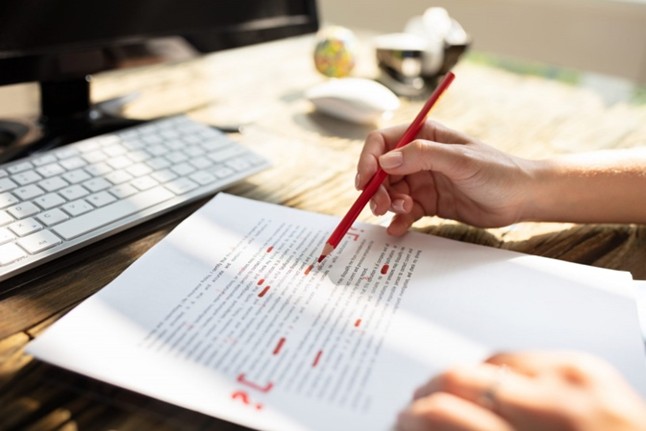
Well, I’ve got to the end of re-writing and structurally editing my third novel The Jamaican Heiress. It required two complete rewrites and a substantial structural edit which took me about eighteen months. It’s now a good story with a logical plot propelling stronger characters through a series of crises and culminates in a satisfying ending. I’m happy with the flow, time line, changing points of view and how it all hangs together. I’ve had feedback from two respected writing friends and made much needed changes to time lines, character arcs and motivations. Alpha readers are gold. Yay.
Big sigh. I’m feeling happy. But now it’s time to do the line/copy edits.
Should be a breeze. HA!
For my previous novels I used Pro Writing Aid to pick up overused words and phrases, (names and blushing references) repetitions, passive voice and my tendency to start every paragraph the same way. I then used a wonderful professional editor who tirelessly tidied up my prose and produced two readable books.
But having it done for you doesn’t help you to learn about the problems you have when you write. This novel I’ve decided to do the line/copy editing myself, as an exercise in strengthening my writing. This blog is about my process.
First step: Google search: What is the difference between line and copy editing?
There is heaps of information on Google and many useful videos on YouTube to check out. For a very quick rundown have a look at Alex Cattoni’s video “Copy Writing Tips: What’s the difference between Line and Copy Editing”. In short, she says: “Line editing crafts the story, Copy editing catches the errors.”
Second step: How many sweeps of the novel will I need to do and what do I look for in each sweep?
Again, I googled line editing and read several blogs and watched a few videos. I suggest spending a few hours combing through the plethora of information available and then come up with your own plan. I’m going for two, or possibly three sweeps (see step five)and then use Pro-writing Aid to pick up my remaining bad habits, then read it out aloud (or use the audio program on your computer) I will then re-read the entire manuscript and pass it on to my beta readers with trembling hands.
Step three: How do I do the line/copy edit?
The general consensus is to line edit a small piece of writing at a time. Could be a paragraph, a page or a scene but then go through your work looking for things like flow, word usage, passive voice, repetition, continuity, dialogue consistent to each character, adding/deleting description, telling and showing balance and point of view problems. The idea is to make every sentence clear to read, strong and efficient at conveying what you want to tell the readers without browbeating them.
Step four: Next sort out your process.
If you want to line edit on the computer, make sure you keep a copy of the first draft and line edit the new copy. I suggest you don’t name the copy the same as the original. I’ve got myself tied up in knots trying to find documents with similar sounding names, so put a date on your new file. You might want to try a program like Scrivener which helps sort multiple copies of a manuscript and allows colour coding too.
Other people like to print out the manuscript and edit on the printed page. Using different highlighters for different problems is something I’m going to give a try. So, red for errors, blue for word usage, pink for POV, purple for purple prose, green for continuity and yellow for “it’s just wrong”.
Step five: It makes sense that your first sweep looks at paragraphs and scenes and information to be added, deleted or changed completely. My first sweep will concentrate on:
- Do I need to add/delete descriptions?
- Have I used the senses?
- Is the balance of show/tell good for pacing.
- Continuity. Robert has blue eyes not brown!
- Remove repetitions.
- Is dialogue unique for each character? Think about tone as well as commonly used words or phrases.
- Is each sentence clear and easy to read.
- Is there any head hopping going on?
The second sweep will focus more on sentences and words and includes:
- Over used words, descriptions or phrases.
- Reduce filter words: she thought, he realized…
- Change weak words to stronger words, he walked, to he paced/strode/shambled/limped.
- Address passive voice in sentences.
- Reduce adverbs.
- Look at consistency of tense.
I’m new to this so I’m not sure this process will work. I will try it out for a few weeks, tweak it and experiment, then report back.
I have published two previous novels and have also had three short stories published. The feedback I’ve had from readers and editors has been positive so I will approach line/copy editing with some confidence. I do have faith that I can catch a lot of clangers, but I think it’s essential to have an editor or well-informed writing friend to catch what I miss. There are lots of problems that you as the writer don’t see.
I found the following articles helpful but there are many more on-line.
https://www.masterclass.com/articles/what-is-line-editing
Cheers
© Elsie King 2025
Feature Photo courtesy of http://www.bluepenbooks.com
 Indie Scriptorium -- Self Publishing Collective