Indie Scriptorium — Self Publishing Collective

Helping Each Other Publish

Skip to content
  • Home
  • About Us
  • Blog
  • Books For Sale
  • Introducing Indie Scriptorium
  • Links–More for You
Search

Uncategorized

Marketing–Building a Website

November 13, 2022 / lmkling / 4 Comments

Marketing—Do you need a website?

So, you’ve finished, or nearly finished, your novel. It’s written, rewritten, edited probably at least five times, given to beta readers for feedback, critiqued by writing friends or in writing groups and taken up a large part of your life.

Whether it took you years or months, a novel is a major investment in time, energy, sweat and tears and when the manuscript is finished, you don’t want it to languish in a bottom drawer. It needs to be read.

Marketing is the hardest part of self-publishing. It’s estimated that there are over three million books on Amazon. They publish 50,000 books a month and they are the largest company for self-publishing authors in the world. They release a new book every five minutes. It’s a lot of competition. Your book has to be seen, talked about and hopefully bought in order for it to get ahead of the thousands of other books being published. Marketing is the way to get your book noticed.

Before coming up with your marketing plan, it may be helpful to consider what you want for your finished book.

  1. Do you want to make writing your career? Intend to write many books and earn enough money from sales to give up your day job. This means a commitment of long hours for the rest of your life. Writing will become a business and a passion, and you will need to build up your name to ensure you have lots of buyers for your products.
  2. You may enjoy writing fiction as a passion, an activity that gives you pleasure, and you want your books read by an audience. This is the category where I am. I want my books to be the best they can be, to achieve a professional standard, but I’m not dependent on an income. I don’t want to put pressure on myself to write what sells and have to achieve deadlines.
  3. The third type of writer may want to write their memoir or family history, or contribute a non-fiction book. These authors may have a smaller audience, although some biographies and memoirs sell well on the open market.
  4. Another author may write for purely personal reasons, using the medium of writing to express their creativity. Often these writers contribute to anthologies in writing groups or may have a body of work that they want a book to share with family and friends.

All of these authors can self-publish a brilliant book, but their goal for book distribution may differ from a professional writer.

Back to the question: Do you need a website? If you want your book read and consider writing more books in the future, a website is a good idea and is worth the effort to get one up and running.

A website in simple terms is your address on-line. It’s where people can find you by searching online for your name and what you do. For example: www. elsieking/author.com (not in operation yet). You can sell your books from the website, advertise books you are writing, you can tell your readers about your life, passions and ideas. A website may also be a blog or newsletter where you share your writing tips. The website lets you connect with your readers and get reviews.

A website can be a simple page with minimal details (a landing or home page) or a more complex beast with links to social media, e-mail marketing, newsletters and contacts with other authors.

I’m a newbie with websites. I know they can be expensive to have made for you, but much cheaper to make one of your own using a website host such as WordPress, Square Space, or Wix. Don’t believe the adverts about creating your own websites. It is not as easy as they say. But it is fun to experiment with some website builders.

My advice, consider if you need a website. Research some of your favourite author websites and look at the plethora of YouTube videos that tell you how to create a website. (I found most of them too quick and get through too much information. They also use acronyms which they don’t explain. Find one that works for you)

If you decide to try it, be prepared with a catchy by-line, have a succinct but interesting author bio ready and think about what graphics, fonts and colours you want.

I’m a techno dinosaur, so I expect it will take me many weeks to construct my website. I’m learning as I go and have discovered you can create a website, delete it and start again and play without having to commit to publishing until you have it just right. When I get it right, I will do another blog to discuss the process, I found helpful.

If anyone reading this blog has some personal experience with building a website, please write an e-mail to scriptoriumpublishing@gmail.com We’d love to hear from you.

Elsie King ©2022                                            

Feature Photo: Image from creative commons
Share this:

  • Share on X (Opens in new window) X
  • Share on Facebook (Opens in new window) Facebook
Like Loading...

Grammar Made Easy–Jan’s Gran’s Van

October 29, 2022 / lmkling / Leave a comment

Jan’s Gran’s Van

Following on from “Raised commas aka Dratted apostrophes” back in September, we thought you might enjoy the following text of a children’s story featuring these pesky punctuation marks (taken to a somewhat bizarre level, we must admit). Bizarre as they are, in this piece we can assure you that this is grammatically correct.

Jan and her Gran

Jan has a Gran,

Gran belongs to Jan

And Jan has fun with her Gran.

Jan’s Gran has a van.

The van belongs to Gran,

Gran belongs to Jan

And Jan has fun with her Gran.

Jan’s Gran’s van had wings,

the wings belonged to the van,

the van belongs to Gran,

Gran belongs to Jan

and Jan has fun with her Gran.

Jan’s Gran’s van’s wings had nuts.

The nuts belonged to the wings,

the wings belonged to the van,

the van belongs to Gran,

Gran belongs to Jan

and Jan has fun with her Gran.

Jan’s Gran’s van’s wings nuts held the wings onto Jan’s Gran’s van

so Jan and her Gran could hop in the van and go off on trips.

They would jump in that van

and then they were off,

up, up and off.

            Off to spots that were cold

            and spots that were hot.

Spots that were wet

and spots that were not—

up, up and off

                  to fun spots galore.

Then it was spring and a trip was planned.

They packed lots of things—

        Drinks…

            lunches…

                        rugs…

                                  maps…

BUT!

When they checked the van

            the nuts fell off.

            When the nuts fell off

            the wings fell off.

           When the wings fell off

                       they could not

                                    be up, up and off.

So that trip was off.

Jan was sad.

Jan’s Gran was sad.

But the van would still go—

NOT up, up and up

but still…

                        it WOULD go.

That van could still go on trips—

lots and lots.

            So Jan and her Gran

            plugged up the spots where the wings fell off.

Then—

            in they hopped

            and off they went,

Jan and her Gran

in the van with no wings.

They went

            to spots that were cold

            and spot that were hot,         

            spots that were wet

            and spots that were not—

Fun spots galore!

        And Jan…

            STILL has fun with her Gran.

© Mary McDee 2022

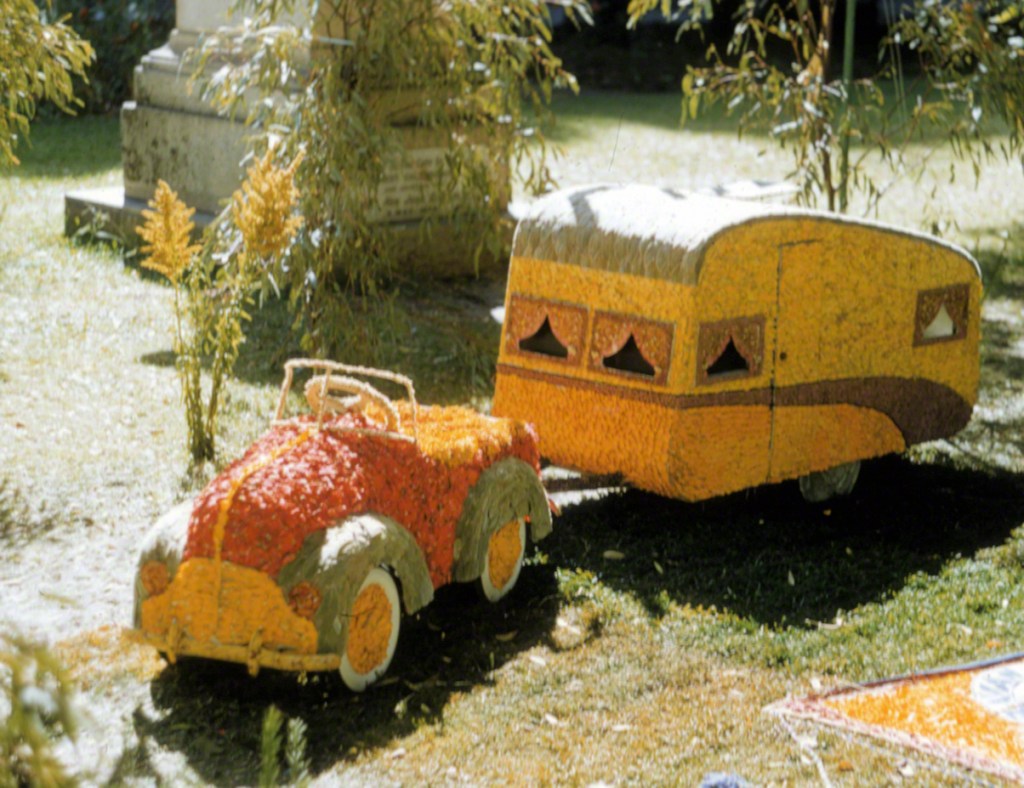
Feature Photo: Floral Caravan and Car at Adelaide flower festival © Sam Gross circa 1960

Share this:

  • Share on X (Opens in new window) X
  • Share on Facebook (Opens in new window) Facebook
Like Loading...

Writing Tips–On Editing

July 15, 2022July 17, 2022 / lmkling / 4 Comments

Step Three–Edit, Edit, Edit.

Your readers want to read the story, to be entertained or informed. They want to finish reading the book with a satisfied smile. If they do that, they may just buy your next novel.

Editing is removing all the mistakes that stop the reader from enjoying your story.

“Assume all your readers are editors.” (Lorena Goldsmith 2013)

You may find that as you write your novel, the words and ideas flow effortlessly. The creative drive is magical. The words fly into your computer or out of your pen and you write and write. (Unless you have writer’s block which we will discuss at another time) I find writing is exhilarating and wonderful. Editing, for me, is far more tedious and definitely much harder.

Editing requires a different mindset from creative writing. I think some people excel at editing. They have the focus to spot the errors and methodically work through a manuscript without getting caught up in the story. If you are like me, I’m good at spotting a few mistakes, but then it all seems to blur, and I get drawn into the story and the editing goes to pot.

Some writers are also exceptional and can write a novel with brilliant flow, use just the right word in the right place, don’t start all their sentences with the same word and make all the myriad bloopers that it’s possible to make. That’s not me–but I’m slowly improving and editing definitely makes me aware of what I’m doing wrong.   

It also helps to acknowledge strengths and weaknesses in your writing. I can’t spell and I suck at grammar. I overuse words, adverbs and the passive voice. I often start each sentence with the same word, (as if you didn’t notice) and I make lots of other mistakes. But my strengths are plotting, character development, dialogue, conflict and pacing, and I can write an entertaining story. For me to get my story read and enjoyed I need all the help I can get.

There are three different types of editing:

The structural edit–or the big picture. With this read through, you are looking at the overall construction of the novel or short story. The plot, pacing, setting, points of views, character development, chapter length, use of conflict, cliff hangers and plot holes plus other stuff.

The line or copy edit–which looks at grammar, word usage, spelling, elimination of overused words, elimination of filler words, repetition, sentence length, paragraph starts, incomplete or non-sensible sentences, showing not telling, good dialogue, unnecessary dialogue attributions, cliches, mixed metaphors and poor research, to name a few.

Proof-reading–the final edit which picks up the typos, line spaces and other issues that will disrupt the printing process.

I need the line and proof-reading edits more than the structural. However, I have had good structural feedback from other writers. I have rewritten and changed chapters around. It is a daunting task, but I learnt a lot from the process.

If you struggle with editing, there are also some ways of helping you get your editing cap firmly on your head.

  • Buy a good reference book and have it on hand at all times. I found Lorena Goldsmith’s Self-Editing Fiction that Sells. (How To Books Ltd. UK 2013) was excellent. I also use the Oxford English–A Guide to the Language compiled by I. C. B. Dear (Guild Publishing 1986). Steven King (yes that Stephen King), swears by William Strunk Jr. The Elements of Style (The Macmillan Company 1959). Stephen King also has a very entertaining informative book, Stephen King-On writing.

(Pocket Books 2002)

  • I purchased “ProWritingAid”, an online editing program, for $120 a year. I love it, but it takes a while to learn how to use it. Other writers use Grammarly, Scrivener or Hemmingway. I suggest you Google “editing programs for writers” and see what suits you. Many have free trials too. You also have basic editing tools in Microsoft Word.
  • Find yourself one or two friends who can edit your work if you edit theirs. This person is more than a reader who will give an overall impression of your novel. They will need to have a good idea about what good writing entails. School teachers who specialise in English make talented editors. Give them a red pen and they become eagle eyed warriors for the English language (Bless them)
  • After I have completed my structural edit, and have had a go at the line editing, I employ a professional. My editor does a wonderful job using track changes in word to make comments and fix my grammar, punctuation, spelling and she’s brilliant at spotting anachronistic words. The cost for an 80,000-word novel is about AU$600 -$800. The cost increases if you supply a rough draft which needs extensive editing.

      Thanks to Mary McDee and Lee-Anne Kling for the editing corrections.

      © Elsie King 2022                             Photo from Creative Commons online

Share this:

  • Share on X (Opens in new window) X
  • Share on Facebook (Opens in new window) Facebook
Like Loading...

Improve Your Writing

July 8, 2022July 20, 2022 / lmkling / Leave a comment
IMPROVE YOUR WRITING – ONE METHOD TO TRY

Read your work aloud or, better still, have a friend/writing partner read your piece aloud as you listen with your eyes closed.

1. Choose a (longish) paragraph or “sub-story” to work on

2. Reformat so: 
* double spaced and in a fairly large font, 
* every sentence begins on a new line, 
* you have at least 3 or 4 line spaces between each sentence.

3. Print off and cut up so each sentence is isolated.

4. Rearrange sentences so they make the best sense then: 
* subtract any that don’t belong 
* set aside any that need to be part of another 
paragraph, 
* add extra words/sentences if needed.

5. Review and consider whether any sentences can either be: 
* amalgamated so 2 become one, 
* split to make 2 or 3 shorter ones.

6. Check for: 
* repetition of words/phrases, and hackneyed expressions. 
 
7. Can you find a more vivid or expressive word to replace any mundane, 
ordinary ones?
 
BUT, make very sure you keep your writing in balance – too many “fancy” words is too much (all icing and no cake!!)
 
8. Then read aloud again; or have someone else read your piece aloud to you 
and check how it all sounds now.

© Mary McDee 2022
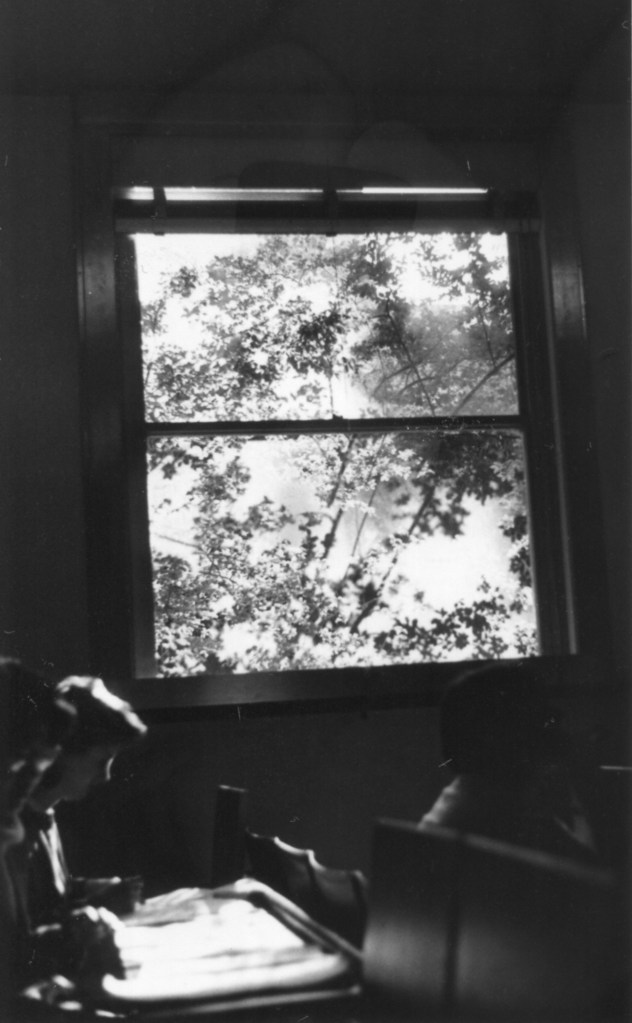
Feature Photo: Window of Learning © L.M. Kling 1985

Share this:

  • Share on X (Opens in new window) X
  • Share on Facebook (Opens in new window) Facebook
Like Loading...

Posts navigation

Newer posts →
Blog at WordPress.com.
  • Subscribe Subscribed
    • Indie Scriptorium -- Self Publishing Collective
    • Join 95 other subscribers
    • Already have a WordPress.com account? Log in now.
    • Indie Scriptorium -- Self Publishing Collective
    • Subscribe Subscribed
    • Sign up
    • Log in
    • Report this content
    • View site in Reader
    • Manage subscriptions
    • Collapse this bar
 

Loading Comments...
 

    %d