It’s that time of year. In Australia, the end of the year signals groups winding up and the inevitable array of Christmas parties, exchanging of gifts and cards. In my writers’ groups we exchange cards, small presents and some give their latest book or manuscript to peruse. I’ll be guilty of doing that very thing this year, I hope. (Still in the process of editing my latest a detective novel, Fly on the Table.) Together with my fellow writers, I am looking for feedback. I’m hoping that over the holidays, my “test readers” will find the time and interest to read the manuscript. I want my novel to be the best it can possibly be.
But Feedback, that proverbial “elephant in the room” can be difficult for some readers to handle. So, here’s a revisit to an earlier blog. Check it out, I hope you find it useful.
Some time ago, a member of our writers’ group recently published a book.
‘I don’t want to tell anyone,’ they said, ‘because I needed a lot of help.’
Certain members of the writers’ group ensured they revealed and celebrated the news; their achievement was our achievement. A book doesn’t happen in isolation; it’s a group effort. Just as a village raises a child, for the best outcome, a community or group births a book. There’s the writer with the ideas, then comes the editor, test-readers, friends and family, the proof-reader and finally, the audience, the readers out there in reader-world.
We write stories for readers, that’s why the editing process is vital. A story needs to be readable to be effective. Readers need to understand the story to enjoy it. It’s the reason language, especially written language has rules for grammar, spelling, and the art of storytelling has a structure.
So, you’ve finished your masterpiece, but now the challenge: how will you go about editing your work? That’s where the writers’ group comes in. Fellow writers are your work’s first point of contact. Their reaction to your story will tell you if your creation is a winner or a flop. Either way, there will be more work required to perfect your piece of genius—more pen to paper, more fingers tapping on the keyboard, more pain and hair-pulling before your work can be “birthed”.
Once you have completed your work, file it away in a drawer for about three months. You need distance between you and your “baby”. When you revisit your work, you may be amazed at how brilliant you have been putting all those words together in such a clever way, or be horrified at how the gremlins of grammar, spelling, typos, weasel words, repetitions, and so on have bred and multiplied. With fresh eyes, you’ll see ways to improve your story, thus creating your second draft.
Repeat the process of draft and distance until you feel it’s ready to meet fresh eyes that don’t belong to you. But who?
Ever had trouble getting someone to peruse your work? Suddenly, they’re all busy. Or they take your story and sit on it for months, years… Again, happy are those in a writers’ group. Or be bold and blog. Consider serialising your work on Wattpad, even. If you are wanting to sell your novel down the track, having a http://www.presence and band of followers may help.
For those finishing-touches to refining your work, you may seek out a professional editor. When paying an editor, ensure that you define the time and rates in a contract. For Trekking With the T-Team, I negotiated an hourly rate and a limit on the number of hours the editor would work on my book.
There are two types of editing: big picture and proof-reading. Big picture editing looks at the plot, pace, character development, language use and content. Proof-reading deals with the technical side of the work such as grammar, spelling, and formatting. But as my friend who’s an editor said, ‘It’s hard to separate the two. If the content and ideas trigger you, then it’s difficult to be objective and it affects how you respond to the piece.’
So, while it may be preferable for an editor to be outside the genre in which you are writing, it may not work for your book. A good editor, of course, is impartial, but they are still human and will approach your story from their worldview. And on the other side, we as writers are human and see the world through a filter of attitudes and the way we see ourselves. A good editor who is paid, then, is only as good as the receptiveness to feedback of the writer who pays them. After all, you are paying for that objective set of eyes, and feedback based on their experience as a reader and what they perceive as good literature or entertainment. In the end, whatever comments an editor makes, it’s up to you, the writer, to implement those changes—it’s your work, your story.
The last step of editing is proof-reading; the nit-picking of the piece before it surfaces for publication. Ernest Hemmingway, in an interview for The Paris Review (1958), said that he rewrote the end of Farewell to Arms 39 times before he was satisfied with it. However, each writer is different. I use five different coloured pencils: 1) grammar, 2) spelling, 3) word-use, 4) formatting, and 5) content. That being said, I am sure I have perused my works near 39 times by the time it reaches the Amazon shelves.
Other tips: • Reading out aloud helps with sentence structure, flow, and the art of storytelling. Even better, if you can bear it, use a voice-recorder as you read out your story, and then play it back. • Line by line editing. Print out your story and then use a ruler under each sentence to concentrate on each word. Effective for exposing typos and formatting flaws. • Start with the last chapter first, and so work through your piece backwards. Again, helps with plot-holes, character consistency and pacing. • Have an English grammar book and a dictionary within reach, for you’ll be reaching for them repeatedly. I’ve discovered that an online dictionary, or Google are also reliable resources, but beware, as dodgy information slips through the cracks of the Internet.
In the end, it’s up to you, but it’s also a group effort. We are all part of the larger community collective of writers, readers, sharers and receivers of ideas. And I cannot stress enough, the more you read, the more effective your writing will become. We learn from each other.
“You should serialise your books,” a friend said, showing me her latest e-reader. “Once you have finished the book, you can publish it. That’s what some of the authors I read do.”
And my friend reads constantly. You could say she’s attached to her e-reader.
Voila! Kindle Vella popped up as an option.
I looked into this enterprising option.
No go. Unless you live in the USA.
A suggestion at the bottom of the website I had been researching about Kindle Vella suggested a story platform called Wattpad. Wattpad seemed to embrace all those of the universe left out of the US Kindle Vella orbit.
Looked promising.
Further investigation revealed Wattpad was one of the top platforms for reading and writing stories. Millions of stories free. Writers could upload their stories, chapter by chapter, week by week in serial form. An added bonus was that they had an opportunity to receive feedback from their readers.
To me it looked like one big world-wide writers’ group.
Wattpad touted that its Artificial Intelligence (AI) searches with its algorithms, finding books of promise which it then highlights to readers. So, rather than rely on a bunch of readers to raise your story’s profile, as the rest of the World Wide Web does, Wattpad’s “robot” agents do the job.
They, I mean, I guess it’s their AI, will act as an “agent” and Wattpad puts out the “carrot” for aspiring authors that their book may be picked up by major publishing houses and film makers.
Right, let’s get to it.
Full of hopefulness and anticipation for some Beta readers, I launched the first chapter of my novel Diamonds in the Cave on Wattpad. Not sure about the AI but decided to try out the platform as a test case. After all, there seemed to be a healthy cohort of readership for Sci-fi.
Oops! Downsides.
On further investigation, I discovered that Wattpad is geared towards Millennials and Gen Z’s. Upside if you are in that cohort. But if you are not…well…um…
Suddenly, I felt like an old chook trying to sneak into a trendy (or whatever word my children use) nightclub.
Faced with this dilemma, I asked my younger musician son, if I could sneak in using his identity. No, not a good idea. I was afraid that Wattpad might have AI bouncers, who, upon seeing my ancient, in their terms, age, would kick me off the platform.
I applied and that didn’t happen. I was comforted to read that Margaret Attwood is on Wattpad. I will be following her.
Success, of sorts
So, this “old chook”, me, has entered the realm of Wattpad, under the guise of Tessa Trudinger. Funny story about that. When I tried to register under my real name, they, the AI refused to accept me. Hence, I resorted to my maiden name, “Trudinger” and they received me with much enthusiasm saying, “Welcome Home, Trudinger”. Perhaps Trudinger is a hip name in Wattpad world. Fortunately, I had already assigned my nom de plume, Tessa Trudinger, to my detective series which I am currently working on.
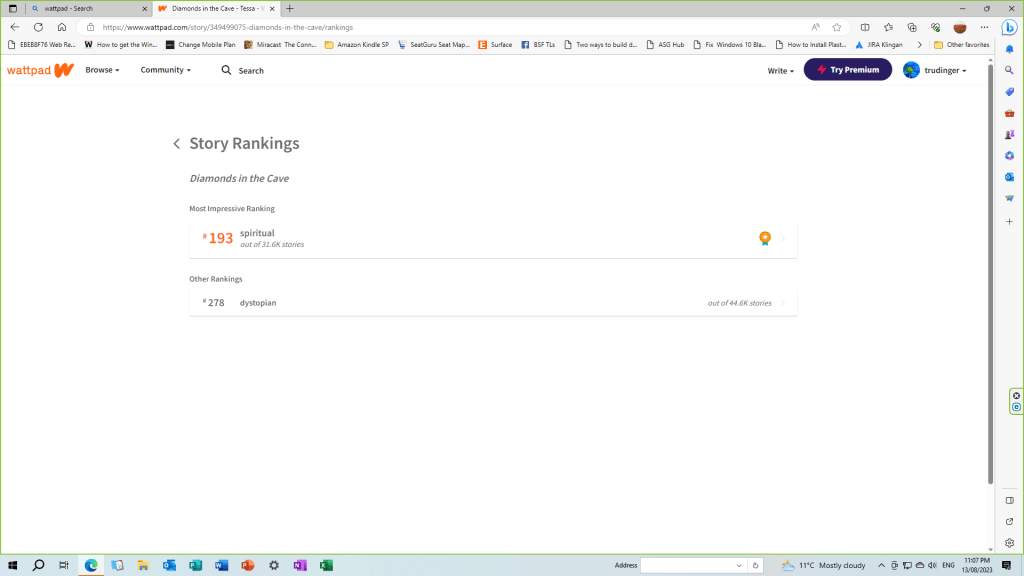
Anyway, a few days in, and the first chapter of Diamonds in the Cave steadily gained attention. Wattpad AI was pleased and awarded it the ranking #193 out of 31.6K in “Spiritual”. And something like #278 out of 44.6K in Dystopian. Two days later the story was still in the top 600 in those two categories.
*[Photo 2: Oh, joy! The statistics on Wattpad]
From there, things went south.
As I said, I’m looking for Beta readers and feedback to improve my story. No comments have appeared on Wattpad. One WordPress reader gave me encouraging feedback, saying I write beautifully. Another reader who has followed me, my friend actually, gave feedback face to face. She suggested that I need more of a “hook” in the first paragraph and that it must be rewritten.
Upon that advice, I rejigged the first paragraph, bringing elements of what the story promises to deliver—a combination of chocolate laced with time/space transporting microbes and the fearful Wend community, driven to witch hunts.
May have to eat more chocolates and play around with the first para some more in the future…
As for navigating the Wattpad website, I’m still getting used to the way Wattpad works. Uploading the story is simple enough; much like I do on WordPress. Copy and paste what I have already written on a Word document. An important strategy as I read in reviews about Wattpad taht quite a number of writers have lost their work by relying solely on Wattpad. One note, though, make sure track changes are off and not showing, or they show through on Wattpad. Messy.
I also found the story notes app provided useful in consolidating characters, the story and pitch. It made me think about my protagonist, Minna, and ensure her character remains consistent and yet grows in maturity and depth. I used the “logline” that I was asked to construct (had to be less than 150 characters), as a lead into Diamonds in the Cave on my WordPress blog.
Reading tips
I began reading a couple of stories on Wattpad. However, I discovered, when I tried to go back to them, they had vanished. Solution: apart from writing down the author’s name and book title on a separate piece of paper, I found that I could follow the authors, and put their books into my “Library” on Wattpad.
Another problem with reading in Wattpad—no bookmarks. Again, trusty old pen and paper come to the rescue. In this respect Kindle is far superior. It has bookmarks.
When I work out how to give Wattpad feedback, I will suggest that they programme some in. I checked the box volunteering to be a “Beta-user”.
This is my story of my journey into Wattpad, so far. Check out Diamonds in the Cave on Wattpad, and please do give some constructive feedback. I don’t mind if you post your comments on WordPress, Facebook, or on Wattpad.
You may need to join up on Wattpad to read, follow or comment on stories there. Not such a scary thing, I’ve done it. Just think of the millions of free stories begging for attention.
Maybe, like my friend, then, the e-reader will always be by your side.
A relative mentioned how in choosing a book to read, they kept on overlooking and dismissing one with a rather plain cover. Finally, they ran out of options and decided to give this book a chance. To their amazement, they thoroughly enjoyed the story—a real gem. They recommended we read the book.
Although we are taught from young to “not judge a book by its cover”, in the reality of today’s world of competition, advertising and marketing, the cover of our books is vital. Plain cover—overlooked. An eye-catching cover—a potential sale.
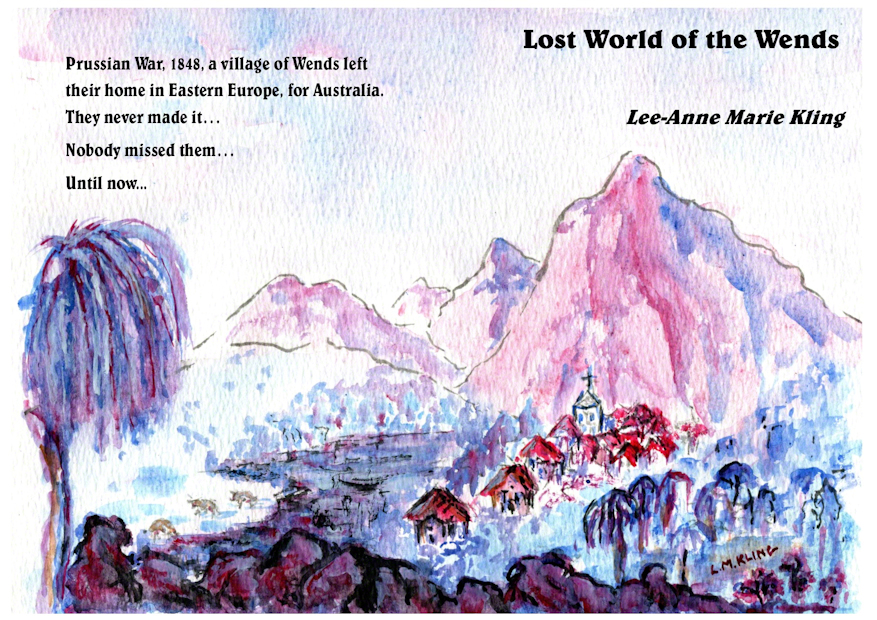
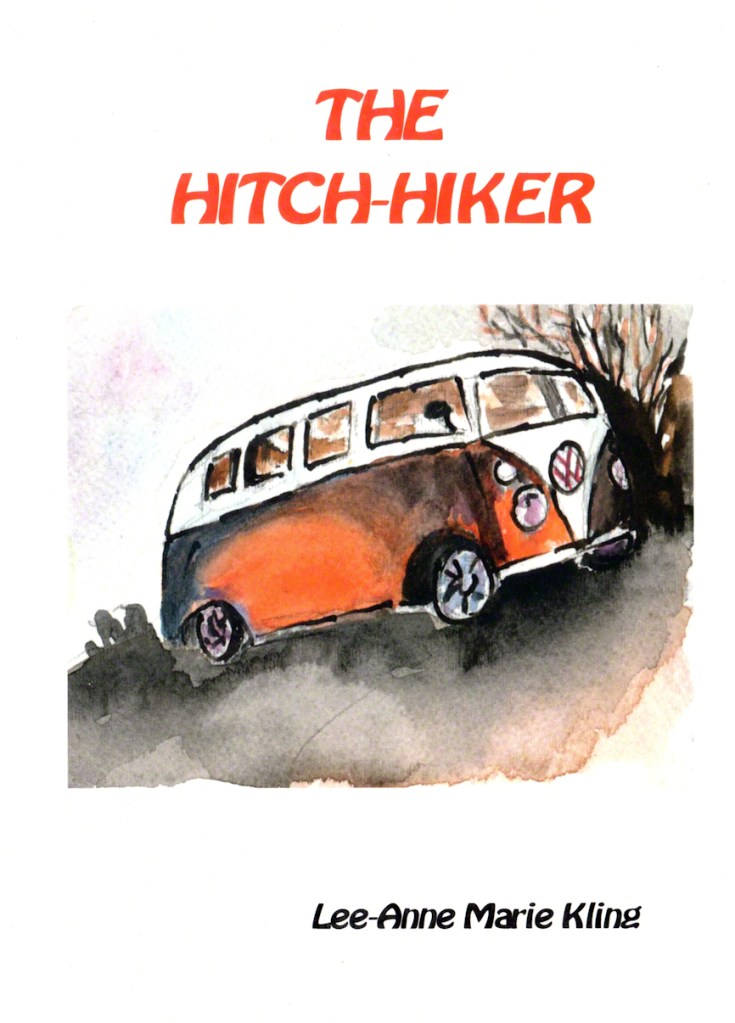
And so, we come to my first novel, Mission of the Unwilling. My team members at Indie Scriptorium advised that although its cover was, well, pleasant, it wasn’t up there, and well, dare I say it again, eye-catching like the covers of my successive books. They said that the covers of my war on Boris Series, The Hitch-hikerand The Lost World of the Wends, being my artwork, had more zing.
I did some research about marketing. Discovered that a book series needs to have features that set it apart and are easily recognisable to the readers who are following the story. Suggestions were: artwork that reflects the genre and story, style, typeface, colours, same size books, and of course, the blurb at the back that hooks the reader.
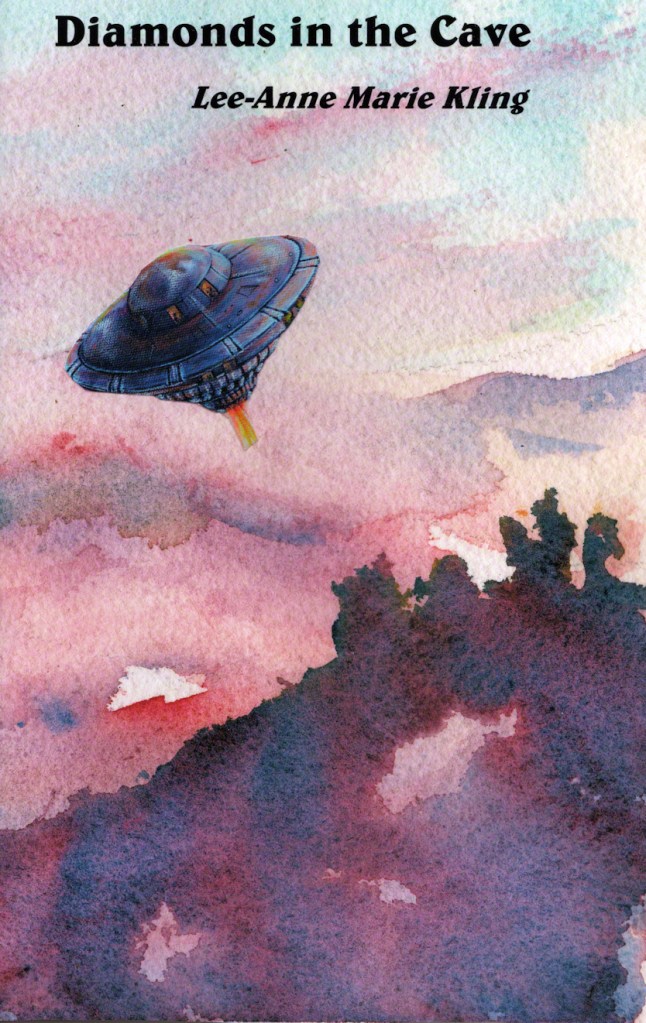
Back to the proverbial “drawing board” or my collection of artworks for a suitable cover for my first novel. After all, I was planning on revising it and releasing a second edition. Around the same time, a fellow artist, Liz Maxted, had painted a UFO scene. Impressed, I asked if I could use it for a cover of one of my future novels. She was thrilled and allowed me to borrow the painting to photograph.
As it has turned out, when working on the new cover for Mission of the Unwilling, Liz’s UFO fits perfectly, hovering over the Sellicks Beach cliffs of my watercolour.
I also changed the blurb to fit with contemporary issues, that being in Mission of the Unwilling’s case, the scourge of bullying and the victim rising above their identity of unworthiness to becoming a hero.
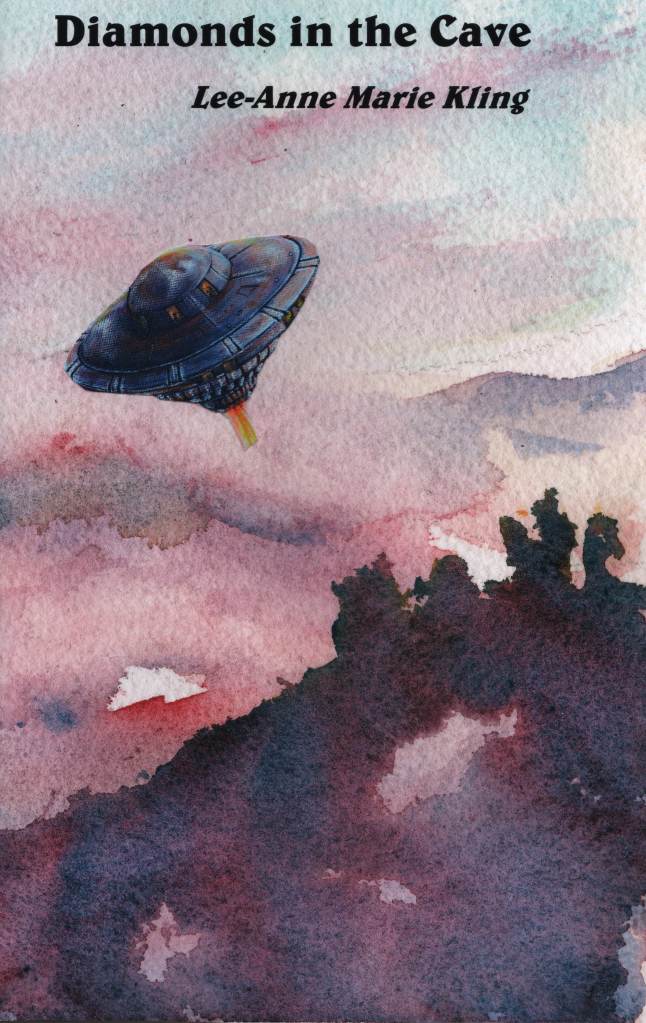
Then, on a roll, I created a cover for the sequel to Mission of the Unwilling, Diamonds in the Cave. And again, Liz Maxted’s UFO fits seamlessly in the mist and clouds of the Mount Martin range of the Pilgrim Planet. In Diamonds in the Cave, my heroine, Minna as a teenage mother, grapples with loss, her mental health, and the issue of witch-hunts plaguing the town.
I’m hoping Diamonds in the Cave will be ready for release soon. Just have to read through it once again, before handing it over to my Indie Scriptorium team to test read and edit. As I said at the beginning, in these competitive times, books are judged by their covers, but the inside needs to match up with good standards too.
Following on from “Raised commas aka Dratted apostrophes” back in September, we thought you might enjoy the following text of a children’s story featuring these pesky punctuation marks (taken to a somewhat bizarre level, we must admit). Bizarre as they are, in this piece we can assure you that this is grammatically correct.
Jan and her Gran
Jan has a Gran,
Gran belongs to Jan
And Jan has fun with her Gran.
Jan’s Gran has a van.
The van belongs to Gran,
Gran belongs to Jan
And Jan has fun with her Gran.
Jan’s Gran’s van had wings,
the wings belonged to the van,
the van belongs to Gran,
Gran belongs to Jan
and Jan has fun with her Gran.
Jan’s Gran’s van’s wings had nuts.
The nuts belonged to the wings,
the wings belonged to the van,
the van belongs to Gran,
Gran belongs to Jan
and Jan has fun with her Gran.
Jan’s Gran’s van’s wings nuts held the wings onto Jan’s Gran’s van
so Jan and her Gran could hop in the van and go off on trips.
For many, many years I was convinced that I “couldn’t write” even though I loved reading, even though I had ideas zooming around in my head, even though I loved words and playing around with them, even though I made up endless stories…
I did write poems, but they were different from stories. My poems were little, short snippets of language where the words were crafted in my head, fiddled around with to get the best ones in the best place, where everything sounded just right before I had to record them on paper. That was fun. There was a sense of achievement.
Stories and essays were a very different kettle of fish. They were hard work. Producing them was a matter of painstaking drudgery that began in Primary school. Back then, at the start of every school year children were issued with a heap of pristine exercise books that had to be taken home, covered and had our own name and the particular subject name written neatly on the front.
The expectation was that the work in each one was to be our very best. No scribbling; no scratching out; no careless, untidy work; no crumpled or torn pages. In other words, by the end of the year that exercise book should be as pristine as it had been on day one but full of work in our very best handwriting. Unattainable perfection for most of us!!
As far as writing was concerned the two that were my nemesis; my tragic downfalls were labelled Handwriting and Composition. The former was bad enough, but it was the latter that led to my conviction: “I can’t write”. Apart from the “Product Perfect” headset the other thing about compositions was that they had to be written straight into the composition book with correct spelling, perfect punctuation, excellent handwriting… no rough copy, no first draft, no preliminary notes. Straight from the brain cells to the page; no muckin’ about.
If I wanted to use a nice long expressive word like ginormous but didn’t know how to spell it correctly, I had to make do with a little short one I could spell (big) because errors were out, frowned upon, seen as evidence of lack of learning, failure… Where was the interest or excitement in that? I was effectively crippled.
Fortunately, education in this area seems to have moved on. Composition books as I knew them have gone the way of the dodo. Teachers and students now talk about first drafts and final copies. Thanks be.
If you can relate to that last paragraph then count your blessings and keep pouring your ideas, thoughts, stories out onto paper or into your computer. If it is the rest (or even part of the rest) and you want to write but think you can’t then ditch the doubts, grab a writing implement – pen, paper, computer – jump in and make a splash. Mistakes and stuffing up are potholes, not impassable roadblocks.
We learn by doing! And lots of practice!! So go to it and good luck.
[Again, I have been revisiting my first Sci-Fi thriller novel, Mission of the Unwilling, preparing it for a revamp and release of a second edition. So, I have been working on my writing and have been reflecting on what I have learnt makes for a good story.]
Unbelievable to Believable
Unbelievable, that’s what they said about my novel. Unbelievable. Is that why my first novel, Mission of the Unwilling has failed to thrive? Why there’s no feedback? Or is it a case of someone who’s not a Young Adult, and just not into Sci-Fi? Although, some readers who have kindly given feedback on this novel were rather traumatised by some of the horror scenes and wondered what indeed went on in my head.
Whatever, I consider this feedback valid and believable. Over the next few months, I plan to revisit Minna’s world and her adventures at the mercy of Boris and learn from my venture into self-publishing. Nothing is wasted. The take-away from the most recent honest feedback—make my stories believable.
What does this mean for me as I refine the craft of storytelling?
My characters are real to the reader.
The setting is authentic, so that the reader can step into my constructed “world” suspending all disbelief.
The audience buy into the journey they take into that world.
But what does “suspending disbelief” mean. I mean, really? I mean, when I revisit my stories, to me, the characters are alive, the setting an on-site movie set, and I gladly invest in the tale told. Not so for some of my readers, apparently. In truth, I’m too close to my work to view it objectively. I need and appreciate feedback from others. I’d go as far as to say that most writers benefit from a second, third, fourth or umpteenth pair of eyes to make their work the best it possibly can be.
So, from the perspective as a reader, that extra pair of eyes on other works, here’s what I’ve learnt that suspends disbelief and do some unpacking of techniques that make characters, setting and journey more believable.
Believable characters: Someone with whom you connect. You know that person. You’ve met them. You’ve had lunch them. You’ve admired them. They’ve annoyed you with their quirky habits. They’re those people you see across a crowded coffee shop and already you’ve constructed a whole story around them, by observing their posture, expressions and gestures. You invest time following what they’ll do, what will happen to them. Believable characters don’t have to be human, but they do need human qualities and personality for readers to relate to them.
Believable setting: Best woven into the forward-moving action of the story. The writer describes the setting with the five senses, what you: 1) see, 2) hear, 3) touch, 4) smell, and 5) taste. And for the world to be memorable, the author picks up something unique or odd about the place. For example, I may write of Palm Valley in Central Australia, ‘Ghost gums jut out of the tangerine rock-face, and a soft wind rustles through the prehistoric palms.’
Believable Story: You need to convince your readers that such a sequence of events can happen. A skilful writer uses the technique of cause and effect. The character makes a choice, and their actions result in consequences often leading to dilemma that must be resolved. Readers are more likely to engage with proactive characters who influence their environment and others, and who make active choices to change and grow, rather than the passive characters who have every disaster happen to them, and their problems magically solved.
Yes, pile on the misery, pile on the challenges, don’t be afraid to get your characters into strife; that’s what the reader’s looking for. But remember, the chain of events must be believable. An article by Laurence Block, Keeping Your Fiction Shipshape*, describes the relationship between storyteller and audience is like enticing readers onto a cruise ship, keeping them there, and delivering them back to port with a good satisfying end.
It’s the skill of the storyteller to convince the audience. If the characters are believable, the setting is believable, and the action believable, your readers will enjoy the ride and complete the journey you, as the storyteller, takes them on.
As an aside, another crucial piece of feedback given about the book from several readers were that this first novel was too fast paced. In response, I have been doing some research how to manage pacing in my storytelling. This will be a topic for a future post.
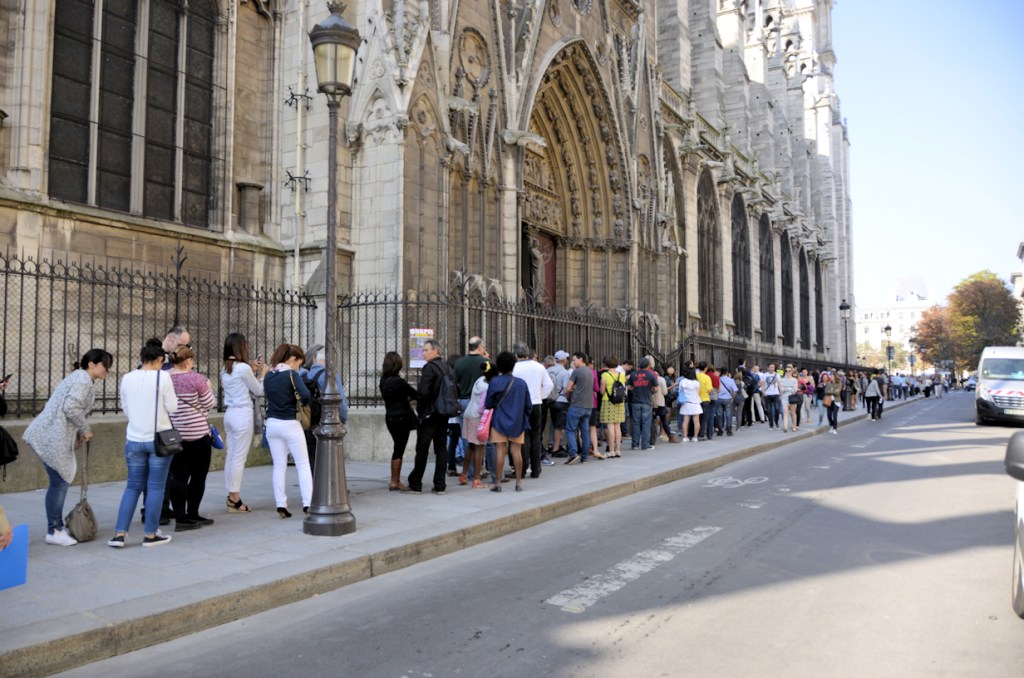
[Why Notre dame? Victor Hugo, the author of Hunchback of Notre-Dame, spent the first three-quarters of the book describing the setting. Useful if you visit Paris but does nothing for moving the story forward.
Also, tourists willing to invest in the journey to climb Notre-Dame by waiting several hours in the long line that stretched the length of the Cathedral. What will they see? The gargoyles (characters), a view of Paris (setting) and a climb and walk through the Cathedral (the journey).]
I’m writing my third novel and still learning. Making my writing more dynamic and engaging is one skill I’m trying to develop. I’ve known while some scenes are full of emotion and action, other parts of my draft tend to wither into bland backstory or boring prose. I need to make my writing Zing.
The rule of “show not tell” is one of the writing rules churned out to fix boring writing. But what do we mean by showing, not telling?
I interpret showing as progressing the storyline by having my character storm around the scene with white lips, beating heart, clenched fists, and flashing eyes. They might be overcome by the smell of roses and hear the plaintive warble of a magpie. Yes, it’s all about the senses. Oh, don’t forget taste, she says with a mouthful of ashes.
Telling is informing your reader that your character is angry, smelt roses, heard a magpie, and has halitosis. Not really Zingy.
I entered a competition with my second novel and received lovely feedback from most of the judges. One judge, however, was less complimentary and hated much of what I had written. Gosh, that hurt. Despite all the warm fuzzy praise, I took the negative critique to heart, then dismissed it. After all, the other judges liked what I had written, and I got into the finals. But after I got over the elation, I took out the negative critique and with trembling hands read the judgement again.
They were right. There was critique I discarded; I honestly felt they were looking for a traditional romantic story and my novel didn’t fit the bill. But their critique of my prose was insightful and confronting and right. I will illustrate this using the actual paragraph the judge picked out to illustrate his/her point.
My line— “Eleanor had more energy and a new zest for life.”
Judges’ line— “Energy sizzled inside her, driving her to paint. Oh, how wonderful it was to pick up a brush and apply paint to a canvas again. Now that she’s accepted the facts, her life had become much better and full of zest.”
The judge’s line is full of Zing. It goes inside Eleanor, makes her feel the energy, expresses her joy, and put her emotion into the action of painting. She actively accepts that she cannot have a child, and acceptance improves her mood and energy.
I believe changing my writing style to make it Zing will require practice. I am writing a first draft of my third novel and have decided that just getting the story down is my priority. But enlivening my prose will take second priority. I will add another layer of editing with the express purpose of Zinging my prose.
Another technique for adding Zing is to use dialogue. Have characters, explain things, pontificate, console, complain, fight, disclose, advise, snub, berate order, and entice. Conversations are fun and show your character’s motivations, desires, beliefs, and points of view. They can also show how a character learns something, amends their belief, and grows as a character. Using secondary characters, friendly or not, will help your character interact and make your writing Zing. Have a look at Agatha Christie, for a masterful example of storytelling using dialogue
Sandy Vaile in her article Clarify, ‘showing for good’ provides excellent advice about aspects of active story telling. I found her ideas about placing characters in challenging situations edifying. If I’m writing a dramatic scene with action my writing Zings, my prose is stronger, and the words flow. But not all my scenes have an elevated level of conflict. In the future, I will plot more scenes with conflict. The conflict could be an internal battle with a problem or emotions or an external conflict with another person or situation but making life difficult for heroes and heroines is my new goal.
Another way to make your writing Zing is to make sure each sentence is active. I’m the queen of the passive voice but I came across a great explanation for active and passive sentences in Sandy Vaile’s’ article. Sandy states you should put the action first and the subject second and gives wonderful examples.
Passive–Tina’s homework was marked in red pen by Mrs. Gleeson. (The subject before the verb/action)
Active–Mrs. Gleeson marked Tina’s homework with a red pen. (The verb/action before the subject)
Passive–The burglar was tackled by the detective.
Active–The detective tackled the burglar.
I’m still learning about active prose. As I’m writing my first draft, some days the words flow and some days they don’t and that is often because of the setting of the scene. Planning more active and challenging situations in my plotting, adding secondary characters who engage my protagonist in active dialogue and making my characters use their senses are all techniques to master. Getting the passive/active voice is also a challenge.
Happy writing.
***
Acknowledgements
Sandy Vaile. Clarify ‘showing for good’ Romance Writers of Australia Hearts Talk August 2022.
Sandy Vaile is a motorbike-riding daredevil who writes romantic-suspense for Simon & Schuster US and supports fiction authors to produce novels they are proud to share with the world (and which get noticed by agents and publishers), through coaching, craft workshops and developmental editing.
[Currently, I’m editing Diamonds in the Cave, the next novel in my War on Boris series. This article, though first posted five years ago, is a pertinent reminder of all that the editing process involves.]
Editing—No Writer is an Island
Some time ago, a member of our writers’ group published a book.
‘I don’t want to tell anyone,’ they said, ‘because I needed a lot of help.’
Certain members of the writers’ group ensured they revealed and celebrated the news; their achievement was our achievement. A book doesn’t happen in isolation; it’s a group effort. Just as a village raises a child, for the best outcome, a community or group births a book. There’s the writer with the ideas, then comes the editor, test-readers, friends and family, the proof-reader and finally, the audience, the readers out there in reader-world.
We write stories for readers, that’s why the editing process is vital. A story needs to be readable to be effective. Readers need to understand the story to enjoy it. It’s the reason language, especially written language has rules for grammar, spelling, and the art of storytelling has a structure.
So, you’ve finished your masterpiece, but now the challenge: how will you go about editing your work? That’s where the writers’ group comes in. Fellow writers are your work’s first point of contact. Their reaction to your story will tell you if your creation is a winner or a flop. Either way, there will be more work required to perfect your piece of genius—more pen to paper, more fingers tapping on the keyboard, more pain and hair-pulling before your work can be “birthed”.
Once you have completed your work, file it away in a drawer for about three months. You need distance between you and your “baby”. When you revisit your work, you may be amazed at how brilliant you have been putting all those words together in such a clever way, or be horrified at how the gremlins of grammar, spelling, typos, weasel words, repetitions, and so on have bred and multiplied. With fresh eyes, you’ll see ways to improve your story, thus creating your second draft.
Repeat the process of draft and distance until you feel it’s ready to meet fresh eyes that don’t belong to you. But who?
Ever had trouble getting someone to peruse your work? Suddenly, they’re all busy. Or they take your story and sit on it for months, years… Again, happy are those in a writers’ group. Or be bold and blog. If you are wanting to sell your novel down the track, having a http://www.presence and band of followers may help.
For those finishing-touches to refining your work, you may seek out a professional editor. When paying an editor, ensure that you define the time and rates in a contract. For Trekking With the T-Team, I negotiated an hourly rate and a limit on the number of hours the editor would work on my book.
There are two types of editing: big picture and proof-reading. Big picture editing looks at the plot, pace, character development, language use and content. Proof-reading deals with the technical side of the work such as grammar, spelling, and formatting. But as my friend who’s an editor said, ‘It’s hard to separate the two. If the content and ideas trigger you, then it’s difficult to be objective and it affects how you respond to the piece.’
So, while it may be preferable for an editor to be outside the genre in which you are writing, it may not work for your book. A good editor, of course, is impartial, but they are still human and will approach your story from their worldview. And on the other side, we as writers are human and see the world through a filter of attitudes and the way we see ourselves. A good editor who is paid, then, is only as good as the receptiveness to feedback of the writer who pays them. After all, you are paying for that objective set of eyes, and feedback based on their experience as a reader and what they perceive as good literature or entertainment. In the end, whatever comments an editor makes, it’s up to you, the writer, to implement those changes—it’s your work, your story.
The last step of editing is proof-reading; the nit-picking of the piece before it surfaces for publication. Ernest Hemmingway, in an interview for The Paris Review (1958), said that he rewrote the end of Farewell to Arms 39 times before he was satisfied with it. However, each writer is different. I use five different coloured pencils: 1) grammar, 2) spelling, 3) word-use, 4) formatting, and 5) content. That being said, I am sure I have perused my works near 39 times by the time it reaches the Amazon shelves.
Other tips: • Reading out aloud helps with sentence structure, flow, and the art of storytelling. Even better, if you can bear it, use a voice-recorder as you read out your story, and then play it back. • Line by line editing. Print out your story and then use a ruler under each sentence to concentrate on each word. Effective for exposing typos and formatting flaws. • Start with the last chapter first, and so work through your piece backwards. Again, helps with plot-holes, character consistency and pacing. • Have an English grammar book and a dictionary within reach, for you’ll be reaching for them repeatedly. I’ve discovered that an online dictionary, or Google are also reliable resources, but beware, as dodgy information slips through the cracks of the Internet.
In the end, it’s up to you, but it’s also a group effort. We are all part of the larger community collective of writers, readers, sharers and receivers of ideas. And I cannot stress enough, the more you read, the more effective your writing will become. We learn from each other.
This edit is most effective when you have finished the structural edit and are satisfied that your story reads, flows well, and makes sense.
Copy editing, also called “line editing” or “content editing”, means that you go through your manuscript line by line to make sure each sentence and paragraph zing.
I find copy editing difficult. I just don’t see the grammar and spelling errors and lose focus quickly. Knowing your weakness as a writer is important and I use whatever help I can to line edit my work.
Lorena Goldsmith suggests you don’t edit from the beginning of your manuscript and work through to the end as you will get caught up in the story and the last chapters tend to suffer as you rush to finish. She advises that skipping around the manuscript is more helpful. Select several pages for editing, then skip to another part of the book and select the next lot of pages. This helps you stay focussed and ensures consistency.
I do multiple edits, each with a different focus. I might edit looking for contractions and adverbs in one edit, and then look at sentence length and overuse of words. Editing for me is a tedious process, but others love it and are geniuses at spotting mistakes. Give them a red pen and they edit like tigers. Revere and reward these people.
Cheating or not, I also use technology. Microsoft Word has a good basic spelling and grammar check and thesaurus. I also use a program called ProWritingAid, which has multiple checks and reviews for the editing impaired. I also pay a professional editor who hones my words into the final draft for proof-reading.
The following is a checklist of things to look for when editing. It’s not definitive.
Have I used the right word/s. Is the meaning clear? Replace a word with a stronger word.
Remove weak/or excessive verbs and adverbs. E.g., He walked quickly, replace with He marched. She spoke gently, replaced by she leaned over and whispered.
Eliminate filler words (for example: just, really, very, that, even.)
Is the selected word in the right mood for the sentence/scene?
Look at word usage. Everyday words are easy to read and understand and don’t stop the flow for the reader. Mix up words, use a thesaurus to find the right word for your line.
Is the word politically correct?
Look for long sentences.
Does the sentence make sense?
Is the paragraph too long?
Are you explaining things too much and repeating information unnecessarily?
Do paragraphs start with the same word, the same style? Mix up your beginnings.
Show not tell. Don’t say “He was nervous” use sweat made him cold as the biting wind cut the air from around him.
Avoid describing emotions. Instead, write a description of your character that incorporates what they smell, hear, feel, see, and touch in their situation that conveys the emotion.
Dialogue–does it flow naturally? Use contractions, e.g. I will to I’ll, as this makes the dialogue more realistic. Does each character have their own voice? Remove unnecessary dialogue, such as “Hello, how are you?” “Yes, good thank you.” It’s just boring. The dialogue should be relevant and move the story along, so make it snappy.
Reduce dialogue attributions. “Where are you going Jim?” Jane asked. Unnecessary, if only Jane and Jim are in the scene.
Look out for cliches. Make metaphors and similes unique and interesting.
After completing your structural and line edit, give it a read. If it’s easily read, tight, well-paced and without obvious bloopers, send it to a professional editor or a competent astute fellow writer. Make amendments, and then it’s ready for the “Proof reading” edit and formatting.
Reference:Lorena Goldsmith-Self Editing Fiction that Sells. (How to Book Ltd. UK-2013)





 Indie Scriptorium -- Self Publishing Collective